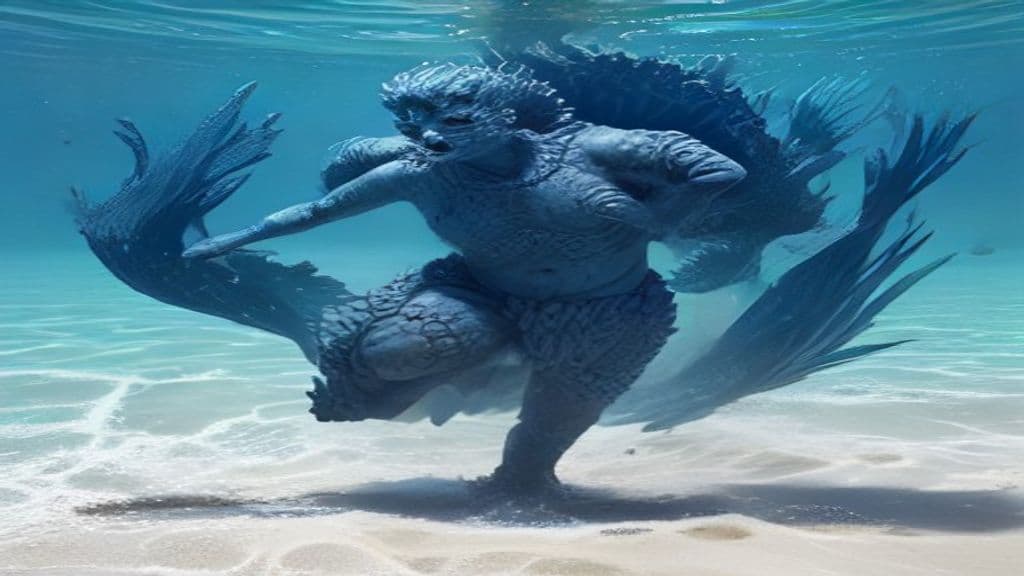
According to classical mythographic summaries, Coryphe is one of the 3,000 Oceanids, the daughters born to the Titans Oceanus and Tethys. As an Oceanid she is part of the vast familial network of water-associated female divinities in Greek myth. In variant local traditions cited in the available sources, she is named as mother by Zeus of a locally venerated figure called Coria in Arcadia, whom those Arcadians worshipped as an inventress of chariots.
No physical description of Coryphe is preserved in the supplied sources. Like many Oceanids, she survives in the record primarily as a name within a genealogical list; the literature frequently leaves individual Oceanids unnamed or uncharacterized beyond lineage, and the provided material records no iconography or detailed portrayal for Coryphe herself.
The supplied sources do not attribute specific powers, deeds, or habitual behaviors to Coryphe as an individual. The only attested functional role is genealogical: in some variants she is the mother (by Zeus) of an Arcadian Coria associated with the invention of chariots. Beyond this maternal/genealogical note, no abilities or interactions with mortals are documented in the provided material.
Weaknesses
- othernone attested in sources
Wards
- othernone attested in sources
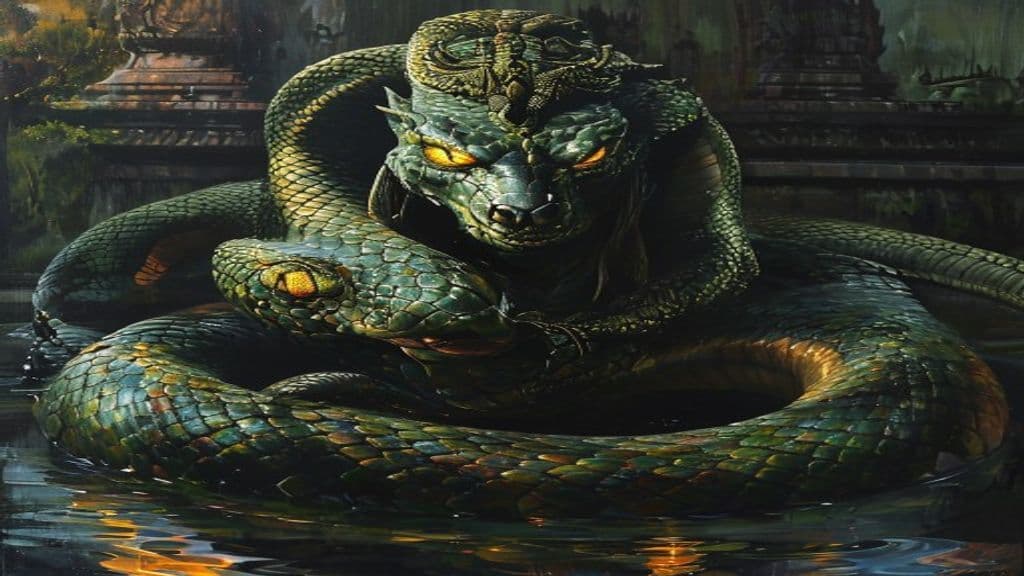
Naga
Divine serpent beings of Hindu, Buddhist, and Jain cosmology — powerful guardians of water, earth, and underground treasures. Revered as deities in South and Southeast Asia.
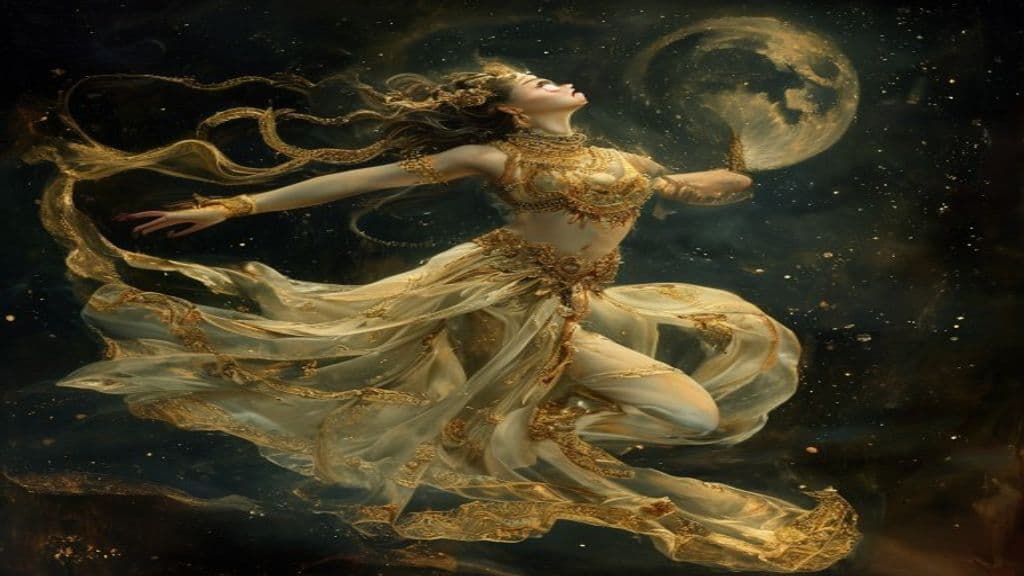
Apsara
Celestial dancers and water nymphs of Hindu cosmology — beautiful semi-divine beings who dance at the court of Indra and, by his command, descend to earth to distract sages from excessive asceticism.
Alpheus
Alpheus (Ancient Greek: Ἀλφειός) is the personified river and river-god of the Alpheios in the Peloponnese. He is classed among the river-deities descended from Oceanus and Tethys and appears in myths linking the Arcadian/Elian river to the Sicilian well Arethusa, to Artemis, and to the labors of Heracles.
Apate
Apate is the personification and divine power of deceit in ancient Greek myth: a named theonym that functions as the embodiment of guile, illusion, and perjury. She appears in mythic narrative (notably in Nonnus' Dionysiaca where she supplies a magical girdle) and in philosophical commentary (Neoplatonic readings) as an explanatory category for deception and illusion.
Cronus
A principal Titan in ancient Greek myth, Cronus (Κρόνος) is the youngest leader of the Titans who overthrew his father Uranus, ruled in the mythic Golden Age, devoured his newborn children to avert a prophecy, and was later overthrown by his son Zeus and confined to Tartarus. He is associated in some traditions with the harvest and is later equated with the Roman Saturn.
Harmonia
Harmonia is the ancient Greek goddess who personifies harmony, concord, and the principle of fitting or joining that underwrites civic and cosmic order. She appears in myth chiefly as the wife of Cadmus, mother of important Theban figures, and as the legendary source or eponym of a famed cursed heirloom (the Necklace or peplos) whose misfortunes affect later generations.
Pallas Athena
Pallas Athena (Athena or Athene) is an ancient Greek goddess associated with wisdom, strategic warfare, and handicraft; she functions as patron and protectress of cities—most notably Athens—and appears throughout art and myth from antiquity into later cultural traditions.
Satyr
In ancient Greek tradition a satyr (σάτυρος, sátyros) is a male nature spirit of woodlands, mountains, and pastures who accompanies Dionysus (and is later identified with Pan/fauns). Satyrs embody ribaldry, music, dance, and unrestrained sexuality and appear collectively (as a chorus) in the satyr play as well as individually in mythic episodes (e.g., Marsyas, Silenus).
Simoeis
Simoeis (Ancient Greek Σιμόεις) is the river-god personification of the Simoeis river in the Troad, counted among the offspring of Oceanus and Tethys and attested as an allied river-deity in accounts of the Trojan War (notably referenced in Homeric material summarized in modern sources).
Corycia
Corycia (Ancient Greek: Κωρυκία, Kōrykia; also Corycis) is a local naiad — a freshwater nymph — associated with the springs and the Corycian (Korykian) Cave on Mount Parnassus near Delphi in Phocis. She is presented in classical summaries as an eponymous resident spirit of that sacred spring-site and is connected in genealogy and cultic geography to Delphic water-nymphs and river-gods.
Corymbasus
Corymbasus (Greek Κορύμβασος / Korymbasos) is a named martial figure in the Dionysiac epic tradition—notably Nonnus’ Dionysiaca—attested as a mortal warrior and, in one passage, as “king of the Aithiopians (Ethiopians).” He is repeatedly recorded in mythographic summaries as the slayer of several minor named combatants during the mythic Indian War of Dionysus.
Corynaeus
Corynaeus is the proper name of one or more mortal followers of Aeneas appearing as minor agents in Virgil's Aeneid: a ritual performer conducting a lustration after Misenus' burial (Book VI) and combatants mentioned in battlefield scenes (Books IX and XII). Scholarly sources note textual ambiguity about whether these mentions denote a single individual or multiple men sharing the same name.
Corythus
Corythus (Greek Κόρυθος, Korythos) is not a single supernatural being but a recurring personal name applied to several mortal men in Greek mythic tradition. The name appears for diverse characters — courtiers, kings, youths, foster‑fathers, and beloveds — across episodes connected to Perseus, the Lapiths and Centaurs, Heracles, the Argonauts/Doliones, Telephus, and the Trojan cycle.
Cosmic Ghost Rider
Cosmic Ghost Rider is a Marvel Comics persona in which Frank Castle (the Punisher) becomes a hell-powered Ghost Rider who later acquires the Power Cosmic as a herald of Galactus. Originating in an alternate timeline, the character fuses vengeance-driven street-level vigilantism with infernal and cosmic forces and appears across devastated Earth, Hell, Valhalla, and various cosmic locales.
Community Record
- [1]Coryphe (Wikipedia). Wikipedia article 'Coryphe' summarizing classical attestations (cites classical source Cicero, De Natura Deorum, among references).wiki
- [2]CORYPHÉE (archive entry — homonymous modern musical record). Archive record for modern musical item titled 'CORYPHÉE' — noted as a homonymous modern usage unrelated to the mythic Oceanid.other
- [3]Mithraculus / Mithrax coryphe (crab species pages — homonymous taxonomic usage). Species page for Mithraculus coryphe — cited in research notes as unrelated modern taxonomic usage of the name 'coryphe'.other