
Sources treating the Mahavidyas place Dhūmāvatī within a group of ten principal manifestations of the Goddess (the Dashamahavidya). Some modern and scholarly summaries cited among the sources note that various traditions describe the Mahavidyas as expansions or manifestations of older goddess figures (for example emanations related to Sati or Shakambhari in differing accounts), and Dhūmāvatī is thereby located as the crone/inauspicious pole of the Goddess in those frameworks (Sources: Wikipedia entry on Dhumavati; two StackExchange discussions summarizing variant origin accounts). The supplied materials do not contain a single canonical birth-myth or scriptural origin for Dhūmāvatī herself; instead she is treated as one of the ten established Mahavidyas within Tantric theology and narrative (Sources: Wikipedia; ResearchUt; Hinduism.StackExchange items).
Dhūmāvatī is commonly depicted as an old woman or crone — described in some sources as the "Widowed Hag" — and iconography places her in liminal mortuary settings. Specific visual markers referenced in the sources include her carrying a winnowing basket, riding a crow or being shown on a horseless chariot, and appearing in a cremation ground (Sources: Wikipedia; OrderWhiteMoon / Dhumavati page; catalog/encyclopedic entries).
Rather than narrating miraculous conquests, the sources emphasize Dhūmāvatī's symbolic, ritual, and theological functions: she personifies inauspiciousness, widowhood, loss, desolation, and the forbidding side of divine power. A catalog entry included in the source set lists her as a "goddess of strife," and an astrological/ritual commentary describes her as attendant to the fierce goddess Bhairavi in some schemata; these descriptions underline her role within networks of Tantric goddess relations and her association with difficult or marginal states rather than a catalogue of supernatural feats (Sources: Wikipedia; catalog entry; metahistory/Bhairavi page).

Bhairavi
Bhairavi (Sanskrit: भैरवी) is a Mahāvidya — a fierce form of the Great Mother in Hindu tantric and Puranic traditions. She appears both as a deity, consort of Bhairava, and as a title or attainment for a female tantric adept (a realized yogini). Iconography and texts portray her as awe-inspiring and ambivalently maternal: protective to devotees and terrible to the wicked.
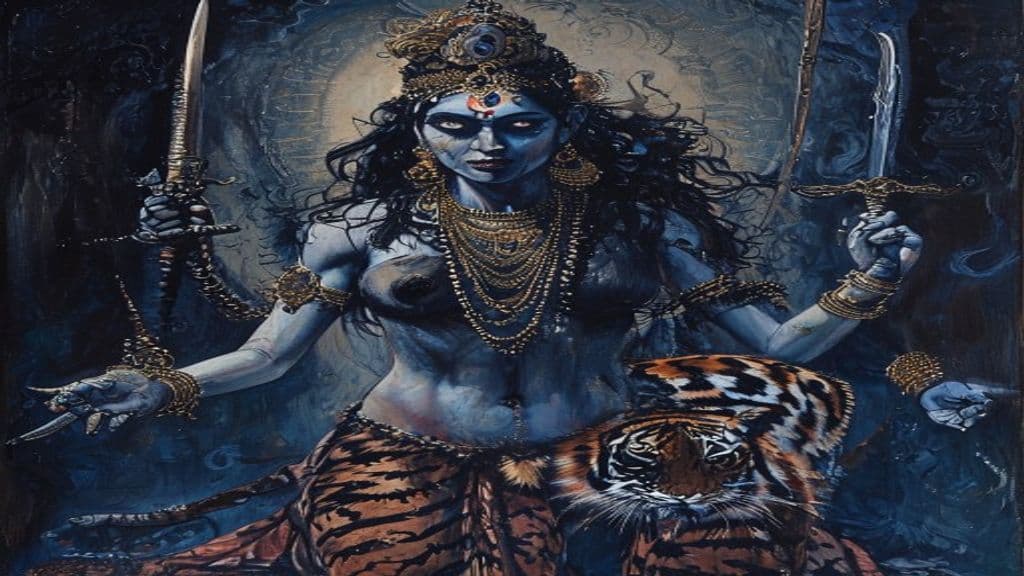
Kali
Kali is a major Hindu goddess associated with time (kāla), death, destruction, and also with liberating knowledge; she appears in Puranic and Tantric texts as a fierce battlefield power and as a protective Divine Mother (Kali Mātā).
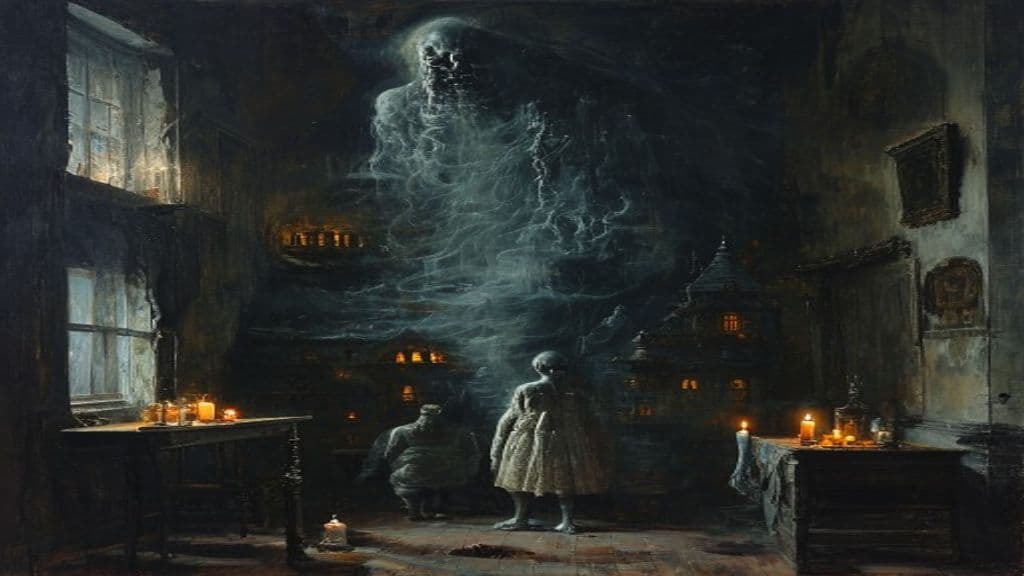
Mahapreta
The 'great ghost' — in Bihar and UP folk classification, a Mahapreta is a preta of exceptional power, born from a death involving multiple injustices simultaneously: wrongful killing, incomplete rites, and unresolved family debt combined. It commands lesser spirits and can cause harm across an entire lineage.

Baba Yaga
Baba Yaga is an ambivalent female figure of East Slavic folktale tradition, depicted variously as a fearsome, child-eating crone or as a helpful, maternal donor. She is associated with the deep forest, a hut described as standing on chicken legs, and the motific accoutrements of a mortar and pestle.
Adi Shakti
Adi Shakti (also Adi Parashakti, Mahadevi, Adya Shakti) is the primordial feminine power in Hindu/Shakta theology, regarded as the ultimate reality (Para Brahman) and the source from which all goddesses and gods manifest. She is both an impersonal cosmic principle (Mulaprakriti) and a focus of devotional invocation in temples, mantras, and pilgrimage sites such as Shakti Peethas.
Akhilandeswari
Akhilandeswari (Akhilandeshwari) is a major South Indian manifestation of the Hindu Goddess Adi Parashakti/Parvati, venerated as the presiding goddess of the Jambukeswarar Temple in Thiruvanaikaval. In temple tradition she is portrayed as a penitent/student of Shiva and figures in local legends, ritual schedules, and festivals that emphasize both maternal and fierce aspects.
Ardhanārīśvara
Ardhanārīśvara is an androgynous iconographic form in Hindu tradition combining Shiva and his consort Pārvatī into a single deity split vertically as male and female, symbolizing the inseparability and synthesis of masculine and feminine cosmic principles.
Avatar (avatāra)
In classical Hindu theology, an avatāra is a divine 'descent' — the event or fact of a superhuman being or deity making a material appearance in the temporal world to accomplish a purpose (commonly to restore dharma). The term (Sanskrit अवतार, avatāra) emphasizes crossing down from the unconditioned into conditioned existence and is central to Vaishnava theology of Vishnu's incarnations while also appearing in other Indian religious contexts.
Bagalāmukhī
Bagalāmukhī (also Bagalā, Pitambarā-devi) is a Tantric Hindu goddess counted among the ten Mahāvidyās. She is a manifestation of the Dēvī whose specialized power (stambhana) is invoked to immobilize, silence, or control enemies and hostile speech, and to grant certain siddhis to devotees.
Bhairav (tantrik)
A complex figure in Hindu tradition, associated with Shiva as the destroyer or transformer. He is a powerful tantric disciple of Guru Gorakshanath and appears in various contexts within Hindu mystical traditions. (Note: - Power tier should be adjusted to Greater (powerful regional) as Bhairav's abilities are related to Shiva, but he is not a cosmic being himself. - Appearance: Add that no detailed physical descriptio)
Bhavānī
Bhavānī (भवानी) is an aspect/epithet of the Hindu Mother Goddess (Devī/Shakti) revered as a giver of life and a warrior who defeats demons; she is both a cultic tutelary deity (notably at Tulja Bhavani, Tuljapur) and a pan-Indian manifestation identified with forms such as Durgā, Katyayani and Mahalakshmi in the cited sources.
Bhuvaneśvarī
Bhuvaneśvarī (also spelled Bhuvaneshvari) is a Hindu goddess identified in Shaktism as the fourth of the ten Mahavidya goddesses and described in sources as an aspect of the supreme feminine principle (Mahadevi/Adi Parashakti). She is theologically regarded as a sovereign cosmic goddess—summarized in linked data as the 'Queen of the Universe'—and is the subject of devotional stotras preserved in modern published collections.
Devi
Devi (Sanskrit: Devī) is the general term for goddess in Indian religious thought, signifying the divine feminine or Shakti; in different texts and traditions she appears as individual goddesses (e.g., Parvati, Lakshmi, Saraswati) or as the supreme reality (notably in Shaktism and certain Upanishads). Sources treat Devi both as a class/category of female divinities and as a philosophical identification with ultimate reality.
Durga
Durga is a major Hindu goddess, central to the Shakta tradition as an aspect of the Divine Feminine (Mahadevi). She is venerated as a protective, martial mother-goddess who combats demonic forces (notably Mahishasura) to uphold dharma, and is celebrated in major festival cycles such as Navaratri and Durga Puja.
Hindu deities
Hindu deities (Deva/Devi) are the diverse gods and goddesses recognized across Hindu traditions, ranging from Vedic forces of nature to later personalized major gods and goddesses. They function as patrons of rites, embodiments of moral and cosmic principles, and focal points for temple cults, festivals, and devotional traditions while often also being interpreted as aspects of a single Ultimate Reality (Brahman).
Kali
Kali is a major Hindu goddess associated with time (kāla), death, destruction, and also with liberating knowledge; she appears in Puranic and Tantric texts as a fierce battlefield power and as a protective Divine Mother (Kali Mātā).
Community Record
- [1]Dhumavati - Wikipedia. Wikipedia: Dhūmāvatīwiki
- [2]Dhumavati: The Crone Mahavidya - Order White Moon. OrderWhiteMoon: Dhumavati: The Crone Mahavidya (iconography and interpretation)other
- [3]Bhairavi with Dhumavati (catalog/astrological note). Metahistory: Bhairavi page noting Dhumavati as attendant in certain schemataother
- [4]Dasha (Ten) Mahavidya – Part I - RESEARCHUT. ResearchUt: overview of the Mahavidyas including Dhumavatiother
- [5]Todala Tantra (reference listing). Todala Tantra (referenced among source list; text not quoted in supplied excerpts)other
- [6]Are the 10 Mahavidyas an expansion of Goddess Sati or that of Goddess Shakambhari? - Hinduism.StackExchange. Hinduism.StackExchange: discussion of variant origin accounts for the Mahavidyasother
- [7]In which scriptures can we find the original stories of the Mahavidyas? - Hinduism.StackExchange. Hinduism.StackExchange: survey of sources and traditions for the Mahavidyasother
- [8]Archive: Kalratri-Shitala-dhumavati. Archive.org: recording listing referencing Dhumavati/Kalratri material (listed among sources)other