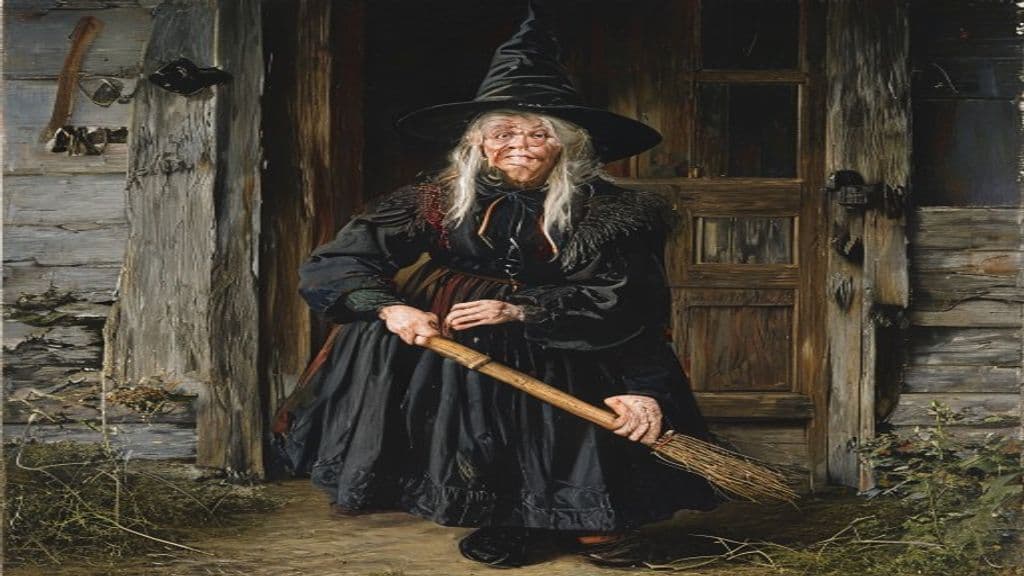
Within Swedish and Finland-Swedish popular belief the Easter witch is a seasonal manifestation of persons associated with witchcraft who travel by broom on the Thursday before Easter (Maundy Thursday or the night between Holy Wednesday and Thursday) to a mythic gathering-place called Blåkulla / Blockula / Blå Jungfrun. The motif is embedded in a calendar-based folk cosmology that fused older notions of witch-sabbaths and diabolic meetings with Christian Holy Week. During the 17th century, when witch persecutions occurred in Sweden, these beliefs informed household precautions and juridical responses; over subsequent centuries the figure transformed in popular culture into a largely performative, child-centered custom observed on Maundy Thursday, Holy Saturday or Palm Sunday (in certain Finnish contexts).
Traditional imagery depicts the Easter witch as an old woman (kärring / häxa) who flies on a broom to the meeting-place of Blåkulla; older accounts treat the witches as adults or youths who undertook nocturnal flights. In modern, secularized practice the figure is performed: originally adults and young people donned costume, but over time children most commonly dress as witches, old women or even in old men's clothing. Visual culture (postcards, colouring pages, decorations) preserves an archetypal costume of crone-like dress and broom imagery.
Folklore describes the Easter witch as capable of nocturnal flight on a broom to the sabbath-site of Blåkulla/Blockula/Blå Jungfrun on the Thursday before Easter and returning at Easter. Older accounts associate the gathering with meeting the Devil and with witches exploiting domestic resources while away or en route—households feared that witches might milk livestock or ride animals and might use available tools as travel implements. In contemporary custom the figure lacks the malevolent actions of earlier belief and is primarily performative, involving door-to-door greetings and exchange of cards or treats.
Weaknesses
- conditionlocked or secured doors and dampers
- conditionbarn doors secured/latched
- conditiontools put away (denial of implements usable for travel)
Wards
- ritualsecuring doors and dampers on Maundy Thursday
- ritualputting away tools on Maundy Thursday
- ritualsecuring barn doors to prevent milking or riding of animals
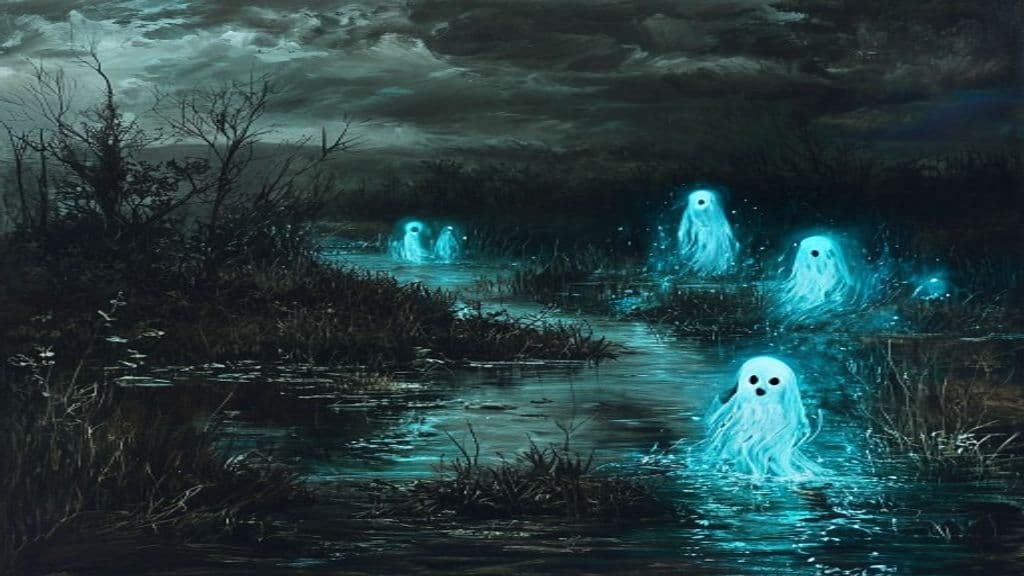
Will-o'-the-Wisp
A wandering light seen over marshy ground at night, leading travellers astray into bogs and fens. Possibly a spirit, possibly the soul of the unbaptised dead, possibly the devil himself.
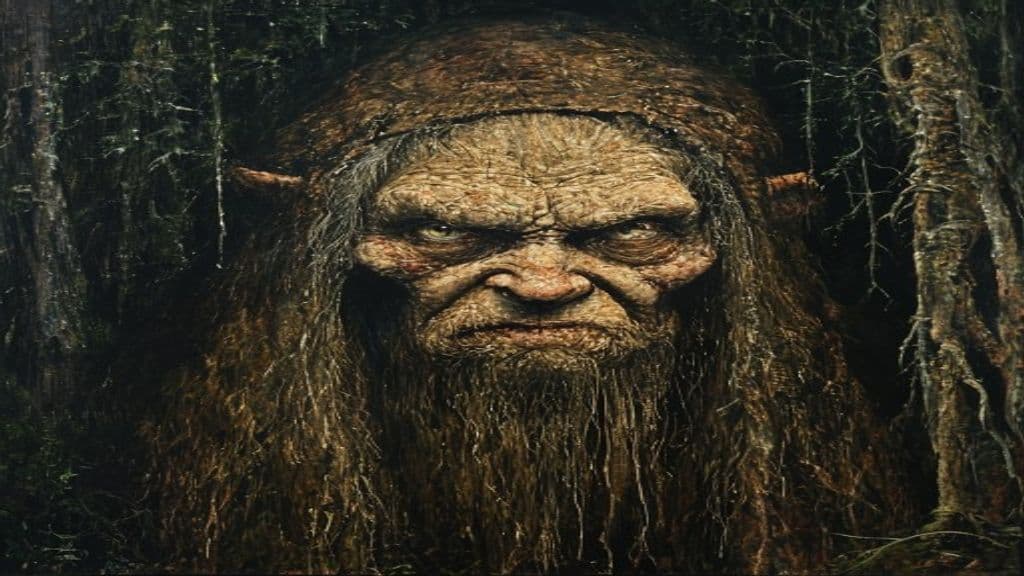
Baba Yaga
Baba Yaga is an ambivalent female figure of East Slavic folktale tradition, depicted variously as a fearsome, child-eating crone or as a helpful, maternal donor. She is associated with the deep forest, a hut described as standing on chicken legs, and the motific accoutrements of a mortar and pestle.
Eadgils (Aðils / Adils)
Eadgils is a semi-legendary 6th-century Swedish king of the Yngling/Skilfing dynasty attested in Old Norse skaldic poetry and sagas and in the Anglo-Saxon epic Beowulf. Sources present him as a dynastic figure whose exile, restoration, and conflicts (notably with Onela/Áli and later associations with Hrólfr Kraki) explain succession and inter-kingdom violence; he is treated as a mortal ruler rather than a supernatural being.
Eagle (Middle-earth)
In J. R. R. Tolkien’s legendarium, the Eagles or Great Eagles are exceptionally large avian beings depicted as more than ordinary animals: described in some sources as 'spirits in the shape of hawks and eagles,' they act with intelligence and occasional independent agency, intervening episodically in key events as rescuers or omens.
Eanmund
Eanmund is a semi-legendary Swedish prince of the Scylfing dynasty attested in the Old English epic Beowulf. Portrayed as a mortal claimant to the Swedish throne whose exile and death precipitate inter-kingdom conflict and later vengeance by his brother Eadgils, he functions as a genealogical and political figure within the Scandinavian heroic cycle rather than a supernatural being.
Earth Mother
An archetypal mother-goddess category personifying the earth, nature, fertility, and life-giving forces; presented in comparative sources as a generative, sustaining cosmological figure often paired with a complementary sky/father principle and invoked in both ancient mythic frameworks and contemporary political-environmental discourse.
Earth deity
An earth deity is the personification or deification of the Earth in a culture's cosmology, often tied to fertility, the ground/land, chthonic or underworld aspects, and communal protection of territory or Dharma. Specific named examples include Papa (Polynesian/Maori), Geb (ancient Egyptian), and Prithivi (in Buddhist textual contexts).
Easter Bunny (Easter Hare / Osterhase)
A folkloric figure originating in German-speaking communities, depicted as an anthropomorphic hare or rabbit that brings or hides decorated eggs and treats for children at Easter. Functioning in domestic and seasonal custom rather than liturgy, the figure was historically associated with child-focused gift-giving and moral evaluation and was popularized in visual culture from the 19th century onward.
Eate, Storm God in Basque Tradition
Eate is a storm god worshipped by the ancient Basques, associated with powerful weather events and control over fire and ice. (Note: - Power tier should be Ancient, as the source describes Eate as a "storm god", implying a more deity-level power. - Abilities: add "possibly" is unnecessary; rephrase to make it clear that control ove)
Ebu Gogo
A set of small humanlike beings in the oral tradition of the Nage people of central Flores, Indonesia, remembered in village tales as short, hairy, gluttonous dwellers of caves and forests who interacted with humans in ancestral times. Some researchers have hypothesized a link between these tales and the fossil hominin Homo floresiensis, but that connection is debated.
Ecbasus
Ecbasus (Greek: Έκβασος) is a minor figure in Greek mythic genealogies, presented as a son of Argus and an ancestor within the ruling houses of Argos. He functions primarily as a connective ancestral link between better-known mythic figures (Argus, Agenor, Argus Panoptes, Pelasgus) rather than as an active heroic or supernatural agent.
Ece
Ece is documented in the provided sources primarily as a Turkish feminine personal name meaning "queen." A single cross-reference in the material links the name to Umay (noting Umay is "also known as Ece"), but the supplied sources do not provide mythic narratives, attributes, or rituals for a supernatural entity called Ece.
Ecgþēow
Ecgþēow is a human figure in the Old English poem Beowulf, presented as the father of the hero Beowulf and a member of the Wægmundings. He functions in the poem as an exemplar of warrior status, kin obligations, and the social mechanisms (wergild, exile, fosterage, and oath‑bonding) that settle blood‑feuds and create inter‑household loyalties.
Echekles
Echekles is an attested ancient Greek personal name appearing in epigraphic records and later mythographic summaries. He is recorded as a property-holder in an inscription (Syll 610), listed among names on a choregic dedication (IG I3 969, ca. 440 BC), and in secondary mythographic compilations is named as husband of Polymele and stepfather who raised Eudoros.
Community Record
- [1]Easter witch. Wikipedia, 'Easter witch' entrywiki
- [2]Easter witch (Wikidata Q1516883). Wikidata entry Q1516883wiki
- [3]Blåkulla, Easter Witches (Sweden) | USC Digital Folklore Archives. USC Digital Folklore Archives, 'Blåkulla, Easter Witches (Sweden)'folk
- [4]Archive audio and cultural references (collection). Archive.org collection referenced in research notesother
- [5]Sweden: Easter in Sweden (official site). Official Sweden site: 'Easter in Sweden' (cultural overview)other