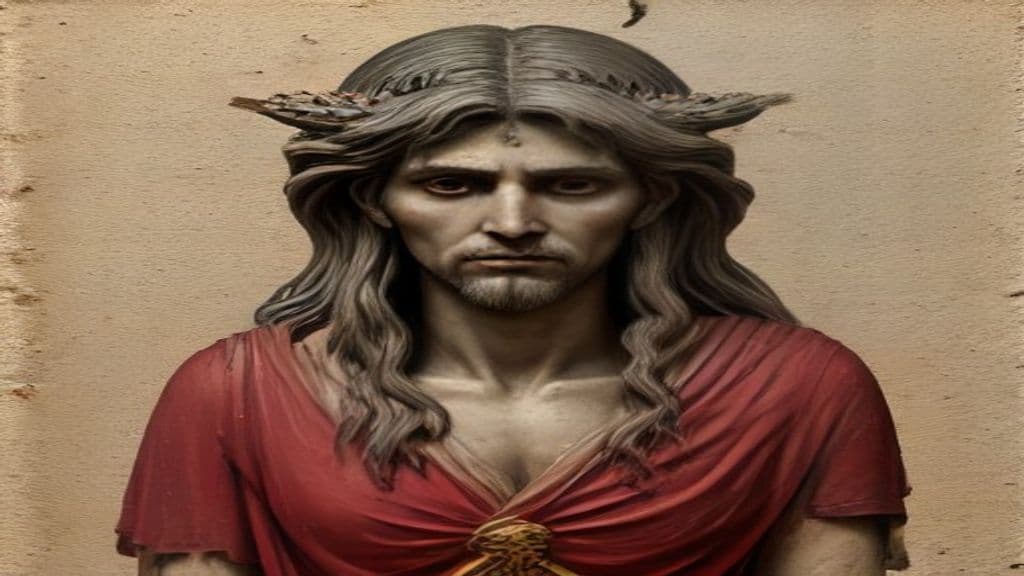
Ecbasus is attested in classical Greek genealogical traditions as a son of Argus, the eponymous king of Argos (himself a son of Zeus and Niobe). In Apollodorus he is named the son of Argus and Evadne (daughter of the river-god Strymon) and is listed as brother to Criasus, Epidaurus, and Piras. A scholion on Euripides records a variant maternal attribution, naming the Oceanid Peitho as his mother. In filial lines he is most commonly given as the father of Agenor, who in turn is father of Argus Panoptes in some accounts; an alternate tradition cited from the historian Charax makes Ecbasus father of Arestor, whose son Pelasgus is said to have settled Arcadia (formerly Pelasgia). These variants reflect competing local or literary genealogies rather than a narrative origin tale.
No physical description of Ecbasus survives in the cited sources. He is treated in the extant material not as a vividly portrayed individual but as a named link in genealogical lists and foundation myths. The absence of iconographic or descriptive detail suggests his role in the tradition is primarily onomastic and documentary: a recorded personal name serving to connect better-attested figures and place-eponyms rather than to provide an individualized portrait.
The surviving sources do not attribute any supernatural powers, particular behaviors, or heroic exploits to Ecbasus himself. His functional "ability" within the mythic corpus is genealogical and onomastic: he connects generations and eponyms (Argus, Agenor, Argus Panoptes, Arestor, Pelasgus), thereby helping to explain descent, territorial claims, and local identities in the Argive and adjoining Peloponnesian traditions. Notable capacities or feats mentioned for descendants (for example Argus Panoptes's many eyes) are expressly properties of those descendants and are not ascribed to Ecbasus.

Argus Panoptes
Argus Panoptes is a many‑eyed giant of Greek myth famed for perpetual vigilance in the service of the goddess Hera. Described as an unwearied guardian of sacred charge (notably Io), he is famed for his all‑seeing eyes and eventual death at Hermes' hands.
Pelasgus
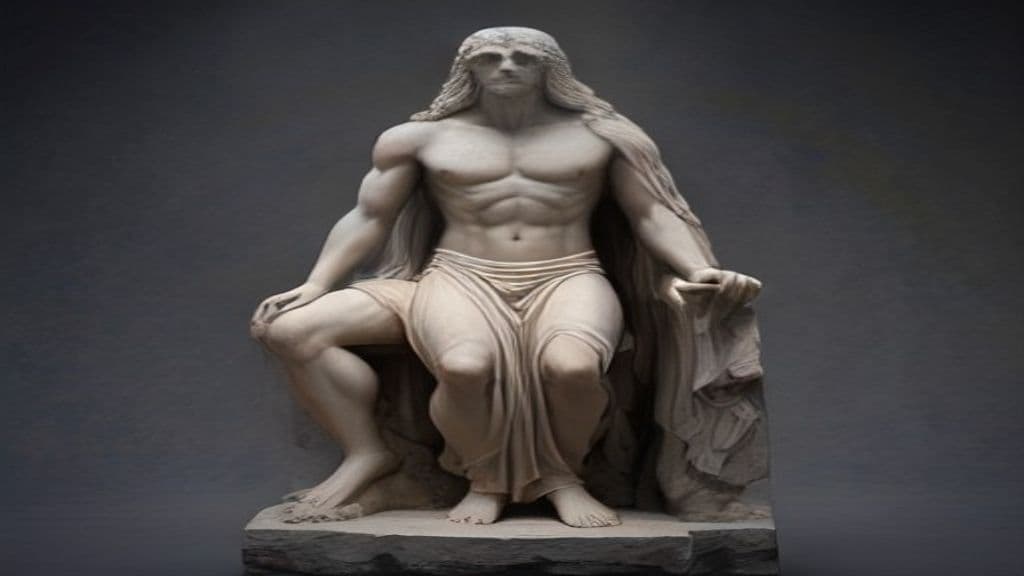
Pelasgus (Πελασγός) is a mythic ancestral and eponymous founder figure in ancient Greek tradition credited in various local accounts with founding cities, teaching agriculture, receiving Demeter, and giving his name to the Pelasgians and regions such as Pelasgiotis. He appears across competing regional genealogies (Argive, Arcadian, Thessalian) rather than as a standardized supernatural being.
Aeolus
Aeolus is a name applied to multiple related figures in Greek myth: an eponymous son of Hellen (founder of the Aeolian people), a son of Poseidon who led colonial ventures to Tyrrhenian islands, and a son of Hippotes depicted in epic as a ruler or keeper of the winds. Ancient mythographers note confusion and overlap among these persons.
Alces
Alces is a minor figure in Greek mythographic genealogies: an Egyptian prince counted among the sons of King Aegyptus and named as the husband of the Danaid Glauce. He is attested only in catalog-style lists of Aegyptid sons and not as an independently active or culted supernatural being.
Brettia
Brettia (Ancient Greek: Βρεττίας in the surviving lexicon entry) is an eponymous nymph credited in Greek ethnographic/place-name handbooks as the name-source of the district Abrettene in Mysia. She is attested only in lexicographical/ethnic compendia and is presented as a local, place-personifying divine figure rather than a figure with recorded myths, cult practice, or narrated deeds.
Iphiboe
Iphiboe (Greek: Ἰφιβώη) is a named maternal figure in Greek mythographic genealogies, attested in some traditions as the mother of Augeas. She appears in scholia and later mythographic compilations as one variant among several given for Augeas’s mother, and in at least one tradition (Tzetzes on Lycophron) is linked to Crete.
Thalassa
Thalassa (Ancient Greek: θάλασσα, 'sea') is the divine female personification of the sea in Greek mythographic, poetic, and visual traditions. Treated variably as a primordial sea-principle, a mother of certain sea-beings, and as an emblematic figure in Roman-era mosaics, she functions more as the sea made person than as a narrowly characterized cult-deity.
Easter Bunny (Easter Hare / Osterhase)
A folkloric figure originating in German-speaking communities, depicted as an anthropomorphic hare or rabbit that brings or hides decorated eggs and treats for children at Easter. Functioning in domestic and seasonal custom rather than liturgy, the figure was historically associated with child-focused gift-giving and moral evaluation and was popularized in visual culture from the 19th century onward.
Easter witch (påskkärring / påskhäxa / trulli)
A Swedish and Finnish folkloric figure of an old-woman witch associated with Holy Week who, in traditional belief, flies on brooms to a diabolic gathering at Blåkulla/Blockula on Maundy Thursday and returns at Easter; in modern practice the image has become a benign costume tradition in which children dress as witches to go door-to-door for greetings and treats.
Eate, Storm God in Basque Tradition
Eate is a storm god worshipped by the ancient Basques, associated with powerful weather events and control over fire and ice. (Note: - Power tier should be Ancient, as the source describes Eate as a "storm god", implying a more deity-level power. - Abilities: add "possibly" is unnecessary; rephrase to make it clear that control ove)
Ebu Gogo
A set of small humanlike beings in the oral tradition of the Nage people of central Flores, Indonesia, remembered in village tales as short, hairy, gluttonous dwellers of caves and forests who interacted with humans in ancestral times. Some researchers have hypothesized a link between these tales and the fossil hominin Homo floresiensis, but that connection is debated.
Ece
Ece is documented in the provided sources primarily as a Turkish feminine personal name meaning "queen." A single cross-reference in the material links the name to Umay (noting Umay is "also known as Ece"), but the supplied sources do not provide mythic narratives, attributes, or rituals for a supernatural entity called Ece.
Ecgþēow
Ecgþēow is a human figure in the Old English poem Beowulf, presented as the father of the hero Beowulf and a member of the Wægmundings. He functions in the poem as an exemplar of warrior status, kin obligations, and the social mechanisms (wergild, exile, fosterage, and oath‑bonding) that settle blood‑feuds and create inter‑household loyalties.
Echekles
Echekles is an attested ancient Greek personal name appearing in epigraphic records and later mythographic summaries. He is recorded as a property-holder in an inscription (Syll 610), listed among names on a choregic dedication (IG I3 969, ca. 440 BC), and in secondary mythographic compilations is named as husband of Polymele and stepfather who raised Eudoros.
Community Record
- [1]Apollodorus, The Library (summary attestations). Apollodorus, Bibliotheca (as summarized in modern reference collections): Ecbasus named son of Argus and Evadne; brother of Criasus, Epidaurus, and Piras; father of Agenor.literary
- [2]Scholion on Euripides (variant maternal attribution). Scholion on Euripides (as cited in modern summaries): gives Peitho the Oceanid as Ecbasus's mother (variant tradition).literary
- [3]Charax (as cited in secondary summaries). Charax (historian), cited in summaries: reports an alternate descent in which Ecbasus fathers Arestor, whose son Pelasgus settled Arcadia (Pelagia/Pelasgia).other
- [4]Reference summaries and compilations. Modern summaries and reference works (Wikipedia, Pantheon, ToposText, myths.uvic.ca) that collate the variant genealogical attestations for Ecbasus.wiki
- [5]Hera – Mythoi Koinoi (on Argus Panoptes). Discussion of Argus Panoptes (noting his many-eyed description) used here to contextualize descendants linked to Ecbasus; the eyes and guard of Io are properties of Argus Panoptes and not Ecbasus.literary