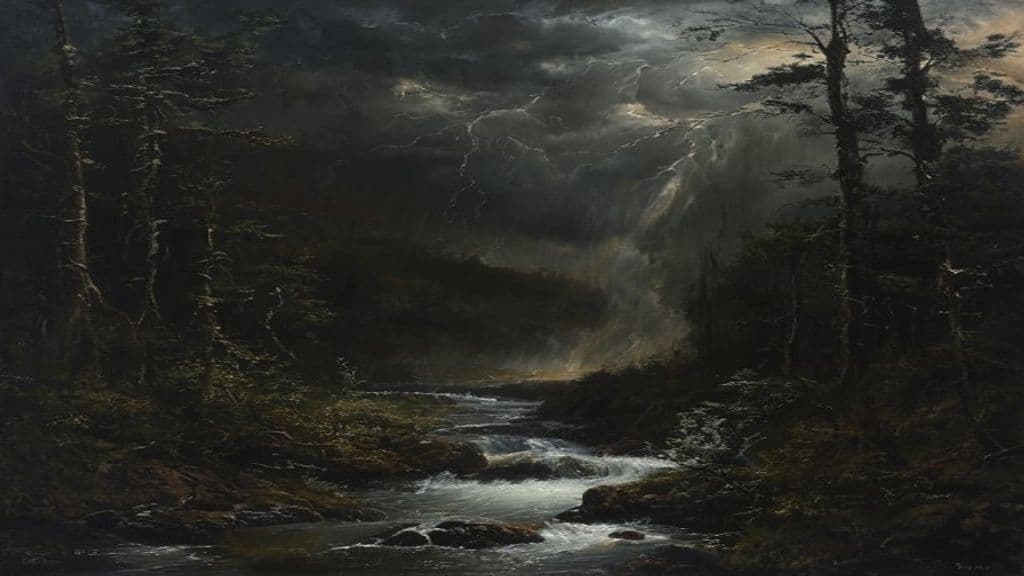
Eate is sometimes associated with fire and ice in addition to his storm god role.
Unknown or not described in source material.
Associated with powerful weather events, possibly has control over storms, fire, and ice.
Akerbeltz
Malevolent Basque spirit associated with sexual abuses and seductive powers, likely tied to the natural environment. (Note: - Power tier: Greater (Akerbeltz's abilities are more regional in scope and do not match the description of an Ancient entity) - Abilities: While source material mentions "sexual abuses" and "seductiv)
Artahe
Tutelary deity of Southern Gaul and Aquitania, providing protection and care to her associated group or place. (Note: - Power tier: Lower than Ancient (consider Greater, as she's a regional deity) - Sensory cues and weaknesses and wards are missing; add relevant information from source material - Abilities should inc)
Gaueko
The spirit of the night, governing human activity and regulating nocturnal behavior in Basque mythology. (Note: 1. Power tier: Lower to Greater (Gaueko's abilities don't quite match Primordial-level powers, but his influence on nocturnal behavior and punishment suggest he's at least more powerful than a Lesser )
Odei (Basque mythology)
A Greater supernatural entity associated with thunderstorms, personifying storm clouds in Basque mythology. (Note: - The origin story summary should specify that it's the personification of storm clouds, not just associated with them. - Power tier: There is no clear indication in the source material that Odei's ab)
Tubal
Patriarchal ancestral figure in Basque tradition associated with Caucasian Iberia, son of Noah, and considered a cosmic ancestor. (Note: - Power tier should be Ancient, not Primordial, as Tubal is a deity-level figure in biblical tradition. - Abilities section should be removed or rephrased, as there is no information about Tubal's abi)
Earth Mother
An archetypal mother-goddess category personifying the earth, nature, fertility, and life-giving forces; presented in comparative sources as a generative, sustaining cosmological figure often paired with a complementary sky/father principle and invoked in both ancient mythic frameworks and contemporary political-environmental discourse.
Earth deity
An earth deity is the personification or deification of the Earth in a culture's cosmology, often tied to fertility, the ground/land, chthonic or underworld aspects, and communal protection of territory or Dharma. Specific named examples include Papa (Polynesian/Maori), Geb (ancient Egyptian), and Prithivi (in Buddhist textual contexts).
Easter Bunny (Easter Hare / Osterhase)
A folkloric figure originating in German-speaking communities, depicted as an anthropomorphic hare or rabbit that brings or hides decorated eggs and treats for children at Easter. Functioning in domestic and seasonal custom rather than liturgy, the figure was historically associated with child-focused gift-giving and moral evaluation and was popularized in visual culture from the 19th century onward.
Easter witch (påskkärring / påskhäxa / trulli)
A Swedish and Finnish folkloric figure of an old-woman witch associated with Holy Week who, in traditional belief, flies on brooms to a diabolic gathering at Blåkulla/Blockula on Maundy Thursday and returns at Easter; in modern practice the image has become a benign costume tradition in which children dress as witches to go door-to-door for greetings and treats.
Ebu Gogo
A set of small humanlike beings in the oral tradition of the Nage people of central Flores, Indonesia, remembered in village tales as short, hairy, gluttonous dwellers of caves and forests who interacted with humans in ancestral times. Some researchers have hypothesized a link between these tales and the fossil hominin Homo floresiensis, but that connection is debated.
Ecbasus
Ecbasus (Greek: Έκβασος) is a minor figure in Greek mythic genealogies, presented as a son of Argus and an ancestor within the ruling houses of Argos. He functions primarily as a connective ancestral link between better-known mythic figures (Argus, Agenor, Argus Panoptes, Pelasgus) rather than as an active heroic or supernatural agent.
Ece
Ece is documented in the provided sources primarily as a Turkish feminine personal name meaning "queen." A single cross-reference in the material links the name to Umay (noting Umay is "also known as Ece"), but the supplied sources do not provide mythic narratives, attributes, or rituals for a supernatural entity called Ece.
Community Record
- [1]Eatewiki