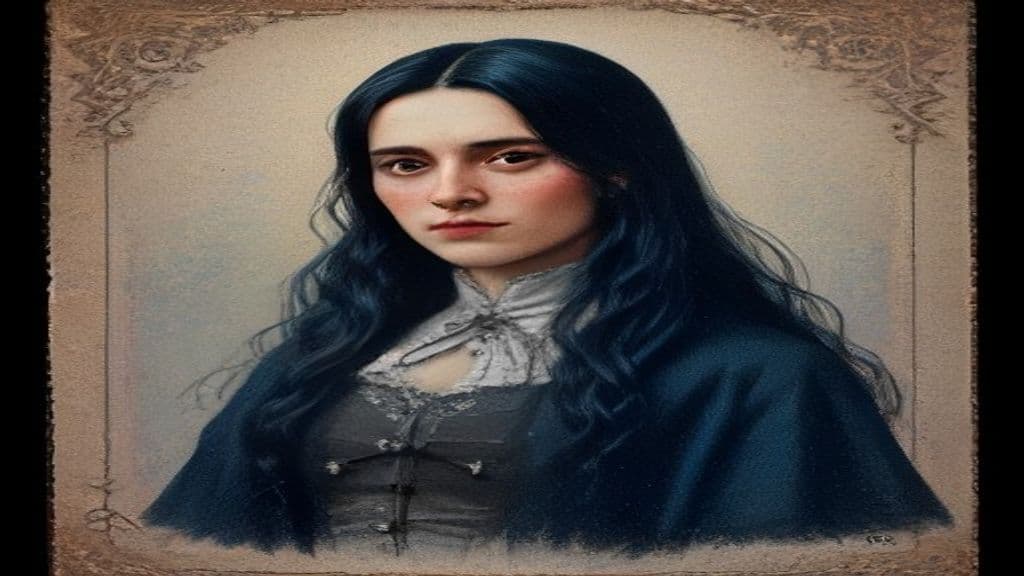
The provided materials do not supply a traditional origin story for a folkloric being named Erda. Instead, they show the name used in several independent contexts: as a place name (Erda, Utah), as an entry on a Wikipedia disambiguation page linking Wagner’s use of the name in Der Ring des Nibelungen with Old Norse names (Urðr, Jörð), and as a modern popular-culture adaptation (Marvel’s Asgardian "Erda"). No primary mythic or ethnographic narrative origin (e.g., a creation myth or oral tradition) is present in the supplied sources.
No descriptive physical appearance for a traditional supernatural Erda is documented in the provided materials. The only appearance-related attestations are references to Wagner’s operatic use and a Marvel Comics character named Erda, but the excerpts supplied do not include stage descriptions, visual depictions, or ethnographic portrayals.
The sources supplied do not enumerate powers, behaviors, or specific interactions with humans for a folkloric Erda. Wagner’s usage (noted on a disambiguation page) links the name to figures in Germanic mythic reworking, and the Marvel adaptation treats Erda as an Asgardian goddess, which implies fictional supernatural capacity in those creative contexts; however, no concrete abilities are described in the provided excerpts.
Epistrophus
Epistrophus is a personal name borne by several mortal figures in Greek mythic genealogies and epic narratives. In the Homeric and later mythographic tradition he is attested primarily as a heroic-age leader — notably a leader of the Phocians in the Trojan War cycle — and appears in catalogue-lists, genealogical summaries, and death-notes rather than as a supernatural being.
Epochus
Epochus (Greek: Ἔποχος) is an Arcadian prince of the heroic age, son of King Lycurgus, attested in genealogies and in Pausanias's report of a temple painting at Tegea that depicts him supporting his wounded brother Ancaeus during the Calydonian boar hunt. He is recorded to have fallen ill and died young; no supernatural attributes are ascribed to him in the cited sources.
Epona
Epona is a Gallo‑Roman/Celtic goddess chiefly associated with horses, protection of stables and riders, and fertility/abundance related to equine livelihoods. Her cult is attested across Roman Gaul and throughout the Roman Empire, notably adopted by mounted units; some scholars also suggest a possible funerary/psychopomp aspect based on select votive objects and iconography.
Epopeus
Epopeus is a personal name applied to several distinct mortal figures in Greek myth rather than a single supernatural being. Principal attestations include a king of Sicyon who marries Antiope and is attacked by Lycus, a king of Lesbos described as the father and rapist of Nyctimene, a sailor who attempted to deceive Dionysus and was turned into a dolphin, and a man of Lemnos killed by the Lemnian women (reportedly by his own mother).
Eppelein von Gailingen
A historical 14th-century German robber baron whose life and deeds were transformed into regional legend and ballads; remembered for raids on merchant traffic around Nuremberg, an enduring tall tale of a daring escape on horseback, and his eventual capture and execution in 1381.
Erato
Erato (Ancient Greek: Ἐρατώ) is one of the nine Muses of ancient Greek religion, traditionally associated with erotic lyric poetry and imitation. As a daughter of Zeus and Mnemosyne she functions as a divine inspirer invoked by poets seeking the voice and affect appropriate to love-themed verse.
Erdhenne
The Erdhenne (German: 'Earth Hen') is a German house spirit from Alpine, Upper Palatinate, and Bavarian folk tradition that usually remains unseen but communicates by loud clucking to warn households of danger. When it becomes visible it is regarded as an omen of death—tradition records death within a year, often of the person it shows itself to.
Erebus
Erebus (Ancient Greek: Ἔρεβος) is the primordial personification of darkness and gloom in Greek myth and a name used for the subterranean darkness or region of the underworld. He functions both as an originating cosmic principle in several theogonies and as a topographical/ontological term for the darkness through which the dead pass.
Erec
Erec is a human knight of the Round Table in the Arthurian literary tradition, best known as the protagonist of Chrétien de Troyes' romance Erec and Enide. He appears across medieval redactions (Old French, German, Norse, Middle English, and prose cycles) as a heroic figure whose narratives examine knighthood, love, reputation, and encounters with enchantment.
Erechtheus
Erechtheus is a mythic-heroic foundational figure of ancient Athens whose identity blends an autochthonous, earth-born ancestor-king with a localized cultic name often syncretized with Poseidon; he functions as eponymous progenitor of the Erechtheidai and as the focus of ritual memory on the Acropolis (the Erechtheion).
Erekosë
Erekosë is a recurring fictional identity — one incarnation of Michael Moorcock's Eternal Champion — presented in the novel The Eternal Champion as the name given to the incarnation John Daker. The figure represents the archetypal Champion who is repeatedly reborn across Moorcock's Multiverse and is drawn into large metaphysical conflicts between cosmic forces (Law, Chaos, later Balance).
Ereshkigal
Ereshkigal is the Mesopotamian goddess-queen of the netherworld (Kur/Irkalla), portrayed in literary myths as sovereign of the Land of the Dead who judges and controls access to the underworld. She appears prominently in narrative texts (notably the Descent of Inanna and the Nergal marriage myth) though archaeological cult evidence for widespread popular worship is limited.
Community Record
- [1]Erda - Wikipedia (disambiguation and article). "Erda or Urðr, often confused with the goddess Jörð, in Richard Wagner's opera cycle Der Ring des Nibelungen (The Ring of the Nibelung)"; Erda (Utah) entry: population and location details.wiki
- [2]Erda, Utah - Wikipedia. Erda ( /ˈɜːr.də/ , UR -də) is a city in Tooele County, Utah, United States. The population was 4,642 at the 2010 census...wiki
- [3]Erda (Asgardian goddess) - Marvunapp (comic reference). First Appearance: (Wagner's Alberich) Das Rhinegold (The Rhinegold), the first of four parts in the opera 'Der Ring Des Nibelung' (September 22, 1869); (Marvel's Erda) Thor I#295 (May, 1980).other
- [4]Erda culture - FrathWiki. Fandom / creative use: text excerpt describing a fictional 'Erda peoples' and environmental notes (fragmentary).wiki
- [5]Origins of the Areth - FrathWiki. FrathWiki fandom page listed among related creative entries in the research notes.wiki
- [6]ERDA Authorization (Muskie Congressional Record). Administrative acronym usage: ERDA = Energy Research and Development Administration (historical U.S. agency) referenced in source list.other
- [7]ERDA Passage (Muskie Congressional Record). Administrative/archival material referencing ERDA acronyms.other
- [8]Running Veros on ERDA - Veros documentation. Technical documentation referencing an ERDA component in software context (source list included for name reuse examples).other