Ghost-train narratives arise in locales where railways became socially significant; in many traditions the motif appears after the arrival of steam trains and motor cars. In Japan the nisekisha/yūrei-kikansha tales are attested from the late 19th century (earliest instances traced between 1879 and 1887) and were widespread by about 1910, with reports continuing into the mid-20th century; scholars interpret these tales as responses to industrial modernity and the social effects of railway introduction. In Anglo-American contexts some variants link the apparition to particular historical events (for example, a recurring phantom funeral train associated with Abraham Lincoln's death), while other local legends (such as the St. Louis Light in Saskatchewan) arose around abandoned or former railway places and were later subject to scientific investigation.
Descriptions vary by region but consistently present the apparition as a full train or rail vehicle with lights and motion. Canadian accounts include a 1908 story of a ghost train with blinding lights traveling on non-existent tracks. U.S. funeral-train variants are described with spectral details (accounts mention a ghostly band, a flatcar carrying a coffin, and reports that watches and clocks stop as it passes). Japanese nisekisha/yūrei-kikansha are often perceived first as the sound and approach of a steam train; physical sighting may resolve into finding a dead tanuki on the tracks rather than an actual locomotive.
The ghost train manifests as a mobile apparition that travels along routes associated with railways and can produce visual lights and audible train noises. In some U.S. variants it is said to recur around an anniversary (e.g., the Lincoln funeral-train tradition) and to affect timepieces in surrounding areas. Japanese versions function as deliberate illusions: tanuki are said to mimic train sounds and appearances to deceive humans, leading drivers to stop for an apparent oncoming train and later discover the animal. In at least one Canadian case (St. Louis Light) the phenomenon was scientifically replicated and explained as optical diffraction of distant vehicle lights, indicating some sightings have non-supernatural explanations alongside folkloric accounts.
Weaknesses
- conditionscientific explanation
- conditionpractical caution (avoidance by stopping to observe and then proceeding)
Wards
- otherpractical caution (drivers stop to avoid collision)
- otherinvestigation and replication (scientific inquiry as a demystifying ward)
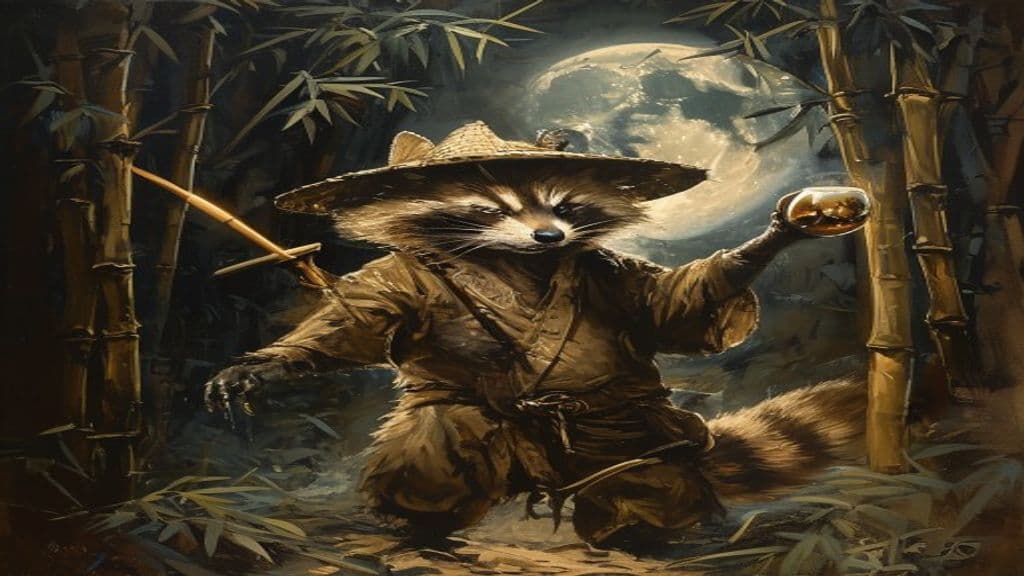
Tanuki
The raccoon-dog spirit of Japanese folklore — a cheerful trickster and master of shape-shifting, less dangerous than the kitsune but far more mischievous. Famous for leaves transformed into money.
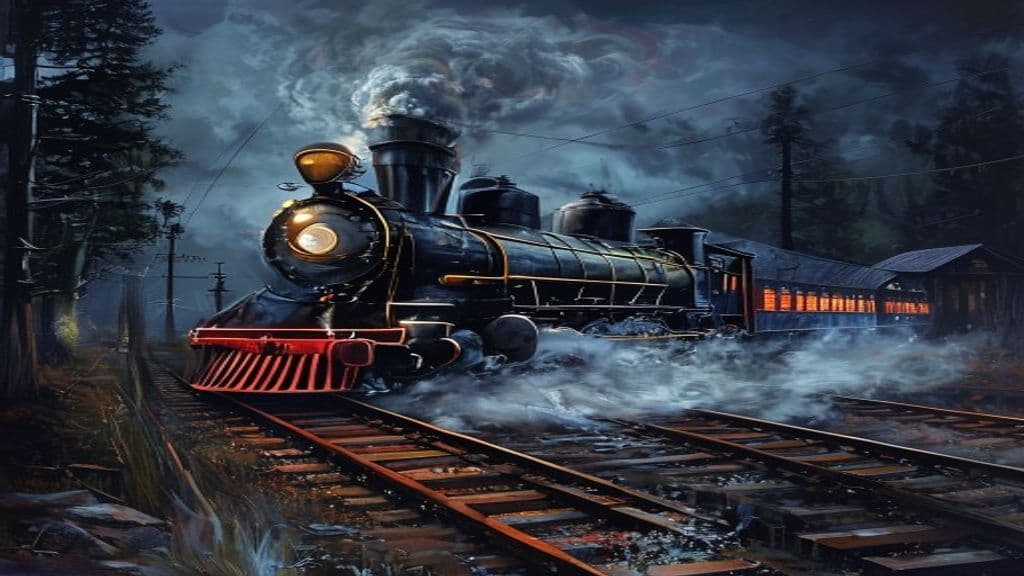
Ghost Train
A folkloric apparition whose visible form is an entire train or rail vehicle rather than a single disembodied human spirit. Reported in multiple regions where railways have been significant, it appears variously as omen, commemorative phantom, or an imitation created by animal tricksters in local tales.
Ghost
A ghost is, in folklore, the soul or spirit of a dead person or non-human animal believed by some to be able to appear to the living. The concept functions across many cultures as an afterlife manifestation tied to ancestor belief, animism, and rituals intended to rest or manage the dead, while modern scientific accounts treat reported phenomena as lacking proof and often propose physiological or environmental explanations.
Ghost Child (toyol, urn)
A named supernatural figure appearing in the 2013 Singaporean horror film Ghost Child (Chinese: 鬼仔), identified in the film as a toyol kept within an urn that brings malicious domestic disturbances to a household. The film is the only supplied source that presents this discrete spirit as an agent in a folk-derived domestic narrative.
Ghost Rider
Ghost Rider is a Marvel Comics mantle borne by multiple human hosts who transform into a flaming-skulled, skeletal superhuman bonded to a supernatural agency variously described as a demon (Zarathos), a Spirit of Vengeance, or an incarnation of Death/Judgment. The figure functions in-universe as an avenger/antihero who enacts retributive justice and is associated with hellfire and a supernatural vehicle (motorcycle or, in some incarnations, a muscle car).
Ghost Ship (Phantom Ship)
A ghost ship (or phantom ship) denotes either a physical vessel found adrift with no living crew or a spectral vessel apparition reported in maritime folklore. The motif functions across maritime cultures as omen, memory of catastrophe, and a narrative way to confront unexplained loss at sea.
Ghost Shirt (Lakota Tradition)
A spiritualized object imbued with powers to protect its wearer from harm or possession by malevolent spirits. (Note: 1. Power tier: Primordial (given its association with spiritual visions from the founder, it's reasonable to assume a higher power level) 2. Abilities: The source material doesn't explicitly mention p)
Ghost Sickness (Navajo Tradition)
A cultural and psychological concept describing a state of being consumed by grief or preoccupation with the deceased. (Note: - Power tier: Primordial (Ghost Sickness is not an entity with concrete abilities, but rather a psychological state that affects individuals) - Appearance: No description needed, as it's a psychologic)
Ghost of Kyiv
A modern wartime legend and morale symbol that emerged in the first 30 hours of the Russian invasion of Ukraine (24 February 2022). Presented as a mythical MiG-29 ace credited in social media with multiple shoot-downs, the persona was later acknowledged by Ukrainian officials as a constructed 'superhero-legend' embodying collective pilot spirit rather than a verified individual or literal supernatural being.
Ghoul
A ghoul is a demon-like or monstrous humanoid originating in pre-Islamic Arabian religion, traditionally associated with graveyards and the consumption of human flesh. The concept later entered broader folklore and has been widely reused and transformed in modern fiction and popular culture.
Ghul (Ghoul)
A demon-like monstrous humanoid from Arabian folklore, traditionally associated with graveyards and the consumption of human flesh; described in scholarship as originating in pre-Islamic Arabian religion.
Giant
A recurring figure-type in myth, legend, and folktale characterized chiefly by humanoid form combined with prodigious size and strength. Giants function variably as monsters, culture-heroes, ancestral figures, or etiological agents that explain landscape features and large ancient remains.
Giant frog
The English label "giant frog" in the supplied sources is ambiguous: it names several very large real-world frog species (Blyth's river frog, Cyclorana australis, and the Goliath frog) and also appears as a short Wikidata classification linking the phrase to the category of youkai in Japanese mythology. The materials do not supply a single, unified folkloric entity or narrative for a specific giant-frog youkai.
Giants of Ath
No attested folkloric entity called 'Giants of Ath' appears in the supplied sources. The name 'Ath' appears only as a Belgian place-name; other references to 'giants' in the sources are modern metaphorical or sports uses and not traditional beings.
Community Record
- [1]Ghost train. Wikipedia: Ghost train (summary of regional traditions including nisekisha, Lincoln funeral train, St. Louis Light)wiki
- [2]Archive: Haints, Trains, and Automobiles. Archive recording referencing mobile apparition/vehicle legendsother
- [3]VOA Global English (April 24, 2020). Archive item cited in research notesother
- [4]How To Paint a Prairie Ghost Train. Essay/resource referenced in source listother