
The Grafton Monster originates in mid-20th-century local reportage: a cluster of sightings beginning the night of June 16, 1964, near Route 119 beside the Tygart Valley River outside Grafton. The episode was amplified by local newspapers and subsequent popular-media and fandom attention; sources present it as a modern media-fueled cryptid phenomenon rather than a preexisting traditional myth or ritual entity.
Secondary-source descriptions consistently portray the creature as a large, roughly 7–9 foot (2.1–2.7 m) tall biped with very pale or white coloration and a smooth, seal-like hide. Many accounts emphasize an apparent lack of an obvious head or a configuration that appears headless; some speculative/artistic sources offer alternate anatomical details (e.g., a head on the chest or a prominent hump and short neck) but those variants are attested only in later fan or artistic material.
Contemporary sources record no supernatural powers or documented attacks. Descriptions and reportage focus on physical attributes and behavior: bipedal terrestrial locomotion, production of an unusual audible signal (reported variously as a whistling sound or a very deep bellow), and presence along roadsides and riverbanks at night. The creature functions in the sources as an object of local curiosity, pursuit by amateur searchers and media teams, and later as a subject for entertainment adaptations.
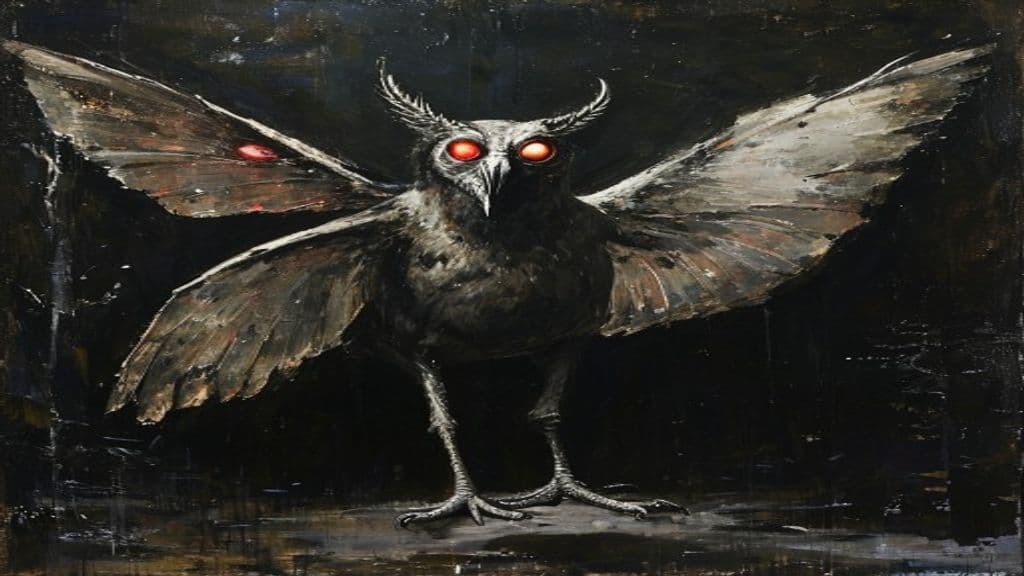
Mothman
A modern American folkloric figure originating from a cluster of 1966–67 sightings around Point Pleasant, West Virginia. Described in press reports and later retellings as a large humanoid or winged creature with notable eyes, the Mothman legend has been variously interpreted as misidentified wildlife, hoaxing/sensationalism, or a paranormal omen linked in some retellings to the Silver Bridge collapse.
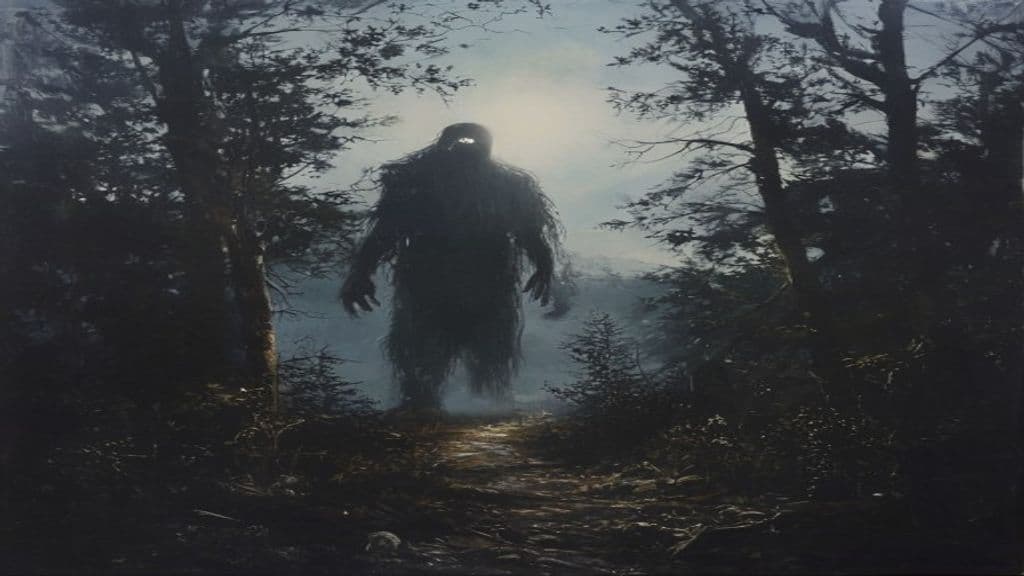
Flatwoods Monster
A creature reported in Flatwoods, Braxton County, West Virginia, on September 12, 1952, seen on the ground after witnesses observed a bright light cross the night sky. Treated in sources as an anomalous terrestrial/extra‑terrestrial apparition recorded in mid‑20th‑century American popular anomalistics and later reinterpreted by investigators with natural explanations (meteor + barn owl + perceptual factors).

Bigfoot (Sasquatch)
A North American folkloric large, hairy, bipedal humanoid reported chiefly from the forests of the Pacific Northwest. The figure functions as a 'wild man' type in regional and popular traditions and is documented primarily through sightings, footprint casts, media, and a subculture of enthusiasts rather than accepted biological evidence.
Goatman (urban legend)
A modular North American roadside/woods urban legend about a half-goat/half-human figure tied to specific local sites (notably Prince George's County, MD; Denton County/Old Alton Bridge, TX; and Nags Head Woods, NC). The Goatman functions as a liminal, threatening presence in stories—blending animal and human traits—and is used to explain local misfortunes and to police risky spaces.
Goryeo Supernatural Ancestor
A supernatural entity credited with uniting the Korean Peninsula and founding the Goryeo dynasty. (Note: 1. Remove "Primordial" power tier as it implies cosmic-level abilities, which is not supported by the source material that only mentions unification. 2. Add a statement about unknown weaknesses and wa)
Goryō (御霊)
In Japanese belief, goryō are spirits of the dead—specifically honorificly framed spirits of persons who died unjustly, prematurely, or in political disgrace—whose unrest was thought to produce calamities until they were ritually and politically appeased and often enshrined as kami.
Goshtasp (Vishtaspa)
A legendary/semi-legendary Iranian king who, in Zoroastrian tradition, is presented as the royal patron and early follower of the prophet Zoroaster (Avestan: Vishtaspa), and who in Ferdowsi's Shahnameh appears as a Kayanian monarch and the father of the epic hero Esfandiyār.
Gostaham
Gostaham is a personal name applied to multiple heroic figures in the Persian epic tradition of the Shahnameh. Two principal bearers appear in different episodes: Gostaham son of Nowzar (installed as a local ruler in Turan and among heroes who disappear/die in snow during Kay Khosrow's ascent) and Gostaham son of Gazhdaham (a martial companion of Bizhan active in the Davazdah Rokh combats and, in one tradition, castellan of the border fortress Dez-e Sepid).
Gotama Buddha (Siddhartha Gautama)
Siddhartha Gautama, commonly called Gotama or the Buddha, is presented in these sources as a historical religious teacher from the Sakya clan who attained full awakening (nirvana) and founded the Buddhist sangha; he is treated both as a human exemplar shaped by historical circumstances and, in devotional accounts, as the fully awakened Buddha situated among a sequence of past buddhas.
Goudarz
Goudarz (Persian: گودرز) is a heroic figure from the Iranian national epic tradition, primarily the Shahnameh. Presented as a veteran warrior, counselor, and progenitor of a notable family, he appears across the epic's heroic age as a military leader and elder statesman who participates in key episodes such as the retrieval of Kay Khosrow and the Davazdah Rokh.
Grahana
In Hindu tradition, a Grahana refers to an eclipse, a celestial event of significant importance in Hindu cosmology. (Note: 1. Summary: While accurate, it could be more concise and clear. 2. Power tier: Primordial (as a celestial phenomenon with significant importance in Hindu cosmology) 3. Abilities: Note the absence of s)
Gramadevata
A gramadevata (Sanskrit: grāmadevatā) is the tutelary or guardian deity of a specific locality—most commonly a village—in South Asian Hindu practice. Gramadevatas function as territorial, communal divinities responsible for the wellbeing, boundaries and fortune of the settlement; they are propitiated in local shrines and festivals and may be benevolent when honored or feared as causes of calamity if neglected.
Grani
Grani is the named horse of the hero Sigurðr (Sigurd) in the Old Norse Völsunga saga. Presented as descended from Odin's steed Sleipnir, Grani is an exceptional, singular heroic mount attested in the saga narrative and in later Norse iconography and kennings.
Granmar
Granmar is a legendary-historical king of Södermanland in Old Norse literary tradition. He appears in Snorri Sturluson's Heimskringla and in Eddaic and saga material (notably the Helgi Hundingsbane poems and the Volsunga saga) as a political actor whose marriage alliances, feasting, and military resistance intersect with wider heroic cycles; in Heimskringla he is ultimately burned to death in a treacherous hall-burning arranged by King Ingjald.
Granny Weatherwax
Esmerelda "Esme" Weatherwax, commonly called Granny Weatherwax or Mistress Weatherwax, is a human witch and the leading figure among the Ramtops witches in Terry Pratchett's Discworld novels. She is a practicing herbalist and folk-psychologist ('headology') who serves as a pragmatic guardian of the Kingdom of Lancre and its people.
Community Record
- [1]Grafton monster. Wikipedia: 'The Grafton Monster is a cryptid reported in and around Grafton, West Virginia... commonly portrayed as a very tall, pale or light-colored figure, sometimes described as appearing headless and producing an unusual whistling sound.'wiki
- [2]The Grafton Monster. e-WV (West Virginia Encyclopedia): places the first reported sighting late on the evening of June 16, 1964, beside Route 119 near the Tygart Valley River and summarizes local reportage.folk
- [3]Grafton Monster | Cryptid Wiki. Cryptid Wiki: summarizes physical descriptions including 7–9 ft height, pale/white skin, and records variant notes such as alternate head placement reported in a single source.wiki
- [4]Realistic Grafton Monster (archive art). Archive art upload: speculative visual depiction describing a large, 7–9-foot-tall, white-skinned creature with a smooth, seal-like hide and noting artistic/speculative taxonomy (Agriosanthrops) as creative elaboration.other
- [5]Exclusive: Mountain Monsters create hillbilly hazmat suit and still pursue Grafton Monster. Monsters & Critics: documents modern television show's pragmatic, entertainment-oriented gear (e.g., 'hillbilly hazmat suit') used in pursuit and notes media interest rather than traditional ritual responses.other
- [6]Fallout 76: The Grafton Monster (fan adaptations). Fallout Wiki / fandom: records the creature's incorporation into game lore and fan artifacts, illustrating popular-culture adaptation distinct from original reportage.wiki
- [7]Theresa's Haunted History of the Tri-State: The Grafton Monster. Regional blog: situates the Grafton Monster among West Virginia anomalous creatures and notes its place in local popular-history compilations and tourism usage.other