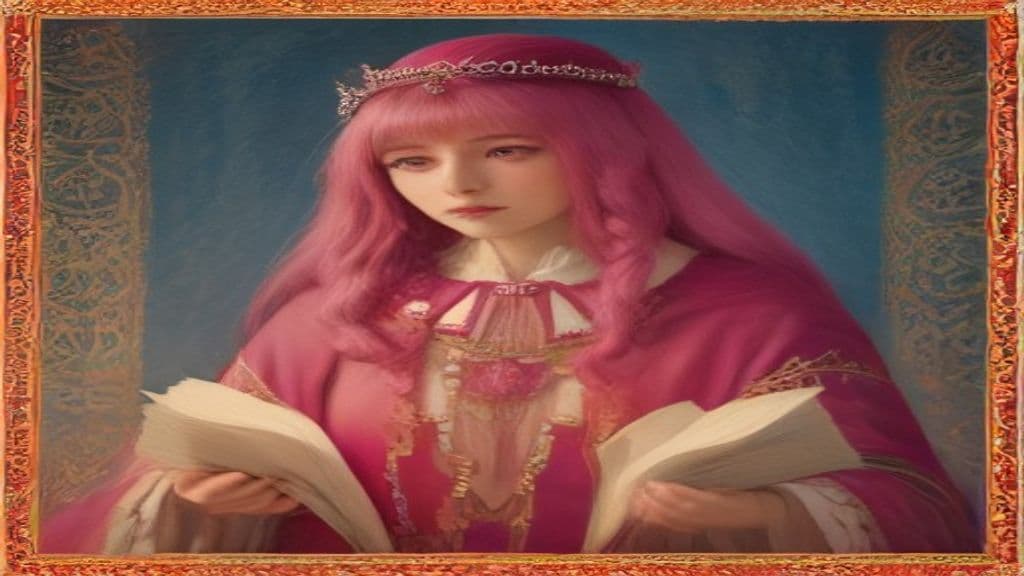
In the canonical narrative of the Book of Esther Haman is presented as a senior official under King Ahasuerus (the Persian royal court at Susa) who, offended by Mordecai's refusal to bow, persuades the king to issue a decree to exterminate the Jews. Rabbinic and midrashic expansions rework his biography and motives: they portray Haman as formerly impoverished and sold into servitude (allegedly to Mordecai), later a barber for many years, an idolatrous courtier who embroidered an image on his garments to induce bowing, and an astrologer/diviner who cast lots (pur) to choose a propitious day and month—finally fixing on the month of Adar because of its zodiacal sign. These later traditions frame his rise and fall as moral exempla and as part of divine retribution, culminating in his being hanged on the fifty-cubit gallows he had prepared. (Canonical elements: Book of Esther; rabbinic/midrashic details: Midrash/Targumic summaries cited in modern reference summaries.)
The biblical text gives no detailed physical portrait. Rabbinic sources and later summaries record a notable clothing detail: Haman's garments were said to bear an embroidered idolatrous image so that subjects ordered to bow to Haman would in effect bow to the image (a motif preserved in midrashic comments and Targumic material noted in secondary summaries). No canonical physical descriptions (height, hair, facial features) are attested in the provided sources.
Haman's 'powers' are political and social rather than supernatural: he is depicted as a principal minister with authority in the king's court, able to require obeisance (demanding that the king's servants bow to him) and to secure a royal edict for the extermination of the Jewish people. Rabbinic tradition adds proficiencies in divination/astrology—casting lots (pur) to select an auspicious day and month for his decree—and presents him as ambitious, proud, vengeful, and inclined to public acts of humiliation (e.g., erecting an extremely high gallows intended for Mordecai).
Weaknesses
- conditiondependence on royal favor and court politics
- othersubject to reversal by legal/royal authority (Esther's petition leading to revocation and reversal)
Wards
None recorded.
Halitherses
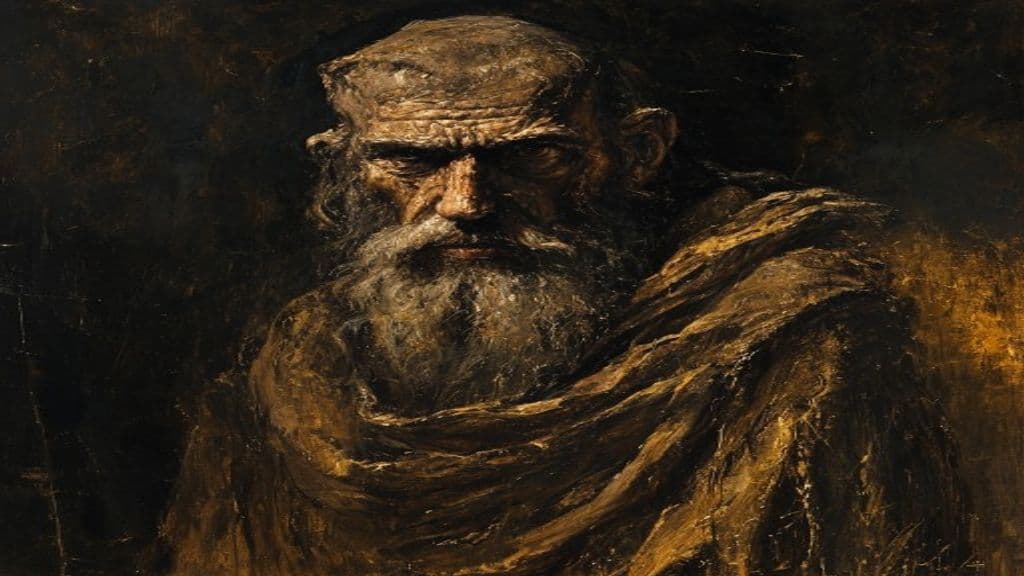
Halitherses (Ancient Greek: Ἁλιθέρσης) is an Ithacan seer and elder in the Homeric Odyssey cycle, named as the son of Mastor. He interprets signs from Zeus, pronounces their meaning publicly, and counsels restraint and deference to the gods; his warnings are often disregarded by the suitors and portions of the community.
Halius
Halius is not a single supernatural being but an Ancient Greek personal name borne by several distinct mortal characters in epic tradition. The name (Ancient Greek Ἅλιόν / Ἅλιός, 'of the sea') appears for different individuals in Homeric and Virgilian narrative cycles — warriors, princes, suitors, and companions — each treated as a human actor within heroic-era stories.
Halphas
Halphas is a named spirit in the Western grimoire (Goetic) tradition, listed as an earl who commands 26 legions of spirits and is described as an avian figure (usually a hoarse‑voiced stock dove; some authorities describe a stork). Goetic texts attribute to him military/logistical functions: supplying weapons and ammunition for towers (or towns in some variants) and sending men to war. Modern culture frequently reuses the name as an infernal motif in music, gaming and fiction.
Haltija
In Finnish mythology, a Haltija is a supernatural guardian that protects specific locations and species, embodying a spirit of preservation within the natural world. (Note: * Power tier: should be "Lesser" instead of "Greater", as Haltijas are described as solitary creatures protecting specific places or species. * Abilities: added information about Haltijas being able t)
Hamadryad
In Greek myth a hamadryad is a tree-associated nymph whose life is bound to a single tree; if that tree dies, the hamadryad dies. They function as localized rural deities enforcing reciprocal human conduct toward trees and may be propitiated by sacrifice when offended.
Hamadryas baboon (tradition)
The hamadryas baboon (Papio hamadryas) is an Old World primate native to the Horn of Africa and southwestern Arabian Peninsula. In ancient Egyptian religious and archaeological contexts baboons are attested as sacred animals kept in temple precincts and represented in votive statuary and funerary catacombs (the Sacred Animal Necropolis at North Saqqara included baboons among its interments and monuments). The cited materials document the species' biological ecology and its institutional cultic treatment in temple and necropolis contexts but do not supply mythic origin narratives or ritual liturgies specific to the species.
Hamet (Hamut)
The name Hamet (variant Hamut) appears in modern reference sources as a personal name and in several toponyms. The provided sources do not document any folkloric or supernatural entity called Hamet/Hamut, so no reliable ethnographic or mythological description is available from the supplied material.
Hamr (Norse)
In Norse mythology, Hamr is a manifestation of one's mental or spiritual essence that can take shape outside the body, enabling magical transformation and disguise. (Note: 1. Power tier: Downgrade to Lesser (local spirit) - Primordial implies cosmic or universal power, which doesn't match the description. 2. Origin story: Add "According to some interpretations" or rephr)
Hanako-san
Hanako-san (Toire no Hanako-san) is a modern Japanese urban-legend spirit said to haunt school toilets. Commonly framed as the ghost of a young girl associated with a particular stall/floor of a school lavatory, the figure is transmitted chiefly in school settings and popular media and is described variously as a yūrei or a yōkai.
Hanan (lexical element; as in Hanan Pacha)
Hanan is not attested in the provided sources as an independent goddess. In the Andean/Quechua material within the corpus, hanan functions as a lexical/ontological element meaning the 'upper' or 'higher' realm (as in Hanan Pacha, the Higher World) and appears in compound epithets linking deities (e.g., Inti Hanan Pacha) to that higher world.
Hanbi
A scarcely attested Mesopotamian figure described in modern summaries as the "lord of evil" and as the father of the better-known spirit Pazuzu; preserved mainly in classificatory or genealogical statements rather than narrative myth. Modern commentators sometimes (tentatively) compare him to later Near Eastern concepts of malign shadow-spirits, but primary attestations are fragmentary.
Haneunim / Hananim
Haneunim (하느님) or Hananim (하나님) is the sky god in Korean mythology presented as the supreme heavenly deity. The figure functions as the Lord of Sky in older Korean cosmology, appears in the Dangun foundation myth (via the closely related Hwanin/Hwanung genealogy), and is identified in syncretic religious contexts with high deities such as Indra (Śakra), the Jade Emperor (Okhwang Sangje), and is named in modern Korean religions including Cheondoism and Jeungsanism; the terms have also been used as Korean translations for the Christian concept of God.
Community Record
- [1]Haman (Wikipedia). Wikipedia contributors, 'Haman,' Wikipedia, The Free Encyclopediawiki
- [2]Haman - Biblical Cyclopedia. Biblical Cyclopedia, entry 'Haman'literary
- [3]Wikidata: Haman. Wikidata entry Q650680other
- [4]Answering-Islam: The Haman Hoax and related discussions. Katz, 'The Haman Hoax,' Answering-Islam website (comparative/historical discussion)other