
Hannya is primarily a theatrical and folkloric figure rather than a single mythic individual. The label 般若 (hannya) is the Japanese phonetic rendering of the Sanskrit prajñā ('wisdom'); sources offer multiple hypotheses for the name's application to the mask, presented as possibilities rather than settled fact: that an artisan or monk called Hannya-bō may have perfected the mask; that the name derives from a line in the Noh play Aoi no Ue referring to the 'hannya-goe' (the voice reciting the Heart Sutra); or that the artisan needed great 'hannya' (wisdom) to create the expressive mask. Historically the mask functions within a dramaturgical tradition (Noh and related forms) portraying women whose jealousy, obsession, or resentment has transformed them into dangerous, tormented spirits (onryō/ikiryō analogues).
In the theatrical context the Hannya mask is characterized by two sharp, bull-like horns, metallic or golden eyes, and a leering or grimacing mouth; coloration varies by character nuance—paler (white) faces indicate refined or aristocratic women turned spirit, red faces indicate less refined origins, and darker reds indicate fuller demonic transformation. Noh technique exploits the mask's geometry so that it appears terrifying when viewed head-on but sorrowful or mournful when the actor tilts the mask downward, allowing a single mask to embody both wrath and torment. Related masks mark intermediate stages of transformation (namanari, deigan, hashihime, jya, shinjya).
Sources describe the Hannya primarily as the representational form of women who have become demons through obsessive jealousy and resentment; in plays the Hannya functions as a vengeful agent whose wrath produces curses, possession, or violent action within narrative contexts (examples in Aoi no Ue, Kanawa, Dōjōji, Momijigari, Kurozuka). Modern popular summaries add physical-attack details (claws, wounds that won't heal) but these elements are not corroborated in the theatrical and encyclopedic sources and should be regarded as later popular embellishments. Ritual specialists and sutra recitation appear in narratives as means by which the Hannya may be repelled or resolved, indicating its place in a ritual-imaginary system rather than a fixed catalogue of occult powers.
Weaknesses
- mantraHeart Sutra recitation (hannya-goe) — recited voice that, in Aoi no Ue and related narrative usages, functions to repel the spirit
- ritualPrayers or ritual intervention by a specialist (e.g., Abe no Seimei in the play Kanawa) — narrative/ritual means shown to repel or counter the Hannya
Wards
- mantraHeart Sutra recitation (hannya-goe)
- ritualPrayers or ritual rites performed by an onmyōji/ritual specialist (as depicted in play narratives)
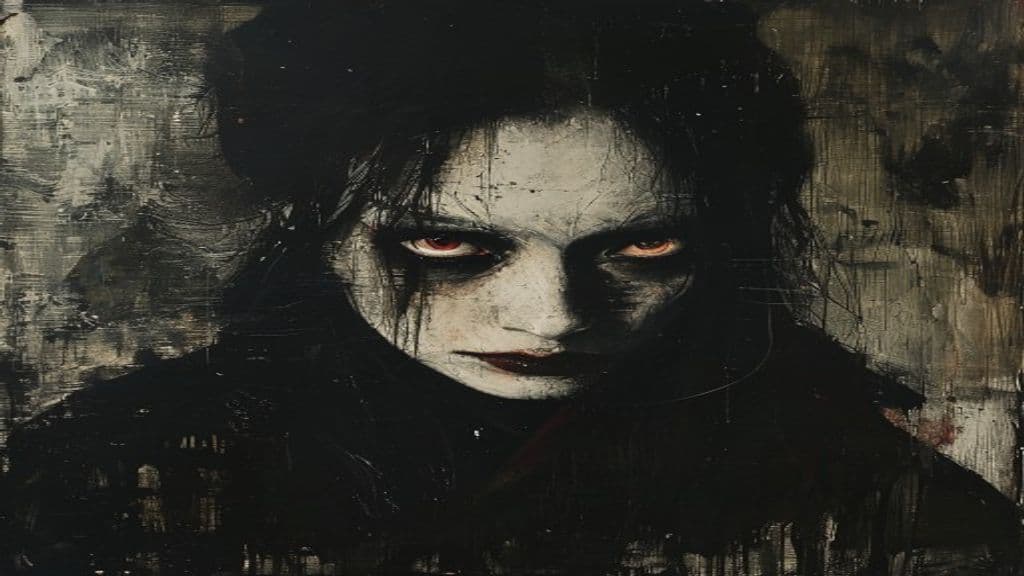
Onryō
Onryō are vengeful spirits in Japanese folklore who return after death to redress wrongs suffered in life by harming the living; they are commonly portrayed in literature and film as wronged individuals—frequently women—whose resentment manifests as lethal retribution, and in some accounts as causing wider calamities.
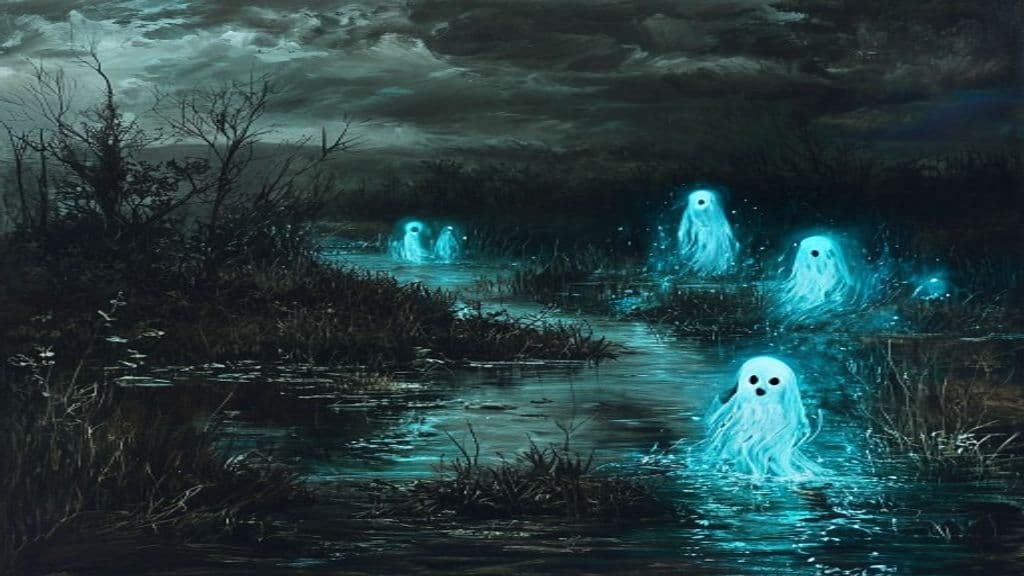
Will-o'-the-Wisp
A wandering light seen over marshy ground at night, leading travellers astray into bogs and fens. Possibly a spirit, possibly the soul of the unbaptised dead, possibly the devil himself.
Akashaguma
Akashaguma is presented in the available sources as a child-like house guardian spirit in the Japanese yokai tradition, closely comparable to the regional zashiki-warashi. It is associated with domestic interiors (parlors or storage rooms) and with bringing prosperity to households where it dwells.
Azukibabaa
Azukibabaa (あずきばばあ, "bean hag") is a Japanese yōkai represented as an old-woman figure whose presence is signaled by the sound of azuki beans being handled (azukiarai). Found in regional folk narratives around Kantō and nearby prefectures, she lures or unnerves night travelers and in some localities is said to scoop up or swallow passersby.
Bakeneko
The bakeneko (ばけ猫, "changed cat") is a Japanese yōkai classed as a kaibyō (supernatural cat). Folklore presents it as a household cat that, through age, long residence, or other local conditions, acquires uncanny abilities such as shapeshifting, speech, and vengeance against cruel humans.
Betobeto-san
A Japanese yōkai manifesting as the sound of footsteps that follow lone travelers at night. Traditionally regarded as non‑harmful: walkers are advised to step aside and address it politely to have the footsteps pass.
Chōchinbi
Chōchinbi (提灯火, "paper-lantern fire") are regionally reported Japanese atmospheric spirit-lights treated as a variety of onibi. Tales describe them as lantern-like floating flames seen near footpaths, rice fields, riverbanks, and graveyards, sometimes vanishing when approached and sometimes associated with animal yōkai or resentful human spirits.
Hito-gitsune
A household-associated small carnivore spirit from western Japan (Chūgoku region) that attaches to certain families, providing wealth in belief but causing illness, behavioral change, social stigma, and transmission across households. It is represented in regional traditions as a marten/fox/weasel‑like possessing spirit rather than a singular individualized deity.
Inugami
Inugami (犬神) are Japanese household-associated dog-spirits that appear in western Japan. In folklore they may be intentionally created by kodoku/kojutsu rituals or become hereditary household possessors that attach to people, animals, or objects and produce illness, jealousy, or social stigma.
Ishinagenjo
Ishinagenjo is a Japanese coastal folkloric phenomenon in which fishermen hear the sound and feel the effects of a huge stone crashing into the sea though no stone is ever found. Sources treat it variously as an episode of yōkai activity (sometimes linked to sea-witch figures such as the Iso Woman) or as an illusion/perceptual error recorded in fisherfolk accounts from several coastal localities.
Isonade
A large, shark-like sea monster from Japanese regional folklore (notably Matsuura and other parts of western Japan). Its body is said to remain hidden beneath the waves, with only a huge, barbed tail fin visible; it approaches boats stealthily, can snare sailors with its hooked tail, capsize vessels, strike beaches, and is associated with fierce winds when it appears.
Japanese wolf
An endemic subspecies of gray wolf historically inhabiting Honshū, Shikoku, and Kyūshū, remembered in Japanese natural history and folklore as both a biological predator and a liminal spiritual figure associated with mountain deities and occasional protective roles toward travelers.
Kamaitachi
A class of Japanese yōkai associated with sudden cutting winds and whirlwinds that cause sharp, initially painless wounds. Narratives vary by region: kamaitachi may be imagined as weasel-like creatures riding dust devils, trios of mischievous gods, animated sickles (tsukumogami), or other local spirit causes.
Okuri-inu
The Okuri-inu (送り犬, literally "escorting dog") is a Japanese yōkai encountered on mountain paths at night that follows travellers. Regional accounts identify it as a dog or wolf (okuri-ōkami, yama-inu) or as related follower-spirits (okuri-itachi); it behaves ambivalently, sometimes protecting those who comport themselves correctly and sometimes attacking or eating those who fall or panic.
Community Record
- [1]Hannya — Wikipedia. Wikipedia contributors, 'Hannya,' Wikipedia, The Free Encyclopedia.wiki
- [2]Hannya - 般若 -はんにゃ | SaruDama. SaruDama, 'Hannya - 般若 -はんにゃ', Japanese folklore summary.folk
- [3]JAANUS / Hannya bosatsu 般若菩薩. JAANUS entry on Hannya-bosatsu; notes the Buddhist lexical background of 般若 (prajñā).academic
- [4]Triple Threat: Hannya - Ravens N' Pennies. Ravens N' Pennies, modern folklore summary mentioning popular embellishments.folk
- [5]Maka hannya haramitsu — Wikipedia (related term). Wikipedia contributors, 'Maka hannya haramitsu.'wiki