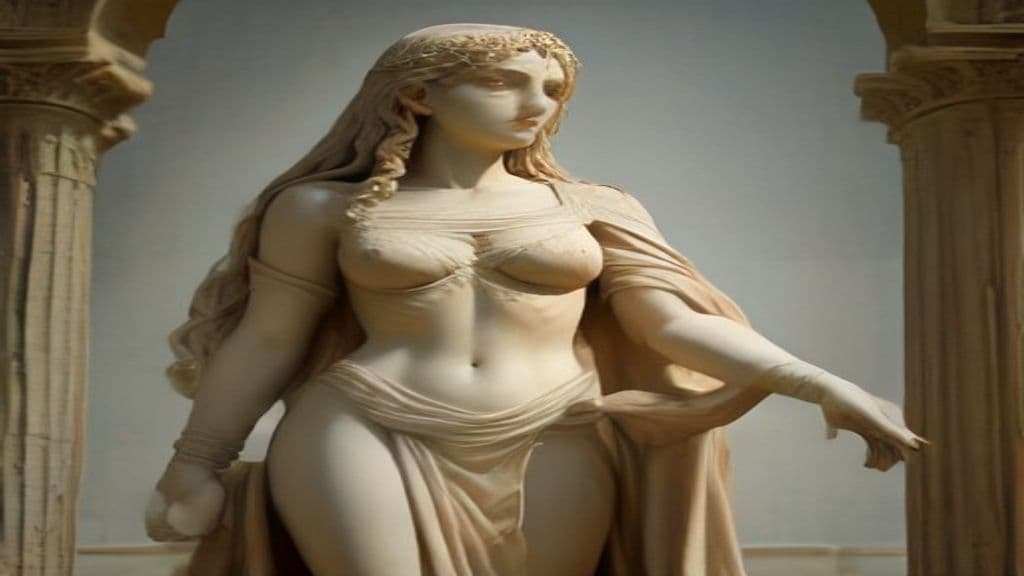
In the Homeric and post-Homeric tradition Helen is presented as a daughter of Zeus (by Leda or, in some accounts, Nemesis) who becomes the wife of Menelaus of Sparta. Her leaving Sparta for Paris (whether by willing elopement or abduction varies by author) is narrated as the immediate cause of the Trojan War. Local cultic developments in Laconia (notably Therapne) and worship in Attica and Rhodes indicate that epic narrative and regional religious practice intermingled around her figure. Scholarly treatments note multiple, contested etymologies for her name and possible older layers (e.g., vegetal or luminous epithets) underlying the literary Helen.
Across literary and artistic traditions Helen is defined primarily by her exceptional beauty — repeatedly described as "the most beautiful woman in the world." Surviving summaries and artistic reception emphasize this overriding attribute rather than fixed physical detail; iconography from the 7th century BCE onward treats episodes such as her elopement/abduction in varying ways but continually centers her beauty as the salient trait.
The supplied sources do not attribute explicit supernatural powers (such as magic or shapeshifting) to Helen. Her influence is chiefly narrative and social: her beauty, marriage ties, and reputed parentage (daughter of Zeus) produce political and martial consequences (the Trojan War) and allow occasional elevation to a divine or immortal status in some accounts (e.g., later traditions placing her on Olympus). Literary portrayals vary in agency and culpability—Homeric ambivalence, traditions depicting her as treacherous, and versions that remove her physically from Troy (placing her in Egypt) are all attested in the summarized sources.

Menka
A Dayan witch who has survived approximately 200 years — the first named threshold, when her glamour is at its most potent and her seductive powers allow her to pass freely among the living.

Djinn
The class of supernatural beings created from smokeless fire in Islamic cosmology — a parallel civilization to humanity, capable of belief or unbelief, with their own prophets, society, and judgment before God.
Abas
Abas (Ancient Greek: Ἄβας, gen.: Ἄβαντος) is not a single mythic being but a recurring personal name borne by multiple mortals and minor mythic figures in Greek epic and genealogical traditions — kings, founders, seers, warriors, attendants, a centaur, and a youth transformed by a goddess. The name is glossed in the sources as 'guileless' or 'good-hearted' and appears across Argive, Theban, Trojan, Euboean, and other local cycles.
Adrastus
Adrastus (Ancient Greek: Ἄδραστος or Ἄδρηστος) is a legendary king of Argos in the Greek mythic-historical tradition, best known as the leader of the expedition of the Seven against Thebes and as a figure tied to oracular counsel, dynastic marriages, and local hero cults.
Ajax (Aias)
Ajax (Ancient Greek: Aias) is a human heroic figure of the Trojan-cycle tradition and the tragic protagonist of Sophocles' play Ajax. In the surviving tradition he is a mortal Salaminian warrior celebrated for physical strength and martial reputation whose wounded honor, rage, and resulting suicide are the focus of Sophocles' drama.
Ajax the Great
Ajax the Great (Ancient Greek: Αἴας, Aíās) is a mortal heroic figure of the Trojan War cycle, famed as a towering, steadfast Greek champion and defender of the Achaean ships. Prominent in Homer’s Iliad, he is portrayed as second only to Achilles in martial standing and as a paragon of defensive strength and reliability.
Alcinous
Alcinous (Ancient Greek: Ἀλκίνοος, Alkínoos, "mighty mind") is a legendary human king of the Phaeacians in Greek epic tradition. He is portrayed as an ideal hospitable monarch who receives wandering heroes (notably Odysseus and the Argonauts), presides over feasts and games, adjudicates disputes, and provides ships, gifts, and safe passage. Variant genealogies and island-identifications appear across sources, but his role as a beneficent royal host is consistent.
Alcmeonis
A lost early Greek epic poem (Ancient Greek: Ἀλκμεωνίς / Ἀλκμαιωνίς) traditionally counted among the Theban cycle; known only from a small number of fragmentary references, it narrated the story of Alcmaeon’s killing of his mother Eriphyle in vengeance for the death of his father Amphiaraus.
Amphialus (Amphialos)
Amphialus (Ancient Greek: Άμφίαλος, Amphialus/Amphialos, lit. 'of two seas') is a recurring personal name in classical Greek epic, genealogical tradition, and later pastoral/romance literature. The name is applied to several distinct mortal figures — a Phaeacian athlete in the Odyssey, various seafaring companions and suitors in Homeric summaries, a son of Neoptolemus and Andromache in genealogical accounts, and a noble/warrior character in early modern Arcadian romances — rather than to a single supernatural being.
Amphinomus
Amphinomus (Ἀμφίνομος) is a personal name borne by several human figures in Greek tradition, most notably a princely suitor of Penelope in Homer's Odyssey; other bearers appear in local genealogies, a Catanian civic legend, and a later historical record as a geometer. The sources treat Amphinomus as mortal personages rather than a supernatural being.
Andromache
Andromache (Ancient Greek Ἀνδρομάχη) is a human figure of ancient Greek literary tradition: the wife of Hector of Troy who exemplifies virtuous fidelity, ritual mourning, and the losses suffered by women in war. She appears in Homeric epic and later classical sources as grieving spouse, captive concubine after Troy's fall, and later queen in post-war narratives.
Antimachus of Teos
Antimachus of Teos (Greek: Ἀντίμαχος ὁ Τήϊος) is an early Greco-Ionian epic poet cited in later antiquity as the putative author or ascription-anchor for fragmentary Theban-cycle material (notably sometimes the Epigoni). Later authors quote or reference him for sententiae and as a chronological marker; his identity is contested and sometimes conflated with the much later Antimachus of Colophon.
Antiphus
Antiphus (Ancient Greek Ἄντιφος) is a personal name borne by several mortal men in Greek myth and epic traditions rather than a single supernatural being. Multiple figures named Antiphus appear in genealogies and narratives as princes, warriors, companions of heroes, colonists, and victims in the heroic age (generation of Heracles, the Trojan War, and the Odyssey).
Argos
Argos is the loyal hunting dog of Odysseus in Homer's Odyssey, remembered for recognizing his master upon Odysseus's covert return to Ithaca after a twenty-year absence. Presented as a domesticated, neglected animal, Argos functions as a moral and emotional emblem of fidelity and the effects of prolonged absence in the epic.
Community Record
- [1]Helen of Troy - Wikipedia (selected excerpts). Wikipedia, 'Helen of Troy' (selected excerpts on biography, etymology, cult, and literary reception).wiki
- [2]Helen of Troy - Wikidata. Wikidata entry for Helen of Troy (identification as daughter of Zeus in Greek mythology).other
- [3]The Trojan horse, part 1 (radio drama listing). Archive listing noting Helen as a dramatised role in a modern retelling; provides no additional mythic details in the excerpts used.other