
Sources present regional variation rather than a single canonical origin. Some scholars interpret the southern Sámi name Horagalles as a loan from Old Norse Þórr Karl or related Scandinavian forms (e.g., Torsmannen), while eastern names Tiermes/Tiirmes may reflect an older local sky‑god concept or substrate; these etymological proposals are offered in the literature but remain contested. In eastern Sámi narratives the thunder figure appears in cosmogonic and eschatological roles (for example teaching early humans skills and, in some accounts, being capable of world‑destruction by shooting a celestial reindeer).
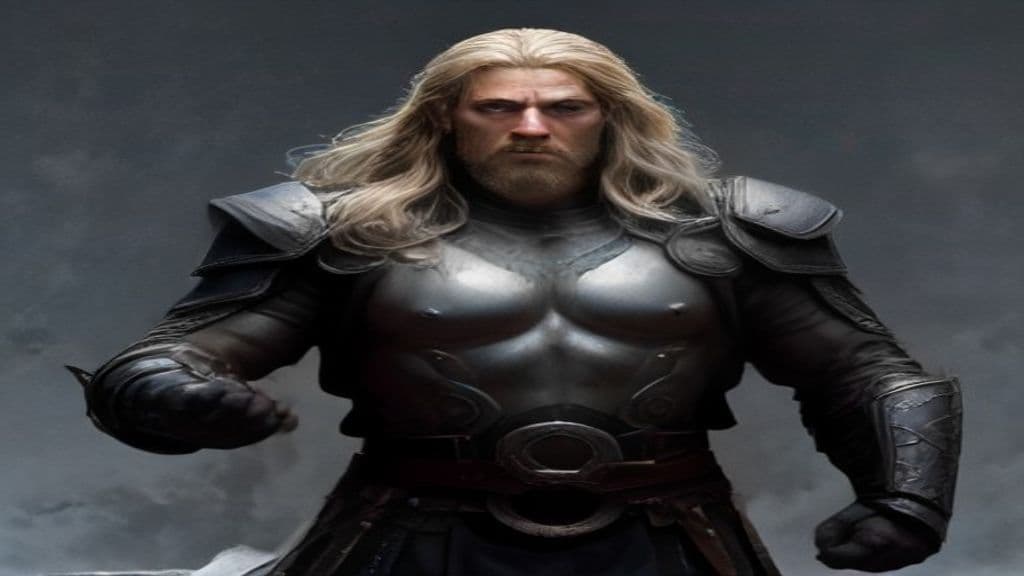
Represented in wooden idols often fitted with a nail or spike and a piece of flint in the head. He is depicted holding a hammer—named Wetschera, Aijeke Wetschera, or Ajeke veċċera ('grandfather's hammer')—and on some shaman drums appears with a sledgehammer in one hand and a cross‑hammer in the other or is symbolized by two crossed hammers. The rainbow is described in some accounts as his bow. Local cult paraphernalia include staged mounts for idols and, in at least one Inari account, a birch tree cult object (a tree set upside down) associated with the figure.
Produces thunder and lightning and controls weather, rain, oceans and lakes; lightning is sometimes described as fiery arrows and the rainbow as his bow. Drum iconography records a paired‑hammer motif whereby one hammer makes thunder and lightning and the other withdraws them to prevent harm. He punishes 'hurtful demons' or mountain/troll spirits—destroying them with lightning, shooting them with his bow, or dashing out their brains with his hammer. He protects Sámi people and their animals but sources also state the thunder god 'was also capable of hurting the Sámi and their sacred sites.' Noaidi (shamans) could connect with him by drumming and yoiking to request aid (for example to release reindeer from spells or to harm enemies).
Weaknesses
- otherno explicit weaknesses recorded in provided sources
Wards
- ritualnoaidi mediation (drumming and yoiking)
- othercult care at local sites (offerings such as reindeer antlers and metal objects)
Homer (tradition)
Homer is the traditional name given to the poet or poets credited with composing the Iliad and the Odyssey. Treated in ancient and later writings as an authorial identity that can be a historical individual, a rhapsodal role, or a legendary figure, Homer functions as a foundational cultural and educational authority in Greek literary tradition.
Hone-onna
Hone-onna (骨女, "bone woman") are a class of yōkai in Japanese folklore identified as women who died while still attached to living lovers and who return at night to reunite with those lovers. To the beloved they appear as beautiful young women, while their true form is a decaying skeleton; their nocturnal visits are said to drain the life force of the living partner unless the deception is revealed or religious protections are maintained.
Honey Island Swamp monster
A regional Louisiana cryptid reported from Honey Island Swamp in St. Tammany Parish, commonly described as a large, bipedal, hair-covered humanoid. The figure exists primarily in local legend, tourism, and popular-culture accounts rather than as a scientifically verified animal.
Hongatar
A Finnish haltija (localized spirit) associated with the bear: presented in runic songs as the mother or progenitor of the bear, and named for the honka pine used to hang bear skulls during peijaiset (bear funeral/feast). She is an invited guest of those rites and forms part of a family/network of tree-linked female haltijas in Finnish/Karelian oral tradition.
Hopleus
Hopleus (Ancient Greek: Ὁπλεύς) is a Greek personal name borne by multiple mortal figures in myth and epic: an Arcadian son of Lycaon, a Thessalian son of Poseidon and Canace, a Lapith listed among spearmen on Heracles' shield, and a soldier in the army of the Seven against Thebes. He is a human/heroic name appearing across genealogical lists and narrative cycles rather than a single supernatural type.
Horae
The Horae are Greek divine personifications of natural portions of time—originally the seasons—who regulate growth, ripening, and the periodicities of nature, and who later came to embody right order, justice, and civic stability. They appear in variable groupings (commonly triads) with both rural agricultural cults and urban juridical cults and act as attendants and guardians within the divine household.
Horned Serpent
A recurring mythic serpent-being attested across multiple cultures, typically depicted as a large horned snake associated with water, storms, fertility/regeneration, and sacred crystalline or iridescent bodily accoutrements that serve as ritual power-objects.
Horouta
A legendary canoe in Māori tradition, significant to the Polynesian migration to New Zealand. (Note: * Power tier should be Lesser (it's a historical canoe, not a deity-level entity) * Abilities section is incomplete and inaccurate; instead of supernatural abilities, describe its significance in the )
Horsemsu
Horsemsu is attested in a modern database entry (Wikidata) as an Egyptian deity. The supplied sources beyond that single label provide no additional attested information about its functions, attributes, iconography, or cult.
Hortdan
A Turkic folkloric figure denoting a troubled soul of the dead that rises from the grave; in older accounts a mournful grave-apparition, and in later popular retellings sometimes recast as a vampire- or zombie-like undead.
Horus
Horus (Ancient Egyptian ḥr.w) is a major Egyptian deity associated with the sky, the sun and moon, kingship, protection, and healing. He appears in multiple local and chronological manifestations (e.g., Horus the Elder, Horus the Younger) and serves as the divine model of the living pharaoh and avenger/heir of Osiris.
Horus Name
Title or crest used by ancient Egyptian rulers, symbolizing divine connection and royal identity. (Note: - Power tier should be Ancient (deity-level) as it represents a connection to a deity and is used by rulers, not just regional spirits. - Summary: While accurate, could be rephrased for clarity: "Titl)
Community Record
- [1]Horagalles - Wikipedia. Wikipedia article 'Horagalles'wiki
- [2]Horagalles - Wikidata. Wikidata item Q5902515other
- [3]FUD20 (page excerpt on Sámi beliefs). Finnugor research volume pages referencing Sámi thunder figure names and attributesacademic
- [4]Mythology Stackexchange discussion: 'Why does Horagalles have a nail on his head?'. Community Q&A discussing iconography and sourcesother
- [5]Dagdrivarn Bildstam Horagalles. Image and discussion of Horagalles iconography (hammer, nail, flint)other
- [6]TheCollector — 'How the Sami Survived at the Edge of the Viking World'. Popular article discussing Sámi–Norse contacts and interpretive context for namesother