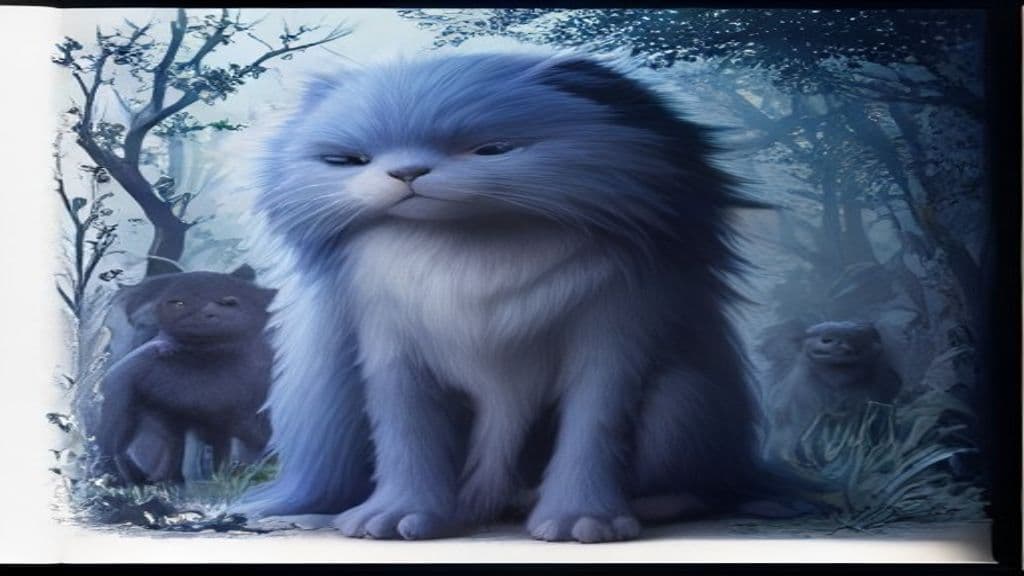
The supplied sources do not record a specific cosmogonic origin for the Intxixu/Intxisua. Available excerpts place them within a broader Basque folkloric milieu as one of a variety of small supernatural beings—household or local 'goblins' in the broad English-language characterization—without giving a creation myth, founding tale, or divine genealogy. In the material provided they are positioned as members of the unseen population of beings who interact ambivalently with humans, capable of both helpful and troublesome actions.
The provided excerpts give no physical description beyond the generic label of 'little creatures.' No details about size, dress, color, or specific anthropomorphic or animal features are present in the supplied sources. The sources therefore only support describing Intxixu/Intxisua as diminutive mischief-making beings, without further visual specifics.
Source material explicitly records only general behavior: they 'make mischief' and 'can both help people but also cause problems.' The excerpts do not enumerate specific kinds of helpful acts or pranks, nor do they attribute named magical powers, methods of speech, possession, or specific interactions. The principal attested characteristic is ambivalence—capable of aiding or harming—presented without operational detail in the supplied texts.
Eguzki Amandrea (Sun Mother)
Eguzki Amandrea is the Basque personification of the sun, presented in the cited corpus as a female, familial cosmic figure associated with warmth, growth, and the visible life of the world. Sources frame the sun as an animate, gendered celestial body embedded in a kinship-like cosmology with Earth and the Moon.
Galtxagorri (Galtzagorris)
Galtxagorri (also spelled Galtzagorris in the cited tourism material) are described in the supplied source as tiny elfin beings from Basque mythology who are presented in a local Zarautz tourism experience where they are hidden around the town's historic monuments for families to find.
Orko (Basque Thunder God)
Deity associated with thunder and the forces of nature in ancient Basque mythology. (Note: * Power tier: Greater (not Ancient), as there's no indication of deity-level powers. * Abilities: Specify exactly what abilities related to weather control are associated with Orko, instead of making )
Inshushinak
Inshushinak is the principal tutelary deity of the city of Susa in Elamite tradition, functioning as the city's lord, protector, royal legitimizer, and divine judge with associations extending into funerary and underworld contexts.
Interpretatio Graeca
Ancient Greek cultural practice of identifying foreign deities with their own gods through comparative methodology. (Note: - Remove the term "Ancient" from the power tier as it is not specified in the source that this entity has deity-level abilities. - Add to summary: "...and interpreting foreign mythologies through comp)
Interpretatio Slavica
A cultural practice among Slavic peoples to identify and equate their deities with those of neighboring cultures and Christian saints. (Note: - Power tier should be Ancient (deity-level), as it's a cultural practice rather than a supernatural being. - Sensory cues, weaknesses, and wards are not applicable to this entity, as it's an abstract)
Interpretatio germanica
Process by which Germanic peoples identified Roman gods with their own deities, facilitating cultural exchange and syncretism. (Note: - Power tier should be Ancient (deity-level) instead of Primordial (cosmic), as it's a cultural exchange process rather than an otherworldly power. - Appearance and sensory cues sections are missing; )
Inti
Inti is the principal Inca solar deity — a politicized and multilayered sun-power central to Inca state religion, agriculture, and dynastic legitimation. Treated as both the divine Sun and an ancestral source for the ruling lineage, Inti was worshipped in temples (notably Qurikancha), honored in seasonal rites such as the Inti Raymi, and served by an institutional priesthood.
Inua
Inua is an Inuit concept of a pervasive spirit-force or soul-quality that inheres not as an individual personal soul but as a shared vital continuity across members of a given kind (people, animals, lakes, mountains, plants). It functions as the generational chain or continuum linking past, present, and future individual spirits of a genus.
Inugami
Inugami (犬神) are Japanese household-associated dog-spirits that appear in western Japan. In folklore they may be intentionally created by kodoku/kojutsu rituals or become hereditary household possessors that attach to people, animals, or objects and produce illness, jealousy, or social stigma.
Inugami Gyōbu
Inugami Gyōbu (隠神刑部), also called Gyōbu-danuki, is a named bake-danuki figure from the Matsuyama (Iyo Province) folk tradition. In local narrative cycles he functions as an individualized, powerful leader of a household of tanuki associated with Kumayama cave and is portrayed variously as a protector of Matsuyama Castle, a recipient of vassal faith, and an active supernatural agent in the O-Ie Sōdō (domain disturbance) narratives.
Inzak
Inzak is the principal deity of the ancient Dilmun pantheon and the tutelary god of the place called Agarum (also attested as Akarum/Failaka in some sources). He functions as a municipal and royal patron whose cult legitimized rulers of Dilmun and who was integrated into Mesopotamian and Elamite religious contexts where he was sometimes equated with or associated with foreign gods.
Community Record
- [1]Basque Fact of the Week: Intxisua, Goblins of the Basque Country | Buber's Basque Page. "Every culture has their goblins – little creatures that make mischief. The Basques are no different." and "They have a variety of such creatures that can both help people but also cause problems."folk
- [2]Basque Mythology | Buber's Basque Page. General compilation page referenced for Basque mythical creatures (excerpt material supplied was limited and did not include detailed entries for Intxixu/Intxisua).folk