
Constructed in Moscow by sculptor Boris Petrovski as a protest monument against the oppressive Soviet government, the colossal stone humanoid (originally 100 feet tall) became animate in Marvel Comics continuity when its body was inhabited by the transferred mind of a stranded alien of the Kigor race. Subsequent narrative arcs feature other instances of mind-transfer (notably Bob O'Bryan, a Hollywood special-effects designer), external control by antagonists (Doctor Vault, Lotus Newmark), destruction and later reconstructions (including reduction in size by Doctor Vault and rebuilding as a robot for film use).
The core depiction is a monumental stone humanoid statue approximately 100 feet in height, described as a constructed colossus by sculptor Boris Petrovski. Variations across stories include a later reduced form (30 feet after tampering by Doctor Vault), a rebuilt robotic facsimile used as a film prop, and periodic reconstitutions whose visual specifics vary by storyline; nevertheless the recurring visual motif is a humanoid, colossal constructed figure of stone or mechanical reproduction.
Its abilities derive from its colossal constructed body combined with the intentions of the inhabiting or controlling intelligence: immense physical strength, durability, and capacity for large-scale movement and combat (rampage through Moscow; attacks on U.S. Army forces; battles with superheroes and monsters such as the Hulk and encounters involving Doctor Doom). The Colossus itself does not originate independent sentience in the cited accounts—its actions reflect the aims of the Kigor alien, Bob O'Bryan, or other controllers—and narrative countermeasures center on severing or reversing the animating mind-transfer, defeating the controlling intelligence, or destroying/dismantling the construct.
Weaknesses
- conditionloss or defeat of animating intelligence (mind-transfer severed or controller defeated)
- otherphysical destruction/dismantling (reduced to rubble, destroyed in battle, or technologically altered)
- othertechnological reconfiguration (rebuilding as robot or reduction in size by antagonists such as Doctor Vault)
Wards
- othernone specified in sources (narrative countermeasures are tactical/technological rather than ritual)
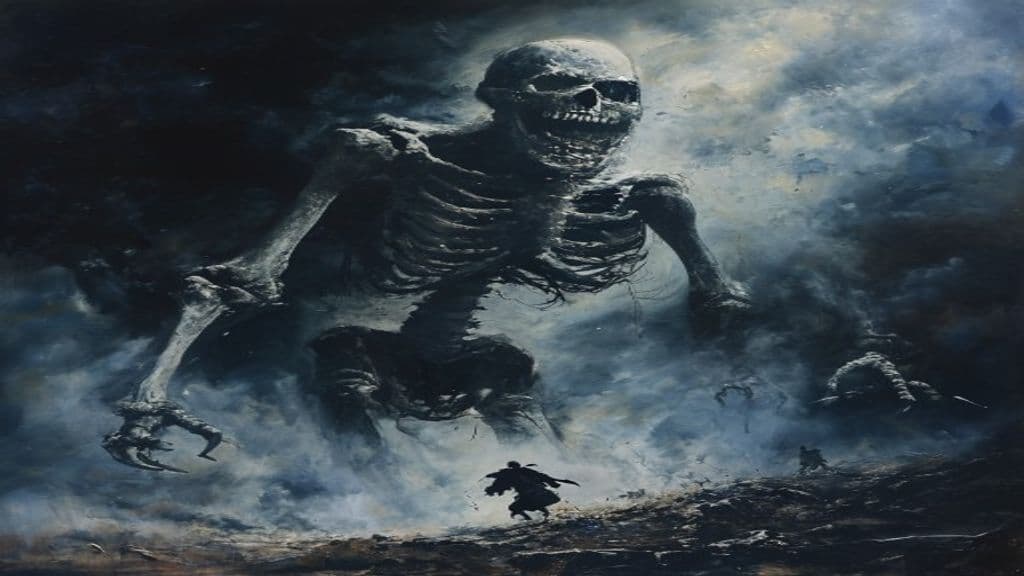
Gashadokuro
A fifteen-times-human-height skeletal yokai formed from the bones of those who starved to death or died on battlefields, their unburied remains fused together into a hungry colossus.
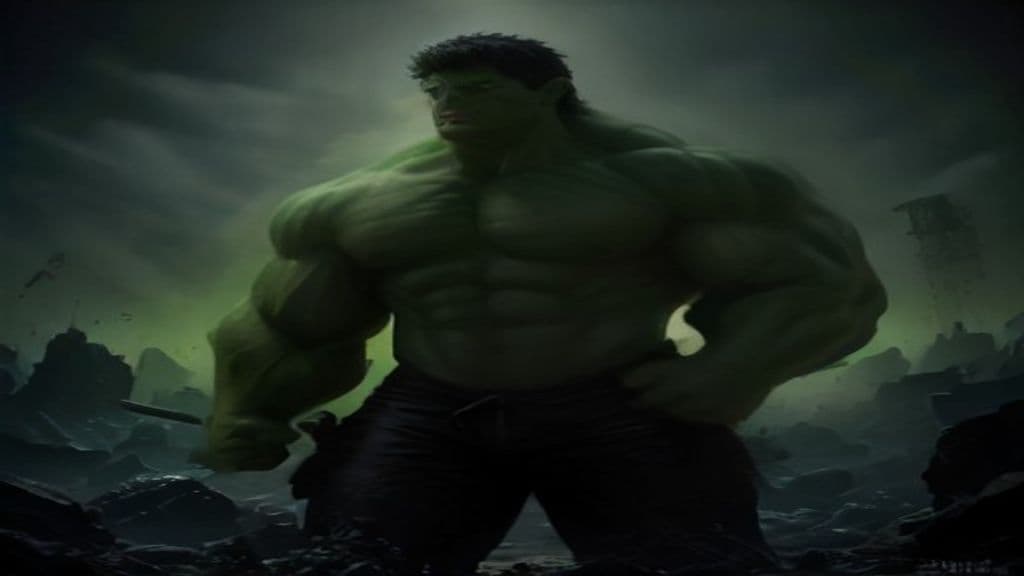
The Hulk
A modern fictional comic-book character from American popular culture created by Marvel Comics, the Hulk is the rage‑driven alter ego of scientist Dr. Robert Bruce Banner who transforms following exposure to gamma radiation; portrayals vary across media and continuities between a destructive, near‑mindless brute and more nuanced, intelligent personae.
Isonade
A large, shark-like sea monster from Japanese regional folklore (notably Matsuura and other parts of western Japan). Its body is said to remain hidden beneath the waves, with only a huge, barbed tail fin visible; it approaches boats stealthily, can snare sailors with its hooked tail, capsize vessels, strike beaches, and is associated with fierce winds when it appears.
Israfil (ʾIsrāfīl)
Israfil is an elevated angel in Islamic tradition who, according to later hadith and exegetical accounts, is appointed to blow the trumpet (ṣūr) that signals Qiyamah (Day of Judgment). He is described in traditional sources as nearest the Divine Throne, awaiting God's command, and occasionally portrayed as a celestial scribe and the Muʾadhdhin (caller) for those in Heaven.
Issitoq
Issitoq is an Inuit supernatural being described in the cited sources as a deity that punishes those who break taboos. The same sources state that he usually takes the form of a giant flying eye.
Issun-bōshi
Issun-bōshi (一寸法師, "One-sun Boy") is the protagonist of a Japanese folktale: a human child born the size of one sun (about 3 cm) who travels to the capital, serves in a noble household, defeats an oni by bravery and craft, and— in some variants—acquires a magic mallet that enlarges him. The figure is principally a miraculous or abnormal human hero in premodern tale cycles, later sometimes mentioned in Edo-period popular culture as a label for very small people or as a yōkai-type motif.
Istrus
Istrus is not attested in the provided sources as a mythological being; the only direct occurrence in the corpus is a 1932 auction catalogue phrase referring to "Istrus Münzen" (a find of Istrus coins), suggesting a toponymic or numismatic usage rather than a spirit or creature. Possible connections to classical place-names (e.g., Histria/Ister) are explicitly uncertain given the available material.
Istämi
Istämi was a 6th-century Turkic ruler who governed the western portion of the Göktürk realm as a yabghu and is retrospectively referred to as a khagan. He exercised de facto sovereignty in the west, dominated Sogdian subjects there, defeated the Hephthalites, and engaged in high-level diplomacy with Sassanid Persia and Byzantium (including sanctioning a Sogdian embassy to Constantinople in 568).
Itonus
Itonus is an eponymous figure in Greek myth, appearing in two distinct genealogical traditions as a king and ancestor tied to the settlement Iton in Phthiotis and to a local sanctuary of Athena. The name is glossed in modern summaries as Ἴτωνος (romanized Itonos / Itonus) and has been interpreted as having willow associations in some scholarly reconstructions, but classical sources present him primarily as a mortal founder/ancestor rather than an independent supernatural spirit.
Ittan-momen
Ittan-momen (一反木綿, "one bolt of cotton") are Japanese yōkai traditionally described in Kagoshima folklore as a white, flying strip of cloth (reported roughly 10.6 m by 30 cm) that appears at dusk and night, wrapping around faces and necks to suffocate or carry victims away. The motif functions chiefly as a local cautionary tale and has been reimagined in modern popular culture.
Itzam Kʼan Ahk II
Itzam Kʼan Ahk II (born 18 Nov 701 – died 26 Nov 757) was an ajaw (king) of the Late Classic Maya polity Piedras Negras. He is attested in multiple stelae and panel inscriptions as a political and ritual actor who celebrated calendrical rites, engaged in regional diplomacy and warfare, and was buried at a sacred mountain (identified with Pyramid O-13) whose tomb and associated monuments were venerated by successors.
Itzamná
Itzamná is a principal upper-world creator deity in Maya religious thought, associated with the sky, priestly arts (including writing), calendrical authority, agriculture (maize), and rulership. He appears across Classic iconography and Postclassic codices in multiple transformative aspects (aged tonsured maize form, a Principal Bird Deity, and within a two‑headed caiman earth image) and is invoked in specific ritual months in early‑colonial reports.
Itūr‑Mēr
Itūr‑Mēr is an Old Babylonian-era tutelary deity of the city of Mari (Tell Hariri), closely associated with the royal house of Zimri‑Lim. He functions in civic religion as a guardian of oaths, a protector of the city and dynasty, an agent in forensic revelation, and—in limited attestations—a healer.
Iunit
Iunit is a minor ancient Egyptian goddess whose name is translated as "She of Armant" and who is attested as the consort (wife) of the war-god Montu (also spelled Mentu). Surviving references are brief and localizing; no substantial myths, iconography, or cultic rites for Iunit are recorded in the supplied sources.
Community Record
- [1]It! The Living Colossus (Wikipedia). "It! The Living Colossus is a fictional character appearing in American comic books published by Marvel Comics." and fictional biography details cited in research notes.wiki
- [2]Wikidata entry: It! The Living Colossus. Wikidata record for It! The Living Colossus as referenced in research notes.wiki