
Jophiel appears in Jewish pseudepigraphal and mystical corpora and later in Christian and occult angelologies rather than in a single narrative origin myth. The Revelation of Moses (pseudepigraphal) names Jophiel (also called Dina) as an angel of the seventh heaven, a guardian of the Torah and wisdom who taught seventy languages to souls at the dawn of creation. The Zohar, produced in the milieu of medieval Kabbalah, lists Jophiel as a Great Angel Chief who commands legions and supervises Torah-reading on the Sabbath. Early modern ceremonial and magical texts (for example, listings in works cited by the Calendarium Naturale Magicum Perpetuum and variants of the Key of Solomon) adapt Jophiel into correspondential systems (notably associated with the Sephira Binah) and into planetary/zodiacal attributions in the writings of authors such as Agrippa, Paracelsus, and Rudd.
Canonical textual sources provide little consistent literal description; instead iconography and literature shape Jophiel’s visual image. Medieval and later Christian church windows and murals commonly depict Jophiel as an angelic figure often holding a flaming sword (examples cited in stained glass at St Michael's Church, Brighton; St Peter and St John's Church, Kirkley; Holy Trinity Church, Coventry; and a mural at St. John's Episcopal Church, Memphis). John Milton’s Paradise Lost characterizes the archangel as 'the cherubim with the swiftest wings,' reflecting literary imaginings of great swiftness and beauty. General angelological conventions (humanlike beauty, wings, halo, radiance) are applied to Jophiel in artistic contexts, but no single canonical anthropomorphic description is provided in the mystical or pseudepigraphal texts cited.
Across the cited sources Jophiel functions as a high celestial officer with pedagogic, custodial, and supervisory powers. The Revelation of Moses credits Jophiel/Dina with teaching seventy languages to souls and guarding the Torah and wisdom. The Zohar assigns Jophiel command over many legions (the Zohar names eighty-three or, as summarized, fifty-three legions in various listings) and the role of superintendence over Torah-readings on the Sabbath. Later occult and Kabbalistic systems place Jophiel in correspondence with the Sephira Binah and various planetary/zodiacal attributions (Agrippa assigns Saturn; Paracelsus assigns Jupiter; Rudd links Jophiel with the Zodiac), which integrates the angel into ritual and astrological frameworks where the name functions as an operative power to be invoked or stationed by practitioners. Artistic depictions of Jophiel with a flaming sword indicate a guardian or martial aspect in devotional imagery, though the supplied texts do not elaborate combative powers beyond iconographic signaling.
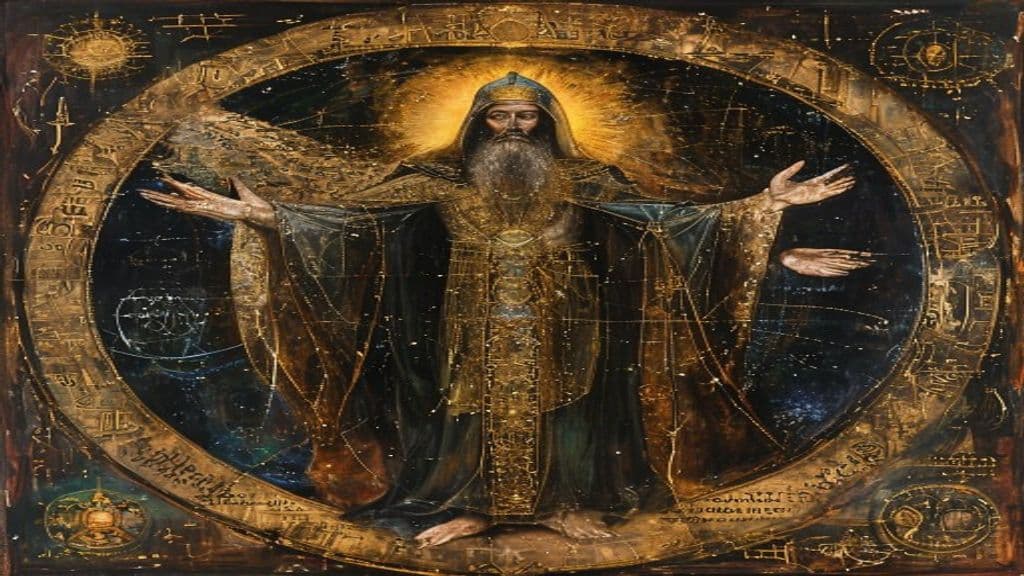
Metatron
An exalted heavenly figure in postbiblical Jewish literature, often identified with the transformed patriarch Enoch in later mystical texts and portrayed as a celestial scribe and high court official in merkabah and Kabbalistic writings.

Raziel
Raziel is an angelic revealer in Jewish mystical literature, called the 'Angel of Secrets' and credited with transmitting esoteric books (notably Sefer Raziel) to prime ancestors; the name is also reused in modern fiction for characters and artifacts that evoke revelation or hidden knowledge.
John Hyrcanus
John Hyrcanus (Yoḥānān Hurqanos) was a historical Jewish high priest and Hasmonean ruler of Judea (born c.164 BCE; reigned 134–104 BCE) who combined religious and secular authority, expanded Hasmonean territory, and negotiated with Hellenistic powers. He is presented in the sources as a human political and cultic leader rather than a supernatural being.
John Ryker
John Ryker is a fictional, non‑superpowered antagonist in Marvel Comics who functions as a high‑ranking U.S. Army general and later corporate executive. He uses military, scientific, and corporate resources to hunt, experiment on, and attempt to weaponize gamma‑irradiated individuals (notably the Hulk and related subjects).
John the Evangelist
A central figure in Christian tradition identified as the authorial persona behind the Gospel of John and as an authoritative apostolic witness to Jesus. Traditions variously equate him with John the Apostle, John of Patmos, or John the Presbyter; modern scholarship disputes a single authorship for all Johannine writings. He is venerated as a saint, commemorated liturgically, and appears widely in Christian art and hagiography.
Johnny Cage
Johnny Cage (Jonathan "John" Carlton) is a fictional character from the Mortal Kombat video game franchise: a Hollywood action-film star and skilled martial artist who serves as one of Earthrealm's champions in inter-realm tournaments and wars. Though a mortal human in the fiction, his narrative repeatedly intersects with supernatural forces that kill, resurrect, or manipulate him.
Jokhini
A female supernatural predator of Assamese folklore — the Jokhini appears as a beautiful woman to lure men, but also as a hideous crone to devour them. She is associated with the dense forests of the Brahmaputra valley and is one of the most feared night entities in Assamese village belief.
Jonakr's sons (Hamdir, Sörli, Erpr)
Three brothers—Hamdir (Hamðr), Sörli (Sǫrli), and Erpr—of the Völsung lineage in Germanic heroic legend who, at their mother Guðrún's urging, attempt to avenge their half‑sister Svanhildr by attacking King Jörmunrekr/Ermanaric. Their deed and tragic deaths are attested across Norse poetic and saga sources and continental chronicles.
Jorōgumo
A yōkai of Japanese folklore depicted as a spider-associated shapeshifter that can take the form of a woman to lure, entangle, and sometimes devour humans. Tales place it in liminal natural sites (waterfalls, abysses) and domestic edges (eaves, attics), and local practices sometimes worship or ritually counter it.
Joulupukki
A Finnish Christmas figure representing the spirit of Yule and winter solstice, often conflated with Santa Claus. (Note: * Power tier should be Lesser or Minor Spirit, as there is no indication in the source material that Joulupukki is a powerful regional or deity-level entity. * Abilities are not described, but it's st)
Jove (Jupiter)
Jove, more commonly known in scholarship as Jupiter, is the chief sky-and-thunder god and king of the gods in ancient Roman religion and mythology. He functioned as the leading divine authority of Roman state religion throughout the Republican and Imperial eras and is portrayed in legend as establishing principles of Roman cult practice through negotiation with the early king Numa Pompilius.
Juan Tamad
Juan Tamad (Tagalog for "Lazy Juan") is a stock character in Philippine folklore known for extreme laziness. Portrayed usually as a child (sometimes a young man), he appears in short comic or moralized tales that exemplify sloth through absurd behavior and its social consequences.
Judah (Yehuda)
Judah (Hebrew: Yehuda) is a biblical patriarch—the son of Jacob—whose name became the eponym of the Tribe of Judah and of multiple historical and geographic entities (Kingdom of Judah, Judea/Yehud, later provincial and modern toponyms). The supplied sources treat Judah as a human ancestor and an ethnic/political designation rather than a supernatural being.
Julia Carpenter
Julia Carpenter is a fictional Marvel Comics superhero introduced in Secret Wars #6 (1984). A human altered by covert government experiments, she has used the codenames Spider-Woman, Arachne, and later assumed the Madame Web mantle in some storylines; her narrative roles include government operative, team member, mother, and occasional double agent.
Community Record
- [1]Jophiel — Wikipedia. Wikipedia article 'Jophiel' — summary of appearances in Revelation of Moses, Zohar, artistic depictions, and occult correspondences.wiki
- [2]Wikidata entry Q592818 (Jophiel). Wikidata entry for Jophiel, cross-referencing authority data and aliases.other
- [3]Revelation of Moses (summarized in secondary sources). Summary in Wikipedia noting Revelation of Moses description of Jophiel/Dina as an angel of the seventh heaven who guarded the Torah and taught 70 languages.other
- [4]Zohar (summary in secondary sources). Summary in Wikipedia noting the Zohar lists Jophiel as a Great Angel Chief in charge of legions who superintend Torah-readings on the Sabbath.other
- [5]Iconographic examples and literary depiction (summarized). Wikipedia summary noting stained glass/mural examples and John Milton's depiction in Paradise Lost as 'the cherubim with the swiftest wings.'literary
- [6]Calendarium Naturale Magicum Perpetuum; Veritable Clavicles of Solomon; Sixth and Seventh Books of Moses (summary). Wikipedia summary reporting that these magical/Kabbalistic works list Jophiel as the angel of the Sephira Binah and that occult authors (Agrippa, Paracelsus, Rudd) assign planetary/zodiacal correspondences.other