
Regional accounts link Kuttichathan in some contexts to the deity Vishnumaya Chathan. Vishnumaya Chathan traditions describe an origin as an incarnation associated with Parvati (and linked mythically to Shiva and an illusory aspect of Vishnu) who enacted deeds such as defeating the demon Bhrugasura. In northern Malabar ritual taxonomy Kuttichathan is often identified with or represented by this Vishnumaya figure, though sources present this identification as a regional linkage rather than a single uniform origin for all chathan beliefs.
Sources describe Kuttichathan as depicted locally as a portly adolescent or boy-figure (the element 'kutti' indexing a juvenile form). Vishnumaya Chathan is described in some accounts as a young boy riding a buffalo and holding a short stick; Kuttichathan also appears as a theyyam ritual figure in northern Kerala performance contexts. Detailed costume components from theyyam recordings are not transcribed in the available summaries.
Folklore reports credit Kuttichathan with trickster, illusionary, and mischievous acts — examples recorded include setting victims' clothing alight, throwing stones at people, and turning beds into beds of thorn. These acts are described as causing great trouble but not serious physical harm. He is said to demand food in exchange for freedom from harassment; as Vishnumaya Chathan he is also revered as a god who provides prosperity and blessings and was worshipped by tantrics in Kerala, indicating both amulet-like or occult capacities attributed by ritual specialists and a protective/deity aspect.
Weaknesses
- ritualRegular propitiatory offering (cockerel sacrifice with incantations)
Wards
- ritualCockerel sacrifice with correct incantations (local Malabar practice reported to appease Kuttichathan)
- ritualTheyyam invocation/performance at shrine (community ritual engagement)
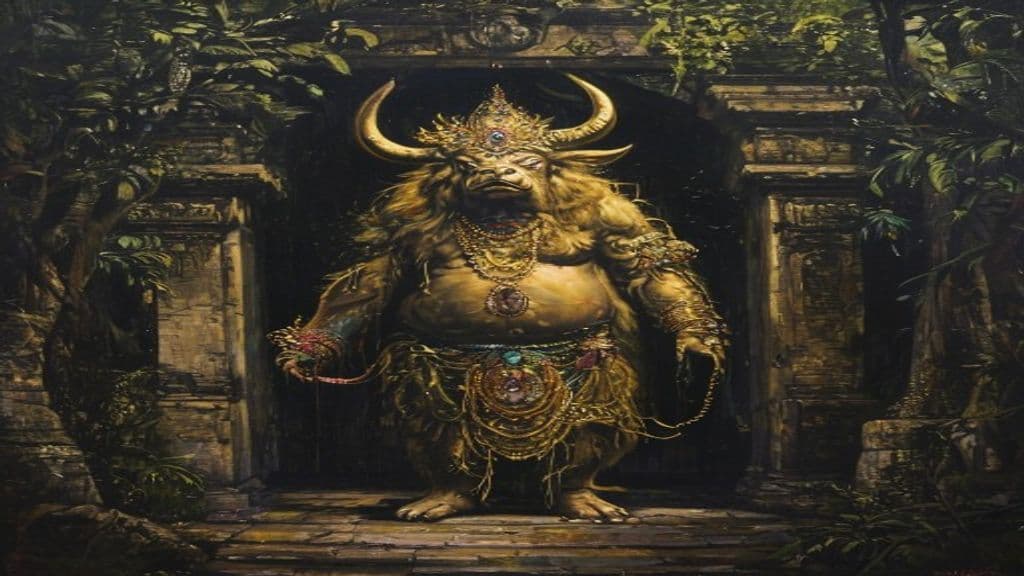
Yaksha
Nature spirits of Hindu, Buddhist, and Jain cosmology — guardians of forests, treasures, and wilderness. Ambivalent beings, capable of great benevolence to the respectful and terrible harm to the greedy.
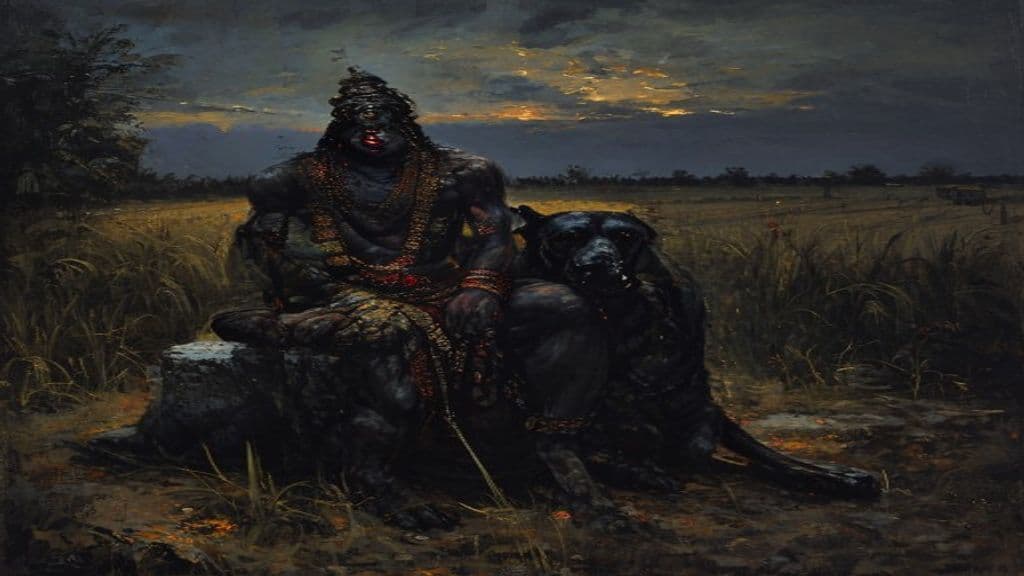
Kshetrapala
Fierce guardian deity of fields, village boundaries, and agricultural territory — an aspect of Shiva or Bhairava who punishes trespass with epidemic illness and crop failure. Every North Indian village once had a Kshetrapala shrine at its boundary stone; his is the first rite performed before plowing season.
Kusha
Kusha (Sanskrit: कुश, IAST: Kuśa) is the elder of the twin sons of Rama and Sita in the Hindu epic the Ramayana. Presented in canonical Uttara Kāṇḍa material as a human prince raised at Valmiki's ashram, he functions as an heir and founder-king who preserves dynastic continuity and helps transmit the Ramayana as a cultural text; a small number of later or regional variants give alternate birth legends or expanded territorial claims.
Kushiel
Kushiel is an angel in Judeo-Christian folkloric and Hebrew‑writing contexts described as a punitive agent of divine justice. He is named among a group of seven angels associated with punishment and is variously described as operating from a heavenly layer and as linked to infernal punishment.
Kusibanda
Kusibanda (also spelled Kusigbanda; older disputed reading Guškinbanda) is a Mesopotamian deity who functions as the tutelary god of goldsmiths and silversmiths. He is associated with the preparation of statues and is attested in temple contexts (notably the temple of Ninimma in Nippur) and in documents from Seleucid-period Uruk.
Kussie
Kussie (クッシー, Kusshī) is a modern local lake‑monster/cryptid associated with Lake Kussharo in eastern Hokkaidō, Japan. Presented in contemporary sources as a place‑linked folkloric creature, Kussie functions largely as a component of local identity and tourism rather than as a well‑documented traditional spiritual being.
Kusu
Kusu is a Mesopotamian deity associated with purification and the removal or mitigation of ritual pollution. The available sources identify Kusu primarily by this functional role; detailed mythic biography, iconography, or ritual prescriptions are not provided in the supplied material.
Kut (mythology)
No evidence for a mythological entity named 'Kut' appears in the supplied sources. The materials provided instead reference a city named Al-Kut in Iraq, unrelated archive items, and a festival name containing the substring 'Kut.' This entry records the absence of documented mythic material in the provided source set.
Kuttichathan (Chathan)
Kuttichathan (also written Chathan) is presented in the supplied sources as a supernatural figure depicted in Malayalam popular cinema. In the cited film My Dear Kuttichathan (1984) the being is described as a "mystical indigenous goblin" who is placed under a sorcerer's spell, later released by three children, and then befriends them.
Kuutar
Kuutar (lit. "Lady Moon") is a Finnish mythic-poetic lunar feminine figure attested in Kalevalaic and regional runic-song tradition who owns and spins the moon's gold, weaves luminous garments, and is petitioned in songs for protection, adornment, and health at the new moon.
Kuyang
A Southeast Asian nocturnal female spirit motif, described as a floating disembodied woman's head with internal organs trailing beneath the neck; attested in English-language summaries and contemporary creative and tourism writings that reference the broader Krasue motif.
Kuśadhvaja
Kuśadhvaja is a human royal figure in the Ramayana tradition, described as the younger brother of King Janaka of Mithila, husband of Chandrabhaga, and father of Mandavi and Shrutakirti. He is named as King of Samkasya after Janaka defeats Sudhanvan and appears in the narrative context of the Sita–Rama marriage.
Kwaku Ananse
Kwaku Ananse (Anansi, Ananse) is a central spider-associated trickster and culture-bearing figure from Akan (including Ashanti) folklore of southern Ghana. Presented in oral tale cycles, songs, children’s literature, and modern media, he embodies wisdom, wit, cunning, and mischievousness and functions as a narrative teacher who both questions and ultimately reinforces social norms.
Kwoth
Kwoth (also Kuoth, Kuoth Nhial) is the supreme, omnipresent creator deity of the Nuer people of South Sudan and Gambella. Regarded as the 'Spirit of the Sky', Kwoth is the originator of humans, sovereign over celestial bodies and natural phenomena, and the ultimate divine presence invoked in life-cycle and funerary rites.
Community Record
- [1]Wikipedia: Kuttichathan. Wikipedia entry 'Kuttichathan' (summary notes provided in research materials)wiki
- [2]Kuttichathan Theyyam (Wikipedia). Wikipedia entry 'Kuttichathan Theyyam' (notes in research materials)wiki
- [3]Theyyam: Traditional Folk Dance of Kerala (Vol. II) – archive recording. Archive audio/video metadata documenting Kandakarnan and Kuttichathan theyyam performance by Shri K. Bhaskar and group (Vol. II)other
- [4]Theyyam: Traditional Folk Dance of Kerala (Vol. I) – archive recording. Archive audio/video metadata documenting Kuttichathan theyyam performance (Vol. I)other
- [5]National Seminar on Theyyam (Vol. V) – archive recording. Seminar recording including Kuttichathan performance by Shri Andy Pannikar (metadata noted in research materials)other