
Kuśadhvaja is presented within the Ramayana's royal genealogies as a member of the Videha/Mithila kinship network. Sources identify him as the younger brother of Janaka, king of Mithila, and as husband of Chandrabhaga. In the episode recounting the war with Sudhanvan, Janaka kills Sudhanvan and crowns Kuśadhvaja as king of Samkasya; elsewhere he is associated with the area around Rajbiraj. Genealogical variants (noted in secondary discussion) attribute different filiation in other texts, but primary cited sources present him as Janaka's brother and as installed by Janaka in Samkasya.
The cited sources do not provide a physical description of Kuśadhvaja. He is characterized by social and familial roles: a king, younger brother of Janaka, husband, and father. Textual mentions emphasize his participation in courtly and ceremonial life—being present at the Sita–Rama wedding celebrations and being part of dynastic arrangements—rather than any bodily or visual details.
No supernatural powers or magical abilities are attributed to Kuśadhvaja in the provided sources. His activities are political and familial: he participates in royal ceremonies (he is summoned by Vashishta to the Sita–Rama wedding recitals), occupies kingship when Janaka crowns him king of Samkasya after Sudhanvan's defeat, and acts as a marital actor by fathering daughters (Mandavi and Shrutakirti) who marry into Rama's family. Sources do not ascribe extraordinary or otherworldly capacities to him.

Janaka
Janaka is a legendary and dynastic king of Videha (capital Mithila) who functions in Indic sources as an exemplar of ideal kingship and spiritual realization—a ruler who combines political authority, patronage of Vedic learning, and non-attachment. The name is used both as a regnal title for Videha's kings and as the personal/regnal name of the famous monarch who is the adoptive father of Sītā in the Rāmāyaṇa.
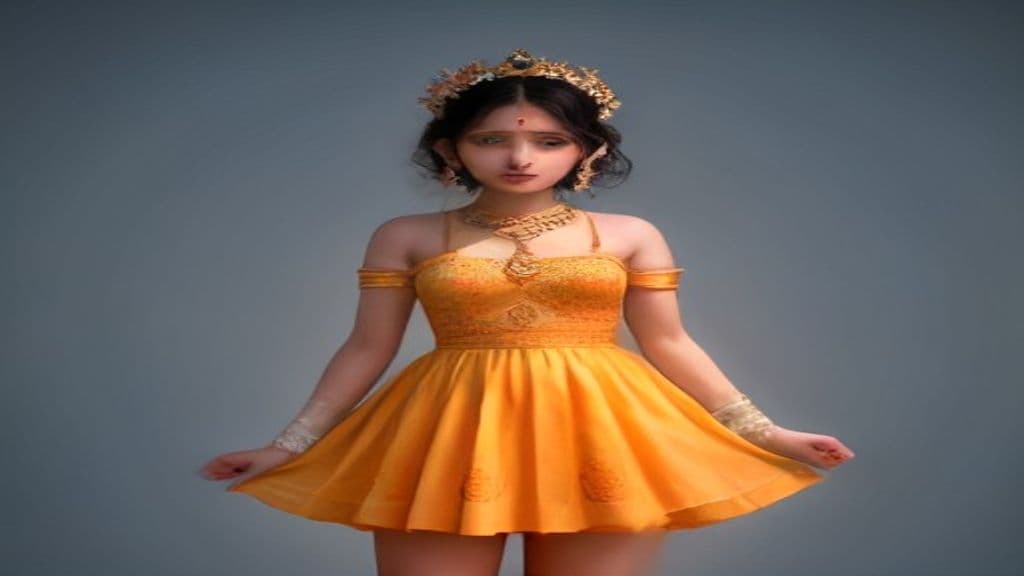
Mandavi
Mandavi (Sanskrit: Māṇḍavī) is a princess of Videha (Mithila) in the Ramayana tradition, wife of Bharata, and is regarded in some retellings as an incarnation of the shankha (conch shell) of goddess Lakshmi. She functions as an exemplary pativrata (dutiful wife) noted for sacrifice and perseverance and figures in narratives that link Mithila and Ayodhya through dynastic marriage.
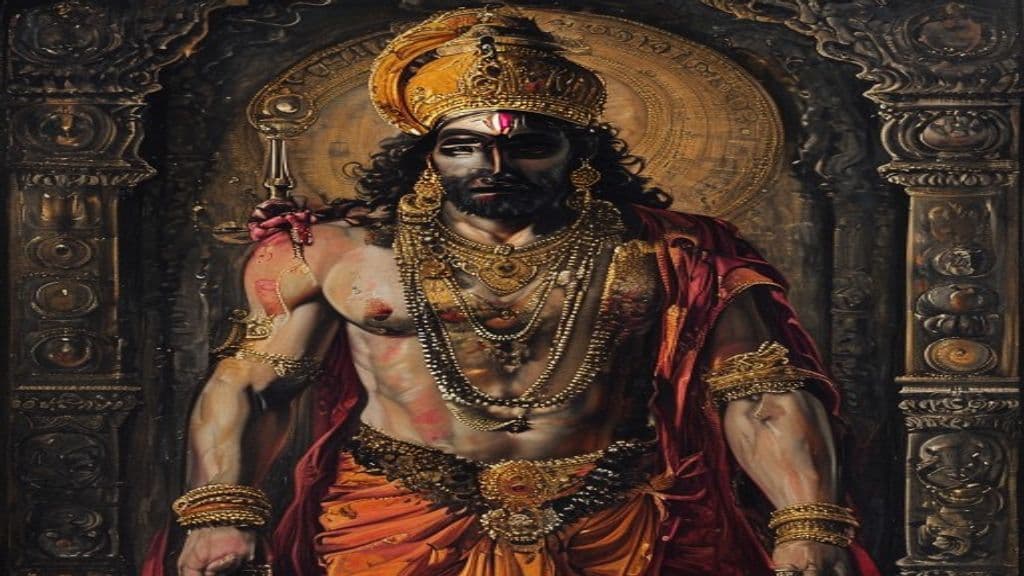
Rāma
Rāma is a major divine-hero in Hindu tradition, worshipped as the seventh avatar of Viṣṇu and the central protagonist of the Ramayana. He is portrayed both as the ideal man (maryāda puruṣottama) and, in Rama-centric sects, as the Supreme Being; his life-story (birth in Ayodhyā, 14-year exile, Sītā's abduction, and the defeat of Rāvaṇa) functions as a primary exemplar of dharma.
Añjanā
Añjanā (Sanskrit: अञ्जना; also Anjani, Anjali) is a semi-divine figure of the Ramayana cycle, described as an apsara reborn among the vanaras and the mother of the hero Hanuman. She figures both in pan-Indian epic narratives (as wife of Kesari and devotee of Vayu) and in regional cultic practice (notably a temple tradition in Himachal Pradesh) and is adapted in Javanese wayang as Dewi Anjani.
Kusha
Kusha (Sanskrit: कुश, IAST: Kuśa) is the elder of the twin sons of Rama and Sita in the Hindu epic the Ramayana. Presented in canonical Uttara Kāṇḍa material as a human prince raised at Valmiki's ashram, he functions as an heir and founder-king who preserves dynastic continuity and helps transmit the Ramayana as a cultural text; a small number of later or regional variants give alternate birth legends or expanded territorial claims.
Lakshmana
Lakshmana is the younger half-brother and devoted attendant of Rama in the Ramayana tradition. Portrayed as an ideal companion and protector during Rama’s fourteen-year exile and the war with Ravana, the Puranas also describe him as an incarnation (avatara) of the serpent Shesha, linking him to the divine order surrounding Vishnu.
Nila
Nila (Sanskrit: नील, Nīla; also spelled Neela) is a vanara chieftain in the Ramayana epic, described as commander‑in‑chief of the vanara army under Sugriva who leads troops in the war against Ravana and participates in the search for Sita and the building of the Rama Setu in some traditions.
Kuttichathan
Kuttichathan is a Malabari (Kerala) folk-deity/kshetrapala figure presented in local Hindu and theyyam contexts as a juvenile, ambivalent spirit who can both bless households and harass them with trickery. In parts of northern Malabar he is identified with or represented by Vishnumaya Chathan and is invoked in theyyam ritual-performance and small-scale household propitiation.
Kuttichathan (Chathan)
Kuttichathan (also written Chathan) is presented in the supplied sources as a supernatural figure depicted in Malayalam popular cinema. In the cited film My Dear Kuttichathan (1984) the being is described as a "mystical indigenous goblin" who is placed under a sorcerer's spell, later released by three children, and then befriends them.
Kuutar
Kuutar (lit. "Lady Moon") is a Finnish mythic-poetic lunar feminine figure attested in Kalevalaic and regional runic-song tradition who owns and spins the moon's gold, weaves luminous garments, and is petitioned in songs for protection, adornment, and health at the new moon.
Kuyang
A Southeast Asian nocturnal female spirit motif, described as a floating disembodied woman's head with internal organs trailing beneath the neck; attested in English-language summaries and contemporary creative and tourism writings that reference the broader Krasue motif.
Kwaku Ananse
Kwaku Ananse (Anansi, Ananse) is a central spider-associated trickster and culture-bearing figure from Akan (including Ashanti) folklore of southern Ghana. Presented in oral tale cycles, songs, children’s literature, and modern media, he embodies wisdom, wit, cunning, and mischievousness and functions as a narrative teacher who both questions and ultimately reinforces social norms.
Kwoth
Kwoth (also Kuoth, Kuoth Nhial) is the supreme, omnipresent creator deity of the Nuer people of South Sudan and Gambella. Regarded as the 'Spirit of the Sky', Kwoth is the originator of humans, sovereign over celestial bodies and natural phenomena, and the ultimate divine presence invoked in life-cycle and funerary rites.
Kyi, Shchek and Khoryv
Semi-legendary brothers who allegedly founded the city of Kiev in Kievan Rus', their historical significance overshadowing any potential mythological importance. (Note: 1. The power tier should be Primordial, as they are considered the founders of the city of Kiev, a major cultural and historical hub. 2. Add "Their names likely represent real individuals or ancestral)
Kyzaghan
Kyzaghan (Kızagan, Kyzaghan Han) is a Turkic war deity associated with martial success and protection of warriors. Described as a son of Kayra/Kara Han and a brother of Ulgan, he is placed high in the sky-cosmos (explicitly on the ninth floor of the sky in one source) and is semantically linked to the color red and the notion of anger or fierceness.
Community Record
- [1]Kushadhvaja - Wikipedia. Wikipedia: 'Kushadhvaja (Sanskrit: कुशध्वजा IAST: Kuśadhvaja) is the King of Samkasya and the younger brother of Janaka, the King of Mithila ... He was married to Chandrabhaga and is the father of Mandavi and Shrutakirti.'wiki
- [2]Valmiki Ramayana - Bala Kanda - Sarga 70 (prose). Valmiki Ramayana, Bala Kanda Sarga 70: 'Vashishta narrates this to Janaka and his brother Kushadhvaja, who is also summoned to participate in the wedding celebrations...'literary
- [3]Valmiki Ramayana - Bala Kanda - Sarga 70 (romantic prose). Valmiki Ramayana, Bala Kanda Sarga 70 (alternate rendering): mentions Kushadhvaja's presence in the wedding episode and genealogical narrations.literary
- [4]Hinduism Stackexchange discussion (genealogical variant). Forum citation referencing Bhagavatam: 'The son of Śīradhvaja was Kuśadhvaja, and the son of Kuśadhvaja was King Dharmadhvaja...' (noted as a secondary/uncertain genealogical variant in the provided materials).other