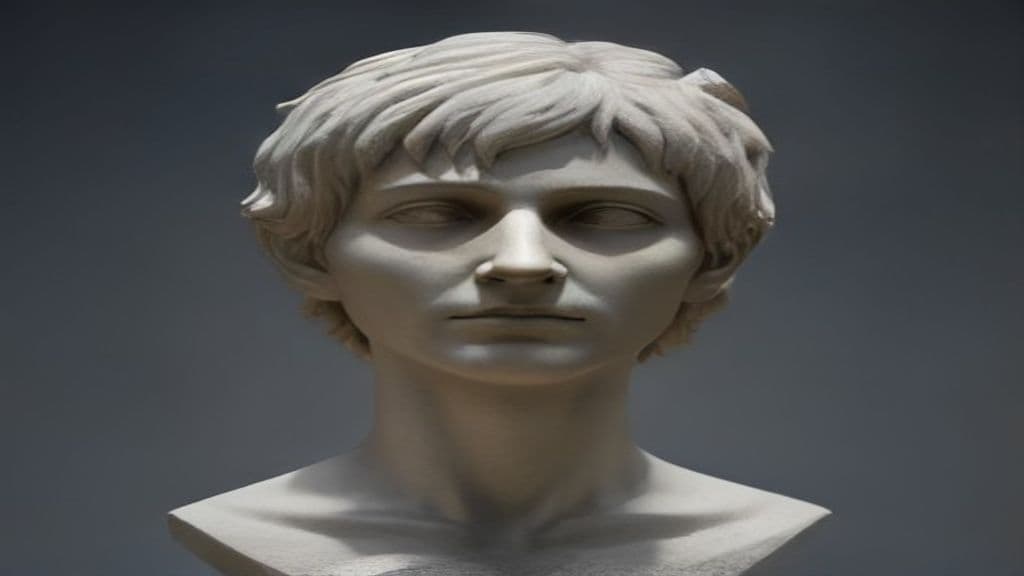
There is no attested mythic origin story for a supernatural being named Lethus in the provided sources. The clearest traditional occurrence is as a personal name in classical Greek genealogical material: Pylaeus is described as "son of Lethus, son of Teutamides, descendant of Pelasgus," which locates the lexical form within epic/Trojan War genealogies rather than as a mythic creature. Separately, 'Lethus' appears as a genus or author-element in entomological lists (e.g., Lethus Rehn, 1934) and in modern usage as usernames and brand/personal names. A single modern creative source (a D&D Wiki page) invents a fictional "Lethus Dragon," but that is a fan-made construct and not part of any documented traditional origin narrative in the dataset.
Classical and scientific sources provide no physical description corresponding to a supernatural being named Lethus; in the classical citations the name functions genealogically and carries no attendant descriptive attributes. The only descriptive appearance in the supplied material comes from a modern fan-made D&D Wiki entry: the "Lethus Dragon" is described there as having "a body blacker than a Black Dragon that is wreathed in horrible black smoke." This depiction is explicitly modern/fan-created and not supported by the classical or taxonomic sources.
No traditional supernatural abilities or behaviors for an entity named Lethus are attested in the provided classical, taxonomic, or ethnographic material. The sole set of attributed powers appears on the D&D Wiki fan page, which characterizes the Lethus Dragon as a horror linked to places of strong negative energy, associated with death, and called "the evilest of dragons." These are creative fiction attributes from a roleplaying-content site and are not corroborated by historical or folkloric sources in the dataset.
Leraje
Leraje (also spelled Leraie, Loray, Oray, Leriac) is a named spirit in the Goetic/grimoire tradition, described as a 'mighty Great Marquis' who commands thirty-three legions of lesser demons. In the grimoire corpus he is depicted as a green-clad archer and is credited with causing battles, producing arrow-wounds that fester or gangrene, and influencing lovers to come or to go.
Lernaean Hydra
A multi-headed serpentine chthonic water-monster of Greek myth associated with the marshes and spring of Lerna; famed as the adversary slain by Heracles in his second Labour, notable for poisonous breath and blood and for regenerative heads (accounts vary).
Les Lavandières
Three supernatural entities in Celtic tradition associated with death and mortality. (Note: - Power tier: Minor Spirit (not Greater) as their abilities seem limited in scope. - Origin story: Mention "possibly" is not necessary; the text directly states a connection to the triple goddess, but)
Lesbian vampire
A literary and cinematic trope that fuses traditional vampire motifs with eroticized female same‑sex desire. Originating in 19th‑century Gothic fiction and developed through 20th‑century cinema, the figure functions narratively to explore, sensationalize, or critique sapphic desire and female sexual transgression.
Leshy
A tutelary forest being in Slavic folklore; an embodied, territorial power of the woods that can protect, mislead, or punish humans depending on their behaviour toward the forest. Highly variable in form and described across many regional variants and names.
Lete
Lete is not attested in the provided sources as a supernatural being. The attested uses of the form 'Lete' are lexical and onomastic: a Basque toponym and surname, an ancient city (Lete in Mygdonia), a modern village in Nepal, an entry-word in the constructed language Toki Pona meaning 'cold' (with an associated glyph), an esoteric programming language (esolang) called Lete, an ICAO airport code (LETE for Morante Airfield), and a proper name applied to an exoplanet. No sources in the consulted corpus describe Lete as a spirit, demon, deity, or monster.
Leto
Leto (Ancient Greek: Λητώ / Λατώ; Latin: Latona) is an ancient Greek goddess best known as the mother of the Olympian twins Apollo and Artemis. She functions in myth and cult as a kourotrophic (mother‑or nurse‑goddess) figure with important sanctuaries at Delos and the Letoon in Lycia, and appears in narratives that emphasize both mildness and the capacity to call down retribution when insulted.
Leucosia
Leucosia is a name applied in the source corpus to multiple distinct referents: a possible name for one of the Sirens of Greek mythology (a sea-associated, singing female figure), a modern taxonomic genus of small 'pebble' crabs (family Leucosiidae), and several modern/pop-cultural uses. The supplied sources do not preserve a standalone ancient narrative or ritual corpus specifically attached to a Siren named Leucosia.
Levan (unattested forest spirit — proposed)
No supplied sources attestate a supernatural being named Levan in Georgian tradition. The name Levan appears in the provided materials only as a Georgian masculine given name and in various toponyms and archival name references; there is no folkloric description, origin story, or ritual material relating to a forest spirit by this name in the supplied sources.
Leviathan
A giant sea serpent in Jewish mythology, embodying chaos and serving as a metaphor for a powerful enemy. (Note: - Power tier should be Ancient (Leviathan's abilities are often described as deity-level, such as threatening the damned after their lives are over and being annihilated) - Appearance is not mentioned)
Leyak
A flying head with entrails, targeting pregnant women and newborn children in Balinese folklore. (Note: - Power tier: Primordial (given the cosmic-level abilities of targeting pregnant women and newborn children) - Abilities: The draft only mentions sucking blood, but source material mentions abducting )
Leđan (Slavic tradition)
An ancient and magical city from Croatian mythology and folklore. (Note: 1. Power tier: downgrade to Greater (since Leđan is described as an "ancient" city, but its magical nature and lack of explicit abilities suggest it may be less powerful than Ancient). 2. Appearance: )
Community Record
- [1]Pylaeus. Wikipedia, entry for Pylaeus (notes Pylaeus as 'son of Lethus')wiki
- [2]Episactidae. Wikipedia, Episactidae (shows 'Lethus Rehn, 1934' in taxonomic listing)wiki
- [3]Lethus Dragon (3.5e Creature) - D&D Wiki. D&D Wiki entry describing the fan-made 'Lethus Dragon' as 'a body blacker than a Black Dragon that is wreathed in horrible black smoke' and associating it with negative energy and deathother
- [4]Lethus · RetroAchievements (user page). RetroAchievements user page showing modern online usage of the string 'Lethus'other
- [5]Lethus (Wikidata). Wikidata entry for lexical/formal occurrences of 'Lethus'wiki
- [6]Episactidae listing (source excerpt mentioning Lethus Rehn). Taxonomic context where 'Lethus' appears as a genus/author element (e.g., 'Lethus Rehn, 1934')wiki
- [7]Lethus — mythic name entry (Myths UVic). Mythography page noting occurrences of the name Lethus in classical sources and genealogical contextsother