
In the common legend Mae Nak is a woman named Nak who died while pregnant or in childbirth while her husband Mak was conscripted/away at war. When Mak returned he initially lived with Nak and their infant without perceiving that she was dead; neighbours eventually warned him and Nak revealed her ghostly nature (for example by stretching her arm to an impossible length to retrieve an object). Various versions conclude with monastic intervention–a powerful monk either confines her in an earthen jar and disposes of it in the canal, removes and binds a bone from her forehead as a relic, or persuades her to leave by promising reunion in a future life. Scholarly and popular retellings record multiple variants and some historical-critical claims that the tale was later shaped in print and performance.
Legendary descriptions present Nak as a beautiful young woman who, in the ghost story, appears as if alive and nursing an infant. Shrine iconography at Wat Mahabut centers on a statue or images of Mae Nak with her child; devotees also offer fine dresses, toys, and portraits. A notable folkloric episode describes Nak stretching her arm to an impossible length, signaling her supernatural state.
Folklore attributes to Nak postmortem persistence and agency: she can appear indistinguishable from living persons (deceiving her husband), perform remarkable physical feats in stories (the elongated arm episode), pursue and terrorize those who oppose her, and inflict fear or harm on a local community when enraged or jealous. Her motivation in most tellings is intense attachment to her husband and child; responses to her haunting center on monastic ritual containment, negotiation, or shrine-based petitions.
Weaknesses
- conditionBuddhist holy ground (wat/temple precincts) — temples are presented as places a ghost cannot enter
- substanceBlumea balsamifera (nat) — traditional motif states ghosts are afraid of sticky nat leaves and people use nat bushes in the legend to hide from or repel her
- ritualmonastic containment or relic-binding — variants describe a monk confining the spirit in an earthen jar or removing and binding a forehead bone
Wards
- conditionSeek refuge in a temple (wat) — entering temple precincts is presented as protective
- substanceHide behind or use Blumea balsamifera (nat) — legend uses nat bushes as a means to avoid detection
- ritualMonastic capture and containment (earthen jar) — a powerful monk is said in some versions to have confined her in an earthen jar and thrown it into the canal
- ritualCranial-bone relic binding — in other variants a high-ranking monk (Somdet Phra Phutthachan [To Phrommarangsi]) is said to have removed a bone from her forehead and bound it, holding the relic to control the spirit
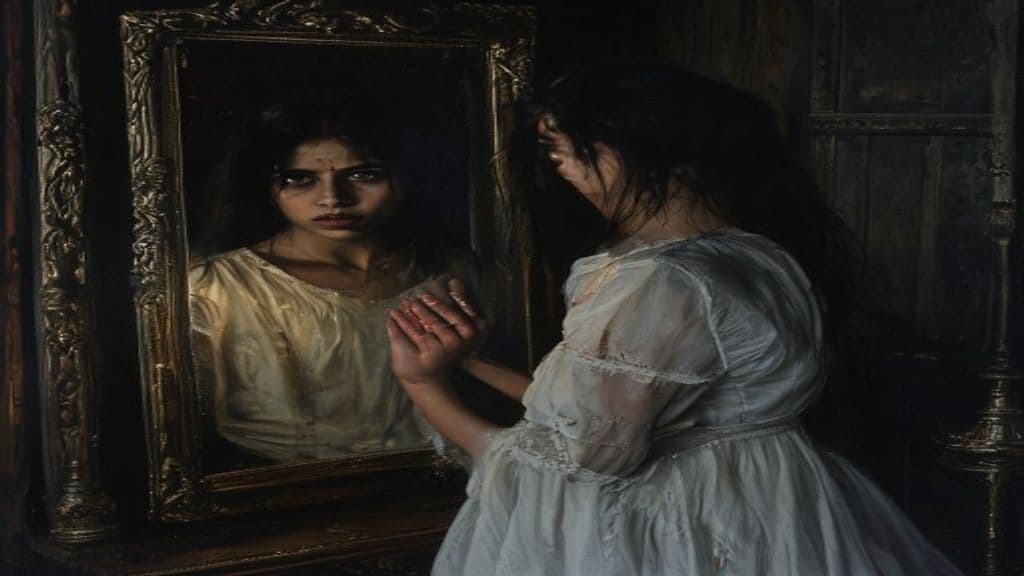
Petni
The female equivalent of the Bengali bhoot — the ghost of a young woman who died unmarried or before fulfilling her expected life. The Petni is more volatile and less predictable than the Shakchunni (married woman's ghost), driven by the particular bitterness of a life foreclosed rather than interrupted.
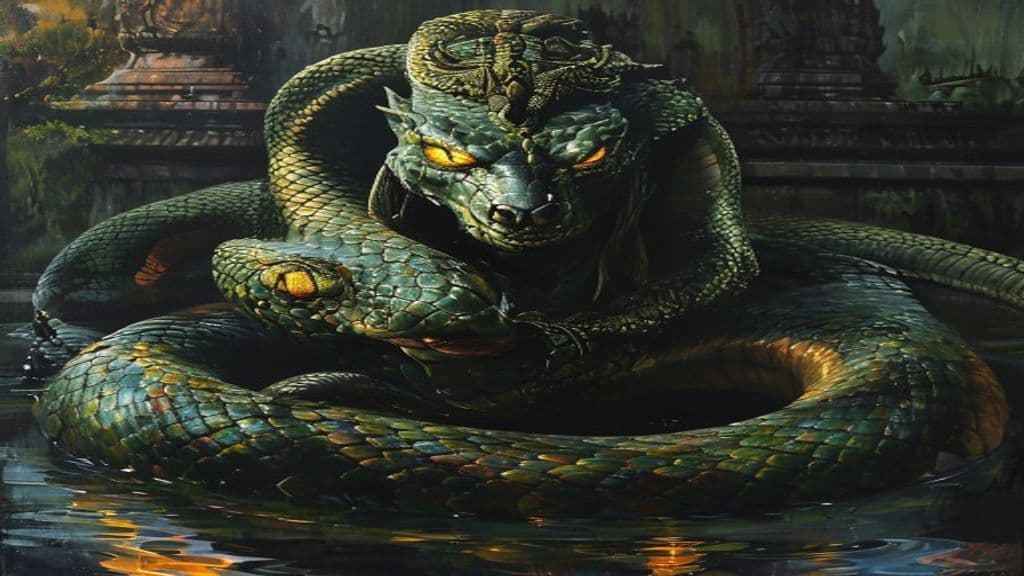
Naga
Divine serpent beings of Hindu, Buddhist, and Jain cosmology — powerful guardians of water, earth, and underground treasures. Revered as deities in South and Southeast Asia.
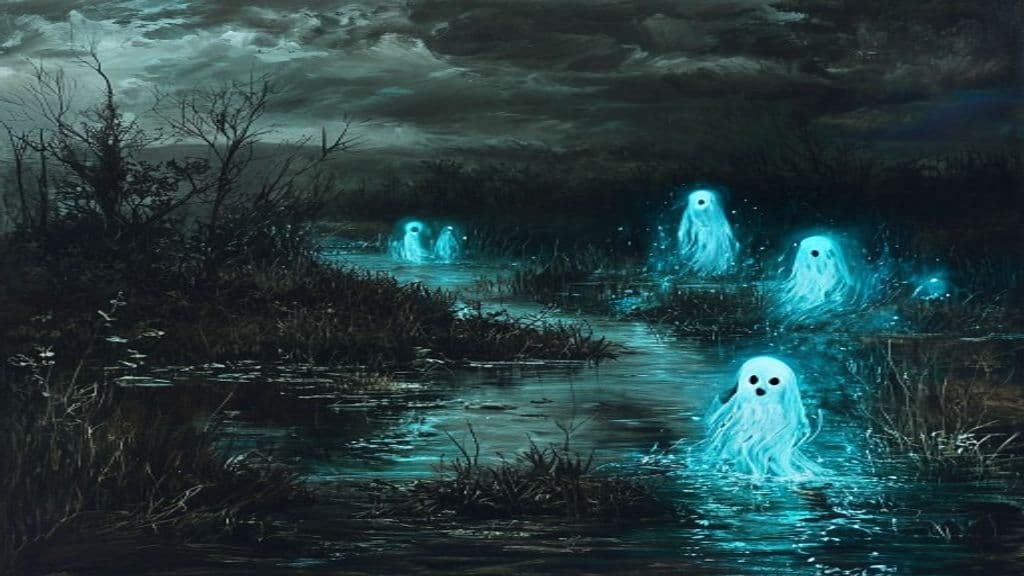
Will-o'-the-Wisp
A wandering light seen over marshy ground at night, leading travellers astray into bogs and fens. Possibly a spirit, possibly the soul of the unbaptised dead, possibly the devil himself.
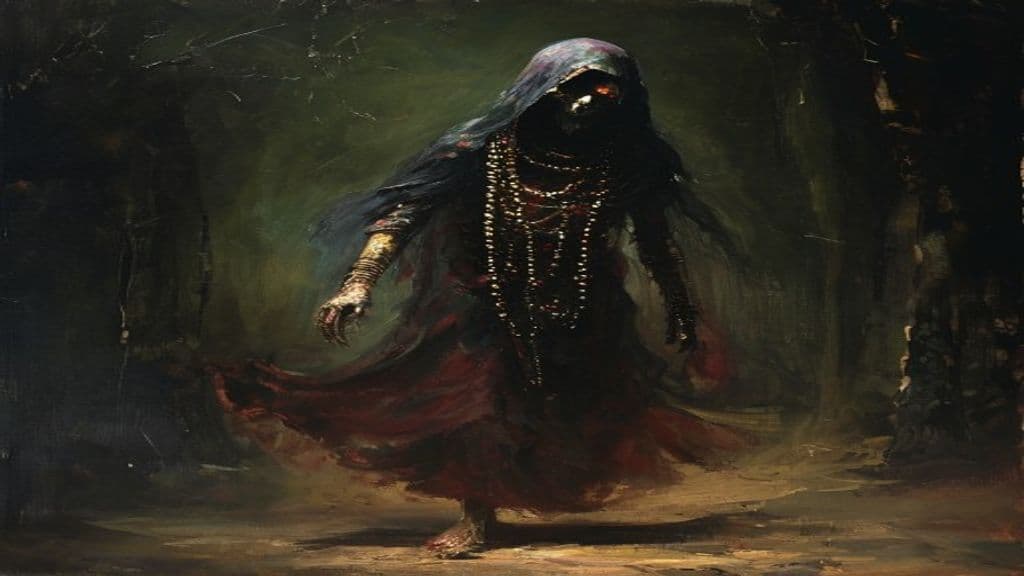
Bhoot (bhoota)
A bhoot (also bhoota, bhoot, bhut) is the culturally specific term across parts of the Indian subcontinent for a perturbed, restless spirit generally understood to be the ghost of a deceased person. Sources describe bhoots as arising when a person's death or post-death circumstances prevent them from moving on — for example violent death, unresolved affairs, or failures in funerary rites — and the term appears frequently in modern South Asian media and discussions.
Phi Hua Khat (Rice-Field Ghost)
Phi Hua Khat is presented here as a named rice-field ghost in Thai folkloric terminology supplied by the user; however, the provided source set does not contain any specific attested information about this entity. General statements about Thai ghost beliefs are drawn only from Source 1; no direct descriptions, stories, rituals, or attributes for Phi Hua Khat itself appear in the supplied materials.
Phi Krasue
Phi Krasue is a nocturnal female spirit in Thai/Isan popular belief, depicted as a floating disembodied woman's head with trailing internal organs. Situated within Buddhist-syncretic and local animist worldviews, it functions as a visceral, boundary-enforcing specter in village and regional folklore and continues to appear in contemporary media.
Madam Pigott
A named White Lady ghost of Newport and Chetwynd Park, Shropshire, said to be the restless spirit of a deceased woman tied to the Pigott family and to specific local landmarks; traditions describe repeated nocturnal appearances, interactions with riders, and two different local remedies (clerical Psalm-reading exorcism and a Romani-style bottling and drowning).
Madame Goliath
Madame Goliath is attested only as a terse label in a single database entry describing a "giant from Ath." The provided source set contains no narrative, ethnographic, or ritual information about this figure; all other consulted items do not reference the entity.
Madhusudana (Hindu tradition)
Madhusudana is an epithet of Vishnu, a major deity in Hinduism, associated with qualities and actions attributed to Vishnu. (Note: * Power tier: Lower to Primordial is too strong, given the lack of information about specific powers; Greater would be more suitable. * Abilities: Delete "However" sentence as it implies there's some )
Madurai Veeran
Madurai Veeran is presented in the supplied material as a local heroic figure situated within the broader milieu of Tamil/Dravidian village‑deity practice. In the context of Dravidian folk religion he is best understood as a place‑linked guardian figure whose cult participates in the kaaval deivam (village guardian) ecosystem, though the provided sources do not supply detailed primary narratives or ritual texts specific to him.
Madurai Veeran
A Tamil folk-hero and village guardian worshipped as a local deity associated with Madurai and surrounding areas. He is remembered through song, street theatre and shrine cults; his improperly honoured death is narrated as causing social and supernatural disorder that is remedied by ritual recognition and the erection of shrines.
Maelstrom (ride)
A fictional theme park attraction inspired by Norse mythological concept of maelstroms, located in the Norway Pavilion at Epcot's World Showcase. (Note: 1. Add Power tier: Greater (the ride has immersive abilities that create an environment for visitors, but its scope is limited to a specific location in Epcot) 2. Include sensory cues from source mate)
Maenad
In ancient Greek religion and myth, maenads (Ancient Greek: μαινάδες, mainádes) are the female followers and ritual participants of Dionysus who enter ecstatic frenzy to commune with the god. They function both as organized cult members in Dionysian worship (the thiasus) and as mythic agents through whom Dionysus' power—sometimes restorative, sometimes destructive—is manifest.
Maeon
Maeon is a recurring personal name in Greek and Roman epic and tragic tradition applied to several distinct mortal figures (Theban, Trojan, Rutulian and other local variants). The name does not denote a single supernatural species but appears across multiple genealogies and episodic narratives where each Maeon’s parentage, role, and fate vary by source.
Mafuiʻe
Mafuiʻe is a Samoan subterranean being who dwells in volcanic regions below the earth, keeper of fire and governor of earthquakes; in origin myths a culture-hero (Tiʻitiʻi / Tietie-i-Talaga or Maui-variant) wrests fire from him, and he is left with only one arm.
Magic Carpet (Persian Tradition)
A legendary carpet in Persian tradition that serves as a form of transportation, carrying its user(s) quickly or instantaneously to their destination. (Note: - Power tier should be Greater, given the ability to defy physical laws and traverse vast distances at will. - Appearance should state "no specific description provided" instead of making an unsubstan)
Community Record
- [1]Mae Nak Phra Khanong. Wikipedia entry 'Mae Nak Phra Khanong' (accessed online)wiki
- [2]Wikidata: Mae Nak Phra Khanong. Wikidata item for Mae Nak Phra Khanongwiki
- [3]Ghost of Mae Nak shrine, Bangkok (Travelfish). Travelfish guide entry on the Mae Nak shrine at Wat Mahabutfolk
- [4]Archive: Episode 248 - Keep Your Spirit Entertained (Mae Nak). Archive.org episode referencing Mae Nak folkloreother
- [5]Mae Nak Phra Khanong - Midnight Muse. Midnight Muse summary and discussion of Mae Nakother
- [6]Bangkok's haunted temple: the ghost story of Mae Nak. Travel/cultural blog retelling the Mae Nak story and the Wat Mahabut shrineother