
Niobe is presented in Greek literary tradition as a daughter of Tantalus and the wife of Amphion. Celebrated for her large progeny (commonly given as fourteen children, seven sons and seven daughters, the Niobids), she boasts of her fertility in comparison to the goddess Leto, who has only two children. In response to this claim of superiority, Leto's children Apollo and Artemis kill Niobe's sons and daughters with arrows. Devastated by the slaughter and her subsequent grief, Niobe retreats to Mount Sipylus; various accounts recount her prolonged mourning and her eventual transformation into stone. The story is deployed in epic and tragic contexts (notably Homer’s Iliad and later tragic and lyric references) as a paradigmatic exemplum of hubris toward the gods and of overwhelming maternal sorrow.
As a mortal figure, Niobe is characterized primarily by social and familial markers: a royal daughter of Tantalus, wife of Amphion, and mother of the Niobids (often enumerated as seven sons and seven daughters). Sources in the supplied material do not give a detailed bodily portrait. In iconic later tradition she is associated with a natural rock formation on Mount Sipylus resembling a female face, the so-called 'Weeping Rock' (Turkish: Ağlayan Kaya); the narrative describes her as 'turned to stone' and the petrified face as continuously shedding water, a landscape petrifaction that commemorates her unceasing tears.
The supplied traditions do not attribute preternatural powers to Niobe prior to her transformation; her defining narrative traits are prolific motherhood and extreme, prolonged mourning (narratively recorded as abstaining from food while her dead children lay unburied for nine days). After the divine punishment, the tradition records a miraculous or symbolic continuation of grief in the form of a rock that appears to weep—water seeping from the formation—rather than ongoing agency or active supernatural abilities attributed to a recurring class of being.
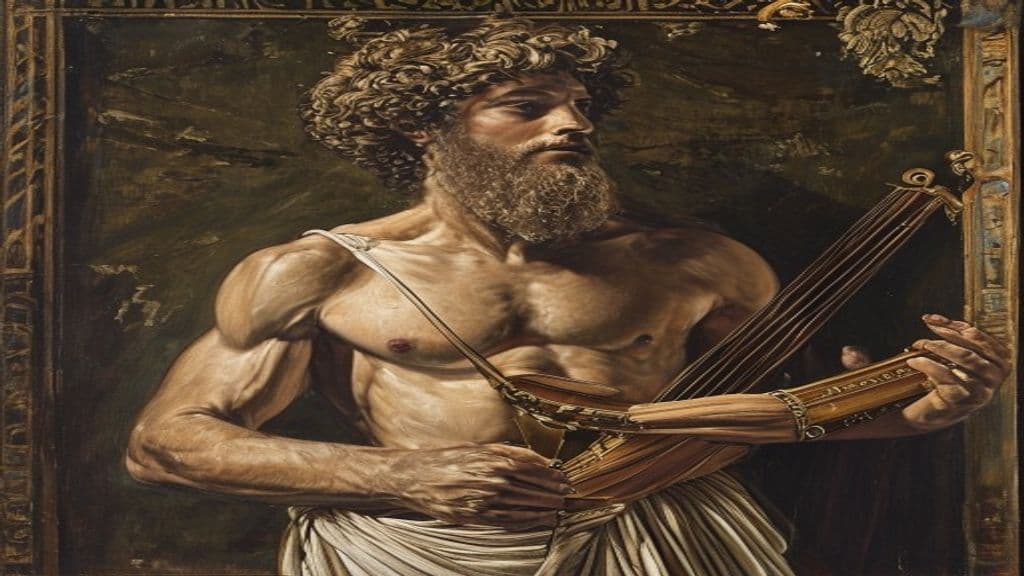
Apollo
Olympian deity of ancient Greek religion associated with prophecy, healing, music, archery, purification, and civic order. Principal patron of the Delphic oracle, protector of youth and flocks, and ambivalently both healer and bringer of plague.

Artemis
Artemis is an ancient Greek goddess of hunting, the wilderness and wild animals, transitions (especially childbirth and puberty), vegetation, and chastity. Twin sister of Apollo and daughter of Zeus and Leto, she functions as a protector of young children and maidens while also capable of inflicting disease or punishment for transgressions against her sacred laws.
Callirhoe
Callirhoe (also Callirrhoe, Callirhoé) is a name attested across Greek myth, classical literature, toponymy, and botanical taxonomy. The provided sources do not present Callirhoe as a single supernatural spirit or consistent cosmological entity; instead the name refers to several mythological characters, an ancient Greek novel and its artistic adaptations, a place with baths near the Dead Sea, and a genus of mallow-family plants used in horticulture and traditional herbal practice.
Cephalus
Cephalus (Ancient Greek: Κέφαλος) is an ancient Greek masculine personal name borne by several mythological and literary figures. In surviving sources he appears as a hunter, husband of Procris, a beloved of the dawn-goddess Eos in some traditions, a son in varying genealogies, and as a named interlocutor in Plato's Republic rather than as a class of supernatural being.
Medea
Medea is a mythic Greek woman of royal lineage associated with practiced pharmakeía (drugcraft) and ritual knowledge; in epic she functions as the helper who enables Jason's success, and in tragedy she becomes a transgressive avenger whose actions include murder. Sources present her variably as mortal with divine ancestry (granddaughter of Helios) and as a skilled worker in magical substances and rites often linked in literature to Hecate.
Minos
Minos is a legendary Cretan king in ancient Greek myth, remembered as a lawgiver and founder of Cretan naval power in life and as one of the three judges of the dead in Hades after death. Classical sources present him as a semi-divine, politically powerful mortal (son of Zeus and Europa) whose authority is both terrestrial and judicial in the afterlife.
Ninsun
Ninsun is a Sumerian goddess of ancient Mesopotamia, mother of the hero Gilgamesh and consort of the deified king Lugalbanda. She functions as a divine intercessor, dream-interpreter, and a protective beneficent figure (sometimes called a lamma) invoked in royal legitimation and literary traditions such as the Epic of Gilgamesh.
Nintinugga
Nintinugga is a Mesopotamian city-associated goddess of medicine, healing and ritual cleansing, principally worshiped at Nippur and attested across Ur III and Old Babylonian contexts. She is linked with bandaging, wound-cleaning, cleansing rites (atua), funerary libations, and cultic associations with dogs and specific ritual objects.
Ninurta
Ninurta is a major deity of ancient Mesopotamia (Sumerian–Akkadian–Assyrian–Babylonian) whose roles include agriculture, healing/exorcism, law and scribal authority, and martial champion of the gods. He is attested from the mid-third millennium BC onward and was venerated at city cult-centers such as Nippur (Eshumesha), Girsu/Lagash (as Ninĝirsu), and later in Assyrian Kalhu.
Nin‑MAR.KI
Nin‑MAR.KI is a localized Mesopotamian goddess of the Lagash region, principally attested as the divine protector of cattle and as an oath deity. Her main cult center was Guabba, a seaport in Lagash territory; after local cult decline her name persists in god‑lists and laments and in lexical/literary traditions.
Niobid
A Niobid is one of the children of Niobe and Amphion in Greek myth; collectively the Niobids are mortal royal offspring slain by Apollo and Artemis as punishment for Niobe's boastful comparison with Leto. They function as tragic victims and exempla of the consequences of human hubris toward the gods.
Nirṛti
A Vedic and later Hindu personification of decay, sorrow, and inauspiciousness. In early Vedic texts Nirṛti functions as an unwanted presence associated with the kingdom of the dead and with ritual misfortune; in later Puranic and Agamic material the name is sometimes recast as a male dikpala (guardian) of the southwest with varied iconography.
Nis Puk
The Nis Puk is a household spirit from Danish-, Low German- and North Frisian-speaking areas of Schleswig and adjacent regions. Treated as a hybrid of the nisse (house-sprite) and puk/puck (kobold-like manikin), it acts as a domestic helper or a wealth-bringer in some localities and enforces reciprocal obligations through tests, rewards, and punishments.
Nisaba
Nisaba is an ancient Sumerian goddess chiefly associated with writing, the scribal arts, wisdom, and grain. Attested from the Fara (Early Dynastic) period onward, she functions as the divine patron and legitimizer of literacy, accounting, and the institutional arts of tablets and archives, and later becomes identified with grain itself.
Community Record
- [1]Niobe. Wikipedia: 'Niobe (Ancient Greek: Νιόβη...)' and related sections on punishment, mourning, and Mount Sipylus.wiki
- [2]Niobe (Wikidata). Wikidata entry identifying Niobe as a mythological daughter of Tantalus.other