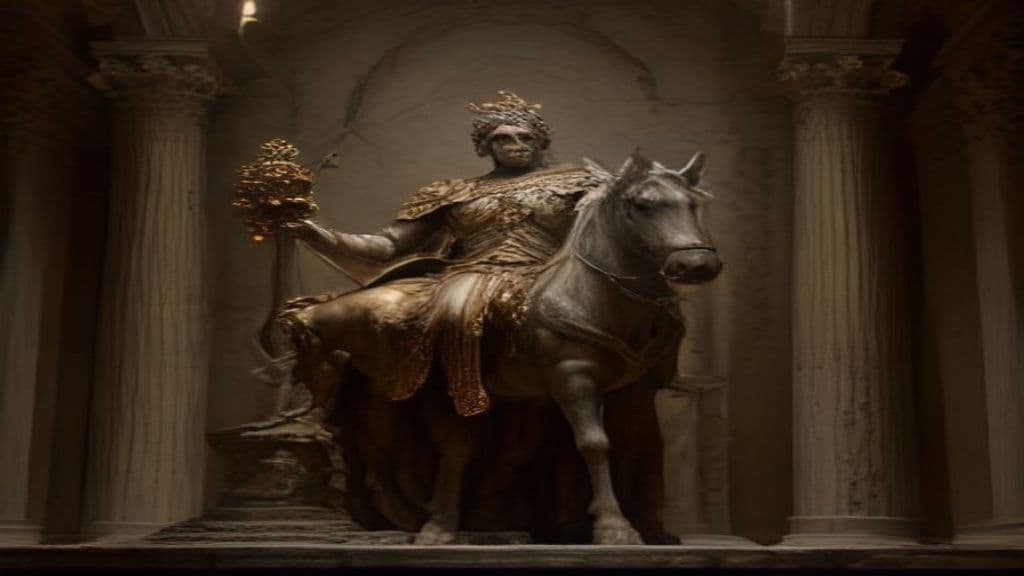
Meleager is born to Althaea and King Oeneus of Calydon (some traditions record alternate paternity by Ares). At his birth the Moirai prophesy that his life will end when a particular piece of wood, then burning in the family hearth, is consumed. Overhearing the prophecy, Althaea douses and hides the charred log to preserve his life. Later narrative context for Meleager's early fame is the Calydonian boar hunt, a communal expedition organized by Oeneus and led by Meleager after Oeneus summons heroes from across Greece to punish a boar sent against Calydon (a punishment motif elsewhere attributed to Oeneus' failure to honor Artemis). During the hunt Meleager awards the boar's hide to the huntress Atalanta because she drew the first blood; this provokes outrage from other hunters (including maternal relatives) and Meleager kills several of them in defense of his decision. The familial violence culminates when Althaea, enraged at Meleager's slaying of her brothers, burns the concealed wood, causing Meleager's death. In mythic aftermath his sisters' excessive mourning is punished by their metamorphosis into guineafowl (meleagrides).
Ancient summaries and artistic representations depict Meleager as a conventional epic warrior-prince: martial regalia, armor, and association with the boar-hunt tableau. Literary testimony preserved in later poets (e.g., Bacchylides as cited in summaries) portrays his shade in the underworld as still wearing 'shining armor.' Visual art and engravings commonly show him presenting the boar's head to Atalanta, emphasizing his role as leader and victor rather than providing unique physical identifiers beyond heroic dress.
Meleager's capacities in the tradition are those of a preeminent mortal hero: he gathers and leads other heroes as host of the Calydonian boar hunt, demonstrates prowess by killing the Calydonian boar (after Atalanta wounds it) and by slaying opponents who contest his judgment, and is counted among the roster of pan-Hellenic heroes in some epic lists (including variants that place him among the Argonauts). He is not described as possessing intrinsic supernatural powers; his life course is governed by a prophetic fate-token (the hearth-log) whose destruction results in his death. After death he appears in underworld narratives retaining his martial identity and is noted as the only shade who does not flee Heracles in one account.
Weaknesses
- conditionlife bound to a specific charred hearth-log (consumption by fire causes death)
Wards
- ritualdousing and hiding of the charred hearth-log

Atalanta
Atalanta is a mortal heroine of ancient Greek myth, famed as a swift-footed huntress and archer who lives at the margins between wilderness and polis. Her story—exposure and fosterage by a she-bear, prominence in the Calydonian boar hunt, a marriage-footrace won by Hippomenes with Aphrodite's golden apples, and a later metamorphosis into a lion—appears in multiple regional variants and literary traditions.
Argonauts
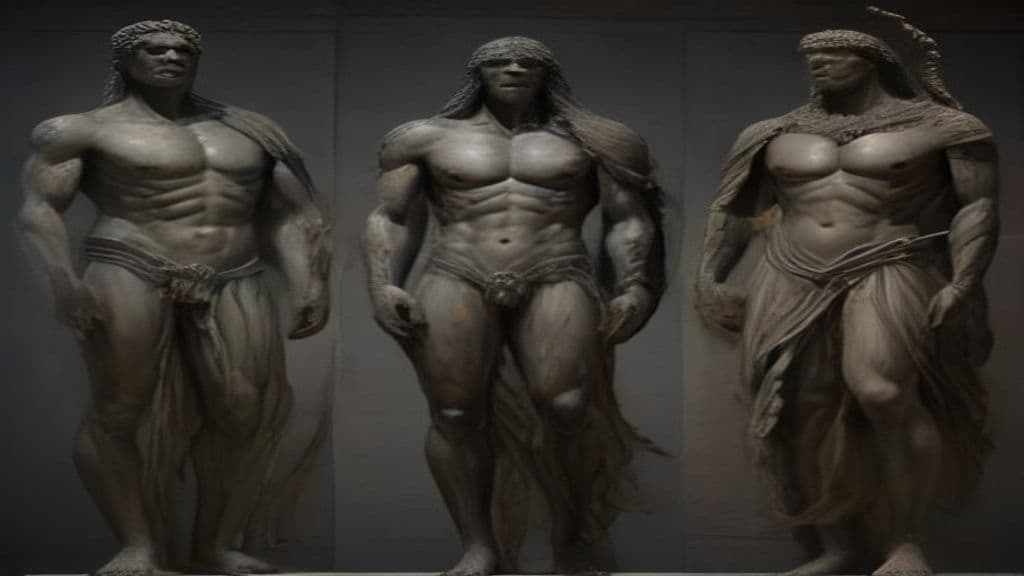
A band of human heroes in Greek myth who sailed aboard the ship Argo under Jason to Colchis to retrieve the Golden Fleece. Their identity is defined by membership in the celebrated voyage and by shared heroic lineages; membership lists and details vary by source.
Heracles
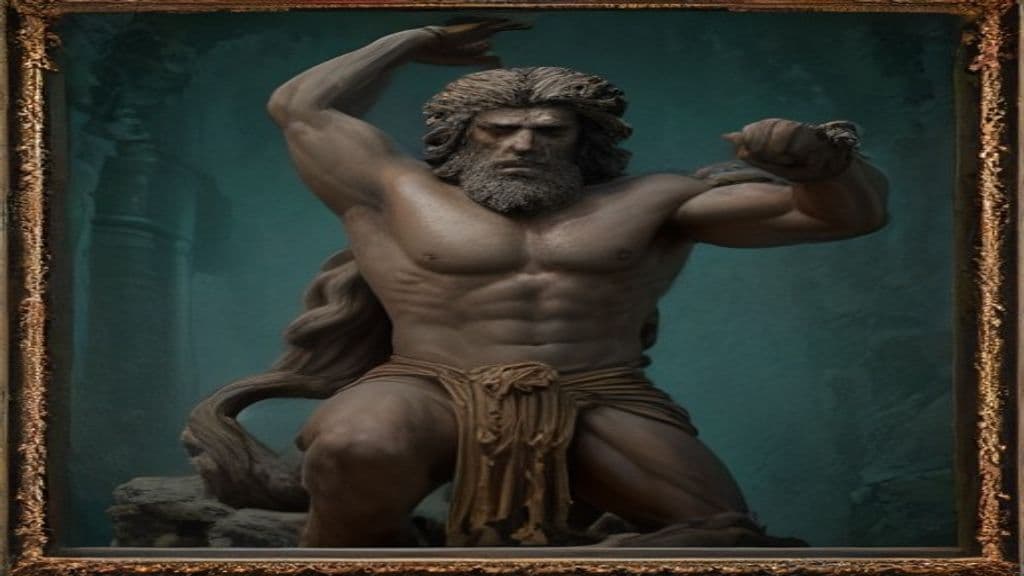
Heracles is the greatest hero of Greek myth whose career bridges mortal hero-cult and full divinization. Celebrated for his Twelve Labours, martial prowess, and travels between the mortal world, the underworld, and Olympus, he functioned as a civic patron, ancestor of royal lines (the Heracleidae), and object of cult that treated him both as chthonic hero and as god.
Acamas
Acamas (Ancient Greek: Ἀκάμας) is a personal name recurrent in ancient Greek narrative traditions applied to multiple human characters (warriors, princes, suitors), once to a Cyclops, and once as a hound's name. Rather than a single supernatural entity, bearers of the name appear episodically across the Trojan War, Theseid, and Theban cycles as mortal actors whose deeds intersect with gods and fate.
Aegimius
Aegimius (Ancient Greek: Αἰγίμιος) is a legendary ancestral king and lawgiver of the Dorians in Greek tradition. He appears in mythic-historical narratives as the eponymous progenitor of Dorian subgroups, a military leader who enlisted Heracles' aid, and the adoptive guardian of Hyllas, linking the Dorians to the Heracleidae.
Alector
Alector (Ancient Greek: Ἀλέκτωρ) is a personal name borne by multiple mytho-historical figures in ancient Greek tradition. The name appears in several regional genealogies and foundation stories (Magnesia, Boeotia, Elis, Argos, Sparta) and functions as an eponymous ancestor or princely figure rather than a single supernatural being.
Alke
Alke (Ancient Greek: Ἀλκή) is the anthropomorphic personification of prowess, courage, and battle-strength in archaic and classical Greek poetic tradition. She is attested as a named figure depicted on Athena's aegis in Homeric epic and the name also appears in later mythographic lists as a number of distinct proper-name figures.
Aloeus
Aloeus (Ancient Greek: Ἀλωεύς), sometimes rendered Haloeus, is a mytho-historical/genealogical figure in Greek tradition. Two distinct personages appear in sources: a Thessalian prince (son of Poseidon and Canace) connected to the Aloadae, and a son of Helios associated with sovereignty in Asopia (Sicyon). He functions as an eponymous ancestor and local founder-figure rather than as a supernatural actor.
Amphion and Zethus
Amphion and Zethus are twin brothers of Greek myth who function as the culture‑founding heroes of Thebes: Amphion the musician and Zethus the hunter/herdsman who together conquer Thebes, build the Cadmea, and rule jointly. Their story links human founders with gods (commonly Zeus as father; Hermes, Apollo and Artemis as intervening deities) and ends in later family tragedy surrounding Niobe and divergent accounts of the brothers' deaths.
Astynome
Astynome (Ancient Greek: Ἀστυνόμη) is not a single supernatural being but a personal name attested for several different mortal women in Greek mythic and genealogical traditions — for example, a Niobid, a daughter of Talaus and mother of Capaneus, a captive woman identified with Chryseis in Trojan War material, and a woman transformed into a rock after seeing Artemis naked.
Autochthe
Autochthe (Ancient Greek: Αὐτόχθη) is a minor mythological princess of the Perseid line, named in classical genealogies as a daughter of Perseus and Andromeda. In some traditions she is said to have married Aegeus of Athens and borne daughters but no sons, and her chief narrative role is as a dynastic connector between ruling houses (Argos/Mycenae and Athens).
Autochthon (ancient Greece)
In ancient Greek myth and civic ideology, an autochthon is an 'earth-born' person or people—literally generated by the soil of a place—to claim the deepest form of indigenous origin and thereby political legitimacy. The term functions as a social-mythic category grounding territorial belonging and priority rather than as an independently acting supernatural creature.
Balius and Xanthus
A paired set of exceptional, traditionally immortal horses from Greek myth, often given by gods to heroes and famed as the chariot steeds of Achilles. They are noted for divine parentage variants, great speed and endurance, emotional responsiveness, and — in one Homeric episode — a momentary prophetic speech granted by a goddess.
Calydon (son of Aetolus)
Calydon (Ancient Greek: Καλυδών, Kalydōn) is an eponymous mythic figure recorded in Greek tradition as the son of Aetolus and the namesake of the city and plain called Calydon in Aetolia. Sources treat him as a genealogical/foundational ancestor within local royal genealogies rather than as a deity or active supernatural agent.
Coresus
Coresus is a name borne by two mortal figures in Greek mythic tradition: an autochthonous founder associated with the sanctuary of the Ephesian Artemis, and a priest of Dionysus at Calydon whose unrequited love and prayer to the god bring a lethal frenzy on the city and culminate in his self-sacrifice. Both roles are attested in summaries of Pausanias' accounts preserved in modern reference works.
Community Record
- [1]Meleager (Wikipedia). Wikipedia article 'Meleager' (summary of mythic traditions, cult, and literary references)wiki
- [2]Meleager (Wikidata). Wikidata entry for Meleager (identifier and summary metadata)wiki
- [3]Meleager - in ancient sources @ attalus.org. Compilation of ancient attestations and variant traditions concerning Meleagerother
- [4]Meleager Presents the Boar's Head to Atalanta (Bernard Picart engraving). Art-historical depiction reinforcing iconography of Meleager in armor with the boar and Atalantaother
- [5]De fabula Meleagrea (archive). Archival text referencing Meleager traditions (cataloged material in supplied notes)other