Myrto is not given a single origin narrative in the provided materials. Rather, the attested usages are: (1) a mythic bearer presented as a possible eponym for the Myrtoan Sea (attestation uncertain and presented as a possible eponym); (2) a named Maenad listed among those who followed Dionysus (appearing in Dionysian mythic lists, e.g., the Indian campaign context in fragmentary sources); (3) in some genealogical variants a woman named Myrto is given as the mother of the mythic figure Myrtilus; and (4) in later ancient biographical tradition a historical-legendary Athenian woman called Myrto is described as a descendant of Aristides and appears in contested accounts of being associated with Socrates. These attestations are discrete usages of the same plant-derived personal name rather than components of a single mythic life-story.
The provided sources do not record a consistent physical description for any singular supernatural Myrto. Where the name appears among Maenads it is as a list-name within Dionysian retinues; no individualized iconography or physical traits for 'Myrto' are supplied in the excerpts. Similarly, mythic-eponym and genealogical mentions provide no descriptive details. Thus, no specific or recurring appearance can be reconstructed from the cited material.
No specific powers or habitual supernatural behaviors are attributed to a unified being named Myrto in the available sources. Implicitly, a Myrto listed as a Maenad would share, by category association, the generic role of a Dionysian follower (ecstatic rites, participation in the god's retinue) — but the sources provided simply list the name without describing actions. Genealogical or eponymous uses (mother of Myrtilus; eponym of the Myrtoan Sea) convey familial or onomastic roles rather than demonstrable abilities. The biographical Athenian Myrto is a historical-legendary personage with disputed social relationships; no supernatural capacities are recorded.
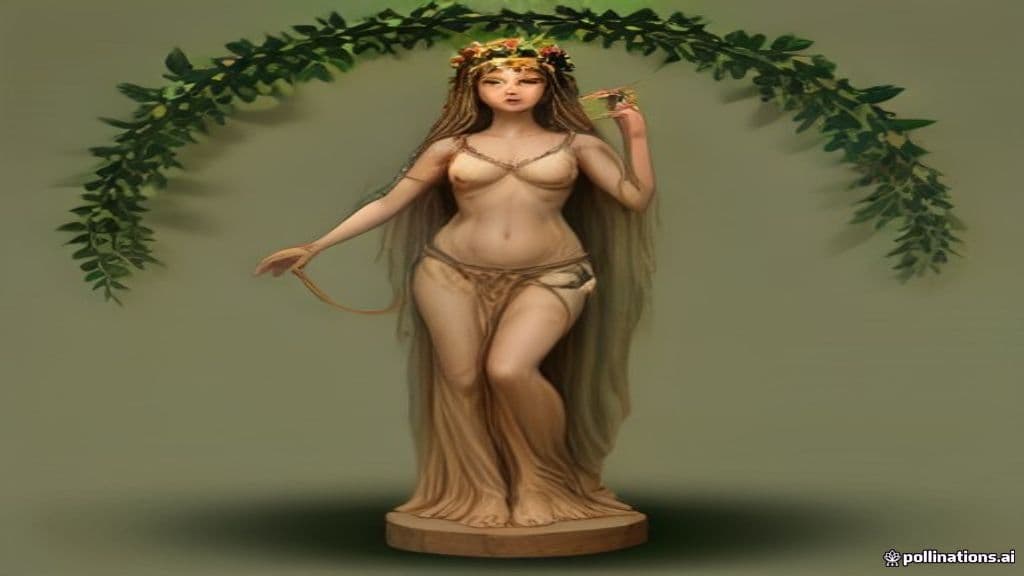
Maenad
In ancient Greek religion and myth, maenads (Ancient Greek: μαινάδες, mainádes) are the female followers and ritual participants of Dionysus who enter ecstatic frenzy to commune with the god. They function both as organized cult members in Dionysian worship (the thiasus) and as mythic agents through whom Dionysus' power—sometimes restorative, sometimes destructive—is manifest.
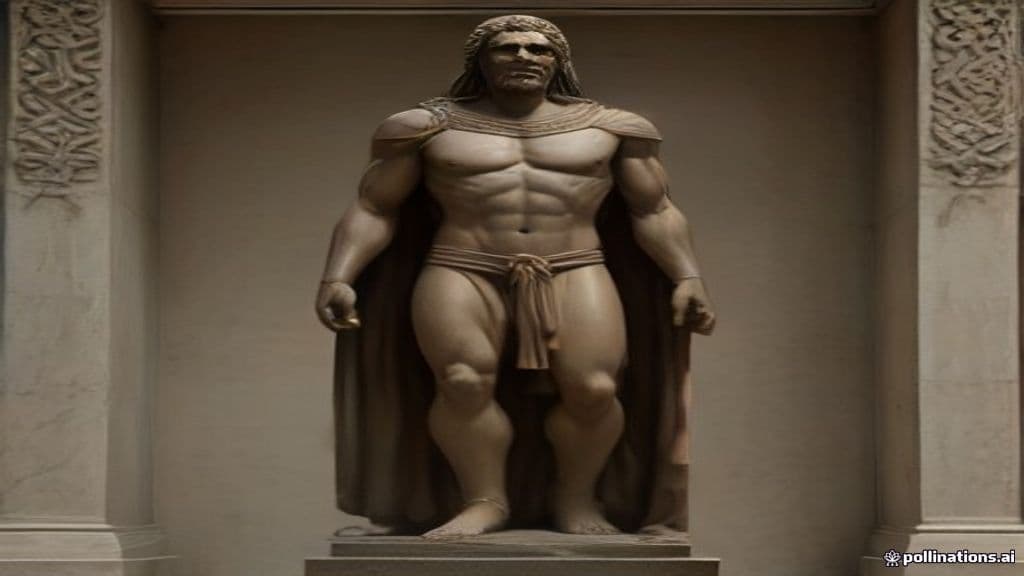
Myrtilus
Myrtilus is a heroic figure in Greek myth, known as the charioteer of King Oenomaus of Pisa and commonly described as a son of Hermes. He sabotaged Oenomaus's chariot, causing the king's death; Pelops then threw Myrtilus into the sea, and the dying charioteer pronounced a curse that, in tradition, haunted Pelops' descendants. His body was said to have been recovered and honored at a sanctuary of Hermes, and local topography and stellar identifications (Myrtoan Sea, a taraxippus at Olympia, and a later association with the constellation Auriga) are recorded as variants.
*Péh₂usōn (reconstructed)
Péh₂usōn is a hypothetical Proto‑Indo‑European pastoral guardian reconstructed by comparative scholars from parallels in Greek and Vedic traditions. Proposed as a Graeco‑Aryan ancestor‑figure, the reconstruction describes a protector of flocks, roads, and travellers rather than an attested historical cultic personality.
3-D Man
3-D Man is a Marvel Comics superhero identity associated with a 1950s-era origin in which the body of Chuck Chandler can materialize in three-dimensional existence when activated by his brother Hal via a pair of glasses. The mantle was later assumed by Delroy Garrett (formerly Triathlon) in modern continuity.
5 Ronin
5 Ronin is a 2011 Marvel Comics five-issue limited series that reimagines five Marvel superhero archetypes as rōnin (masterless samurai) in a fictionalized post‑Sekigahara feudal Japan. The work places Wolverine, Hulk, Punisher, Psylocke, and Deadpool analogues into period roles to explore displacement, revenge, and identity in an era of political upheaval.
A Elbereth Gilthoniel
An Elvish hymn in Sindarin addressed to Elbereth (Varda) from J. R. R. Tolkien's legendarium. Presented in The Lord of the Rings and later musical and dramatic adaptations, the hymn functions as devotional poetic language that evokes Elvish reverence for the star-kindler rather than an independent supernatural agent.
A.R.G.U.S.
A.R.G.U.S. is a fictional clandestine United States government agency in the DC Comics universe that investigates, contains, and manages superhuman, meta-human, and supernatural incidents and assets. Introduced in The New 52 continuity, it functions as an institutional actor providing intelligence, logistical support, covert task forces (notably Task Force X / the Suicide Squad), and a dedicated magic division across comics and media adaptations.
Aba (disambiguation / name-form)
Aba is a polyvalent name-form attested across many unrelated contexts (place names, personal names, animal names, and brief mythological listings). The provided sources do not support a single, coherent supernatural entity called "Aba" and offer no descriptive or ritual material for such a being.
Abarbarea
Abarbarea is a name attested in classical Greek and Roman sources for freshwater nymphs (naiads). The name appears for at least two individual mythic figures — a naiad wife of Bucolion and a naiad counted among ancestors of the Tyrians — and Hesychius records plural forms that may indicate the name was also used as a class-name (Abarbareai / Abarbalaiai).
Abas
Abas (Ancient Greek: Ἄβας, gen.: Ἄβαντος) is not a single mythic being but a recurring personal name borne by multiple mortals and minor mythic figures in Greek epic and genealogical traditions — kings, founders, seers, warriors, attendants, a centaur, and a youth transformed by a goddess. The name is glossed in the sources as 'guileless' or 'good-hearted' and appears across Argive, Theban, Trojan, Euboean, and other local cycles.
Abderus
Abderus (Ancient Greek: Ἄβδηρος, romanized Ábdēros) is a mortal heroic figure in Greek myth closely associated with Heracles, remembered as the youth left in charge of the Mares of Diomedes who was killed by them. He functions as an eponymous local/divine-hero ancestor for the city of Abdera and received funerary commemoration and athletic agones at his tomb.
Abin Sur
Abin Sur is a fictional extraterrestrial Green Lantern from the planet Ungara in DC Comics. A former history professor turned Green Lantern of Space Sector 2814, he discovered and investigated a prophecy tied to the "Blackest Night," died wounded on Earth and chose Hal Jordan as his ring-successor, and was later reanimated as a Black Lantern in the Blackest Night storyline.
Abomination of Desolation
An apocalyptic prophetic phrase originating in the Book of Daniel designating a profaning thing or act that renders the Jerusalem Temple cult desolate; later reused in the Synoptic Gospels as an eschatological sign prompting urgent flight. The term denotes ritual/cultic impurity (Hebrew shiqquts) and is variously interpreted as pagan offerings or altar, a foreign cult statue, or (in some New Testament readings) an acting agent.
Absolute Green Lantern (tradition)
A modern comic-book reinterpretation in DC's Absolute Universe in which a giant green lantern-shaped vessel appears above Evergreen, Nevada, generates an impenetrable green dome, judges townspeople and sends the judged into the Lantern to await further adjudication in OA (Omega‑Alpha). The story reframes Green Lantern mythos as cosmic/religious horror with an "Enlightenment Spectrum" of flames (Qard, Rao, Sur, Aur) stewarded by Oans such as Abin Sur.
Community Record
- [1]Myrto (mythology) — Wikipedia. Wikipedia contributors, 'Myrto (mythology)', Wikipedia, The Free Encyclopediawiki
- [2]Myrto — Wikipedia (Socratic tradition / given name). Wikipedia contributors, 'Myrto', Wikipedia, The Free Encyclopediawiki
- [3]Myrtilus — Wikipedia. Wikipedia contributors, 'Myrtilus', Wikipedia, The Free Encyclopediawiki
- [4]Wikidata entry for Myrto. Wikidata Q19968578, 'Myrto' (female given name)other