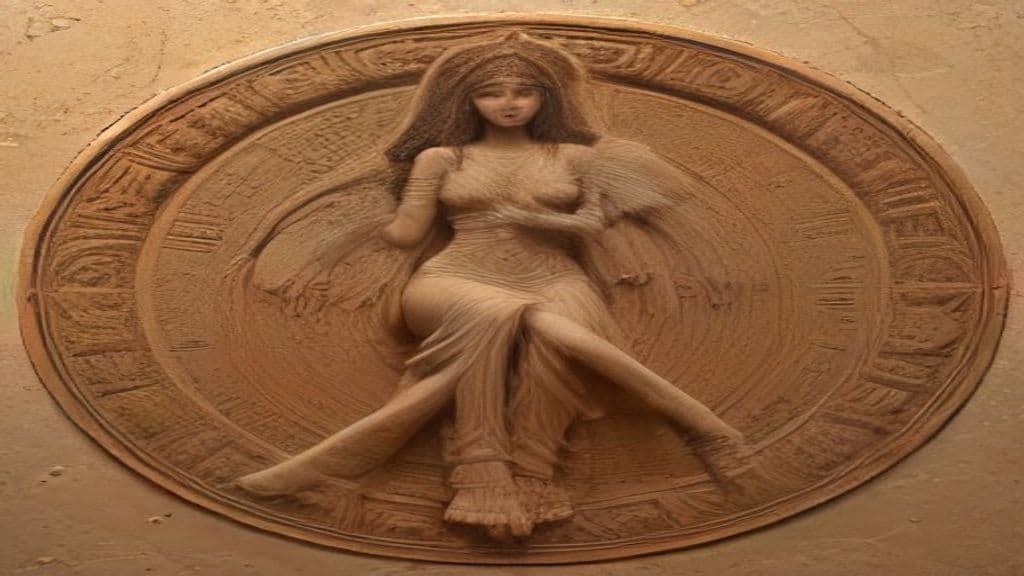
No full birth narrative is preserved in the supplied sources. In the local Lagash pantheon Nin‑MAR.KI functions as a tutelary goddess tied to the cult center of Guabba and is treated in relation to other regional deities (for example Nanshe). The sources do not record a definitive mythic origin or creation story for her; later scribal texts show uncertainty about her name and occasional onomastic overlaps (e.g., a possible appearance as Ninĝagia in one temple hymn), reflecting the textual transmission and reinterpretation of an originally local theonym.
Direct iconographic evidence is limited. The sources note it is possible she was depicted in the company of birds, echoing associations held by the goddess Nanshe, but otherwise provide no consistent physical description or well‑attested iconographic type for Nin‑MAR.KI.
Textual attestations identify Nin‑MAR.KI primarily as a divine protector of cattle and as an oath deity; she would therefore be invoked in contexts concerning livestock welfare and for guaranteeing oaths or legal assurances. Her main cult at the seaport Guabba situates her in a marsh/coastal economic milieu, and some summaries note a possible (but not strongly evidenced) link to trade. She received offerings and appears in offering lists and temple hymn contexts; after the decline of her urban cult she continues to appear in god‑lists and lament literature.
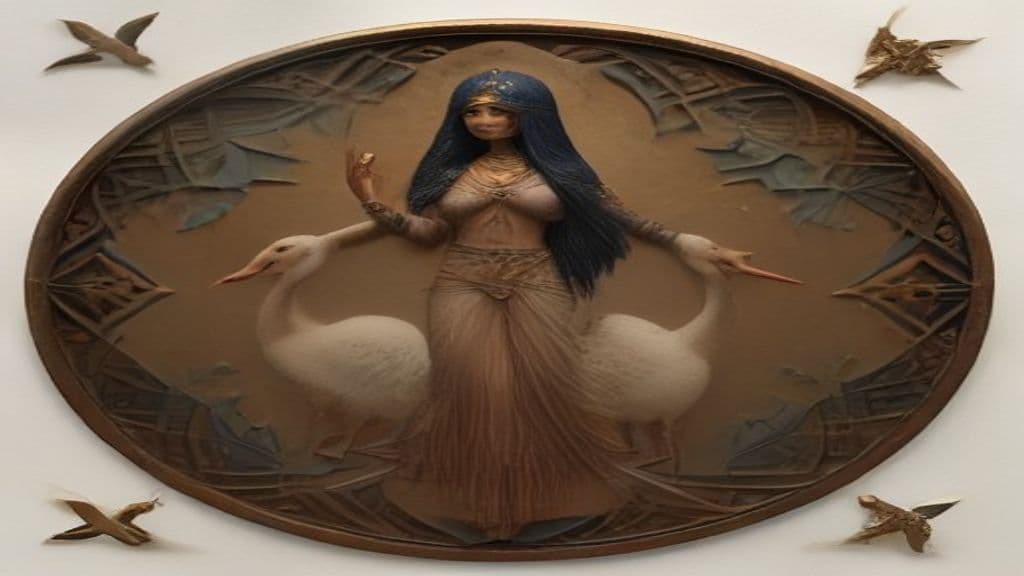
Nanshe
Nanshe is a Sumerian/Mesopotamian goddess associated with marshes and the sea, the fishes and water‑birds of those biomes, and with divination (notably dream interpretation), social justice, and civic welfare. Her primary cult center was the city Nina (Tell Zurghul); she appears across a long Mesopotamian chronology from the Uruk period into the first millennium BCE.

Dumuzi-abzu
Dumuzi-abzu is a Mesopotamian city tutelary deity worshiped in the state of Lagash, attested as the patron goddess of the city Kinunir. She appears in offering lists connected to the Nanshe cultic circle, is associated with temples and sanga priests, and is listed among deities thought to confer virtue on rulers in Lagash texts.

Hendursaga
Hendursaga (Sumerian Dḫendur-saŋ) is a Mesopotamian deity described in hymnic and god-list sources as a divine night watchman who patrols city streets, bears an insignia (staff or torch), and protects nocturnal travelers from hostile supernatural beings. He is attested in connection with the state of Lagash and is equated with the Akkadian Išum in later bilingual contexts.
Ninmug
Ninmug is a Mesopotamian deity attested from the Early Dynastic period onward, primarily functioning as a divine artisan (often titled tibira kalamma, "metalworker/sculptor of the land") and as one of the named helper goddesses associated with birth and the formation of humans. She had local cult centres (notably Kisiga and Adab), temple personnel, and appears in literary and ritual lists rather than in an individual cosmogonic birth narrative.
Ninshubur
Ninshubur is a Mesopotamian divine attendant (sukkal) chiefly associated as the companion, messenger, and intercessor of the goddess Inanna. Functioning as a cultic office within the pantheon, Ninshubur mediates between petitioners and higher gods and appears in major myth cycles (e.g., Inanna's Descent) and in city cults across ancient Mesopotamia.
Ninsianna
Ninsianna is a Mesopotamian astral deity who personifies the planet Venus. Attested from the Ur III period through the Old Babylonian era, the theonym served both as a cultic goddess/god and as the technical name for the observable planet in astronomical and omen texts.
Ninsun
Ninsun is a Sumerian goddess of ancient Mesopotamia, mother of the hero Gilgamesh and consort of the deified king Lugalbanda. She functions as a divine intercessor, dream-interpreter, and a protective beneficent figure (sometimes called a lamma) invoked in royal legitimation and literary traditions such as the Epic of Gilgamesh.
Nintinugga
Nintinugga is a Mesopotamian city-associated goddess of medicine, healing and ritual cleansing, principally worshiped at Nippur and attested across Ur III and Old Babylonian contexts. She is linked with bandaging, wound-cleaning, cleansing rites (atua), funerary libations, and cultic associations with dogs and specific ritual objects.
Ninurta
Ninurta is a major deity of ancient Mesopotamia (Sumerian–Akkadian–Assyrian–Babylonian) whose roles include agriculture, healing/exorcism, law and scribal authority, and martial champion of the gods. He is attested from the mid-third millennium BC onward and was venerated at city cult-centers such as Nippur (Eshumesha), Girsu/Lagash (as Ninĝirsu), and later in Assyrian Kalhu.
Niobe (Argive)
Niobe is a mortal figure of Greek myth, daughter of Tantalus and wife of Amphion, famed for boasting of her many children and for grieving them when Apollo and Artemis slew the Niobids; she is transformed into a perpetually weeping rock on Mount Sipylus in later tradition.
Niobid
A Niobid is one of the children of Niobe and Amphion in Greek myth; collectively the Niobids are mortal royal offspring slain by Apollo and Artemis as punishment for Niobe's boastful comparison with Leto. They function as tragic victims and exempla of the consequences of human hubris toward the gods.
Nirṛti
A Vedic and later Hindu personification of decay, sorrow, and inauspiciousness. In early Vedic texts Nirṛti functions as an unwanted presence associated with the kingdom of the dead and with ritual misfortune; in later Puranic and Agamic material the name is sometimes recast as a male dikpala (guardian) of the southwest with varied iconography.
Nis Puk
The Nis Puk is a household spirit from Danish-, Low German- and North Frisian-speaking areas of Schleswig and adjacent regions. Treated as a hybrid of the nisse (house-sprite) and puk/puck (kobold-like manikin), it acts as a domestic helper or a wealth-bringer in some localities and enforces reciprocal obligations through tests, rewards, and punishments.
Nisaba
Nisaba is an ancient Sumerian goddess chiefly associated with writing, the scribal arts, wisdom, and grain. Attested from the Fara (Early Dynastic) period onward, she functions as the divine patron and legitimizer of literacy, accounting, and the institutional arts of tablets and archives, and later becomes identified with grain itself.
Nishi
Bengali spirit of the night that calls your name in a loved one's voice — answering three times seals your fate. Its call cannot be refused by those whose time has come.
Community Record
- [1]Nin‑MAR.KI — Wikipedia. Wikipedia contributors. 'Nin‑MAR.KI.' Wikipedia, The Free Encyclopedia.wiki
- [2]Nin‑MAR.KI — Wikidata. Wikidata entry Q115519538 for Nin‑MAR.KI.other
- [3]Dumuzi‑abzu — Wikipedia. Wikipedia contributors. 'Dumuzi‑abzu.' Wikipedia, The Free Encyclopedia.wiki