
Sources describe the name Nis Puk as a compound of two regional household-being terms: Nis/Niß (linked to the personal name Nikolaus and cognate with the Scandinavian 'nisse') and Puk/Puck/Pûk (a Low German/Old Norse term for a kobold- or manikin-like being). Folklore treats the figure as a local juxtaposition of these elements rather than presenting a single mythic origin narrative; it functions within domestic cosmology as a house-attached spirit or familiar that may attach to an owner and negotiate its place by testing household comportment.
Accounts vary by locality. Common descriptions portray the Nis Puk as the size of a small child (reports give sizes such as as tall as a one-year-old or one-and-a-half-year-old but never taller than a three-year-old; other variants report as little as three inches or 'as tall as a span'). Typical traits include a disproportionately large head, long arms, small bright eyes, and a broad/stout build in some island descriptions. Clothing items frequently mentioned are a pointed red cap, red stockings or trousers, a grey or green long ticking jacket or grey waistcoat, and soft slippers. Pomeranian variants wear a big hat brimmed upwards and a red coat; one account specifies a red jacket with seven shiny buttons on each side. Regional variants emphasize different proportions and dress rather than a single fixed appearance.
The Nis Puk performs domestic labor—sometimes described as extraordinarily strong (one account says it 'can work as much as seven men')—and moves rapidly (its slippers allegedly enable it to cover huge distances in a short time). It may act as a wealth-bringer in some locales, bringing goods (including stolen items, comparable to the Drak/kobold motif). Socially, it tests households by creating a heap of chippings and soiling milk barrels; households that tolerate these signs gain its favor and it will remain and work. If neglected, refused work, or mistreated, it can torment its owner—beating, pulling hair or ears, riding on the owner's back, or otherwise causing distress. Outside the home in some areas it may assume animal forms (a cat) or a fiery drake-like shape.
Weaknesses
- conditionRefusal of acceptance (household rejects its test)
- conditionDenial of work or proper household reciprocal treatment (provokes punishment)
Wards
- conditionFailing the house's test (removing chippings or discarding soiled milk) — implied means to prevent the Nis Puk from staying
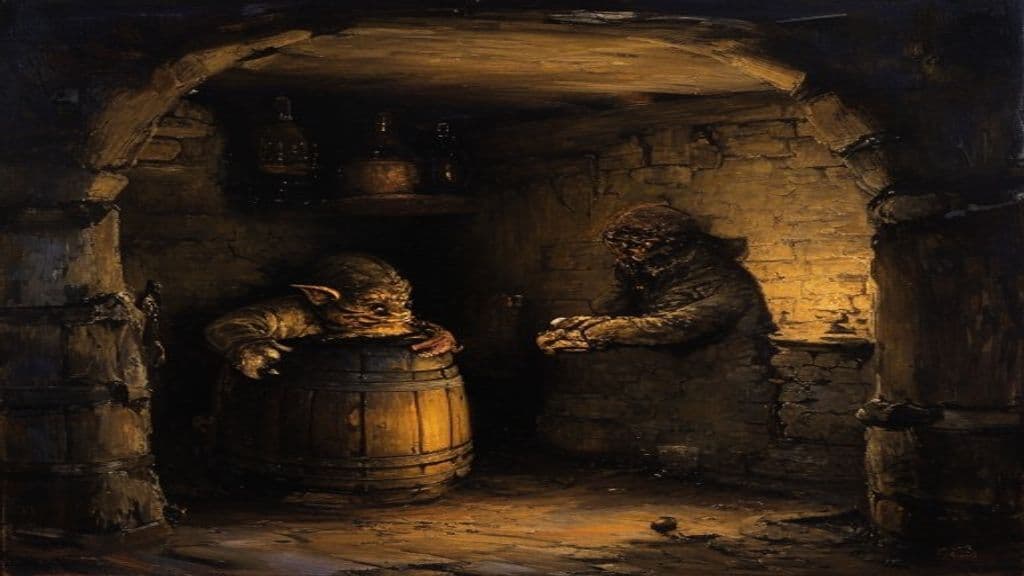
Kobold
The German household and mine spirit — a mischievous but potentially helpful small being who attaches to a household, bringing luck or disaster depending on how it is treated.

Nisse (tomte / tomtenisse / tonttu)
A Scandinavian household and farmstead spirit tied to a particular homestead; a small, human‑like custodian who performs chores, protects livestock and property in return for annual ritual food offerings (notably Yule porridge), and who can become dangerous if offended or neglected.
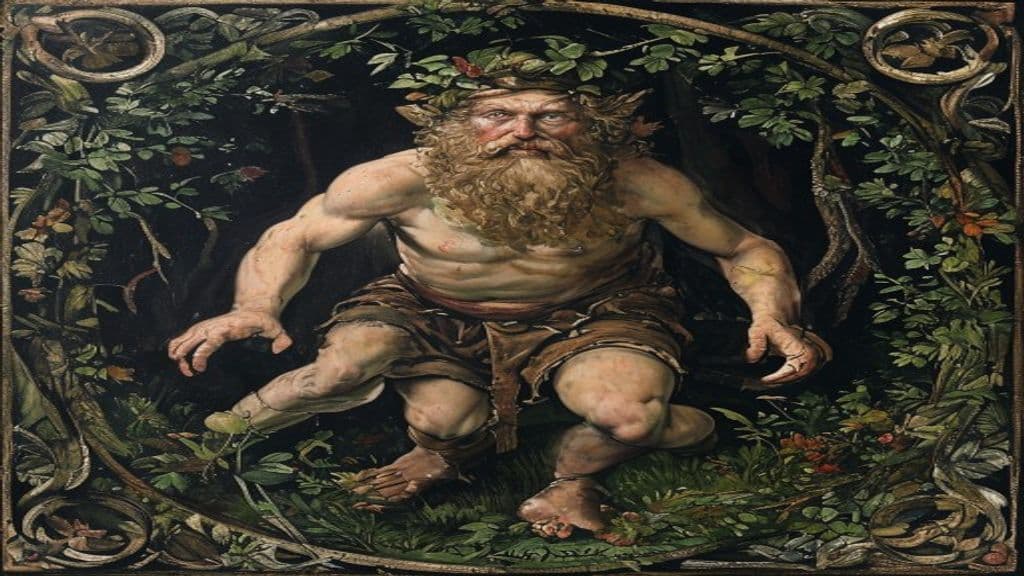
Puck
Puck is a northwest European liminal spirit occupying a space between household sprite and wild fairy trickster. Portrayed as a domestic helper who expects food offerings and as a nocturnal jester of the fairy court, Puck performs both useful chores and mischievous pranks in folklore and literature.
Church Grim
A site-bound guardian spirit in English, Scottish and Nordic/Scandinavian folklore that watches over an individual Christian church and its churchyard, defending the consecrated ground from profanation and hostile spirits. Forms and origin accounts vary by region, including a large black dog in English tradition, the bound spirit of an animal (often a lamb) in Scandinavian accounts, and in some Scottish strands the spirit of the most recently buried person acting as a temporary watcher.
Ekke Nekkepenn
Ekke Nekkepenn is a North Frisian folkloric figure, presented in 19th-century sources as a composite character: Christian Peter Hansen depicted him as a sea-dwelling 'merman' with a wife Rahn, while Theodor Storm later used a similar name for a small fiery, maleficent being. The figure combines a local water-man legend with a Rumpelstiltskin-type name-motif in Hansen's retelling.
Helhest
A three‑legged supernatural horse in Danish folklore associated with Hel, graveyards, and outbreaks of disease; it functions in tradition as an omen and agent linked to death rather than as a moralized devil-figure.
Weiße Frauen
A class of elf-like luminous female spirits in German folklore associated with sunlight, nature, and particular locales (brooks, castles). Scholars (notably Jacob Grimm) interpret them as survivals or localizations of older Germanic light-elves and goddess-figures.
Nin‑MAR.KI
Nin‑MAR.KI is a localized Mesopotamian goddess of the Lagash region, principally attested as the divine protector of cattle and as an oath deity. Her main cult center was Guabba, a seaport in Lagash territory; after local cult decline her name persists in god‑lists and laments and in lexical/literary traditions.
Niobe (Argive)
Niobe is a mortal figure of Greek myth, daughter of Tantalus and wife of Amphion, famed for boasting of her many children and for grieving them when Apollo and Artemis slew the Niobids; she is transformed into a perpetually weeping rock on Mount Sipylus in later tradition.
Niobid
A Niobid is one of the children of Niobe and Amphion in Greek myth; collectively the Niobids are mortal royal offspring slain by Apollo and Artemis as punishment for Niobe's boastful comparison with Leto. They function as tragic victims and exempla of the consequences of human hubris toward the gods.
Nirṛti
A Vedic and later Hindu personification of decay, sorrow, and inauspiciousness. In early Vedic texts Nirṛti functions as an unwanted presence associated with the kingdom of the dead and with ritual misfortune; in later Puranic and Agamic material the name is sometimes recast as a male dikpala (guardian) of the southwest with varied iconography.
Nisaba
Nisaba is an ancient Sumerian goddess chiefly associated with writing, the scribal arts, wisdom, and grain. Attested from the Fara (Early Dynastic) period onward, she functions as the divine patron and legitimizer of literacy, accounting, and the institutional arts of tablets and archives, and later becomes identified with grain itself.
Nishi
Bengali spirit of the night that calls your name in a loved one's voice — answering three times seals your fate. Its call cannot be refused by those whose time has come.
Nishi (Nyishi) — ethnographic group
The available sources do not describe a supernatural entity named “Nishi.” The material refers to the Nyishi (often spelled Nishi) as an ethnic group of Arunachal Pradesh, India, who speak a Tani language called Nishi. No folklore, appearance, abilities, rituals, or warding practices for a supernatural Nishi are documented in the provided sources.
Niskus
River god in Celtic tradition associated with the River Hamble, linked to flooding and drought. (Note: 1. Power tier: Primordial seems too high given Niskus is a river god tied to a local river deity (Lesser power tier would be more accurate). 2. Abilities: Statement should specify that Niskus's abilit)
Community Record
- [1]Nis Puk (Wikipedia). Wikipedia entry 'Nis Puk' (access provided in research notes)wiki
- [2]Family adventure trail with Puk Nis through Kampen. Sylt tourism page 'Family adventure trail with Puk Nis through Kampen' (modern cultural usage)other