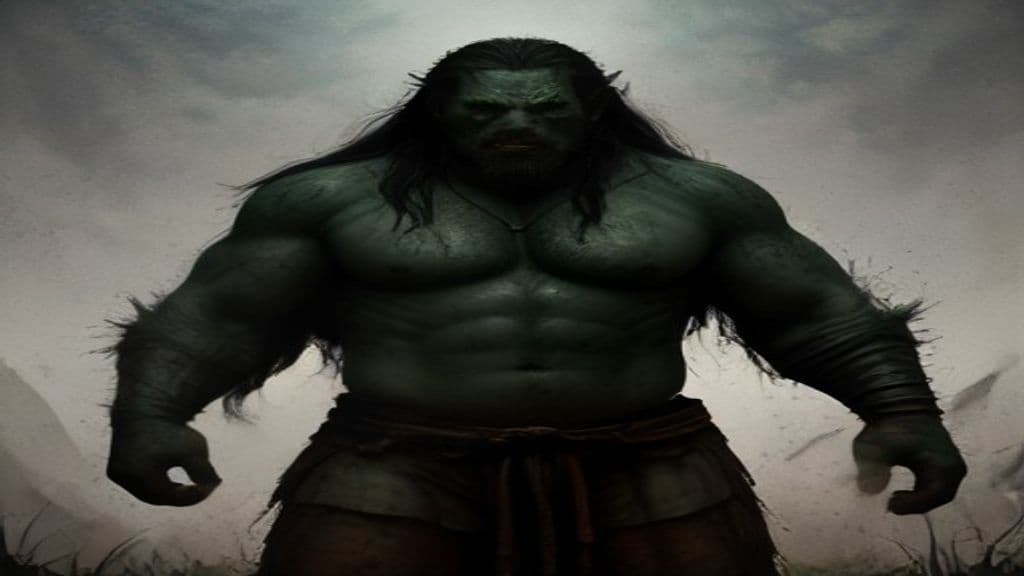
In the Old English poem Beowulf a compound orc‑nēas (plural orcneas) appears in a catalogue of monstrous peoples alongside elves and giants and is interpreted by scholars as linked to Latin Orcus and Gothic/Old Norse terms for corpse, yielding possible senses like 'demon‑corpses' or underworld/necromantic beings. J. R. R. Tolkien adopted and adapted the term for his subcreation: he drew on Old English orc ('demon'/'ogre') for phonetic and thematic resonance, devised Elvish etymologies (e.g., ruku), and presented orcs as a race bred or corrupted to serve Morgoth, Sauron and other dark powers in his legendarium.
Across the sources summarized, orcs are humanoid in shape with considerable variation in size and form. Typical depictions in Tolkien's fiction describe them as ugly, filthy, often bow‑legged, long‑armed and fanged; many early breeds are relatively small and avoid daylight, while later breeds such as Uruk‑hai are larger, stronger, and can endure sunlight. Half‑orcs and other hybrid forms are described in Tolkien's texts as man‑high with goblin‑like faces in some accounts.
Orcs in Tolkien's narratives function as organized, warlike fighters serving dark lords; they exhibit physical ferocity, endurance, and capacity for massed military action. Many early varieties shun daylight, while later bred strains (Uruk‑hai) lack that limitation. Cannibalistic tendencies are reported or suggested in the narrative. Tolkien's materials also depict interbreeding with Men producing half‑orcs; linguistic notes indicate orcish groups in his fiction employ pidgins and varied names rather than a single unified tongue.
Weaknesses
- conditiondaylight sensitivity (many early breeds)
- conditioninternal division and susceptibility to command breakdown
Wards
None recorded.
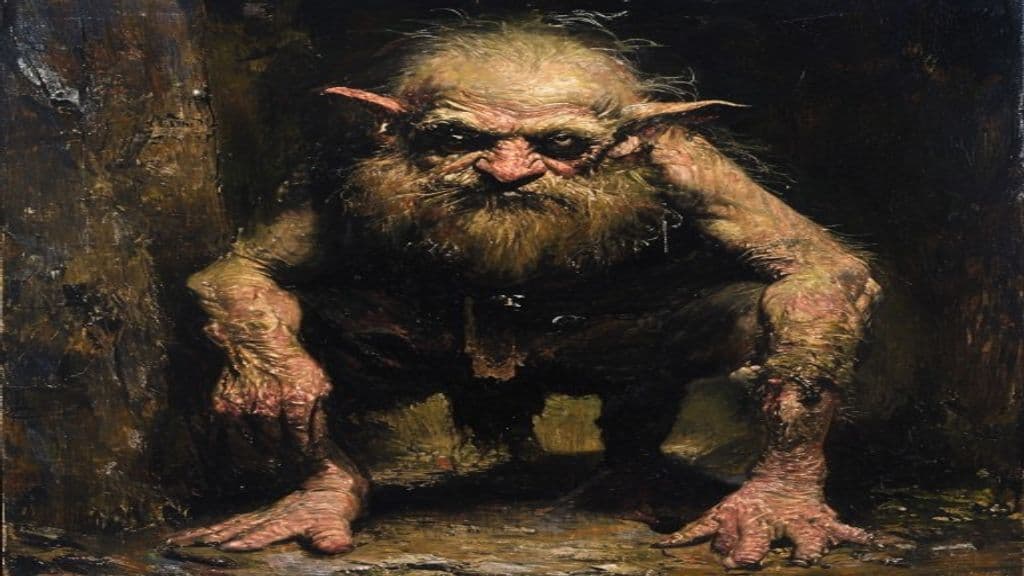
Goblin
A class of small, often grotesque humanoid beings in European folk belief that range from household helpers to tricksters and violent figures. Goblins occupy liminal spaces—hearths, cellars, ruins and wild places—and their behavior toward humans depends on region, story, and reciprocal treatment.
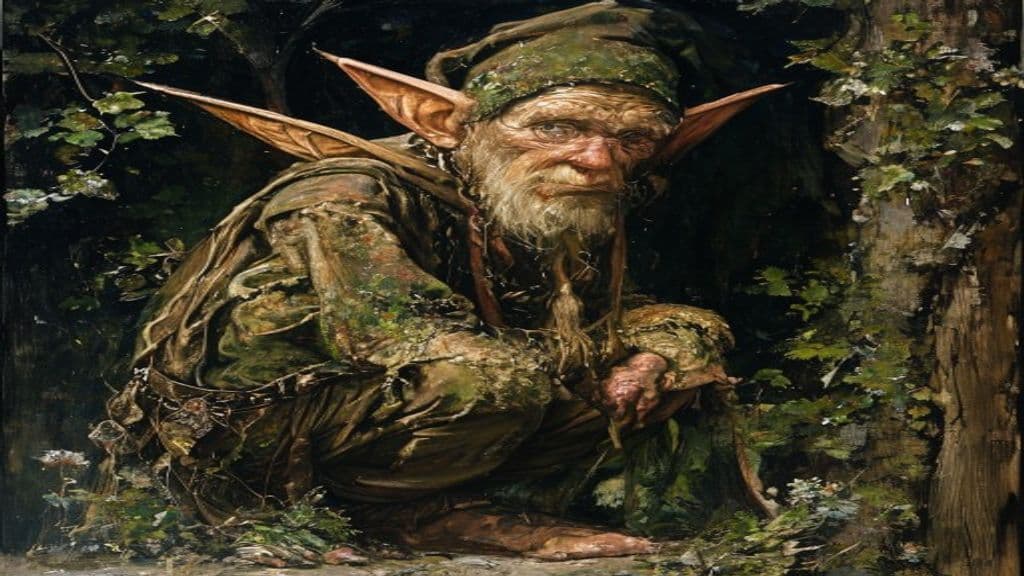
Elf
An elf is a humanoid supernatural being from Germanic folklore, especially prominent in North Germanic (Norse/Icelandic) myth and in later early-modern Scottish and Scandinavian belief. Elves are typically depicted as magically powerful and unusually beautiful, ambivalent toward humans and capable of helping or harming them.
Böðvildr
Böðvildr is a human princess of Germanic heroic legend, daughter of a king (Níðuðr / Niðhad / Niðung) whose fate is entwined with the smith Wayland (Völundr). In older poetic sources she is presented as a tragic figure—victim of the smith's revenge (murder of her kin and rape)—while later prose redactions (Þiðrekssaga) report that she bore Wayland a son (Viðga) and later married him.
Háma (Hama / Heime / Heimir)
Háma (also rendered Hama, Heime, Heimir) is a named figure of the Germanic heroic-legend tradition attested in Anglo‑Saxon and continental Germanic sources. He appears as a legendary warrior or retainer — often associated with the companion Witige — in poems such as Beowulf and Widsith and in later Germanic epic material (Alpharts Tod, Þiðreks saga). A single secondary source records a variant identification of the name with a mythic watchman figure linked to Heimdallr and the Bifrost; this identification is presented in the available material as a distinct, unverified tradition.
Opochtli
Opochtli is an Aztec deity whose name means "The Left" or "The Left-Handed." He is associated with fishing, hunting, and the technologies of lacustrine and marsh livelihoods, credited with inventing the atlatl, the fishing net, the canoe pole, and the bird snare, and is commonly depicted riding a dolphin. He is described in some sources as a representative or attendant aspect of the rain god Tlaloc and is directionally linked to the south in Aztec ritual geography.
Ops
Ops is an ancient Roman earth and fertility goddess personifying abundance, stored grain, and the material prosperity produced by agricultural labour; she is traditionally the consort of Saturn and is attested in cult as Ops Consiva with festivals and sanctuaries in Rome.
Orang Bunian
The 'invisible people' of Malay tradition — a sophisticated parallel civilization of beings sharing the world with humans but normally unseen, who can abduct or adopt humans who stray into their realm.
Orang Minyak
Orang Minyak ('oily man') is a Malay folkloric figure — a nocturnal human-shaped assailant described as coated in shiny black grease who abducts and is blamed for rapes of young women. Accounts vary between supernatural cursed figures and human criminals or warlocks, and the legend functions as a cautionary nocturnal threat in Malay-speaking communities.
Orang Pendek
Orang Pendek is a figure from Sumatran tradition and modern cryptozoology described either as a short, ground-dwelling bipedal primate inhabiting remote forests of Sumatra or, in some indigenous accounts, as a supernatural 'short ghost' (Hantu Pendek) used in oral lore and cautionary tales.
Oread
A class of mountain nymphs (Ὀρειάς, Oreiás) in Greek mythology, the Oreads are local nature spirits associated with mountains and high places and commonly depicted as companions or retinues of deities such as Artemis, Pan, and Dionysus. They appear in mythic narratives and an epigrammatic source where they participate in founding a place of worship.
Oreius
Oreius (also attested as Oreios, Orius, Oreus) is a named centaur figure appearing in two distinct narrative contexts: as one of the centaurs who tried to seize Pholus' wine and was killed by Heracles in Greek myth summaries, and as a centaur military leader (centaur general/commander) in C. S. Lewis's The Chronicles of Narnia and later adaptations/fan works where he fights on Aslan's side.
Orestes
Orestes (Ancient Greek: Ὀρέστης) is a mythic Greek prince and later king, son of Agamemnon and Clytemnestra, whose avenging of his father's murder by killing Aegisthus and Clytemnestra leads to pursuit by the Erinyes and a landmark divine-legal resolution (the trial on the Athenian Acropolis). His narrative explores guilt, divine command, ritual purification, and the transition from private vengeance to civic justice.
Orestheus
Orestheus is a mythic founder-figure in Greek tradition appearing in variant genealogies as either a son of Deucalion and Pyrrha associated with the Ozolian Locrians of Aetolia (noted for a vine-origin wonder-tale) or as one of the fifty sons of Lycaon credited with founding Oresthasion/Oresteion in Arcadia. He functions as an eponymic ancestral figure used to explain place-names and tribal identities.
Orias
Orias (also spelled Oriax) is a named spirit from grimoire-style demonological catalogues, described as a Great Marquis who commands thirty legions and is credited with teaching astrological virtues, granting dignities and favors, and transforming men. The primary descriptive material comes from a Renaissance/early modern-style Goetic grimoire entry as summarized in modern reference sources.
Community Record
- [1]Orc — Wikipedia. Wikipedia contributors, 'Orc', Wikipedia, The Free Encyclopedia.wiki
- [2]Wikidata: Orc (Q51044). Wikidata entry Q51044.other