
No indigenous mythic origin tale for Petbe is preserved in the supplied sources. Modern summaries report two interpretive possibilities for the name and origin: one treats the name as an Egyptian-style compound rendered interpretively as "Sky-Ba" (linking the deity to the Egyptian concept of the ba, or an aspect/soul), while an alternative hypothesis suggests the name is a corruption or hybrid Pet-(Baʻl) introduced via Levantine immigrant influence. The sources present these as etymological or historical hypotheses rather than documented native origin narratives.
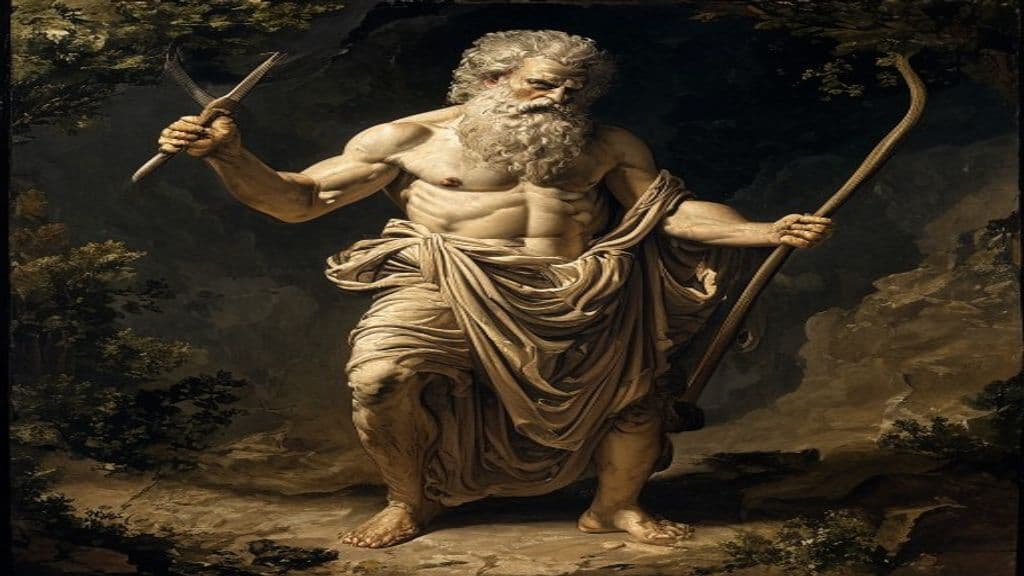
The provided materials do not supply any primary descriptions of Petbe's physical appearance, iconography, animal associations, or standard epithets. No pictorial or textual iconographic details are attested in the supplied sources.
Across the available summaries Petbe's primary attributed function is as "the god of revenge," indicating a specialized role in matters of retributive justice. The sources supply no native myths recounting specific deeds, mechanisms, or wider powers. Later Christian commentators compared Petbe to the Greek god Cronus, but this is a receptional analogy rather than evidence of native attributes beyond the revenge function.
Weaknesses
- otherno attested weaknesses recorded in sources
Wards
- otherno attested warding practices recorded in sources
Hathor
Hathor (Ancient Egyptian ḥwt-ḥr, 'House of Horus') is a major polyvalent goddess of ancient Egypt associated with the sky, maternal and royal motherhood, music, joy, fertility, and the Eye of Ra; she appears in multiple local manifestations and assisted the deceased into the afterlife.
Isis
Isis is a major goddess of ancient Egyptian religion, a member of the Heliopolitan Ennead who functions as sister and consort of Osiris, mother and protector of Horus, a funerary and royal protector, and a locus of potent magic whose cult spread through the Hellenistic and Roman Mediterranean.
Qebui
Qebui is an ancient Egyptian deity personifying the north wind. Attested in modern summaries of Egyptian religion, Qebui is identified primarily by his directional role and distinctive iconography.
Wadj-wer
Wadj-wer is an ancient Egyptian deity-personification of large northern waters called the "great green," associated with fertility and the productive richness of the Nile Delta. Modern descriptions often equate him with the Mediterranean Sea, while primary evidence and some scholarly readings emphasize lagoons and lakes of the northernmost Delta; his earliest attestation is on a 5th Dynasty mortuary temple of Sahure.
Werethekau
Werethekau (Egyptian wrt-ḥk3w) is the personification of magical efficacy and protective potency in ancient Egyptian religion. She functions both as a goddess in some contexts and as an epithet applied to major goddesses and objects (crowns, funerary weapons, household charms) to endow them with safeguarding power.
Personifications of Death
Named, often anthropomorphic figures across cultures that embody, govern, or mediate death and the realm of the dead. Roles vary from psychopomp guide to judge or sovereign of an underworld, and forms range from skeletal reapers to regal underworld rulers and spirit families.
Perun
The highest god in the Slavic pantheon, associated with law, war, thunderstorms, and fertility. (Note: - Power tier should be Ancient -> Primordial (as he is described as the "highest god" and his attributes are cosmic in scale) - Abilities should include control over mountains, as mentioned in the sou)
Peryton
A modern literary chimera combining stag and bird anatomy, originally described by Jorge Luis Borges as a fictional species with a peculiar life-history and a prophetic association; later reused in heraldry, fantasy fiction, and gaming as a winged-deer monster or heraldic charge.
Pesanta
A Catalan legendary night creature—usually an enormous black, hairy dog or sometimes a cat—that enters houses at night and presses on sleepers' chests, causing breathing difficulty and nightmares. It is cited in comparative folklore lists alongside other sleep‑oppressive beings and appears in modern culture as an emblem of nocturnal terror.
Peter Pevensie
Peter Pevensie is a fictional human character created by C. S. Lewis who appears in The Chronicles of Narnia. An evacuated English boy who becomes High King Peter the Magnificent in Narnia, he functions as a divinely‑sanctioned monarch and head general in Aslan's cause and is one of the two Sons of Adam prophesied to rule at Cair Paravel.
Petni
The female equivalent of the Bengali bhoot — the ghost of a young woman who died unmarried or before fulfilling her expected life. The Petni is more volatile and less predictable than the Shakchunni (married woman's ghost), driven by the particular bitterness of a life foreclosed rather than interrupted.
Petrosinella
Petrosinella is the human heroine of a Neapolitan fairy tale recorded by Giambattista Basile (Lo cunto de li cunti, 1634). Named for the local word for parsley, she is given to an ogress as the consequence of her mother's theft, confined in a tower, taught magic arts, and later escapes using three magical gallnuts/acorns in a classic ATU 310/313 sequence.
Community Record
- [1]Petbe. Wikipedia: Petbewiki
- [2]Petbe (Wikidata). Wikidata entry Q2616135wiki
- [3]PETBE - the Egyptian God of Revenge (GodChecker summary). Godchecker: PETBEother