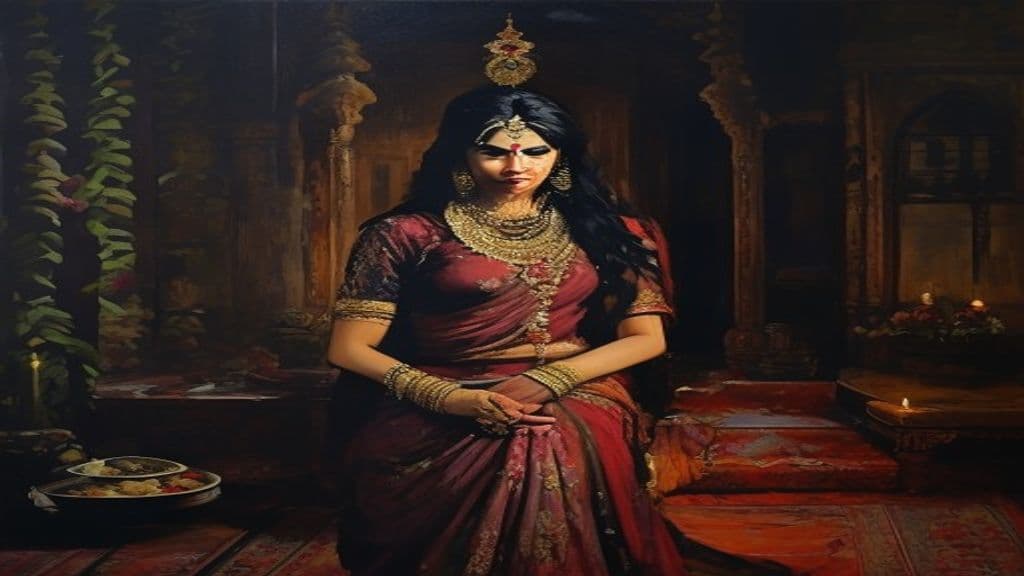
In the television narrative presented in the sources, the named Pishachini (Rani) was a human woman described as evil and greedy whose misdeeds and murders led to a curse after her death that transformed her into a Pishachini. This origin account is specific to the Colors TV show material and is not supplied by the archival tantric listings, which index Pishach‑related sadhana but do not supply an origin myth.
In the TV drama, the Pishachini appears outwardly as a strikingly beautiful young woman who passes as an ordinary human and uses that human guise to seduce and manipulate people; archival/ritual listings in the provided sources do not describe a visual form for Pishachini.
According to the television synopsis, the Pishachini can charm and enchant humans, grant wishes at terrible prices, manipulate family members, seduce for sexual union and use human blood, pursue a pregnancy to produce an even more powerful Pishacha, escape prior ritual imprisonment, attack or paralyze knowledgeable elders, transform others (an elder is later said to become a Pishacha), and command or unleash subordinate dark creatures (Agni Vetaals). The drama also depicts vulnerability to divine power—e.g., a protagonist blessed with the mark of Lord Hanuman and later granted the powers of Goddess Durga uses a trident to counter a Maha‑Pishacha. Separately, Pankaj Oudhia archival listings index Pishach‑ and Pishachini-named sadhana and associated herbal ingredients, implying that practitioners engaged this spirit-type in ritual or remedial contexts, though the listings in the sources do not specify siddhi effects or systematic powers.
Weaknesses
- ritualpriestly imprisonment/containment (as performed by a Pandit/Nanu in the TV narrative)
- symboldivine empowerment/invocation of goddess power (Goddess Durga) and sacred implement (trident/trishul) as effective in the TV narrative
- symbolmark of Lord Hanuman on a devotee (protective role in the TV narrative)
- otherritual sadhana and herbal remedies indexed to Pishach/Pishachini in the Pankaj Oudhia listings (specific procedures not provided in the sources)
Wards
- ritualimprisonment/containment performed by a priest/ritual specialist (TV: Pandit Ji / Nanu who once imprisoned Rani in a box)
- ritualinvocation of Goddess Durga and use of the trident (trishul) by a divinely empowered human (TV depiction where Durga's power disables the Maha‑Pishacha crown)
- symbolmark of Lord Hanuman borne by a human (protective aid in the drama)
- ritualPishach‑Pishachi sadhana / Karna Pishachini Sadhana / Chichi Pishachini Sadhana (indexed tantric/vedic sadhana titles from Pankaj Oudhia archival listings; listed alongside many plant ingredients though procedures are not detailed)
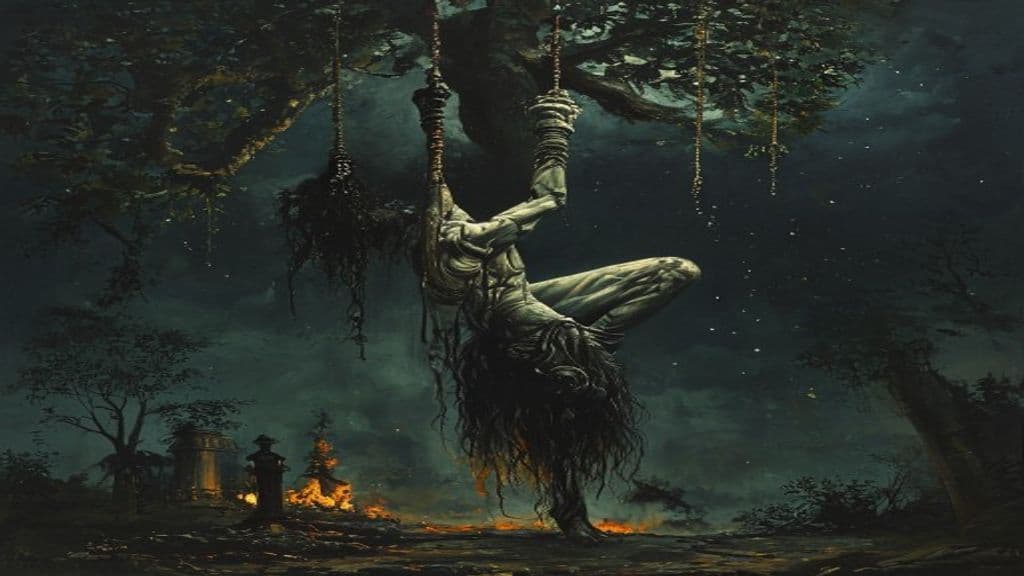
Vetala
A spirit that inhabits and reanimates corpses, possessing supernatural knowledge and the power to prophesy. One of the most feared beings in Shaiva tradition.
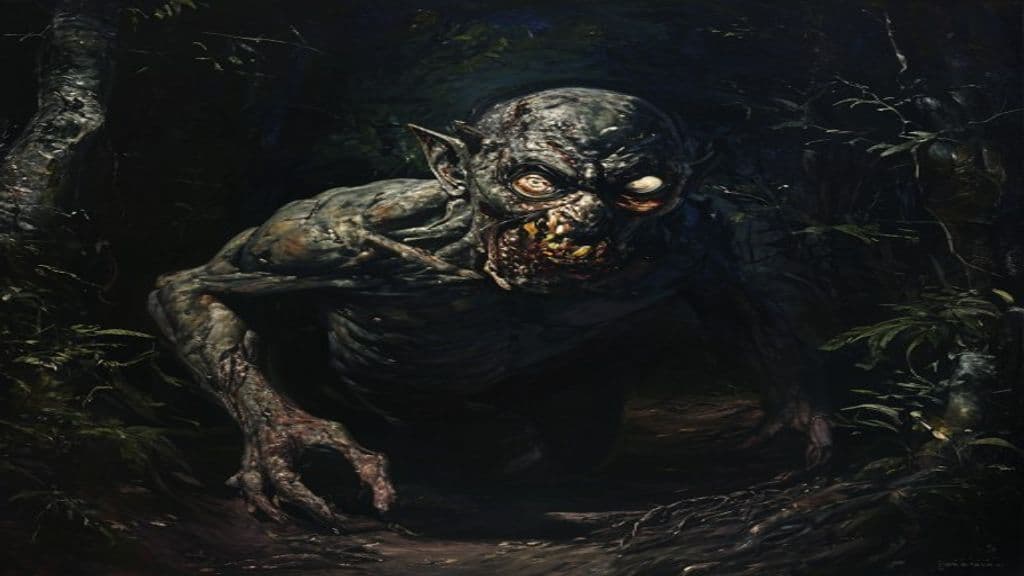
Pishacha
Flesh-eating spirits of Hindu mythology that haunt cremation grounds and are associated with disease, madness, and possession. The lowest class of demon in the Vedic hierarchy.
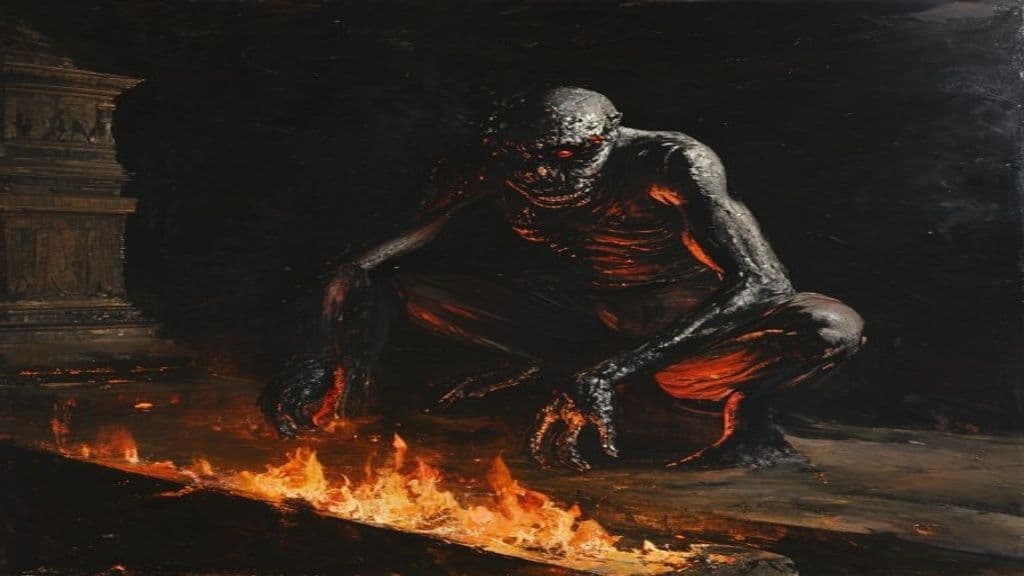
Pishach
Among the oldest classified demon-types in Hindu tradition — flesh-eating entities of the cremation ground first named in the Atharva Veda. The Pishach inhabits fresh corpses and possesses the living, causing the specific Ayurvedic condition of 'pishachabadha': madness, speaking in unknown languages, consuming impure things.
Pirene
Pirene is attested in the provided sources as a name applied to a fountain in Corinth and as a mythological figure described simply as a nymph in Greek tradition; the supplied materials are fragmentary and give no detailed myths, attributes, or cult practices for the figure.
Piru (Finnish tradition)
A fiend or demon from Finnish mythology, classified as malevolent entities. (Note: 1. Summary: Remove "malevolent entities" as it's not supported by the source material. 2. Power tier: Change to Lesser or Minor Spirit (no evidence of Primordial power). 3. Appearance: Add that no spe)
Pisacha
The supplied sources do not document a supernatural entity named Pisacha in Hindu primary texts. In the provided material the lexical form appears in non-mythological contexts: as the scientific name of an insect genus and as a bibliographic/linguistic label (a Dardic/Pisacha language specimen title and the title 'Paishach Bhashya' listed among commentaries). No primary-source descriptions of a demon/ghost called Pisacha (appearance, powers, rituals) are present in the provided excerpts.
Pishach
Among the oldest classified demon-types in Hindu tradition — flesh-eating entities of the cremation ground first named in the Atharva Veda. The Pishach inhabits fresh corpses and possesses the living, causing the specific Ayurvedic condition of 'pishachabadha': madness, speaking in unknown languages, consuming impure things.
Pishacha
Flesh-eating spirits of Hindu mythology that haunt cremation grounds and are associated with disease, madness, and possession. The lowest class of demon in the Vedic hierarchy.
Pishacha-graha
The possessing variety of pishacha described in classical Ayurvedic and tantric texts — a grasping spirit (graha) that seizes the body of a victim, producing symptoms of madness and compulsion.
Pishdadian Dynasty
Mythological rulers in Zoroastrian belief, Persian mythology, and Iranian national history. (Note: - Power tier: Primordial (not Ancient), as they are described as "primordial kings" controlling the world. - Abilities: Remove mention of specific abilities related to governance and leadership, as th)
Pishtaco
An Andean folkloric slayer-figure (also called ñaqaq or kharisiri) associated with attacks on indigenous people to extract human fat for commercial, ritual, or practical ends. The figure straddles human and supernatural traits, frequently imagined as outsider professionals (soldiers, hacendados, doctors) and is used as an explanatory focus for wasting illnesses and violent deaths in Peru and Bolivia.
Pisidice
Pisidice (Ancient Greek Πεισιδίκη, Peisidíkē) is a personal name borne by multiple mortal women in ancient Greek myth. The bearers of the name appear as princesses, queens, daughters, and wives in distinct genealogical and heroic narratives (Aeolian, Pelian, Pylian, Methymnaean, Boeotian), rather than as a single supernatural entity.
Pisinoë
Pisinoë (also Peisinoe, Peisithoe) is attested in Greek mythographic sources as one of the Sirens, named among the daughters of the river-god Achelous and either the Muse Melpomene or Sterope. Surviving references are genealogical; no independent narratives, descriptions, rituals, or specific powers unique to her are preserved in the supplied sources.
Pitys
Pitys is an Oread (mountain) nymph from Greek myth who, pursued by the god Pan in classical accounts, was transformed into a mountain pine. Her story functions etiologically to explain the origin of a pine tree associated with rustic landscape and Pan.
Pitṛ (Pitris)
In Hindu religious tradition the pitṛs (Sanskrit: पितृ, pl. pitṛs or pitris) are the departed ancestors regarded as a class of beings whose welfare depends on ritual duties performed by living descendants. They occupy Pitrloka (and in some accounts Devaloka or other lokas), are sustained by offerings such as piṇḍa and śrāddha, and—when properly propitiated—are believed to confer blessings and social-religious benefits on the living.
Community Record
- [1]Pishachini (Wikipedia). Wikipedia entry for the television series Pishachini (Colors TV) and related synopsis details as provided in the research notes.wiki
- [2]Pishachini (Wikidata). Wikidata item for Pishachini referenced in the research notes.other
- [3]Key Symptoms: Pain in coccyx when touched. © Pankaj Oudhia (archive listing). Pankaj Oudhia archival index linking symptom headings to 'Karna Pishachini Sadhana' and other related sadhana and ingredients, as cited in the research notes.other
- [4]Key Symptoms: Inflammation of bronchia. © Pankaj Oudhia (archive listing). Pankaj Oudhia archival index linking 'Pishach-Pishachi Siddhi' and lists of plant names to the symptom heading, as cited in the research notes.other
- [5]Key Symptoms: Itching of skin of chest specially of mammae. © Pankaj Oudhia (archive listing). Pankaj Oudhia archival index linking 'Chichi Pishachini Sadhana' and lists of plant names to the symptom heading, as cited in the research notes.other