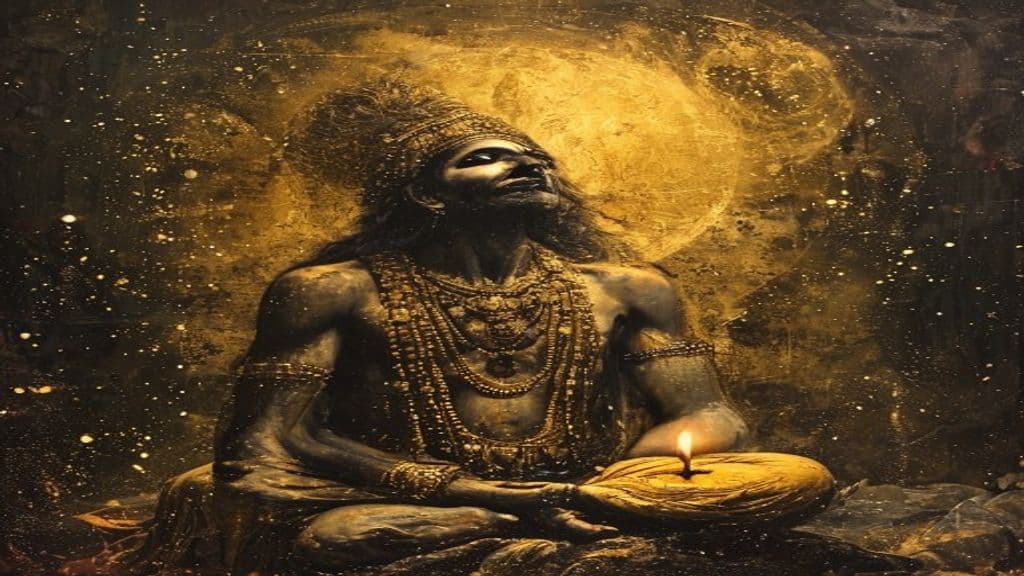
In Brahmana-layer accounts Prajapati is presented as a primeval, self-originating creative principle arising in relation to Brahman and co-operating with Vac (Speech). Cosmogonic motifs attached to him include birth from a golden cosmic egg and staged creation by acts of inhalation/exhalation that produce devas (light) and asuras (darkness). Over time the single figure of Prajapati in early Brahmana texts becomes a more general name or epithet in later Puranic lists and for other deities (e.g., identification with Brahma, Vishvakarman, Daksha, Kashyap) so that the "origin story" varies by text: in some passages he is a metaphysical principle; in others he is a mythic actor who creates, is punished for transgression, and is restored.
Sources do not present a fixed physical portrait but emphasize cosmological and transformative modes of appearance. Mythic imagery includes emergence from a golden egg, the production of beings by breath (inhaling/exhaling), and interchange with the goddess Vac; narrative episodes show him taking animal form (for example turning into a stag to approach his daughter when she is a doe in the Aitareya Brahmana). These accounts portray Prajapati through actions and metamorphoses rather than consistent bodily details such as garments or height.
Prajapati's primary ability is creative generation: in Vedic and Brahmana accounts he makes heaven and earth, waters, gods and humans, and produces fundamental principles such as mind (manas), desire (kama) and tapas (heat). Cosmogonic processes associated with him include the golden egg motif, co-creation with Vac (Speech), and breath-based generation (inhalation/exhalation producing different classes of beings). Textual evidence also shows the name functioning as an epithet applied to multiple deities (Rigvedic passages use Prajapati as a name for Savitr, Chandra, Agni, Indra), so his powers and roles vary across Vedic, Brahmana and Puranic layers rather than forming a single unified omnipotence.
Weaknesses
- conditionsubject to punishment and death in mythic narrative (e.g., killed by Rudra in Aitareya Brahmana following a transgressive act)
Wards
- otherNo specific human wards recorded in supplied sources; mythic correction by other gods (e.g., creation of Rudra to punish Prajapati) is attested rather than human ritual protections
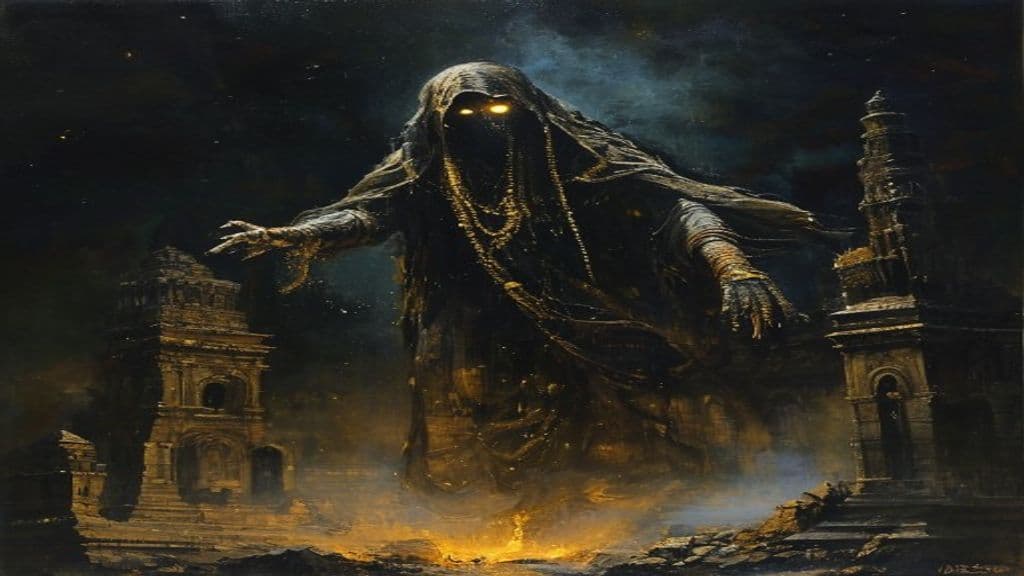
Brahmarakshas
The most learned and terrible of spirits — the ghost of a Brahmin who misused his scriptural knowledge in life and was condemned after death to be both demon and scholar, haunting places of learning.
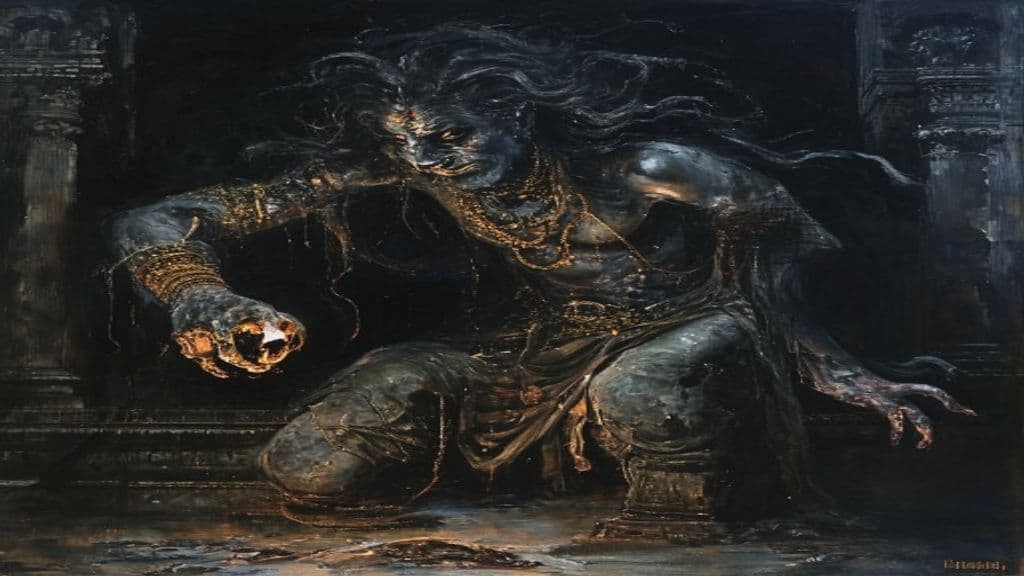
Brahmarakshasa
Demon-spirit of a Brahmin who misused sacred knowledge for evil ends — described in the Ramayana and Mahabharata, the Brahmarakshasa combines the destructive force of a Rakshasa with the ritual knowledge of a priest. Among the most dangerous entities in Hindu demonology.
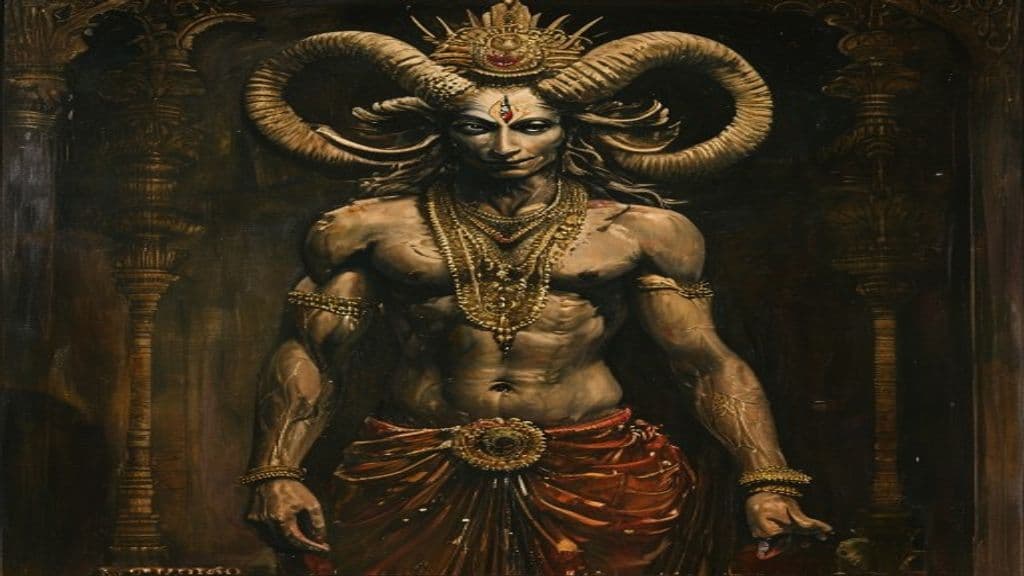
Daksha
Daksha (Sanskrit: दक्ष) is a mythic Prajapati and creator-agent in Hindu textual tradition, remembered as a progenitor who presides over yajna and begets lineages. He appears in Vedic, Itihasa, and Puranic sources as a ritual expert and patriarch whose actions in the Daksha yajna narrative produce major mythic consequences (Sati's self-immolation, Shiva's wrath, origin of Shakti Peethas).
Aditi
Aditi is a major Vedic goddess in Hindu tradition who personifies the boundless, infinite cosmic principle and functions as the maternal matrix from which many celestial deities (the Ādityas and other groups) are born. In the Vedic hymns she is invoked as a protective liberator who guards petitioners, provides wealth and safety, and frees devotees from hindrances such as sin and sickness.
Agni
Agni is the Vedic personification of fire in Hindu tradition: a sacred, mediating principle that manifests as terrestrial fire, atmospheric lightning, and celestial sun, and that receives and conveys sacrificial offerings. Prominent in the Rigvedic corpus, Agni functions as sanctifier, witness of rites of passage, and a transformational inner principle in later Upanishadic literature.
Bhikshatana
An aspect of the Hindu god Shiva manifested as the 'Supreme mendicant' — a naked, wandering ascetic who begs for alms as a penitential and pedagogical form. Presented in Puranic narratives and South Indian iconography, Bhikshatana enacts a Kapali vow of expiation and provokes sages and householders as part of a revelatory drama.
Brahman
Brahman is the ultimate, all-encompassing metaphysical principle in Vedic, Upanishadic and later Vedantic literature: the ground, origin, support and goal of all that exists. It is described variously as an attributeless, ineffable absolute (nirguṇa) and, in devotional contexts, as manifest with qualities (saguṇa) without becoming a conventional cult-deity.
Deva (Buddhism)
In Buddhist cosmology a deva is a class of celestial being or heavenly rebirth occupying higher planes than humans; devas are longer‑lived, more powerful, and generally happier than humans but remain impermanent and subject to karma. The category spans formless meditative beings through subtle form devas to sensual gods, and maps onto the three dhātus (Ārūpyadhātu, Rūpadhātu, Kāmadhātu).
Dyaus
Dyaus (Dyáus; Dyauspitr/Dyauṣpitṛ́) is the Rigvedic daylight‑sky deity and archetypal 'Sky Father' whose union with the earth goddess Prithvi forms the prime parental pair in Vedic cosmology. He functions as a progenitor and sovereignty figure in hymns of the Rigveda and is cognate with the Proto‑Indo‑European daylight‑sky father (cf. Zeus, Jupiter).
Hindu deities
Hindu deities (Deva/Devi) are the diverse gods and goddesses recognized across Hindu traditions, ranging from Vedic forces of nature to later personalized major gods and goddesses. They function as patrons of rites, embodiments of moral and cosmic principles, and focal points for temple cults, festivals, and devotional traditions while often also being interpreted as aspects of a single Ultimate Reality (Brahman).
Indra
Indra is a major Vedic deity, king of the devas and lord of Svarga (heaven), associated primarily with the sky, storms, lightning, rain, rivers and martial heroism; he is central in the Rigveda and later appears across Hindu, Buddhist and Jain cosmologies with varying status.
Indrani
Indrani (Sanskrit: Indrāṇī), also called Śacī / Shachi and Poulomī, is the queen and consort of the Vedic and Puranic god Indra. Presented in Vedic hymns and later epic and Purānic narratives, she functions as Indra's wife, a personification of aspects of his power in some hymns, and an agentic figure in courtly celestial stories such as the Nahusha episode.
Maruts
A troop of Vedic storm-deities portrayed as violent, young warrior-gods associated with thunder, lightning, cloud-splitting and rain; they act as a martial retinue attendant to higher gods (notably Indra) and are variably described as offspring of Rudra and Prisni or, in later tradition, born from Diti.
Nirṛti
A Vedic and later Hindu personification of decay, sorrow, and inauspiciousness. In early Vedic texts Nirṛti functions as an unwanted presence associated with the kingdom of the dead and with ritual misfortune; in later Puranic and Agamic material the name is sometimes recast as a male dikpala (guardian) of the southwest with varied iconography.
Prithvi
Prithvi (Sanskrit: पृथ्वी, Pṛthvī) is the Vedic personification of the Earth, a maternal cosmic principle who is simultaneously the physical ground, the universal Mother who nourishes life, and manifest matter participating in cosmogony. She is commonly paired with the sky (Dyaus) as the dyadic parents Dyavaprithivi and later becomes identified or merged with Bhūmi in classical Hindu and Buddhist contexts.
Community Record
- [1]Prajapati - Wikipedia. Wikipedia article 'Prajapati' (access provided in research notes)wiki
- [2]Wikidata: Prajāpati. Wikidata entry summary for Prajāpati (access provided in research notes)other
- [3]Archive: Prajapati Hiral485 Favorites. Archive record listed in research notesother
- [4]Archive: High Court of Gujarat - GJHC240179881998 (2002-07-03). Archive record listed in research notesother