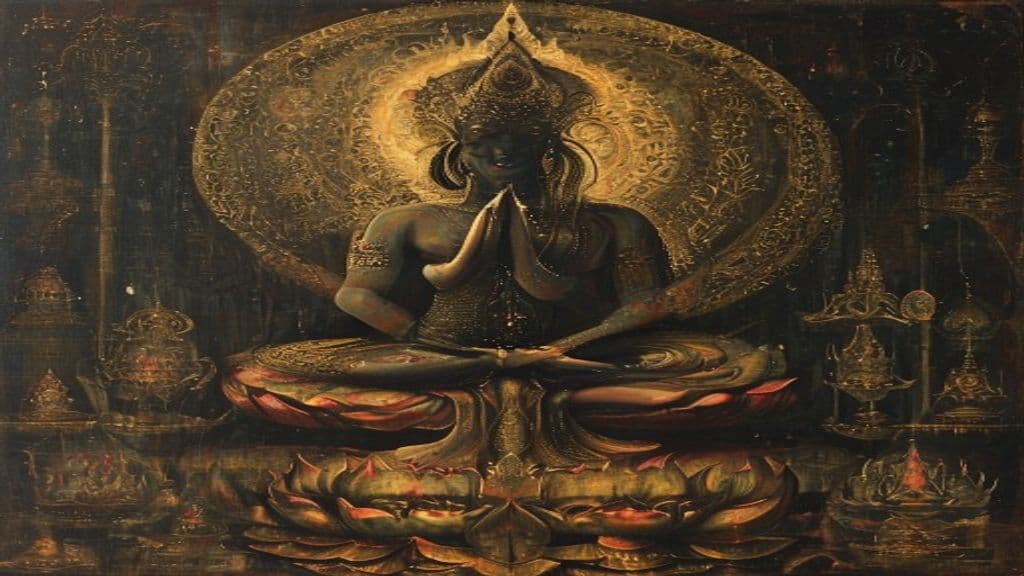
The category 'Deva' appears in the oldest Vedic hymns (the Samhitas) as one of the principal classes of supernatural beings, enumerated in some lists (for example, traditions that count thirty‑three devas) and invoked across ritual hymns. Early Vedic usage treats Devas alongside other supernatural categories (Asuras, Yakshas, Rakshasas) without a fixed moral polarity; Vedic hymns often praise individual Devas as supreme in turn (a henotheistic mode). Over time (late Vedic to post‑Vedic, e.g., the Itihasas and Puranas) the term comes to denote the generally benevolent gods opposed to Asuras. Etymologically, the Sanskrit deva (देव) derives from Indo‑Iranian *daiv‑ and Proto‑Indo‑European *deiwo‑, ultimately from the root *dyew‑ 'to shine' (cognate with Greek Zeus and Latin deus), a linguistic lineage cited in the provided sources.
Appearance varies by class. Ārūpyadhātu devas have no physical form or fixed location and are described as dwelling in formless meditative states. Rūpadhātu devas possess subtle physical form but are described in the sources as genderless and free from sensual passion; many named Rūpadhātu groups are associated with specific dhyāna levels. Kāmadhātu devas have bodily forms similar to humans but larger and more durable; their appearances are more recognizably personlike and may display gender and passion, especially in the lower Kāmadhātu heavens. Devas are generally invisible to ordinary human perception and can be seen or heard only by those with the divine eye (divyacakṣus / dibbacakkhu).
Devas enjoy far greater lifespan, power, and happiness than humans, and some groups are experientially identified with meditative absorptions (e.g., Bṛhatphala with fourth dhyāna, Śubhakṛtsna with third dhyāna, Ābhāsvara with second dhyāna). Certain devas intervene in the human world: Ābhāsvara devas are noted as more interested in and involved with the world below and sometimes give advice or counsel, while Śuddhāvāsa devas are described as guarding and protecting Buddhism on earth and are linked to high spiritual attainments. Devas are subject to karmic contingency: once their accumulated merit is exhausted they can be reborn as humans or in lower, even evil, realms. The figure Māra is associated with influence over the Kāmadhātu and appears among some groups (e.g., Parinirmita-vaśavartin); Asuras are sometimes classed with or opposed to devas and are characterized by continual conflict.
Weaknesses
- conditionimpermanence due to exhausted merit (rebirth into lower realms once merit is consumed)
Wards
- conditionspiritual cultivation (development of meditative faculties and merit) — allows perception (divyacakṣus) and shapes rebirth choices rather than serving as a magical ward

Mara
The nightmare spirit of Northern European tradition who rides sleeping people at night, causing suffocation, terror, and the sensation of an invisible weight on the chest.

Naga
Divine serpent beings of Hindu, Buddhist, and Jain cosmology — powerful guardians of water, earth, and underground treasures. Revered as deities in South and Southeast Asia.
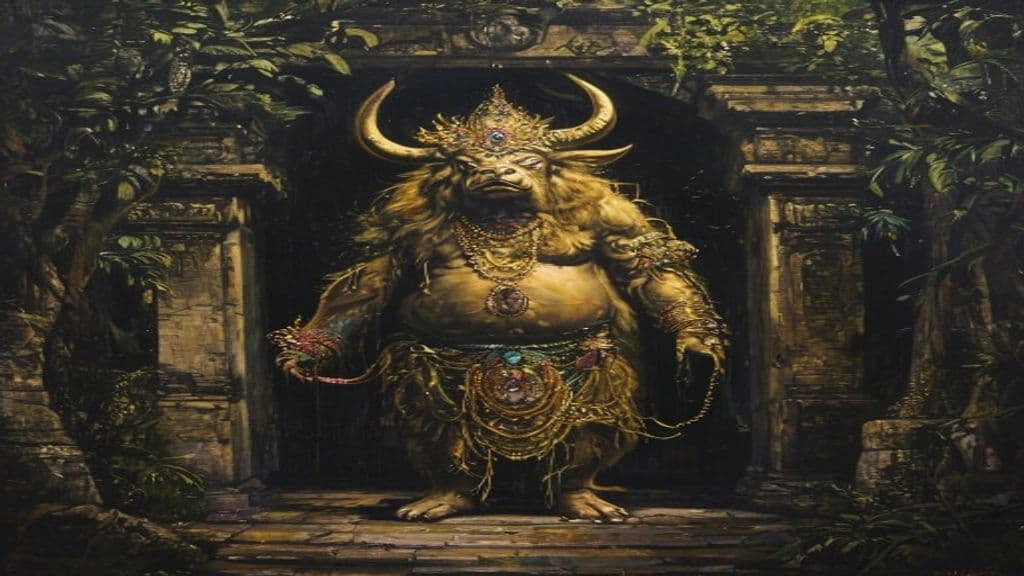
Yaksha
Nature spirits of Hindu, Buddhist, and Jain cosmology — guardians of forests, treasures, and wilderness. Ambivalent beings, capable of great benevolence to the respectful and terrible harm to the greedy.
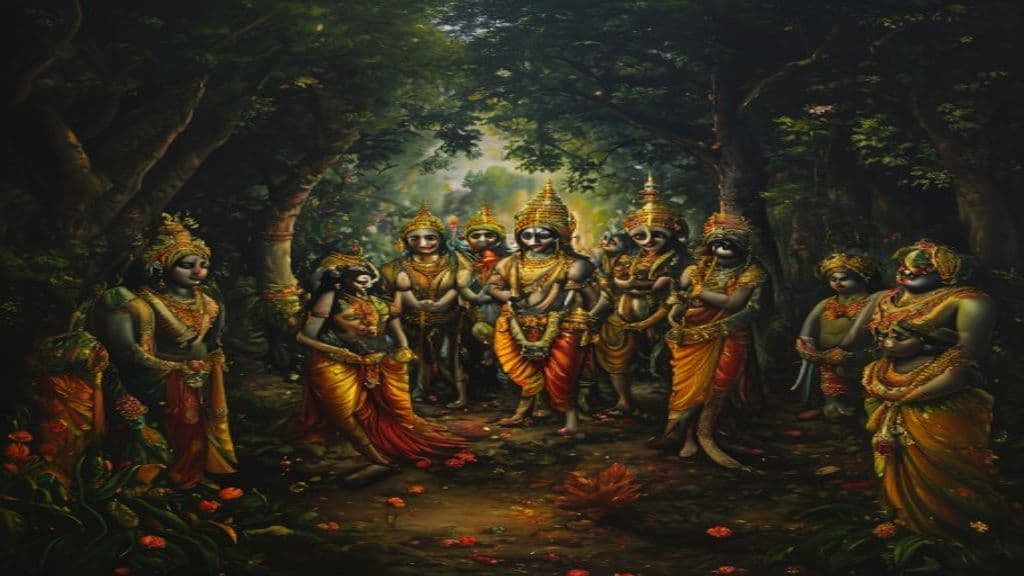
Gandharva
A class of non-human celestial or semi-celestial beings in Indic religions associated principally with music, song, dance, fertility, and an escort/guardian role for liminal arrivals (such as Soma or beings). In Hinduism they are minor deities and musicians of the devas; in Buddhist cosmology they are a low rank of devas and the term (gandhabba in Pāli/commentary) is also used doctrinally for a sentient intermediate state between death and rebirth.
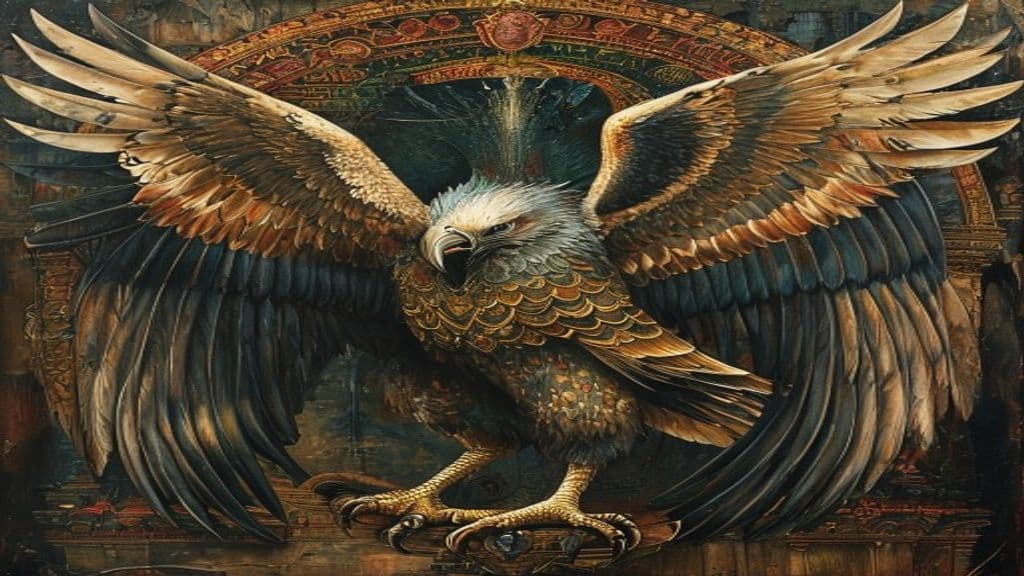
Garuda
Garuda is a divine, eagle-like being in South Asian traditions best known as the vahana (mount) of the god Vishnu. In Vedic, Purānic and later texts he appears as a powerful, solar-associated bird-personage who is both an individual mythic personality (son of the sage Kaśyapa and Vinatā) and an archetype invoked in temple iconography and theological metaphor.

Asura
Asura (Sanskrit: असुर) are a class of supernatural beings in Indian religious traditions. In Hinduism they are described as power-seeking beings related to, and often oppositional toward, the Deva; in Buddhist cosmology they form a demigod/titan class characterized by passions such as wrath and envy. Individual asura figures (notably the asura Svarbhānu) appear in myths that produce the eclipse-entities Rahu and Ketu.
Adi (asura)
Adi is attested in modern reference works as the name of an Asura who 'appears in the Matsya Purāṇa.' Beyond this single-line citation in secondary sources, no descriptive material about the figure is provided in the supplied research notes.
Adi Shakti
Adi Shakti (also Adi Parashakti, Mahadevi, Adya Shakti) is the primordial feminine power in Hindu/Shakta theology, regarded as the ultimate reality (Para Brahman) and the source from which all goddesses and gods manifest. She is both an impersonal cosmic principle (Mulaprakriti) and a focus of devotional invocation in temples, mantras, and pilgrimage sites such as Shakti Peethas.
Adi Vinayaka
Adi Vinayaka (Ādi Vināyaka; also called Nara Mukha Vinayaka) is a named iconographic and devotional form of the Hindu god Ganesha portraying the deity with a human head, described in sources as the form before the episode of decapitation by Shiva. It is rarely worshipped and appears in a small number of South Indian shrines and in devotional/musical repertoires.
Aditi
Aditi is a major Vedic goddess in Hindu tradition who personifies the boundless, infinite cosmic principle and functions as the maternal matrix from which many celestial deities (the Ādityas and other groups) are born. In the Vedic hymns she is invoked as a protective liberator who guards petitioners, provides wealth and safety, and frees devotees from hindrances such as sin and sickness.
Agni
Agni is the Vedic personification of fire in Hindu tradition: a sacred, mediating principle that manifests as terrestrial fire, atmospheric lightning, and celestial sun, and that receives and conveys sacrificial offerings. Prominent in the Rigvedic corpus, Agni functions as sanctifier, witness of rites of passage, and a transformational inner principle in later Upanishadic literature.
Ahalya
Ahalya is a mytho-legendary woman of South Asian (primarily Hindu) narrative tradition, described as created by the god Brahma, married to the sage Gautama, seduced (or tricked) by Indra, cursed by her husband, and ultimately redeemed by Rama. Her tale is a locus for themes of creation, desire, curse/penance, and redemption and she is counted among the ritual-mnemonic panchakanya.
Aindri (Indrani / Shachi / Paulomi)
Aindri (commonly rendered in sources as Indrani, also called Shachi or Paulomi) is a Hindu goddess presented as the queen-consort of Indra. She is depicted in the available material as a courtly queen associated with beauty, pride and kindness who also appears in at least one account as an active martial participant in the devas' battles with asuras.
Akshayavata
In Hindu mythology, Akshayavata is a sacred banyan tree and/or lake that symbolizes eternal life. It is mentioned in both Hindu and Jain traditions and associated with the Puranas. (Note: - The power tier should be "Greater" or at least "Ancient", as it is associated with the Puranas, which are considered ancient texts. - No specific physical description is provided, but that doesn't m)
Alakshmi
Alakshmi is an inauspicious female supernatural figure in Hindu tradition, presented as the negation or shadow-counterpart of the prosperity-goddess Lakshmi. She personifies poverty, grief, jealousy and social discord and is managed in domestic ritual and festival practice.
Alamelu
Alamelu (also Alamelu Manga / Alarmel Mangai) is a South Indian devotional name for the goddess Padmavati, identified in sources as an avatar of Lakshmi and the consort of Venkateswara; the name is also used widely as a female personal name and in titles of cultural works in Tamil and Telugu contexts.
Amrita (Buddhist tradition)
In the context of Indian religions, particularly within Hinduism and Buddhism, Amrita is a divine elixir that grants immortality and eternal life. (Note: - Power tier should be Ancient (deity-level), not Primordial. - Origin story appears accurate but lacks specificity on when Amrita was first mentioned in the Rigveda; add more detail. - Abilities are )
Ananta (Infinite)
Ananta (Sanskrit: अनन्त, 'without end') is primarily an epithet of Vishnu and a symbolic principle of infinity that is personified as the cosmic serpent Shesha. In Puranic imagery Ananta/Shesha forms the multi‑headed couch and canopy for Vishnu as he rests on the cosmic waters between cycles of creation (pralaya), and thus underwrites cyclical cosmogenesis.
Community Record
- [1]Deva (Buddhism) — Wikipedia. "A Deva (Sanskrit and Pali: देव; Mongolian: тэнгэр, tenger) in Buddhism is a type of celestial being..." and related passages on classes, dhātus, divine eye, Śuddhāvāsa, and impermanence.wiki
- [2]Deva (Buddhism) — duplicate reference. Supporting material on devas' three dhātus, examples of heavens (Tuṣita, Trāyastriṃśa, Parinirmita-vaśavartin), and relation to dhyāna states.wiki
- [3]Making Offerings to Devas — Discussion (SuttaCentral forum thread). Community discussion noting the practice of dedicating offerings to deities of one's dwelling (flagged in notes as modern/discursive and therefore uncertain).other
- [4]Deva - Biblical Cyclopedia (reference entry). Reference noting cross-cultural use of the term 'deva' and caution about conflating Buddhist devas with non-Buddhist gods.other
- [5]Deva (Hinduism) — Wikipedia. Wikipedia, 'Deva (Hinduism)' (excerpted material supplied in research notes)wiki
- [6]Siddhi Vinischaya Of Anant Viracharya And Its Vritti Of Bhatt Akalanka. Archive.org catalog entry cited in research notes (no excerpted ritual text available in provided materials)other
- [7]Vol-15 Akhanda Sanhita (অখণ্ড সংহিতা-খন্ড-১৫). Archive.org item listed in research notes (catalog presence noted; content not excerpted for Deva ritual specifics)other
- [8]Nababarsher Bani (নববর্ষের বাণী). Archive.org item listed in research notes (included in provided material list; not used for additional claims about Devas)other