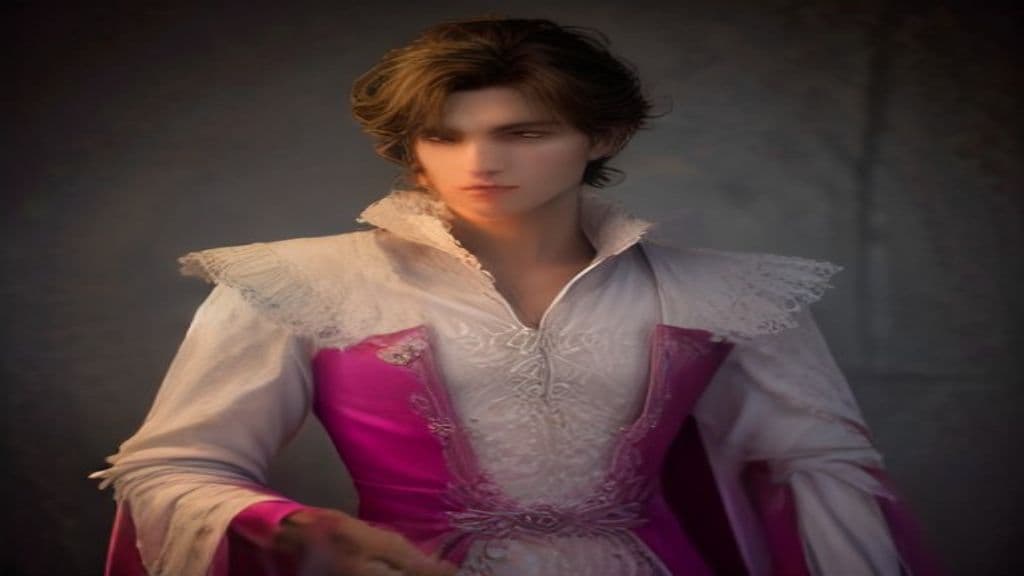
The archetype emerges from multiple European fairy tales rather than from a single mythic origin. Notable historical touchpoints in the source corpus include Perrault's Sleeping Beauty (1697) — where a French passage uses le prince, charmé — Madame d'Aulnoy's named princely figures (e.g., Avenant, 'Le roi Charmant'), and 19th-century Anglophone retellings such as Andrew Lang's translations that helped solidify the English label 'Charming' for princely rescuers. Scholarly commentary and encyclopedic summaries treat 'Prince Charming' as a later shorthand that compresses variant named or unnamed princes across many tales into a single archetypal role.
Traditionally depicted as handsome and conventionally princely (noble dress and idealized features implied by the tale). Visual designers and modern retellers often retain the handsome/princely template or purposely subvert it (portraying him as overtly narcissistic, exaggeratedly handsome, grotesque, or villainous) depending on narrative aims.
Described in sources as a narrative agent rather than a supernatural being: he arrives to perform a decisive act (a kiss, recognition, rescue, or completion of a quest) that undoes an enchantment or secures marriage and social reward for the heroine. Tales attribute to him the capacity to undertake quests, fight to liberate captives, or recognize the true bride; adaptations sometimes recast his behavior as morally compromised (lecherous, polygamous, or politically active). Any effect on enchantment is treated as a plot function, not evidence of intrinsic magical powers.
Kameosa
Kameosa is a modern and media-attested label associated with the idea of a jar or vessel animated in the conceptual family of tsukumogami (objects that acquire spirits). The provided sources do not establish a clear classical folkloric entity named Kameosa; the term appears primarily in contemporary art discussion and popular-media adaptations that draw on the tsukumogami motif.
Sleeping Beauty (folktale motif)
A widespread fairy-tale narrative figure (Aarne–Thompson Type 410): a royal young woman who falls into a prolonged enchanted sleep caused by a curse or a magical/physical agent and is later awakened by reversal of that causation. The story functions as a folkloric motif across Italian, French, and German literary traditions and many later adaptations.
Toxeus (Τοξεύς)
Toxeus (Ancient Greek Τοξεύς, lit. 'bowman') is a personal name borne by multiple human figures in Greek myth — chiefly princely/hunter figures tied to the Calydonian hunt and to Oechalian royal genealogies — and later reused as a modern taxonomic and toponymic label. In the classical material assembled in the provided sources, Toxeus denotes mortal mythic humans (princes, hunters, an inventor attestation) rather than a recurring supernatural creature.
Wicked fairy (Sleeping Beauty)
A folkloristic antagonist figure in the Sleeping Beauty tale-cycle, commonly called the Wicked fairy and appearing in adaptations under names such as Carabosse and Maleficent. The figure functions as the malign actor who precipitates the heroine’s central misfortune in the narrative tradition.
Preta (Hungry Ghost)
A post-mortem supernatural being associated with extreme, unremitting hunger and thirst. In Hindu usage the Sanskrit term can mean a deceased person, while Buddhist traditions develop the category into a distinct realm of hungry spirits whose condition illustrates karmic consequences for demeritorious action.
Preto / Preta (Bhuta) — Rajasthani folk tradition (absence of sourced evidence)
Requested research on a Rajasthani entity called "Preto/Preta (Bhuta)" cannot be supported by the supplied sources. The provided materials consist of a Portuguese disambiguation for 'Preto', a Wikidata entry for Pretoria, and three municipal/archival documents from Ribeirão Preto; none contain information on Rajasthani folklore, Bhuta, or preta spirits.
Priam
Priam is the legendary king of Troy in Greek and Roman epic tradition, an aged sovereign and father figure whose grief, supplication, and death are central episodes in the narratives of the Trojan War. He is portrayed as a mortal ruler embedded in a cosmos of gods and fate rather than as a supernatural being.
Pricolici
A Romanian folkloric revenant that combines lupine characteristics with vampiric, post-mortem hostility; typically represented as a wolf- or dog-like attacker associated with violent deaths, werewolves, and other harmful undead in rural tradition.
Prince Marko
Historical figure and major character in South Slavic oral tradition, de jure Serbian king from 1371 to 1395. (Note: - Power tier: Primordial is too high; Ancient (deity-level) is more plausible given the context. - Abilities: The draft implies supernatural abilities, but the source material only describes Prince Ma)
Prince Rabadash
Prince Rabadash is a fictional human royal antagonist from C. S. Lewis's novel The Horse and His Boy. He is a Calormene prince who plans and attempts an invasion of Archenland during the Pevensie reign of Narnia, and is later depicted unfavorably in the narrative.
Prince Rilian
Prince Rilian is a human royal character in C. S. Lewis's secondary-world of Narnia: the son of King Caspian and grandson of Ramandu the star. In The Silver Chair he has mysteriously disappeared and is held under enchantment in an underground realm by an evil enchantress, prompting a quest by children sent by Aslan to rescue and restore him.
Princess Liễu Hạnh
Liễu Hạnh is a governing figure in the Đạo Mẫu tradition, representing the Heaven realm and overseeing the Earth realm. She is one of The Four Immortals, embodying balance between earthly and divine realms. (Note: - Power tier: Lower to Greater (given the governing role but not cosmic primordial-level abilities explicitly stated) - Abilities: Provide a more specific description or eliminate this section, as no )
Community Record
- [1]Prince Charming. Wikipedia, 'Prince Charming' article (history, description, modern adaptations)wiki
- [2]Wikidata: Prince Charming (Q9290769). Wikidata entry linking Prince Charming to cultural instancesother
- [3]Perrault, 'La belle au bois dormant' (Sleeping Beauty) — passage quoted in secondary source. Passage from Charles Perrault's Sleeping Beauty quoted in the Wikipedia history section noting 'Le prince, charmé...' (Perrault, 1697)literary
- [4]Adaptations and character studies (Into the Woods, Shrek, Fables, Sisters Grimm). Discussion in the Wikipedia article summarizing modern deconstructions and portrayals (Into the Woods, Shrek, Fables, Sisters Grimm)wiki
- [5]Animator commentary (Andreas Deja) on depiction of handsome characters. Reference in the Wikipedia article to animator Andreas Deja's considerations in depicting princely/handsome featureswiki