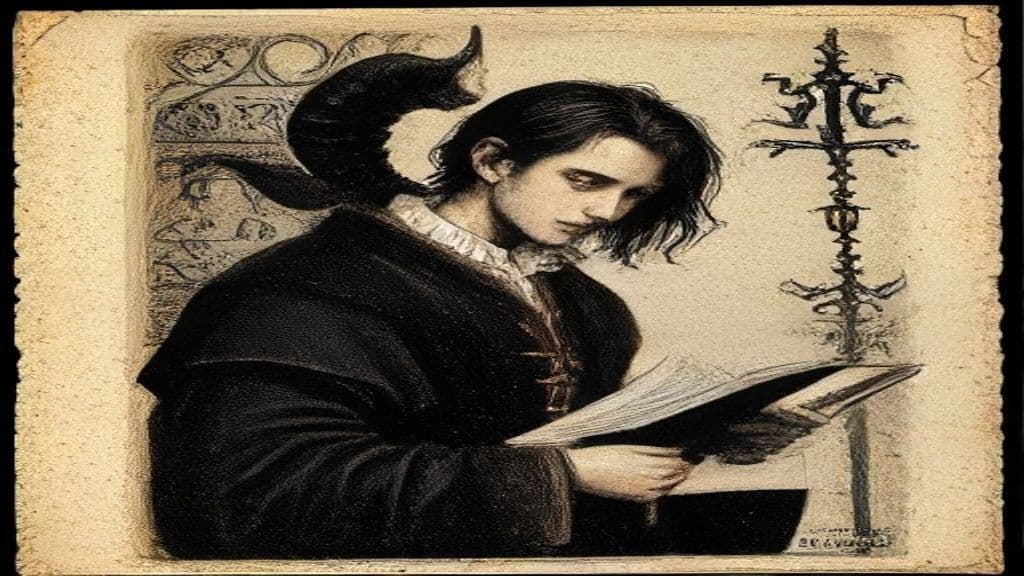
The label ‘‘printer's devil’’ functions as a crossroads of several strands in the historical record rather than a single unified origin myth. Sources present multiple, overlapping explanations: a jocular seventeenth-century account (Joseph Moxon, 1683) explains the name as workshop slang applied to ink-stained boy apprentices; medieval demonology links the idea to Titivillus, a spirit blamed for collecting stray word-fragments and causing errors in copied and printed texts; anecdotal etymologies associate the term with figures connected to early press history (Johann Fust/Faust and stories surrounding early printers such as Aldus Manutius and William Caxton); and in other locales lexical coincidences (a Malayalam near-homophone between words for printing error and a devil term) have been proposed to explain local use. The sources present these alternatives without establishing a single definitive origin, indicating the term's emergence from both occupational practice and folkloric projection.
As an occupational figure the printer's devil was typically a young press apprentice: a low-status worker who mixed ink, fetched type, tended the ‘hellbox’ of worn sorts, and whose skin and hands were commonly stained black by ink. In the folkloric register—largely through association with Titivillus—depictions draw on medieval demon imagery: small mischievous creatures often described with horns and claw-like feet. The sources emphasize that such visual descriptions derive from the Titivillus tradition and are not a single canonical portrayal of every ‘‘printer's devil’’ usage; many historical references are to human apprentices rather than to a literal demonic form.
Folkloric attributions (especially those deriving from Titivillus legends) credit the printer's devil with mischievous, text-focused acts: inverting type, misspelling words, removing lines of set type, and collecting dropped fragments of words or poorly recited prayers to be recorded for infernal use. Printers historically blamed such beings for major errors and corruptions in texts (the sources cite the practice of attributing printing mistakes to Titivillus/‘‘printerly devils’’). In contrast, the human apprentice associated with the term performed mundane, concrete tasks—mixing tubs of ink, fetching and sorting type, emptying the hellbox and returning or melting worn sorts—and functioned socially as a convenient scapegoat for mistakes, whether through jocular slang or pejorative blame.
Weaknesses
- otherNo documented supernatural weaknesses in provided sources (sources record attribution and humor rather than concrete vulnerabilties)
- conditionSocial/occupational scapegoating — attribution of errors to a human apprentice rather than a supernatural agent (documented as a historical practice)
Wards
- otherNo recorded ritual wards specific to the printer's devil in the cited sources; historical response is attribution to Titivillus or labeling apprentices rather than documented ritual protection
- ritualClerical vigilance and textual correction (implicit protective practice: careful proofreading and editorial correction rather than liturgical exorcism)

Titivillus
Titivillus is a medieval Christian demon associated with the collection of omitted, syncopated, or mispronounced syllables and fragments from liturgy and the errors of scribes and printers; he is depicted chiefly as an infernal agent who gathers these fragments in sacks to be counted against offenders.
Faust
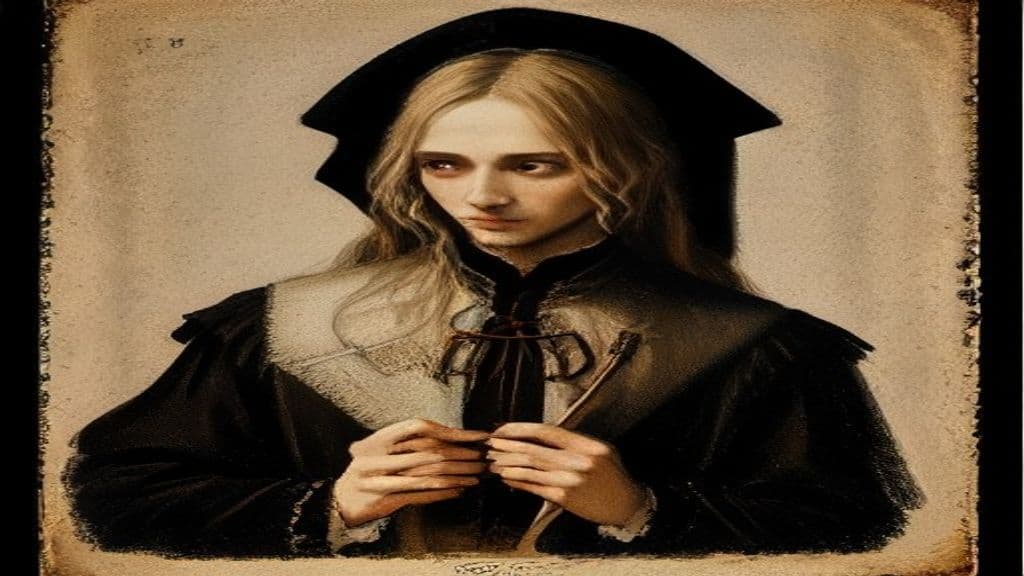
Faust is the human protagonist of a long-standing German legend, based on a probable historical figure (Johann Georg Faust, c. 1480–1540), whose central motif is making a pact with an infernal representative (commonly named Mephistopheles) at a crossroads to exchange his soul for unlimited knowledge and worldly pleasures. The figure functions as a moral and literary archetype warning against preferring human/occult knowledge and worldly gain over divine order; later usages yield the adjective “Faustian.”
Pricolici
A Romanian folkloric revenant that combines lupine characteristics with vampiric, post-mortem hostility; typically represented as a wolf- or dog-like attacker associated with violent deaths, werewolves, and other harmful undead in rural tradition.
Prince Charming
A European-derived fairy-tale stock character archetype: an idealized princely rescuer who appears at the narrative moment of resolution to liberate a heroine (by kiss, recognition, marriage, or quest-completion) and thereby complete the tale's social or romantic reward.
Prince Marko
Historical figure and major character in South Slavic oral tradition, de jure Serbian king from 1371 to 1395. (Note: - Power tier: Primordial is too high; Ancient (deity-level) is more plausible given the context. - Abilities: The draft implies supernatural abilities, but the source material only describes Prince Ma)
Prince Rabadash
Prince Rabadash is a fictional human royal antagonist from C. S. Lewis's novel The Horse and His Boy. He is a Calormene prince who plans and attempts an invasion of Archenland during the Pevensie reign of Narnia, and is later depicted unfavorably in the narrative.
Prince Rilian
Prince Rilian is a human royal character in C. S. Lewis's secondary-world of Narnia: the son of King Caspian and grandson of Ramandu the star. In The Silver Chair he has mysteriously disappeared and is held under enchantment in an underground realm by an evil enchantress, prompting a quest by children sent by Aslan to rescue and restore him.
Princess Liễu Hạnh
Liễu Hạnh is a governing figure in the Đạo Mẫu tradition, representing the Heaven realm and overseeing the Earth realm. She is one of The Four Immortals, embodying balance between earthly and divine realms. (Note: - Power tier: Lower to Greater (given the governing role but not cosmic primordial-level abilities explicitly stated) - Abilities: Provide a more specific description or eliminate this section, as no )
Prithvi
Prithvi (Sanskrit: पृथ्वी, Pṛthvī) is the Vedic personification of the Earth, a maternal cosmic principle who is simultaneously the physical ground, the universal Mother who nourishes life, and manifest matter participating in cosmogony. She is commonly paired with the sky (Dyaus) as the dyadic parents Dyavaprithivi and later becomes identified or merged with Bhūmi in classical Hindu and Buddhist contexts.
Procession of the Dead
A widely attested folkloric motif (Stith Thompson Motif E491) describing a marching retinue of ghosts, phantoms, or souls that travels through the living world. Local forms (e.g., Santa Compaña, Nightmarchers, panchabhāya) vary in appearance and meaning and are often tied to liminal times, funerary ritual, or moral repercussion.
Processional giant
Large hollow costumed figures carried and animated by people in civic and liturgical processions across parts of Europe (notably Belgium, France, Spain, Portugal, Italy and England). Rooted in medieval rites, they function as performative embodiments of town archetypes, biblical and legendary characters and are part of festival pageantry rather than autonomous supernatural beings.
Proctor Valley Monster
A local cryptid of Proctor Valley and Proctor Valley Road in southwestern San Diego County, California, reported in variable forms (commonly a Bigfoot-like humanoid or a bovine-like creature). The figure functions in local lore as an explanatory monster for disappearances, strange animal activity, and unexplained footprints and has been incorporated into regional popular culture.
Proetus
Proetus (Ancient Greek: Προῖτος, Proitos) is a personal name borne by several legendary mortal figures in Greek mythic genealogies and local traditions—principally kings or princes associated with Argos/Tiryns, Corinth, Thebes, and Nauplia—rather than a single supernatural being.
Professor Digory Kirke
Professor Digory Kirke is a fictional human character created by C. S. Lewis who appears in three books of The Chronicles of Narnia. The supplied sources identify him by name and list his appearances but provide no folkloric or supernatural classification beyond his role as a literary character.
Community Record
- [1]Printer's devil - Wikipedia. Wikipedia contributors. 'Printer's devil.' Wikipedia, The Free Encyclopedia.wiki
- [2]Printer's Devil (Wikidata). Wikidata: Q7245297 (Printer's Devil)other
- [3]Raleigh : a living history of North Carolina's capital (archive listing referencing printers' devils). Archive.org item referencing historical uses of the term 'printer's devil'.other
- [4]Redcliff Review (1912) — memoir 'the newspaper war: recollections of a printer's devil'. Archive.org: Redcliff Review, May 17, 1912 — recollections referencing the occupational role.other
- [5]Printer's Devil — Godine (book listing, cultural reuse). Publisher listing for works titled 'Printer's Devil' demonstrating cultural reuse of the term.other