
Sources trace Rübezahl to pre-Christian, pagan-rooted mountain-lore in the Giant Mountains; he originates as a 'fantastic lord of weather' associated with storms, fog and other mountain phenomena. Over time the figure was reworked in literatures and local narratives (early modern collections and later 18th–19th century literary retellings) into a more ambivalent culture-hero and guardian figure who tests, rewards or punishes humans. Etymologies are contested in the tradition: folkloric tale-explanations (Musäus) link the German name to Rüben + zählen ('turnip-counter'), while philological proposals read older forms (Ruobezagel / Riebezagel) and note associations with pictorial motifs (e.g., 'tail' elements). The German nickname Rübezahl is also described in sources as mocking and liable to provoke his anger; respectful epithets such as 'Herr vom Berge' are recorded as culturally proper forms of address.
Appearances vary widely across accounts: Rübezahl is fundamentally shape-changing and may appear as a capricious giant, a gnome-like being, a wild man (woodwose), an old woman, or a monk in a grey frock. Some tales describe him carrying a stringed 'storm-harp'. Literary and artistic traditions (wood engravings, paintings, folktale illustrations) present diverse visualizations rather than a single canonical form; narratives insist he 'can take any form he wishes', from an old grandmother to a giant crossing the mountains in one step.
Tradition attributes weather-control (summoning storms, fog, snow, lightning), shapechanging, oversight of hidden mountain riches, and moral agency: he tests humans' hearts and punishes mockery or meanness while rewarding hospitality and helpfulness (teaching medicine, giving presents). In some tales he is portrayed as lord or steward of subterranean treasure chambers and as commanding gnomes who tend them. He also functions as a trickster-figure whose caprice governs when and how he intervenes in human affairs.
Weaknesses
- conditionAvoidance of provocation by mocking name
Wards
- ritualRespectful address (use of epithets such as 'Herr vom Berge' or 'Herr Johannes')
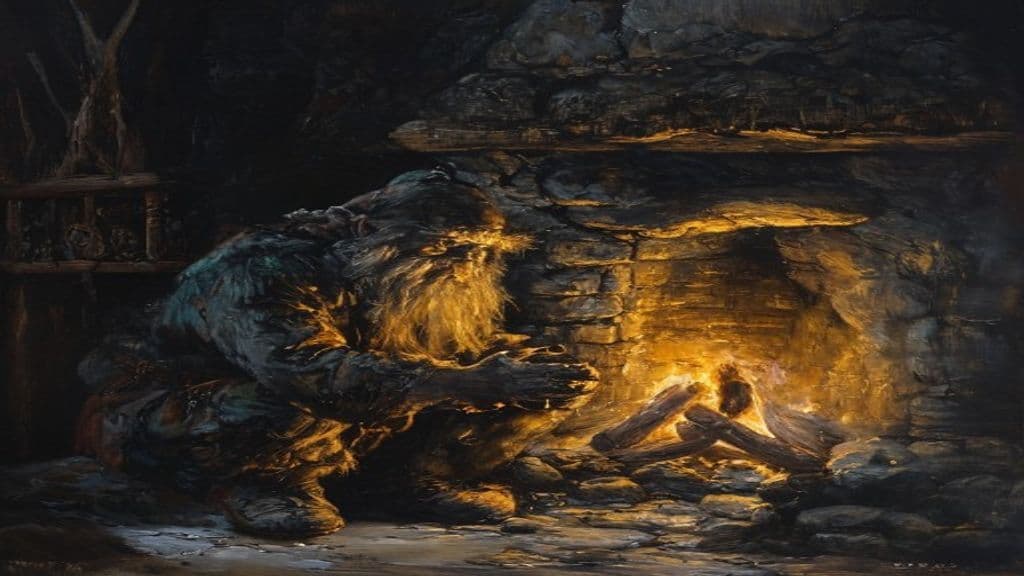
Domovoi
The house spirit of Slavic tradition — a small, invisible guardian of the home bound to a specific dwelling and its family. Protective when respected; dangerous when insulted or forgotten.
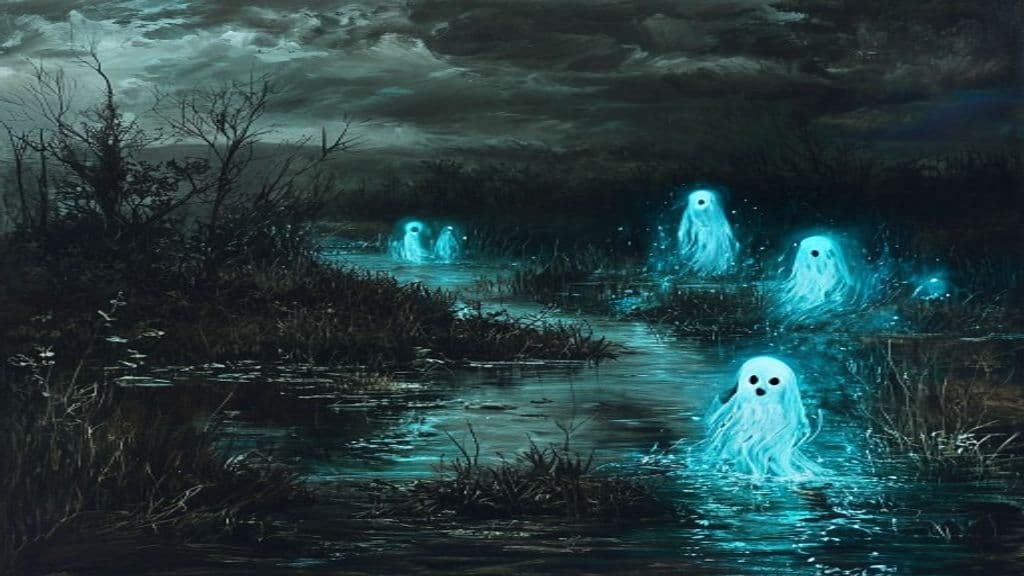
Will-o'-the-Wisp
A wandering light seen over marshy ground at night, leading travellers astray into bogs and fens. Possibly a spirit, possibly the soul of the unbaptised dead, possibly the devil himself.

Gnome (tradition)
A class of animate subterranean beings from early-modern European natural-philosophical and miners' lore. Treated by Paracelsus as earth elementals (gnomi) and recorded in German mining tradition as Bergmännlein / Berggeist, these small, humanlike mountain-spirits explain and personify phenomena in mines — from mischief to the discovery of ore.
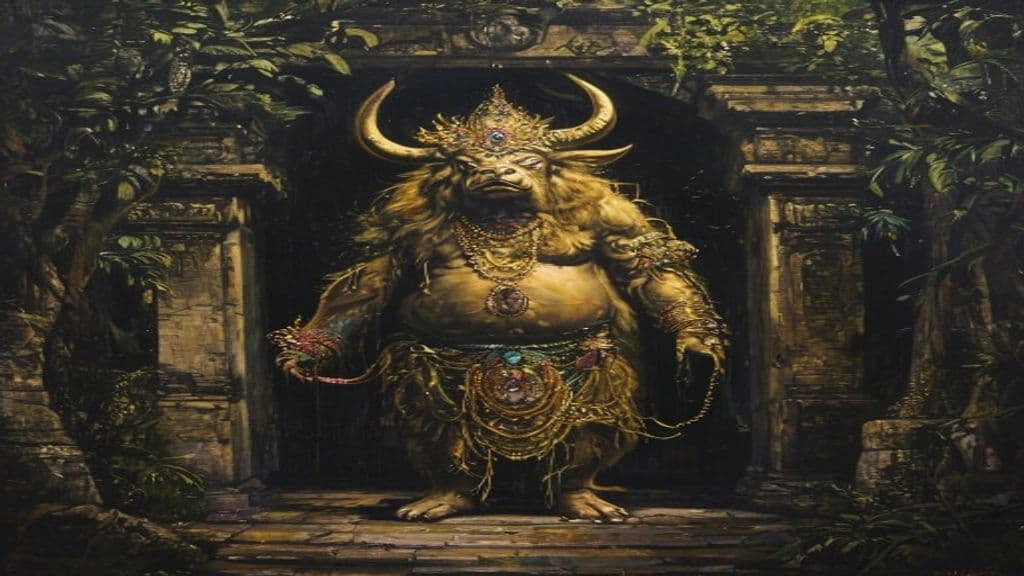
Yaksha
Nature spirits of Hindu, Buddhist, and Jain cosmology — guardians of forests, treasures, and wilderness. Ambivalent beings, capable of great benevolence to the respectful and terrible harm to the greedy.
Abraun
Abraun is an attested name in German-language plant-legend scholarship (Der abraun, ein beitrag zur pflanzensagenkunde, 1916) and a short database entry (Wikidata) labels it as a spirit from German mythology. Surviving accessible documentation is extremely limited: the principal academic treatment is a 1916 contribution to pflanzensagenkunde (plant-saga studies), but the excerpts available here contain only bibliographic metadata and do not record tales, descriptions, or rituals.
Alp
A German-speaking folkloric figure associated with nocturnal disturbance of sleepers. Historically tied to the broader Germanic family of 'elves' and treated variously as an eerie nature-being in medieval glosses and as a male nocturnal spirit in later folk accounts that sits on sleepers' chests and causes nightmares (Alptraum) and 'elf-pressure' (Alpdruck).
Aufhocker
The Aufhocker is a German folkloric shapeshifting 'pressure' or 'perching' spirit that leaps upon the backs or shoulders of solitary travelers, weighing them down with each step until victims become exhausted, incapacitated, or—in some variants—killed. It is associated with liminal places (bridges, crossroads, hollow paths, cemeteries) and exists in multiple narrative roles including punitive agent, nightmare embodiment, and theriomorphic attacker.
Bergmönch
A German mountain spirit associated with pits and mines; described as a hooded, giant figure who aids favored miners and punishes those who offend him or violate mining-community mores. He appears in mining locales and may manifest as a monk-like giant, a miner, a horse, or become invisible.
Bieresel
A German household/local spirit associated with beer, breweries, inns and cellars, the Bieresel alternates between helping by performing chores in exchange for a nightly portion of beer and causing mischief or harm when neglected; some regional variants in Thuringia and former German‑speaking Bohemia depict street‑roaming, aufhocken behavior.
Boruta
Boruta (called "Devil Boruta" in the cited source) is a folkloric character from Polish mythology, folklore, and literature associated with the town of Łęczyca. The available source frames Boruta as a local legendary figure but provides no extended ethnographic detail.
Buschgroßmutter
A female wood/forest spirit of German folklore, especially attested in Thuringia, Saxony, German Silesia and parts of Bohemia and Transylvanian Saxon tradition. She is an ancient, ambivalent grandmotherly figure of the underwood who may reward respectful helpers or punish mockery and transgression of forest norms.
Drak
The Drak is a household spirit in German folklore, attested under several regional names and frequently identified with the kobold or the devil (Teufel). Surviving references are brief and primarily classificatory, indicating a household-associated supernatural figure with variable local naming and associations.
Elwetritsch
A regional legendary chimera reported in southwestern Germany (especially the Palatinate): a bird‑like, chicken‑sized imaginary creature assembled from parts of different animals and embedded in local mock‑hunts and folk identity. One scholarly interpretation traces the modern motif to a linguistic and cultural miniaturization of older night‑pressure spirits (Albdrude/Albdruck), though this continuity is presented in sources as an interpretation rather than uncontested fact.
Erdhenne
The Erdhenne (German: 'Earth Hen') is a German house spirit from Alpine, Upper Palatinate, and Bavarian folk tradition that usually remains unseen but communicates by loud clucking to warn households of danger. When it becomes visible it is regarded as an omen of death—tradition records death within a year, often of the person it shows itself to.
Ewiger Jäger
A spectral huntsman from German, Belgian and Pennsylvania Dutch folklore condemned to an unending hunt. Usually portrayed as a formerly human hunter bound by oath, curse, sacrilege, or a dying injunction to pursue quarry ceaselessly, the figure is a local variant of the European wild hunt motif.
Feldgeister
Feldgeister are a class of German agricultural spirits or 'field spirits' associated with cereal crops, harvest processes and weather. The category groups many named local types (animal, human, and hybrid forms) implicated both in fertility of fields and in hazards such as child-stealing, illness, spoilage and storm phenomena.
Community Record
- [1]Rübezahl — Wikipedia. Wikipedia entry 'Rübezahl' (summary of names, legends, roles, etymologies, cultural evolution, museum).wiki
- [2]Rubezahl (Andrew Lang). Andrew Lang, 'Rubezahl' (fairy-tale text excerpt describing Rubezahl as mountain gnome lord with treasure chambers and gnomes).literary
- [3]Hohe Tannen (song text archive). Archive text of Heimatlied 'Hohe Tannen' referencing Rübezahl in lyrics (cultural/folk-song attestation).folk
- [4]Archive: 123 ein Märchen schnell herbei (audiovisual listing). Archive listing of an audiovisual tale referencing Rübezahl (citation only; content not fully transcribed).other
- [5]Assorted cultural/art references (prints, hotels, modern mentions). Art and cultural references cited among the provided materials (illustrations and modern uses demonstrating continued regional symbolic presence).other