
The modern shadow‑person motif emerges from late‑20th and early‑21st‑century paranormal media, radio programs, and online forums which collected and circulated memorates and anecdotal reports; sources note comparisons to older shadowy beings (for example Islamic jinn or the Choctaw Nalusa Falaya) but do not claim direct linguistic continuity. Radio and internet dissemination (e.g., late‑night talk shows, online threads, and paranormal authors such as Heidi Hollis as summarized in encyclopedic sources) helped crystallize a recognisable set of features — faceless dark silhouettes, a recurring Hat Man subtype, and frequent association with sleep paralysis and substance‑related hallucinations — that form the contemporary folk category.
Across the assembled sources a shadow person is described as a dark silhouette or human‑shaped shadow, often faceless or with minimal discernible features, sometimes characterised as a ‘black mass’ or an obsidian humanoid outline visible in peripheral vision. A named variant, the 'Hat Man', is repeatedly reported as wearing a brimmed hat or fedora; witnesses commonly emphasise a lack of facial detail and an impression of being watched or stared at even when no features are visible. Reports often stress flickering or intermittent visibility, particularly at the edges of perception in low light.
Reported behaviors and attributed abilities vary by source and by community. Paranormal memorates, forum threads, and popular authors attribute agentive behaviors: appearing in peripheral vision, approaching or standing over sleepers, allegedly attempting to press on chests during episodes interpreted as sleep paralysis, and (in some community narratives) feeding on fear or communicating telepathically. Anecdotal claims of more dramatic physical interactions (abduction, possession, killing) appear primarily in personal testimony, fictionalised accounts, and fan creations. Clinical and skeptical sources represented in the materials instead interpret many such reports as hallucinations or perceptual phenomena associated with sleep paralysis, delirium from substances (e.g., datura, diphenhydramine, benzydamine), sleep deprivation, or psychiatric conditions, and therefore treat the perceived agency as a product of human neurophysiology rather than an independently verified supernatural power.
Weaknesses
- conditionaddressing underlying physiological causes (sleep hygiene, treating substance use, medical/psychiatric care)
Wards
- mantrainvoking the Name of Jesus (reported by paranormal author Heidi Hollis as a repellent in community testimony)
- otherad‑hoc physical measures reported in testimony (spraying mist to 'unveil', using improvised weapons) — attested in popular media accounts and individual memorates

Jinn
A class of supernatural beings from pre-Islamic Arabian religion later integrated into Islamic theology; jinn are created, morally accountable entities distinct from humans and angels, often unseen but capable of taking visible forms and interacting with people in varied ways.
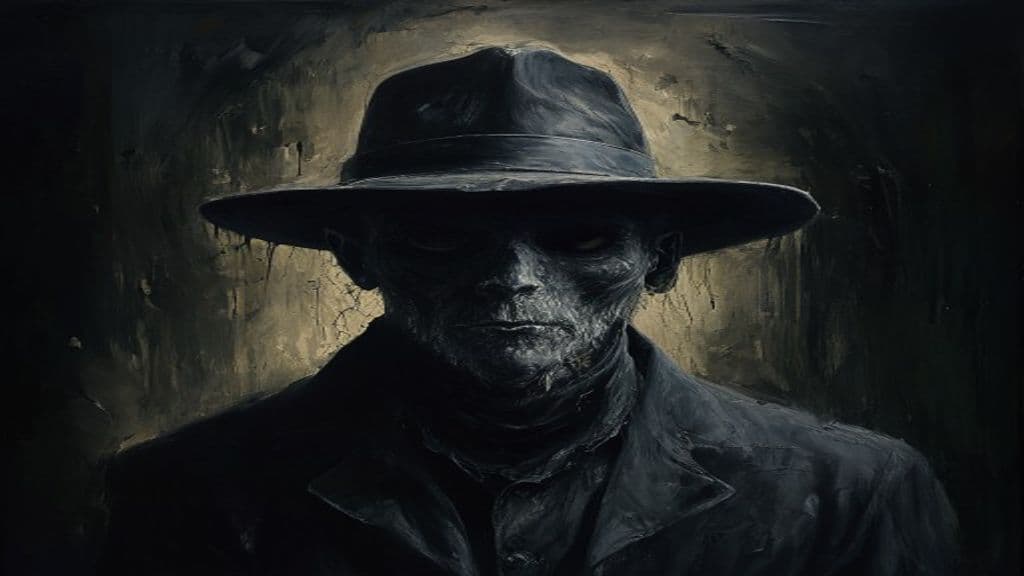
Hat Man
A modern popular-paranormal variant of the 'shadow person' phenomenon: described in sources as a humanoid, shadow-like figure discussed in paranormal communities and occasionally linked in contemporary notes to drug- or sleep-related experiences.
Bogeyman
A folkloric, non‑canonical monster figure invoked across cultures as a disciplinary device to frighten children into compliant behaviour; presented in sources as a flexible category rather than a single, systematized being and often used figuratively as a personification of terror.
Hat Man
A modern popular-paranormal variant of the 'shadow person' phenomenon: described in sources as a humanoid, shadow-like figure discussed in paranormal communities and occasionally linked in contemporary notes to drug- or sleep-related experiences.
Shachihoko
A Japanese mythic sea-creature and roof-ornament (shibi) combining a predator head (dragon or tiger) with a carp body. In Japanese architectural and folkloric contexts it functions as an apotropaic roof guardian believed to store water and control rain, used primarily to protect wooden buildings from fire and as a status emblem.
Shaddād
A legendary king in Arabian folklore, described as tyrannical. (Note: 1. The power tier should be Greater (deity-level abilities are implied by association with a lost city and connection to Qur'anic lore). 2. Add appearance description from source material, mentioning )
Shade
A shade is the shadowy spirit or ghost of a dead person in classical and ancient Near Eastern literary and religious cosmologies, understood as the diminished, insubstantial residuum of a person who dwells in the underworld (Hades, Sheol/tsalmavet) rather than among the living.
Shadow (concept)
A polyvalent term used across optics, psychology, computing/administration, and popular paranormal conversation. In the supplied sources it is primarily an optical phenomenon and a psychological archetype; other uses are metaphorical or technical rather than descriptions of a single, traditional supernatural being.
Shadow People
Shadow people are a contemporary paranormal concept describing animate, human-shaped shadow-like presences. Presented primarily in modern paranormal media and practitioner discourse, they are often interpreted as spirits or unseen presences rather than as elements of a specific historic folk cosmology.
Shahbaz (Persian bird deity)
A divine being in Persian mythology associated with protection and guidance, resembling a large eagle. (Note: * Power tier: Greater (Shahbaz is described as a "god" in the source material, indicating deity-level powers) * Sensory cues: Add description of sensory cues associated with Shahbaz, such as its prese)
Shahnameh (Persian epic poem)
A long epic poem that tells of the mythical and historical past of Iran, containing descriptions and stories about various mythological creatures. (Note: - Power tier: Ancient (not Primordial), as it is a work of human authorship that conveys cultural narratives. - Summary: A long epic poem that tells of the mainly mythical but to some extent historica)
Shahrasb (Shahnameh)
A pious and reliable advisor in the Shahnameh tradition, guiding King Tahmuras towards moral guidance and acquiring Khvarenah. (Note: - Power tier: Primordial or Ancient would be more plausible given Shahrasb's role as a moral guide for a mythical king. - Appearance: Add "Not described in source material" to indicate that the inform)
Shai
Shai (also Sai, Shay; Greek Psais) is the Egyptian deification of fate, especially the ordained allotment of a person's lifespan. Present from an individual's birth and accompanying them until final judgment before Osiris, Shai functions as a theological principle integrated with birth goddesses, royal titulary, and, in the Hellenistic period, Greco-Egyptian syncretism.
Shaitan
A class of corrupted djinn who follow Iblis and dedicate themselves to leading humans astray — distinct from Iblis himself, the Shayatin are a species of evil djinn who whisper doubts and temptations into the minds of the living.
Community Record
- [1]Shadow person - Wikipedia. Wikipedia, 'Shadow person' entry (summarises paranormal, folkloric, and clinical perspectives including Heidi Hollis and Hat Man discussion).wiki
- [2]Shadow Person Memorate - USC Digital Folklore Archives. USC Digital Folklore Archives, memorate documenting personal encounter narratives.folk
- [3]My Encounter with a Shadow Person. TransmissionsFromBeyond.com, personal testimony of encounter with a shadow person (memorate/testimonial source).other
- [4]A Fresh Look at the Shadow Person Phenomenon – Unexplainable.net. Unexplainable.net article surveying reports and interpretations in paranormal communities.other
- [5]Forum: 'THE HAT MAN (SHADOW PERSON / JINN) DEMON' INVASION IS HERE!. Godlikeproductions forum thread collecting community claims and warnings about the Hat Man / shadow person motif.folk
- [6]Abducted by a Shadow Person — Strange Familiars. Strange Familiars blog post — anecdotal account of alleged abduction by a shadow person.other
- [7]Shadow Person - SCP Foundation forum (fan fiction/forum). SCP Foundation forum thread: fictional treatment and community mythmaking around the shadow person concept.literary