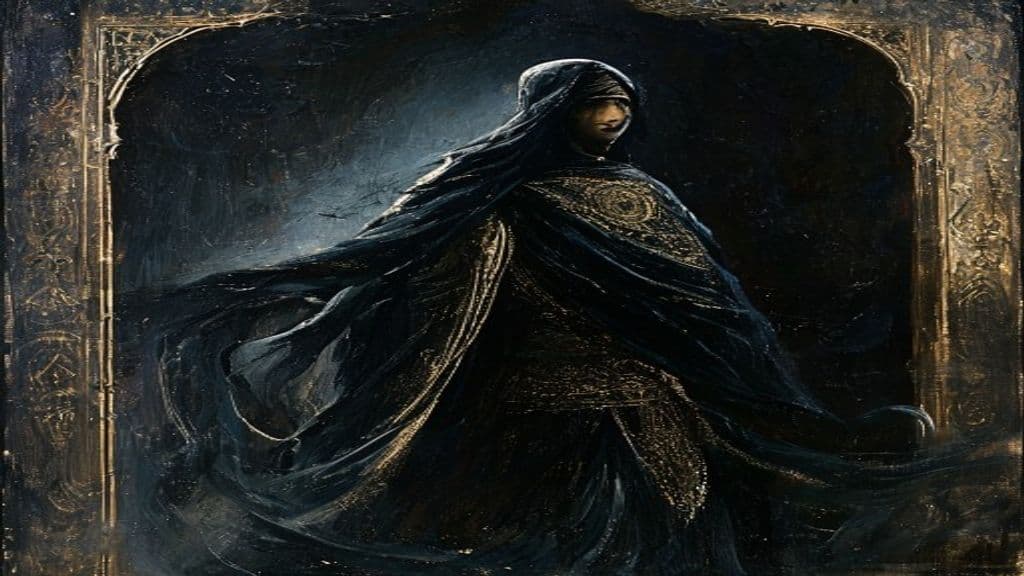
In the Shahnameh, Shahrasb appears as a moral guide for King Tahmuras.
Not described in source material.
Shahrasb helps King Tahmuras acquire wisdom and divine blessings (Khvarenah) through his guidance.
Davāzdah Rokh
Davāzdah Rokh (Persian: دوازده رخ, 'Twelve Combats') is a narrative episode in Ferdowsi's Shahnameh describing a sequence of single combats between Iranian and Turanian champions during Kay Khosrow's campaign; it is also locally anchored to the Zibad / Kuh-Zibad region in Greater Khorasan.
Fariburz (Shahnameh)
Fariburz is a legendary Iranian prince and warrior in Ferdowsi’s Shahnameh, a son of King Kay Kavus and brother of Siyâvash who appears as a recurrent Kayanian court hero in episodes such as the Mazandaran (Bahman’s fortress) campaign and the First 'Joust of the Rooks'. He is a human martial figure within the epic, not a supernatural being.
Kai Khosrow
Kai Khosrow is a legendary Kayanian king in Persian epic tradition, chiefly known from the Shahnameh and related material. He is remembered as the rightful heir who returns from exile, avenges his father Siavash, and rules Iran while repeatedly opposing the Turanian king Afrasiab.
Shadow (concept)
A polyvalent term used across optics, psychology, computing/administration, and popular paranormal conversation. In the supplied sources it is primarily an optical phenomenon and a psychological archetype; other uses are metaphorical or technical rather than descriptions of a single, traditional supernatural being.
Shadow People
Shadow people are a contemporary paranormal concept describing animate, human-shaped shadow-like presences. Presented primarily in modern paranormal media and practitioner discourse, they are often interpreted as spirits or unseen presences rather than as elements of a specific historic folk cosmology.
Shadow person
A contemporary popular‑paranormal motif describing animate human‑shaped silhouettes or ‘black mass’ figures, often reported in contexts of sleep paralysis, low light, or substance‑induced delirium. Accounts range from experiential memorates and forum testimony to skeptical clinical explanations that treat sightings as hallucinations.
Shahbaz (Persian bird deity)
A divine being in Persian mythology associated with protection and guidance, resembling a large eagle. (Note: * Power tier: Greater (Shahbaz is described as a "god" in the source material, indicating deity-level powers) * Sensory cues: Add description of sensory cues associated with Shahbaz, such as its prese)
Shahnameh (Persian epic poem)
A long epic poem that tells of the mythical and historical past of Iran, containing descriptions and stories about various mythological creatures. (Note: - Power tier: Ancient (not Primordial), as it is a work of human authorship that conveys cultural narratives. - Summary: A long epic poem that tells of the mainly mythical but to some extent historica)
Shai
Shai (also Sai, Shay; Greek Psais) is the Egyptian deification of fate, especially the ordained allotment of a person's lifespan. Present from an individual's birth and accompanying them until final judgment before Osiris, Shai functions as a theological principle integrated with birth goddesses, royal titulary, and, in the Hellenistic period, Greco-Egyptian syncretism.
Shaitan
A class of corrupted djinn who follow Iblis and dedicate themselves to leading humans astray — distinct from Iblis himself, the Shayatin are a species of evil djinn who whisper doubts and temptations into the minds of the living.
Shakchunni
Bengali ghost of a married Brahmin woman who died before her husband — identifiable by her white sari and conch-shell bangles, she possesses living married women and refuses to relinquish domestic life.
Shakini
Tantric goddess presiding over the Vishuddha (throat) chakra — she governs speech, truth, and poison. Disturbed, she afflicts voice and communication; correctly propitiated, she grants eloquence, clairvoyance, and the power to speak what cannot be unsaid.
Community Record
- [1]