
The Shahnameh has the ability to shape and tell cultural narratives, reflecting the Persian cultural and historical context of its time period.
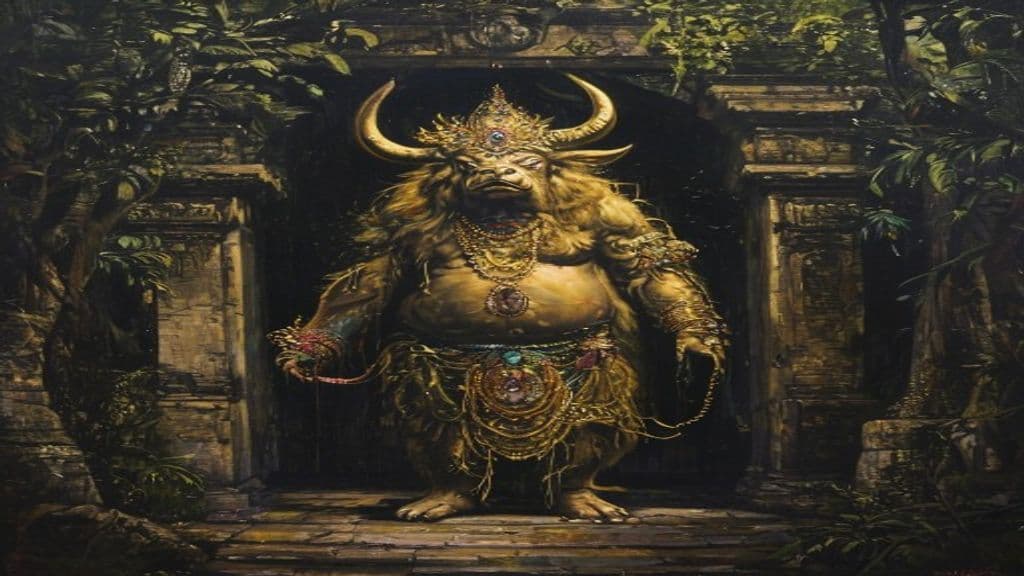
Yaksha
Nature spirits of Hindu, Buddhist, and Jain cosmology — guardians of forests, treasures, and wilderness. Ambivalent beings, capable of great benevolence to the respectful and terrible harm to the greedy.
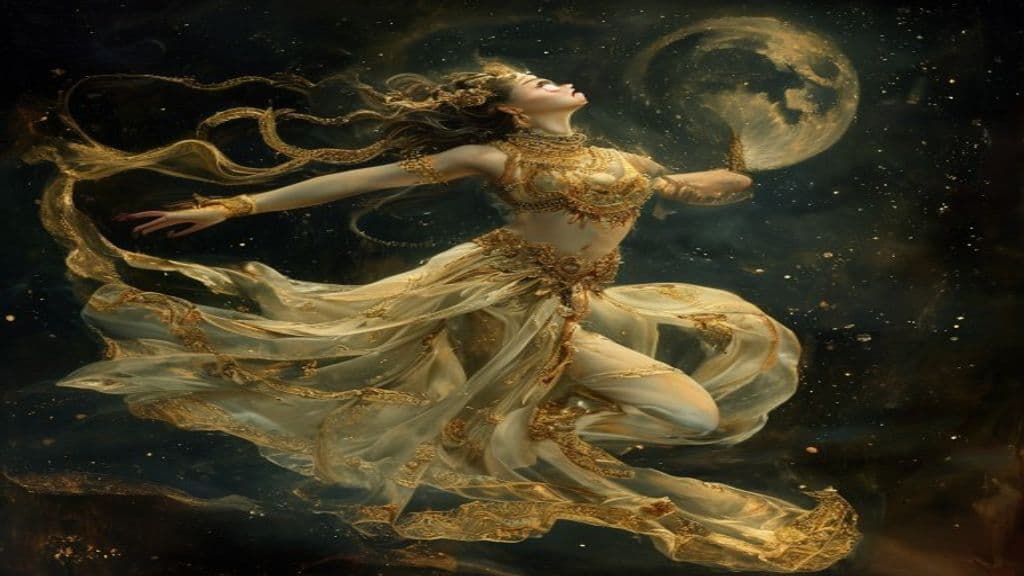
Apsara
Celestial dancers and water nymphs of Hindu cosmology — beautiful semi-divine beings who dance at the court of Indra and, by his command, descend to earth to distract sages from excessive asceticism.

Gashadokuro
A fifteen-times-human-height skeletal yokai formed from the bones of those who starved to death or died on battlefields, their unburied remains fused together into a hungry colossus.
Bibi Seshanbe
Persian holy angel associated with saving and curing people, particularly the poor and desperate. (Note: - The power_tier should be Greater, as Bibi Seshanbe is described as a "holy angel" which typically suggests deity-level abilities. - The summary mentions she is associated with saving and curing peop)
Persian Cat (Persian Tradition)
A traditional breed of cat characterized by its long hair and round face with a petite, but not flat or smashed-in muzzle. (Note: - Power tier should be Primordial (the entity is a traditional breed of cat with no supernatural abilities mentioned), so change to Primordial. - The origin story section is missing and needs to be fi)
Shade
A shade is the shadowy spirit or ghost of a dead person in classical and ancient Near Eastern literary and religious cosmologies, understood as the diminished, insubstantial residuum of a person who dwells in the underworld (Hades, Sheol/tsalmavet) rather than among the living.
Shadow (concept)
A polyvalent term used across optics, psychology, computing/administration, and popular paranormal conversation. In the supplied sources it is primarily an optical phenomenon and a psychological archetype; other uses are metaphorical or technical rather than descriptions of a single, traditional supernatural being.
Shadow People
Shadow people are a contemporary paranormal concept describing animate, human-shaped shadow-like presences. Presented primarily in modern paranormal media and practitioner discourse, they are often interpreted as spirits or unseen presences rather than as elements of a specific historic folk cosmology.
Shadow person
A contemporary popular‑paranormal motif describing animate human‑shaped silhouettes or ‘black mass’ figures, often reported in contexts of sleep paralysis, low light, or substance‑induced delirium. Accounts range from experiential memorates and forum testimony to skeptical clinical explanations that treat sightings as hallucinations.
Shahbaz (Persian bird deity)
A divine being in Persian mythology associated with protection and guidance, resembling a large eagle. (Note: * Power tier: Greater (Shahbaz is described as a "god" in the source material, indicating deity-level powers) * Sensory cues: Add description of sensory cues associated with Shahbaz, such as its prese)
Shahrasb (Shahnameh)
A pious and reliable advisor in the Shahnameh tradition, guiding King Tahmuras towards moral guidance and acquiring Khvarenah. (Note: - Power tier: Primordial or Ancient would be more plausible given Shahrasb's role as a moral guide for a mythical king. - Appearance: Add "Not described in source material" to indicate that the inform)
Shai
Shai (also Sai, Shay; Greek Psais) is the Egyptian deification of fate, especially the ordained allotment of a person's lifespan. Present from an individual's birth and accompanying them until final judgment before Osiris, Shai functions as a theological principle integrated with birth goddesses, royal titulary, and, in the Hellenistic period, Greco-Egyptian syncretism.
Shaitan
A class of corrupted djinn who follow Iblis and dedicate themselves to leading humans astray — distinct from Iblis himself, the Shayatin are a species of evil djinn who whisper doubts and temptations into the minds of the living.
Shakchunni
Bengali ghost of a married Brahmin woman who died before her husband — identifiable by her white sari and conch-shell bangles, she possesses living married women and refuses to relinquish domestic life.
Shakini
Tantric goddess presiding over the Vishuddha (throat) chakra — she governs speech, truth, and poison. Disturbed, she afflicts voice and communication; correctly propitiated, she grants eloquence, clairvoyance, and the power to speak what cannot be unsaid.
Community Record
- [1]