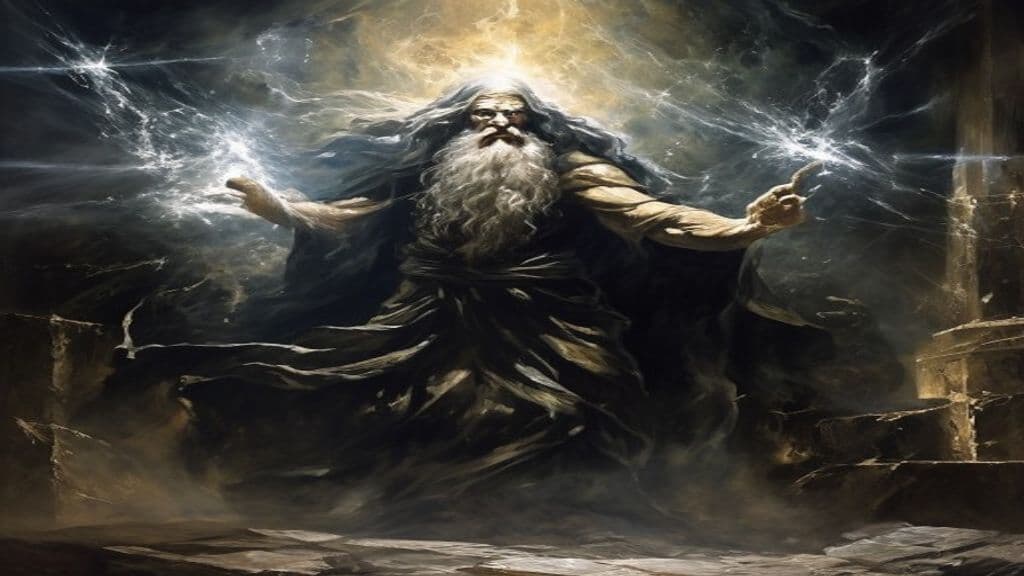
The shamir was said to have been used by Solomon during the construction of the first Temple in Jerusalem.
The shamir has the ability to cut through or disintegrate stone, iron, and diamond without the need for conventional tools.
Weaknesses
- conditionnon-violent means of achieving goals
Wards
None recorded.
Chalkydri
Mythical, angelic creatures associated with the solar cycle and dwelling near the Sun. (Note: - Power tier: Primordial (Chalkydri's abilities are described as bringing heat and dew, which is a cosmic-level phenomenon) - Weaknesses: not mentioned in source material - Wards: not mentioned in sou)
Dybbuk
A malicious possessing spirit in Jewish mythology, believed to be the dislocated soul of a dead person. (Note: Power tier should be Lesser or Greater, not Primordial (the entity's power level seems too high for a dislocated soul). Origin story and Appearance sections are missing. Abilities should be more sp)
Leviathan
A giant sea serpent in Jewish mythology, embodying chaos and serving as a metaphor for a powerful enemy. (Note: - Power tier should be Ancient (Leviathan's abilities are often described as deity-level, such as threatening the damned after their lives are over and being annihilated) - Appearance is not mentioned)
Lilith
Lilith is a feminine night‑spirit in Jewish mythic, magical, and folkloric traditions associated with harmful nocturnal activity, especially threats to sleeping people and infants. The figure appears both as a class of night‑spirits (lilit/lilītu) in Near Eastern demonologies and as an individualized dangerous woman in later medieval Jewish narratives and amulets.
Mazzikin
In Jewish mythology, mazzikin are described as invisible demons that can cause harm or danger to individuals. (Note: - Power tier: change to Lesser (mazzikin cause "minor annoyances") - Weaknesses & Wards: list should be more specific, e.g., "Incantation bowls made by Aramaic-speaking inhabitants of Mesopotamia and )
Sohrab
A legendary warrior in Persian epic tradition, son of Rostam and Tahmineh. (Note: 1. Power tier: Given that Sohrab's abilities are not described in the source material, it's unclear whether he should be classified as Greater or even if he has deity-level powers. 2. Sensory cues: No)
Soini (Finnish Mythology)
A giant and son of Kaleva in Finnish mythology, known for his mischievous tendencies. (Note: 1. Power tier should be Lesser (not Ancient) based on the description of Soini as a giant and a son of Kaleva, but not necessarily a deity-level figure. 2. Add sensory cues from Christfried Ganander's)
Solar Barque (Egyptian)
Divine vessel associated with the sun god Ra, carrying him through the sky during his daily journey. (Note: * Power tier should be Ancient (deity-level) since it's associated with the sun god Ra. * Appearance should note that no physical description exists in source material, but also acknowledge that Ra us)
Solar deity
A solar deity is a class of sky-associated divine figures whose identity or aspect is the Sun. Across many traditions the solar deity personifies solar phenomena (light, daily motion, power) and is integrated into myths of cosmology, kingship, and the afterlife.
Solomonari
Solomonari are weather-controlling magic-workers in Romanian folklore, described as human practitioners trained at a secret school who ride dragons (zmeu or balaur) and cause rain, thunder, or hail. They appear in 19th‑century ethnographic accounts from Transylvania, Bukovina, and adjacent Romanian regions and are associated with an institutionalized craft of magic (Scholomance/Şolomanţă) in several variants.
Solosmasthana (Buddhist tradition)
In the Buddhist tradition of Sri Lanka, Solosmasthana refers to 16 sacred places believed to have been visited by Gautama Buddha. (Note: 1. Power tier should be "Greater" or possibly even "Ancient" considering they are considered important religious locations and associated with deity-level events (Buddha's visits). 2. Origin story is )
Song of Dorang-seonbi and Cheongjeong-gaksi
A Korean shamanic narrative about two supernatural entities associated with the natural world and fertility. (Note: 1. Power tier should be "Minor Spirit" -> not supported (based on lack of information about powers/abilities) 2. Remove power_tier as it's unclear 3. Add sensory_cues, wards, and weaknesses sections w)
Community Record
- [1]