
In Polish folk classification the term strzyga is often etymologized as deriving from Latin/ancient Strix (the Greco‑Roman night-bird that fed on human flesh and blood), a derivation noted by folklorists such as Aleksander Brückner. In local belief the strzyga category is applied to certain problematic births (people born with doubled features such as two hearts or two sets of teeth) and to corpses or corpse-like survivors of mistaken burial; a folk explanation holds that a person with two souls may have one soul remain and return after death, producing revenant behaviour.
Folklore overwhelmingly describes the strzyga as usually female. Traditions report that strzygi were believed to fly at night, often imagined in owl form; a literary source (Władysław Reymont, Chłopi) supplies a description of 'bat's wings' as a motif in fiction. Folk markers applied to living persons suspected of being strzygi include birth anomalies such as two hearts or two souls, a second set of teeth (sometimes barely visible) or natal teeth, and other culturally noted signs (for example somnambulism or absence of armpit hair are attested as one among several suspicious traits in some accounts). Reports also record that people mistakenly buried alive who later escaped graves were identified by communities as strzygi due to their weakened or mutilated condition.
Sources record two principal, sometimes conflicting, clusters of belief. In one strand the strzyga is a revenant-like predator: it was believed to fly by night (often in the form of an owl), attack night-time travellers or people in woods, and suck blood or eat victims' internal organs; periods of feeding on animal blood are also attested. In another attested variant the strzyga functions as an omen of death, comparable to a banshee, whose appearance or cries herald someone's imminent passing. The revenant hypothesis in local explanation makes use of the notion of a double soul: one soul departs while the other remains and causes the return.
Weaknesses
- ritualdecapitation and separate burial
- ritualburying body face-down with a sickle around the head
- ritualburning the body
- ritualhammering nails or stakes into parts of the corpse
- substanceputting a flint into the mouth after exhumation
- ritualpealing church bells (reported effect: 'the strzyga then turns into tar')
- ritualplacing a paper with the word 'Jesus' under the tongue during priest-attended exhumation/reburial
- ritualburying again outside the village and pinning down with a large rock
Wards
- ritualscattering poppy seeds in shape of a cross in every corner of the house
- conditionsocial exclusion — chasing suspected living strzygi away from human dwellings
- ritualplacing small objects in the grave to force counting (apotropaic trick)
- otherslapping across the face with the left hand (immediate apotropaic gesture)
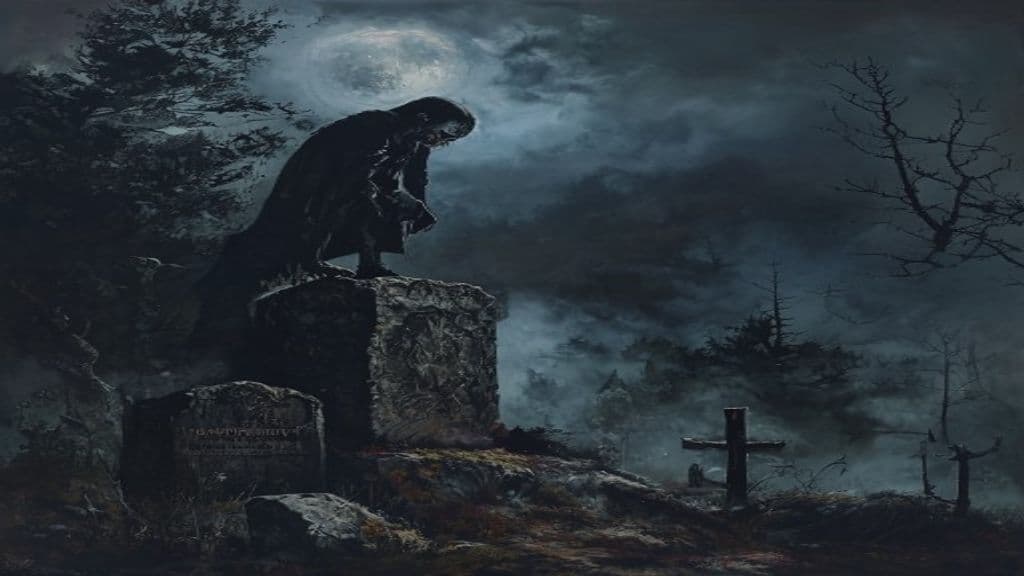
Strigoi
The vampire of Romanian folklore — either a living witch (strigoi viu) or an undead blood-drinker (strigoi mort). The source tradition from which the literary vampire emerged.

Shtriga
In Albanian folklore a shtriga (Albanian indefinite shtrigë; definite shtriga) is a malevolent, witch-like woman who nocturnally sucks the life or blood of infants and children, often leaving victims comatose or dead; she is said to transform into a flying insect after feeding and, in many accounts, only the shtriga herself can reverse the harm she causes.
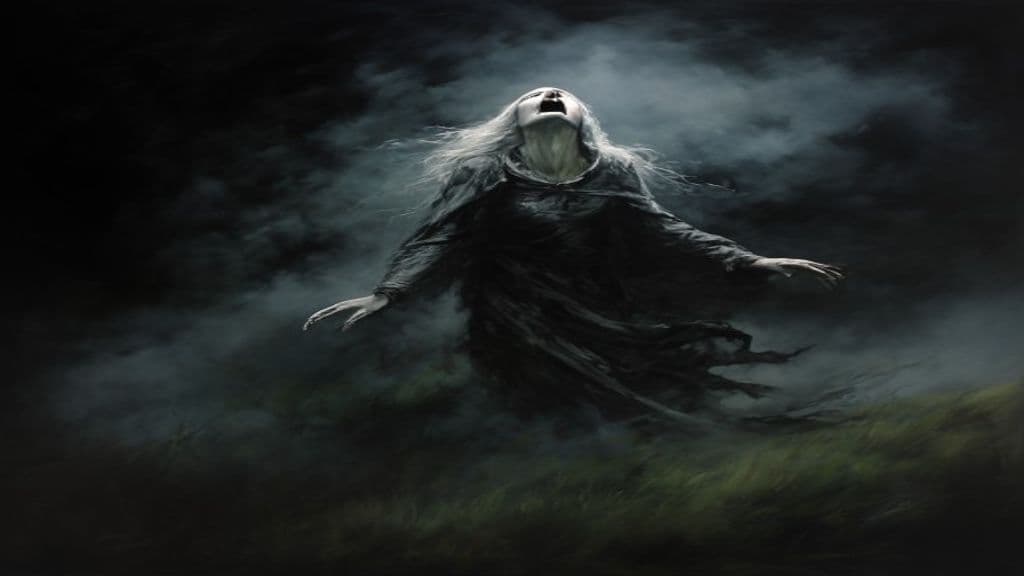
Banshee
A female spirit of Irish and Scottish folklore whose wail heralds an impending death in a family of Gaelic descent. Not a cause of death — a witness to it.
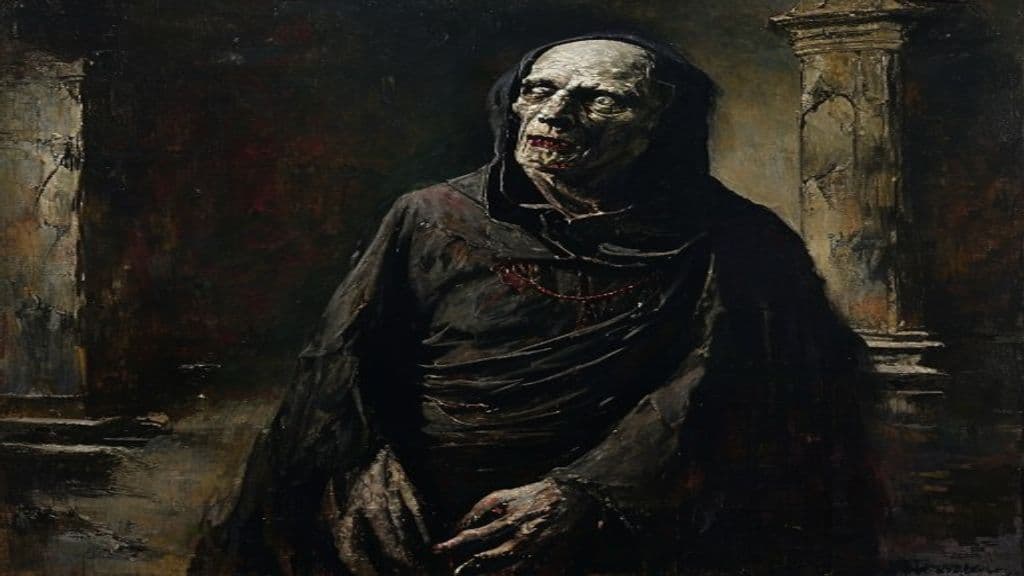
Vampire (tradition)
A class of revenant beings in southeastern and eastern European folk belief that subsist by feeding on the vital essence (generally blood) of the living. Recorded chiefly in early modern to modern oral traditions, these vampires are typically described as reanimated corpses whose presence explains unexplained illness, death, and post-mortem disturbances in their communities.

Strix
A nocturnal, ill-omened bird-monster of classical antiquity that also functions as a lexical label for harmful, often female, practitioners of witchcraft; implicated in infant predation, corpse-deforming acts, and magical practice.
Boginki (boginka)
Boginki (singular boginka) are female personifications of wild natural forces in Polish/Slavic popular belief, described in sources as minor goddesses or female spirits/demons associated with forests, fields, mountains, and waters (both inland and sea). They are ambivalent in disposition, sometimes neutral or beneficent and sometimes hostile to humans, and figure among other Slavic female nature-spirits such as rusalki and vily.
Strigoi
The vampire of Romanian folklore — either a living witch (strigoi viu) or an undead blood-drinker (strigoi mort). The source tradition from which the literary vampire emerged.
Strix
A nocturnal, ill-omened bird-monster of classical antiquity that also functions as a lexical label for harmful, often female, practitioners of witchcraft; implicated in infant predation, corpse-deforming acts, and magical practice.
Strophia
Attested in the supplied materials in two inconsistent senses: as a taxonomic or homonymous label connected to biological genera (notably Thyatira in one source) and as a single-line structured-data assertion identifying 'Strophia' as a naiad in Greek mythology. No coherent mythological corpus, attributes, or rituals for a supernatural Strophia are documented in the provided sources.
Strophius
Strophius (Ancient Greek: Στρόφιος, Strophios) is a recurring personal name in Greek literary and mythographic traditions. It denotes several mortal figures—kings, fathers, companions, and crewmen—who appear across the Atreid cycle, Trojan War narratives, and later epic such as Nonnus’s Dionysiaca.
Strymon
Strymon is the personified river-god (potamos) of the ancient Strymon/Struma River in Thrace/Edonia. In classical Greek tradition he functions as a local natural deity, a genealogical ancestor in foundation myths, and a civic emblem known from literary summaries and local coinage references.
Stryx
Stryx is primarily attested in the provided sources as a modern proper name used for a controversial 1978 Italian television variety programme and for various unrelated contemporary cultural products (games, artists, galleries). The supplied materials do not document a traditional folkloric supernatural being called Stryx.
Stymphalian birds
A swarm of dangerous, man‑eating birds of Greek myth associated with the marsh/lake of Stymphalia in Arcadia. They ravage crops and people, are said to have beaks of bronze or exceptionally powerful beaks and sharp metallic feathers that can be launched as darts, and are best known from Heracles’ sixth labour in which Athena provides a rattle to flush them and Heracles shoots many down.
Stymphalus (son of Elatus)
Stymphalus (Greek: Στύμφαλος) is a mythic, eponymous founder and heroic-age ancestor in Arcadian local tradition. In surviving sources he is presented as a son of Elatus (sometimes by Laodice), a grandson of Arcas, and the name-giver of a spring, a lake/region, and a city in Arcadia; he is treated as a mortal genealogical figure rather than a supernatural creature in the cited material.
Styx
In Greek myth Styx is both a divine river-goddess and the underworld river she embodies; her waters form an ontological and ritual boundary of Hades and serve as the medium for the most solemn divine oaths, with specified punitive consequences for perjury.
Su İyesi
Su İyesi is a Turkic water spirit — a localized guardian (iye) of bodies of water such as rivers, lakes, ponds and springs. It appears in male and female personifications (Su Ana, Su Ata) and is associated with both beneficent functions (bringing rain) and dangerous actions (drownings, floods, wrecks) when offended.
Suanggi
A malevolent spirit from Indonesian folklore, known for its harmful intentions towards humans. (Note: * Power tier should be Lesser, as it's only described as a "malevolent spirit" without any indication of regional or deity-level power. * Sensory cues, weaknesses, and wards are not mentioned in the s)
Community Record
- [1]Strzyga - Wikipedia. Wikipedia entry 'Strzyga' (accessed via provided research notes)wiki
- [2]Wikidata: Strzyga. Wikidata item for Strzyga (linked in research notes)other
- [3]Vampires: Enemy of God, Eater of Babies (archive recording). Archive: thematic compilation referencing vampiric topics including strzyga (as cited in research notes)folk
- [4]Strzyga (audio/archival item). Archive recording titled 'Strzyga' listed in research notesfolk
- [5]Reymont, Chłopi (literary reference cited in notes). Władysław Reymont, Chłopi — cited in research notes for a literary description of 'bat's wings'literary