
The figures appear in the visual and sculptural programs of Japanese Buddhist temples as attendant beings incorporated into the guardian narratives of the Shitennō (Four Heavenly Kings). Art‑historical records identify notable carved standing statues (木造天燈鬼立像, 木造竜燈鬼立像) produced for temple contexts (for example, works by Kōben at Kōfuku‑ji) where the figures are presented as attendants offering light to the Buddha. The sources frame them as iconographic incorporations of formerly hostile or chaotic beings transformed into protective attendants within the Buddhist order.
Described in museum and encyclopedic sources as small oni‑like figures, Tentōki and Ryūtōki are typically depicted as standing statues carrying lanterns (燈) as offerings to the Historical Buddha. The two names encode distinguishing elements—天 (heaven/sky) in Tentōki and 龍 (dragon) in Ryūtōki—combined with 燈 (lamp/lantern) and 鬼 (demon/oni). Sculptural examples from medieval temple complexes (e.g., Kōfuku‑ji, Nara) are wooden standing figures (立像) placed within kondō or other hall ensembles.
Primary sources do not attribute independent supernatural powers or active folkloric deeds to these figures. Their described function is symbolic and service‑oriented: they carry lanterns as offerings to the Buddha and serve as visual emblems that demonstrate the Shitennō’s power to repel and defeat evil. Secondary blog sources relate them to the broader category of jaki (邪鬼, evil spirits), but museum and encyclopedic materials present them chiefly as iconographic attendants rather than autonomous, pathogenic spirits.
Weaknesses
- otherNo vulnerabilities recorded in provided sources
Wards
- otherIconographic placement as protective imagery (statues acting as emblematic warding within temple architecture)
Akuma
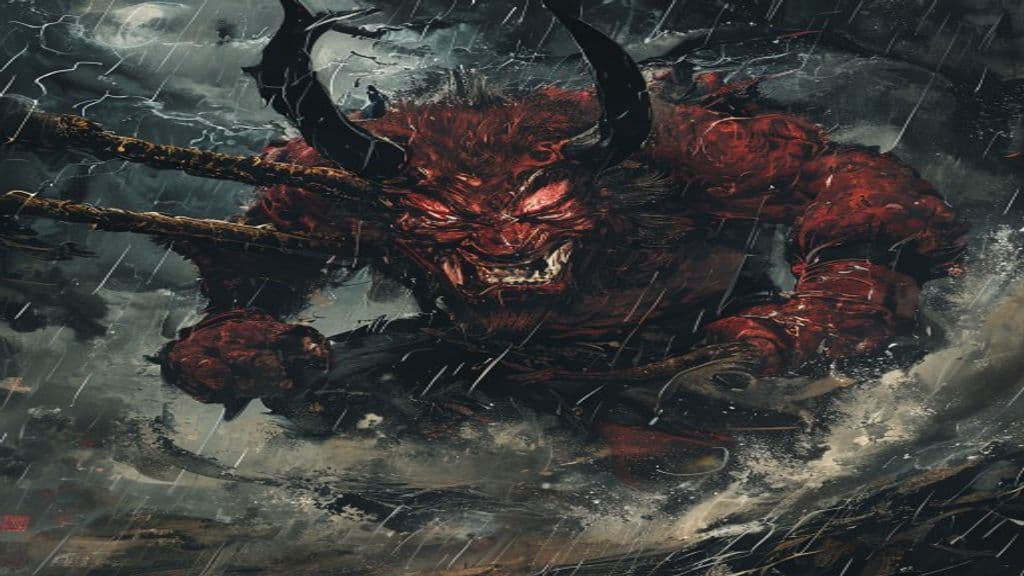
Akuma (悪魔/あくま) in Japanese sources is an evil spirit, devil, or demon associated with misfortune and mental disturbance. The term appears in Buddhist texts and Heian-period literature and was later used to translate the Christian figure of Satan, as well as the Buddhist Mara.
Datsue-ba
A supernatural old-woman ogress figure in Japanese Buddhist underworld imagery who sits by the Sanzu River and strips the deceased of their garments (or, in some accounts, their skin) as part of post-mortem judgement. She functions as a liminal, procedural agent within Ten Kings / Six Realms iconography rather than as a creator or cosmic force.
Five Wisdom Kings
A class of wrathful, mantric protector-deities in East Asian Mahāyāna (notably Japanese) Buddhism, identified with the Sanskrit Vidyārāja and Japanese Myō-ō and described in sources as guardians of the cosmic Buddha Dainichi (Vairocana) and of esoteric teachings.
Gohō dōji
A guardian attendant spirit in Japanese Buddhist folklore depicted as a youthful protector devoted to defending the Dharma and assisting followers of Buddhist teaching. Attested in medieval narrative collections and illustrated emaki, the figure appears as a cultic attendant associated with dharmapāla-type protection.
Japanese dragon
A class of large serpentine beings in Japanese myth that function variously as water deities, regional kami, Buddhist nāga/dragon kings, and shapeshifting supernatural creatures associated with seas, rivers, rain and related powers.
Kalaviṅka
A Buddhist fantastical creature described as a human-headed, bird-bodied being famed for its exquisite, Dharma-preaching voice; represented across South, East, and Southeast Asian Buddhist art and liturgical contexts with regional iconographic variation.
Karura
A Japanese Buddhist divine creature with a human torso and avian head, derived from the Sanskrit garuḍa. Portrayed as an enormous, fire-breathing predator of serpents and incorporated into Buddhist guardian retinues and ritual-iconographic contexts in Japan.
Otake Dainichi Nyorai
Japanese manifestation of Vairocana, embodying wisdom and compassion. (Note: 1. Power tier should be Ancient (deity-level) rather than Primordial (cosmic). 2. Appearance should be noted as "Not specified" due to lack of source material. 3. Abilities, sensory_cues, weaknesses, )
Tennin
Tennin (天人) are celestial, person-like beings in the Japanese Buddhist framework who serve as heavenly attendants, dancers, and companions to Buddhas and bodhisattvas. The concept derives from an Indo-Chinese-Buddhist lineage (compare apsaras) and appears widely in Japanese religious art, Noh theater, and local narrative motifs such as the hagoromo (feather-robe) story.
Yūrei
Yūrei (幽霊) are spirits of the dead in Japanese folklore who remain bound to the world of the living rather than having completed transition to an afterlife. They are a culturally specific category of ghost/spirits, often discussed alongside related terms such as bōrei and shiryō and appearing widely in literary, visual, and local legend contexts.
Tenome
A Japanese yōkai first popularized as an image in Toriyama Sekien's Edo-period emaki tradition, depicted as an old humanoid whose eyes are located on the palms of its hands. Later regional setuwa elaborate it as a revenant of a wronged blind person; one anecdote links it to the removal of victims' bones.
Tereanini
Tereanini is an ancestral ocean-going voyaging canoe (waka) in Māori tradition, cited in accounts of the migrations that settled Aotearoa (New Zealand). It is associated in the sources with Ngāti Porou and the captain Rongomaituaho, linking it to the foundational migration narratives from Hawaiki.
Community Record
- [1]Tentōki and Ryūtōki - Wikipedia. Wikipedia, 'Tentōki and Ryūtōki' entrywiki
- [2]Ryūtōki inside of Kon‑do – Ninna‑ji Official English Blog. Ninna‑ji official blog post referencing the pair inside the Kondōother
- [3]UNKEI exhibition / Tokyo National Museum material. Tokyo National Museum exhibition text referencing Kamakura sculptors and related statuaryother
- [4]Dragon Art of Asia - Ryutoki Lantern Demon (blog). Dragon Art blog entry identifying 'Ryutoki Lantern Demon' and discussing lantern motif and links to jakifolk
- [5]Kappapedia - jaki evil spirit (blog). Kappapedia blog linking Tentōki/Ryūtōki to the category of jaki (邪鬼)folk
- [6]OnMark Productions - Shitennō (Four Heavenly Kings). Digital Dictionary / explanatory material on the Four Heavenly Kings and related guardian iconographyother