Tyro is presented in the sources as the daughter of King Salmoneus of Elis and Alcidice (daughter of King Aleus of Arcadia). She was married to her uncle Cretheus, becoming Queen of Iolcus and mother by him of Aeson, Pheres, and Amythaon. In a separate union, the sea-god Poseidon, disguised as the river god Enipeus, fathered the twins Pelias and Neleus by her; these twins were exposed on a mountain and rescued by a herdsman. In some variants Tyro later marries Sisyphus and is said in certain accounts to have killed children by him to avert a prophecy that they would kill her father Salmoneus. Her place in myth is primarily genealogical, linking generations that lead to Jason and the Argonauts.
Classical sources cited in the provided material do not supply a sustained physical description of Tyro beyond her status as an Elean princess and later Queen of Iolcus. Her depiction in later literary treatments (for example modern poetic reference by Ezra Pound) uses evocative bodily imagery to describe her encounter with a sea-god, but such modern allusion is interpretive and not a primary physical description from the ancient myths.
Tyro is depicted as a mortal human without supernatural powers. Her notable actions and roles are social and narrative rather than magical: she loves the river-god Enipeus (who rejects her), bears children by different fathers (Aeson, Pheres, Amythaon by Cretheus; Pelias and Neleus by Poseidon disguised as Enipeus; and in some accounts two children by Sisyphus), exposes the twins Pelias and Neleus who are subsequently rescued, and (in some versions) kills children by Sisyphus to prevent a prophecy. Her significance derives from these life events, which set in motion later heroic narratives and divine enmities (for example Hera's hatred of Pelias).
Weaknesses
- conditionmortality
- conditionvulnerability to familial and social pressures (prophecy, royal obligation)
Wards
None recorded.
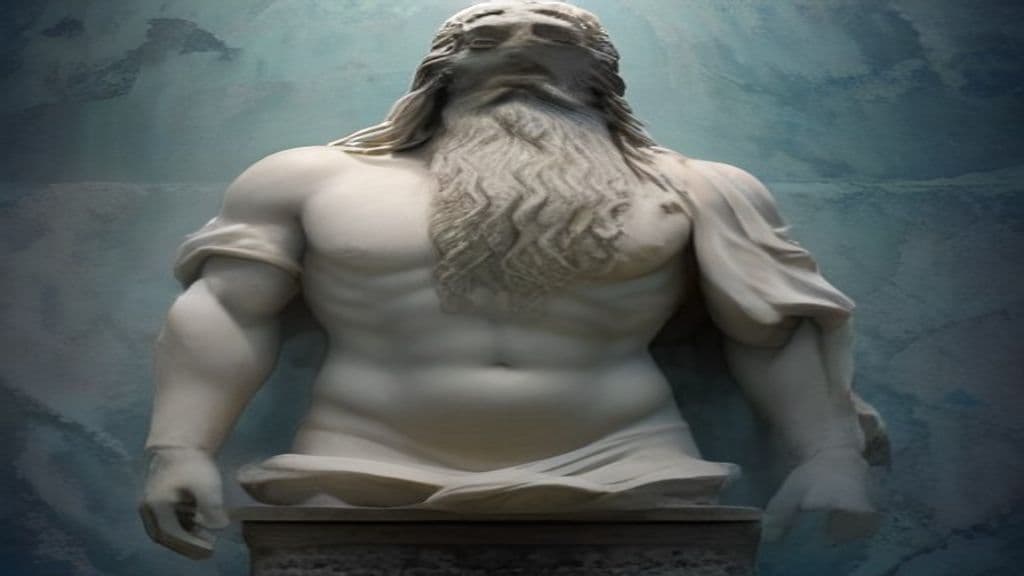
Poseidon
Poseidon is a principal deity of the ancient Greek pantheon, counted among the Twelve Olympians; he presides over the sea, storms, earthquakes and horses and functions as protector of seafarers and guardian of cities and colonies.
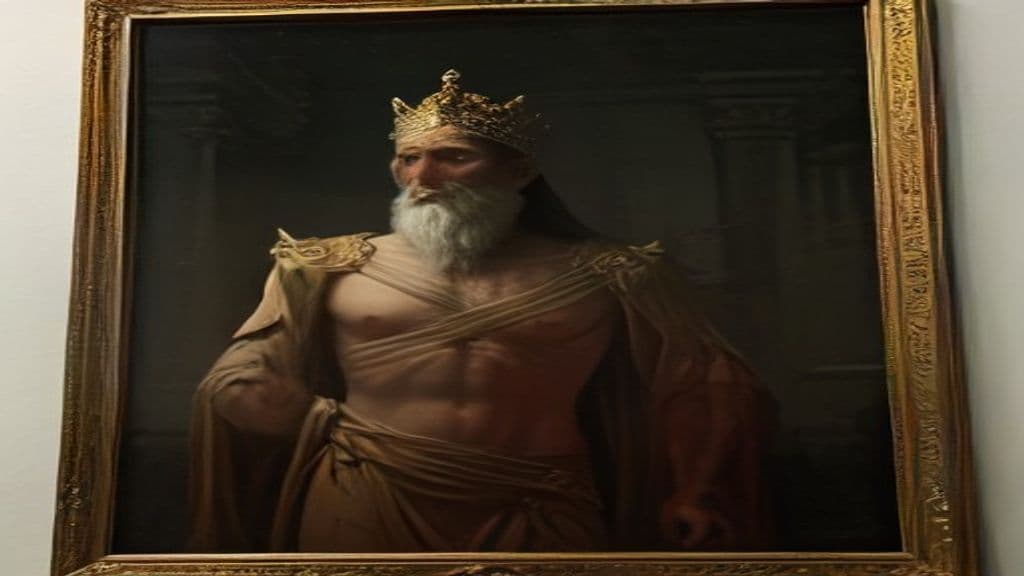
Aeson
Aeson (Ancient Greek: Αἴσων) is a legendary mortal king of Iolcus in Thessaly in Greek myth, best known as the father of the hero Jason. His fate—imprisonment by his half-brother Pelias and either suicide or a miraculous restoration performed by Medea—provides the dynastic and moral background for the Argonautic cycle.
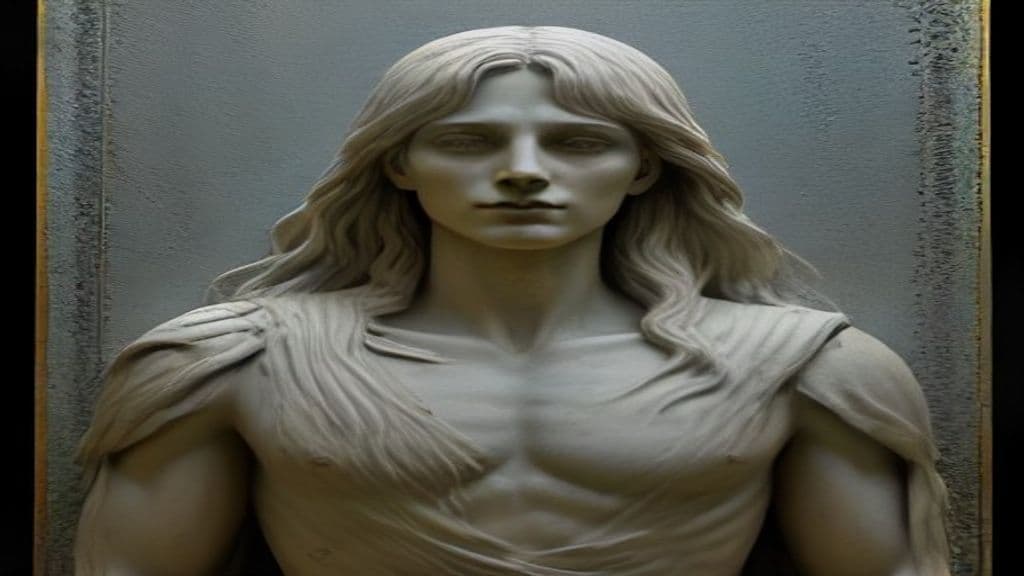
Pelias
Pelias (Πελίας) is a mortal king of Iolcus in Greek myth who usurped power in Thessaly, sent Jason to fetch the Golden Fleece, and was ultimately killed through Medea's deception when his daughters dismembered him in an attempted false rejuvenation.
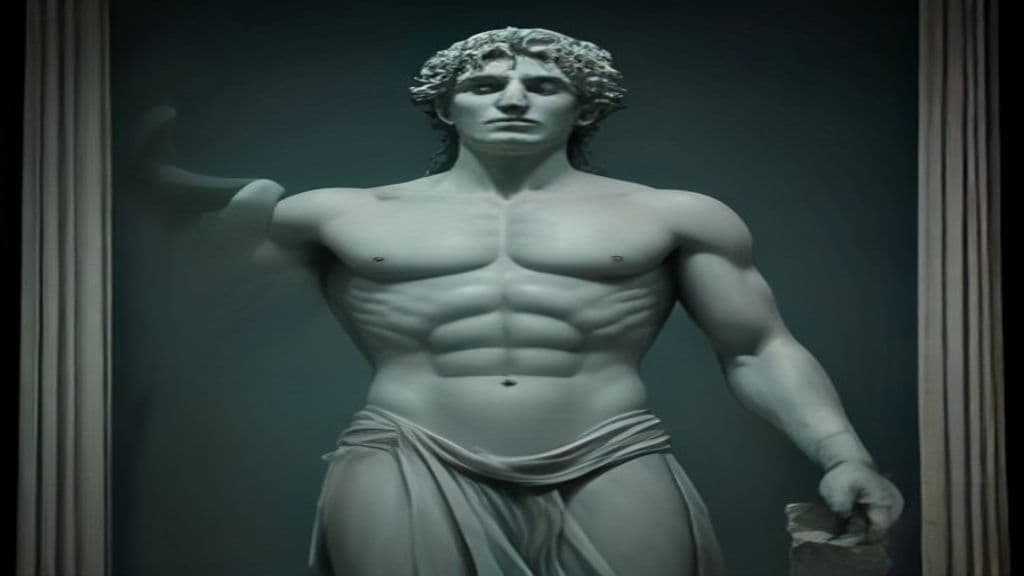
Neleus
Neleus (Greek Νηλεύς) is a mythological heroic-age king of Pylos in Greek tradition, son of Poseidon and Tyro in most accounts, husband of Chloris, and father of Nestor and other sons. He appears in genealogical and foundation narratives and is notably killed by Heracles after refusing to purify him for the murder of his family.
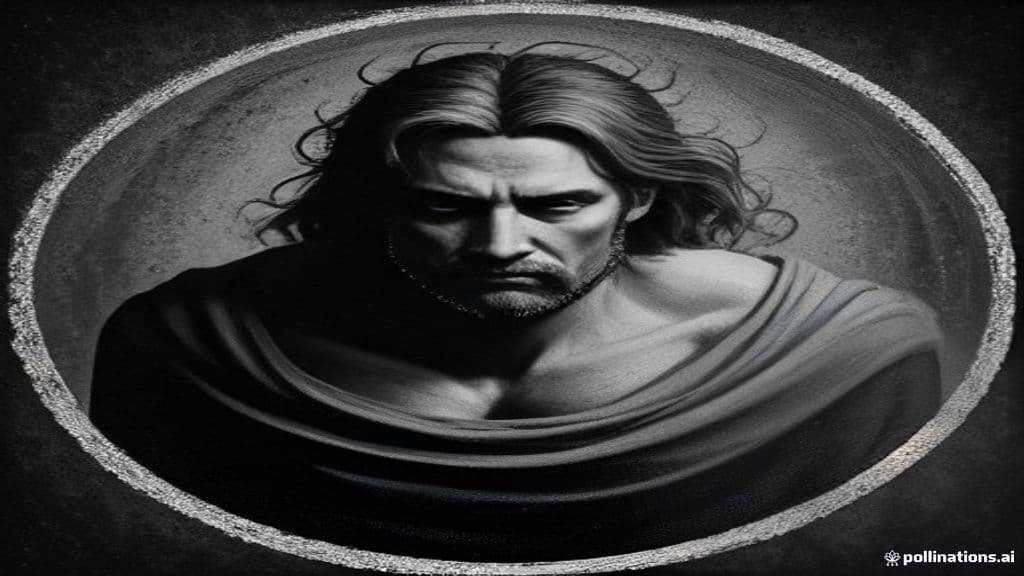
Sisyphus
Sisyphus is a legendary mortal king of Ephyra (Corinth) in classical Greek myth, famed for his exceptional craftiness and for twice cheating death; as punishment he is condemned in the underworld to an eternal, futile labor of rolling a great boulder up a hill only to have it roll back down.
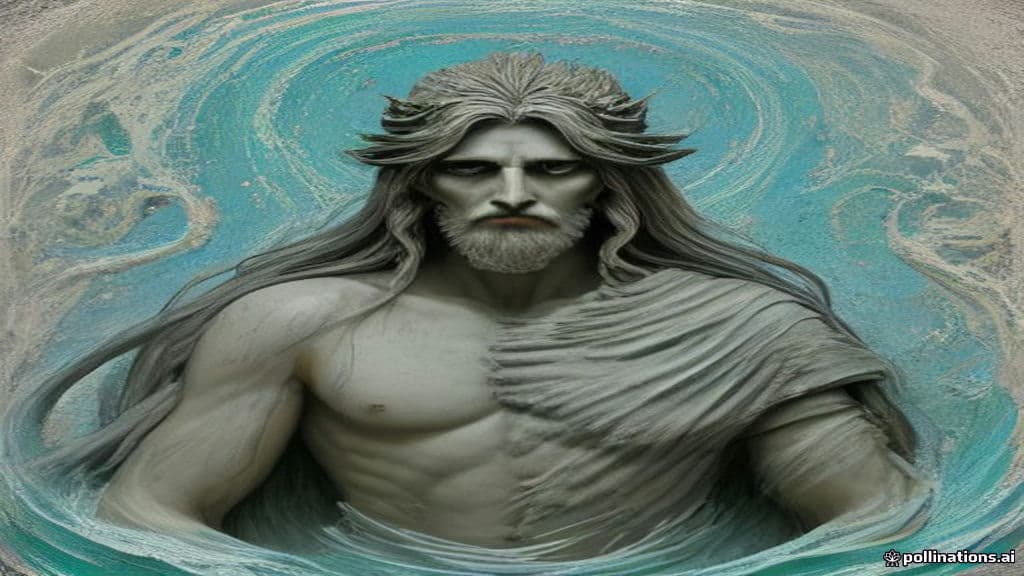
Enipeus
Enipeus (also Enipeas / Enippeas) is attested in Greek sources as the name of several rivers in Greece and as a river-god (a potamos) — a local divine personification identified with those watercourses. Specific rivers named include streams in Elis, Thessaly, and Pieria, and a town named Enippeas in Thessaly.
*Péh₂usōn (reconstructed)
Péh₂usōn is a hypothetical Proto‑Indo‑European pastoral guardian reconstructed by comparative scholars from parallels in Greek and Vedic traditions. Proposed as a Graeco‑Aryan ancestor‑figure, the reconstruction describes a protector of flocks, roads, and travellers rather than an attested historical cultic personality.
3-D Man
3-D Man is a Marvel Comics superhero identity associated with a 1950s-era origin in which the body of Chuck Chandler can materialize in three-dimensional existence when activated by his brother Hal via a pair of glasses. The mantle was later assumed by Delroy Garrett (formerly Triathlon) in modern continuity.
5 Ronin
5 Ronin is a 2011 Marvel Comics five-issue limited series that reimagines five Marvel superhero archetypes as rōnin (masterless samurai) in a fictionalized post‑Sekigahara feudal Japan. The work places Wolverine, Hulk, Punisher, Psylocke, and Deadpool analogues into period roles to explore displacement, revenge, and identity in an era of political upheaval.
A Elbereth Gilthoniel
An Elvish hymn in Sindarin addressed to Elbereth (Varda) from J. R. R. Tolkien's legendarium. Presented in The Lord of the Rings and later musical and dramatic adaptations, the hymn functions as devotional poetic language that evokes Elvish reverence for the star-kindler rather than an independent supernatural agent.
A.R.G.U.S.
A.R.G.U.S. is a fictional clandestine United States government agency in the DC Comics universe that investigates, contains, and manages superhuman, meta-human, and supernatural incidents and assets. Introduced in The New 52 continuity, it functions as an institutional actor providing intelligence, logistical support, covert task forces (notably Task Force X / the Suicide Squad), and a dedicated magic division across comics and media adaptations.
Aba (disambiguation / name-form)
Aba is a polyvalent name-form attested across many unrelated contexts (place names, personal names, animal names, and brief mythological listings). The provided sources do not support a single, coherent supernatural entity called "Aba" and offer no descriptive or ritual material for such a being.
Abarbarea
Abarbarea is a name attested in classical Greek and Roman sources for freshwater nymphs (naiads). The name appears for at least two individual mythic figures — a naiad wife of Bucolion and a naiad counted among ancestors of the Tyrians — and Hesychius records plural forms that may indicate the name was also used as a class-name (Abarbareai / Abarbalaiai).
Abas
Abas (Ancient Greek: Ἄβας, gen.: Ἄβαντος) is not a single mythic being but a recurring personal name borne by multiple mortals and minor mythic figures in Greek epic and genealogical traditions — kings, founders, seers, warriors, attendants, a centaur, and a youth transformed by a goddess. The name is glossed in the sources as 'guileless' or 'good-hearted' and appears across Argive, Theban, Trojan, Euboean, and other local cycles.
Abderus
Abderus (Ancient Greek: Ἄβδηρος, romanized Ábdēros) is a mortal heroic figure in Greek myth closely associated with Heracles, remembered as the youth left in charge of the Mares of Diomedes who was killed by them. He functions as an eponymous local/divine-hero ancestor for the city of Abdera and received funerary commemoration and athletic agones at his tomb.
Abin Sur
Abin Sur is a fictional extraterrestrial Green Lantern from the planet Ungara in DC Comics. A former history professor turned Green Lantern of Space Sector 2814, he discovered and investigated a prophecy tied to the "Blackest Night," died wounded on Earth and chose Hal Jordan as his ring-successor, and was later reanimated as a Black Lantern in the Blackest Night storyline.
Abomination of Desolation
An apocalyptic prophetic phrase originating in the Book of Daniel designating a profaning thing or act that renders the Jerusalem Temple cult desolate; later reused in the Synoptic Gospels as an eschatological sign prompting urgent flight. The term denotes ritual/cultic impurity (Hebrew shiqquts) and is variously interpreted as pagan offerings or altar, a foreign cult statue, or (in some New Testament readings) an acting agent.
Absolute Green Lantern (tradition)
A modern comic-book reinterpretation in DC's Absolute Universe in which a giant green lantern-shaped vessel appears above Evergreen, Nevada, generates an impenetrable green dome, judges townspeople and sends the judged into the Lantern to await further adjudication in OA (Omega‑Alpha). The story reframes Green Lantern mythos as cosmic/religious horror with an "Enlightenment Spectrum" of flames (Qard, Rao, Sur, Aur) stewarded by Oans such as Abin Sur.
Community Record
- [1]Tyro. Wikipedia contributors, 'Tyro,' Wikipedia, The Free Encyclopedia.wiki
- [2]Tyrol (Wikidata entry, homograph noted). Wikidata entry Q42880 (not about the mythological Tyro; cited for homograph distinction).other
- [3]Archive audio entry (homograph of tyro noted). Archive.org item title referencing an unrelated use of 'tyro' (not relevant to the mythological figure).other