
Within the Wanjina Wunggurr cultural bloc, Wandjina are presented as ancestral spirit-beings associated with clouds and rain and as part of the ancestral/creator network that shapes land and weather. Sources identify Wandjina as members of the local cosmology alongside Wunngurr, a creator being described as analogous to the Rainbow Serpent in neighbouring Aboriginal traditions; this situates the Wandjina as ancestral/weather powers embedded in long-standing regional myth and practice.
The supplied sources report that Wandjina are depicted prominently in rock art in northwestern Australia (the Kimberley region). While detailed physical-description elements are not recorded in the provided material, the primary attestation is their presence as painted figures in Kimberley rock art assemblages, some of which are dated to roughly 4,000 years ago. The names Wandjina, Wanjina and Wondjina are used in the sources to refer to these depicted ancestral beings.
Sources characterize the Wandjina principally as cloud-and-rain spirits: their primary domain and activity relate to weather phenomena, especially rain and clouds. As ancestral spirit-beings within the Wanjina Wunggurr system, they function in the region's creation/ancestral narratives and are associated with broader life-sustaining environmental processes. The supplied materials do not record further specific abilities, punitive or benevolent actions, or other behavioral details beyond these associations.
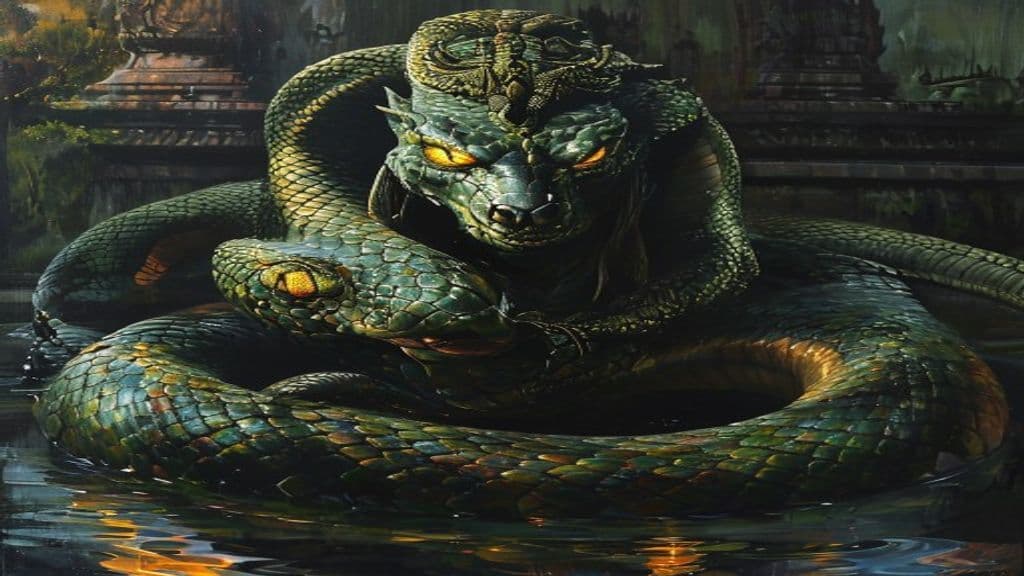
Wairua
Wairua is the Māori concept of spirit or soul: a non-physical, enduring aspect of a person (or things connected to people) that exists beyond death and is the focus of spiritual care within Māori wellbeing frameworks.
Wak / Waq / Waqa (unverified)
No reliable evidence in the provided sources identifies a spirit called Wak, Waq, or Waqa as an Ethiopian 'spirit of the sky.' The materials reviewed contain only unrelated uses of the string 'Wak' (disambiguation entries, archival captions, and institutional data).
Wakinyan (Lakota Tradition)
A thunder spirit in Lakota tradition, embodying the raw energy and majesty of nature through its connection to lightning. (Note: - Power tier: Primordial (based on its association with thunder, a cosmic force) - Weaknesses: Not specified in source material; omit or indicate as unknown - Wards: Not mentioned in source material; )
Wakwak
The Wakwak is a nocturnal, predatory creature in Philippine popular belief, typically described as a bird-like vampiric being that hunts humans at night. It is named onomatopoeically for the wak-wak sound associated with its flight or call and occupies the same folkloric cluster as the manananggal, ekek, and aswang.
Wakȟáŋ Tȟáŋka
Lakota term for the Great Sacred or Great Mystery that names the sacred power or quality immanent in all things; sometimes rendered in English as "Great Spirit" but better understood as a pervasive sacredness or, in some historical usages, as a mysterious collective of sacred beings.
Waldgeist (Woodwight / "Wildnisgeist")
A modern analytical label proposed for poltergeist-like phenomena occurring in wooded locations; described in the cited literature as producing physical disturbances (thrown stones, raps, lights, odors, apports) in forested tracts and sometimes overlapping in report-pattern with non-sighting cryptid (Bigfoot) encounters. The term also appears in contemporary culture as a reused compound name but lacks a documented traditional folkloric corpus within the supplied sources.
Wanjina Wunggurr (unverified)
Insufficient sourced information available in the provided material to describe Wanjina Wunggurr. The only confirmed fact from the source is that the Worrorra (Worora) are an Aboriginal Australian people of the Kimberley region; no reliable details about Wanjina Wunggurr are present in the supplied source.
Warg
A large, malevolent wolf-like being whose modern fictional form was popularized by J. R. R. Tolkien as an intelligent, war‑capable wolf-race allied with Orcs; the term derives from Old Norse vargr and Old English wearh, words that blur natural wolf, outlawry, and destructive agency.
Watcher
Watcher is a polyvalent label applied across religious, literary, and technical domains to beings or systems defined primarily by observation, surveillance, or guarding. In the supplied sources it names an apocryphal class of angels (the Grigori), a localized monstrous guardian in Tolkien's fiction (the Watcher in the Water), a race of cosmic observers in Marvel Comics, and various monitoring programs in computing.
Water deity
A water deity is a god or goddess associated with water or specific bodies of water (sea, ocean, great river, spring, or well). The term is a functional, comparative category used by scholars to group diverse culture-specific divine figures whose primary domain is water.
Way (wayob)
Way (plural wayob) is a Yucatec Maya term denoting a human-linked animal-being tied to sleep; it can mean a person who transforms into an animal while asleep (a Mesoamerican nagual) or the animal transformation/companion itself. Wayob appear in Classic Maya iconography (marked by a special hieroglyph) and are recorded in later Yucatec usage and museum interpretation as both harmful nocturnal agents and as ritual companions for rulers on journeys to the Otherworld.
Wayland the Smith
Wayland the Smith is a legendary master craftsman from early Germanic and Norse tradition, famed for superlative metalwork, cunning devices, and a narrative of capture, mutilation, vengeance, and escape. He appears as a culture-hero/artisan in poetic and saga contexts (not a formal deity) and is later equated with classical craft-figures such as Daedalus in medieval manuscript tradition.
Community Record
- [1]Wandjina. Wikipedia, "Wandjina"wiki
- [2]Wandjina (Wikidata entry). Wikidata Q535154, "Wandjina"wiki
- [3]Psychic and Mystical Experiences of the Aborigines – The Australian Institute of Parapsychological Research (AIPR) information sheet (contextual reference). AIPR information sheet, paraphrase on centrality of Dreamtime in Aboriginal societyother
- [4]Australian Flying Saucer Review 1972 02 vol 3 no 4 VUFORS (archival listing that references regional material). Archive.org: Australian Flying Saucer Review, 1972other
- [5]Myths and legends : from Cherokee dances to voodoo trances (archival collection referencing comparative mythology). Archive.org: Myths and Legends (comparative collection)other