
Agrat bat Mahlat appears in rabbinic and midrashic texts as a named daughter of Mahlat and a powerful night spirit; Talmudic anecdotes (as preserved in Pesachim and related rabbinic discussions) portray her as one of the demons who 'go out' at night and as subject to restriction by holy sages (e.g., Ḥanina ben Dosa and Abaye). Later Zoharic and Kabbalistic materials expand her role, listing her among the quartet of female consorts/"mothers" associated with Samael and depicting her as a queen of unclean spirits whose existence continues until an eschatological eradication of uncleanness. These layers—rabbinic anecdote, midrashic citation, and Kabbalistic systematization—constitute the primary attested origin and development of her figure in the supplied corpus.
Primary rabbinic and Kabbalistic sources cited in the provided material supply little sustained physical description; the tradition emphasizes her role, lineage, and retinue rather than fixed corporeal features. Some later popular and modern sources portray her in succubus‑like or sexualized terms, but such portrayals are receptions and expansions beyond the sparse physical portrait present in the original rabbinic and Zoharic excerpts.
In the Talmudic tradition Agrat is associated with nocturnal activity and the leadership or accompaniment of many destructive spirits (a cited rabbinic line reports that 'she and 180,000 angels of destruction go out' on certain nights, each with permission to destroy). She is presented as capable of threatening humans at night but also as subject to restriction by pious sages—stories record Ḥanina ben Dosa and Abaye decreeing limits on her passing through inhabited places. In later Kabbalistic texts she is named among the principal female consorts of Samael and counted among the 'mothers' or queens of demonic/unlean spirits, and Zoharic passages add named minions (e.g., a chief minion Joseph). Some traditions also represent her as a transmitter of occult lore (for example, accounts that she taught or communicated secret knowledge to sages), a role attested in secondary/receiving traditions within the supplied materials.
Weaknesses
- ritualRestriction/Decree by a holy sage (e.g., Ḥanina ben Dosa, Abaye)
- mantraScriptural protection (Psalm 91:5) and the 'ineffable Name' as cited in midrashic tradition
Wards
- ritualAvoid going out alone at night (communal/rabbinic admonition)
- symbolInscription of divine/ineffable Name or Psalmic verse on a weapon or amulet (midrashic implication)
- ritualAppeal to the authority of a pious sage or Torah-sanctioned intervention
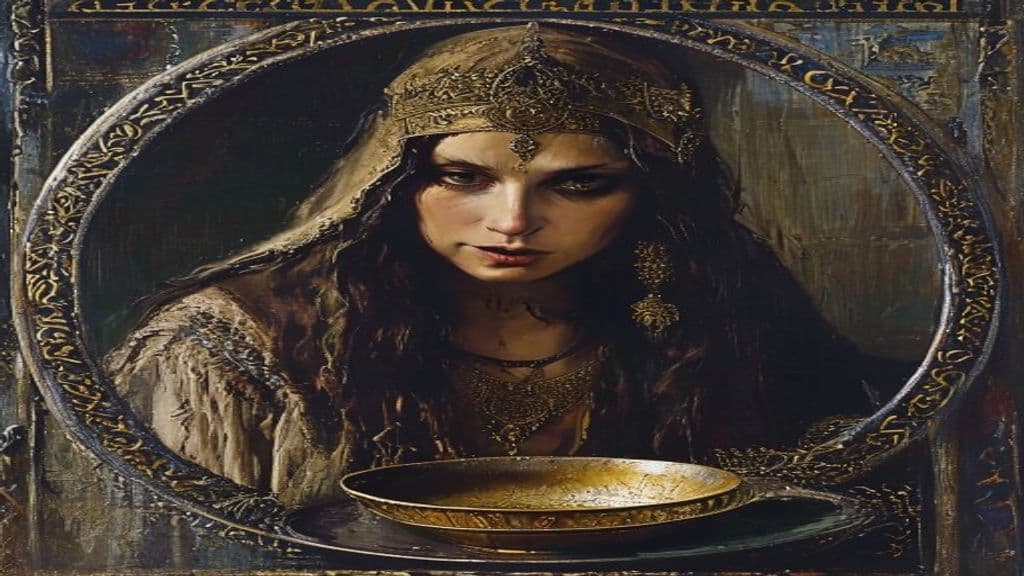
Lilith
Lilith is a feminine night‑spirit in Jewish mythic, magical, and folkloric traditions associated with harmful nocturnal activity, especially threats to sleeping people and infants. The figure appears both as a class of night‑spirits (lilit/lilītu) in Near Eastern demonologies and as an individualized dangerous woman in later medieval Jewish narratives and amulets.

Naamah
Naamah is a name attested in the Hebrew Bible for several mortal women and later reworked in Jewish mystical and folkloric literature as a feminine supernatural figure associated in Zoharic material with the archangel Samael and with erotic/nocturnal motifs; in some later traditions she is linked with unions to angelic or fallen figures that produce classes of spirits (shedim/sedim).

Eisheth Zenunim
A feminine personification from Zoharic Kabbalah identified with sexual immorality and named among a quartet of female partners of Samael. Later Western esoteric and popular sources reinterpret her as a Qliphothic princess or succubus-like 'queen' of demons.
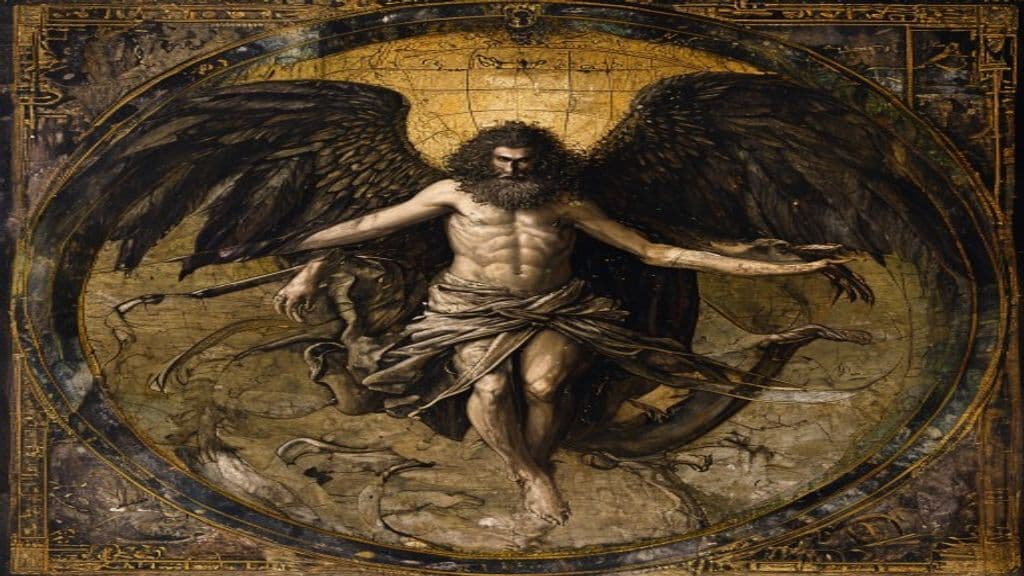
Samael
An angelic figure in Jewish textual traditions whose roles include accuser/adapter (Satanic function), tempter, destroyer/angel of death, and, in later mystical texts, leader of demonic or qlippothic forces. Samael is presented variously across Second Temple literature, midrashim, and Kabbalah; his destructive functions are often framed as serving divine purposes rather than as an independent absolute evil.
Evil eye
A cross-cultural folkloric belief in a harmful influence cast by a person's gaze or look, usually motivated by envy or ill will. Treated as a transmissible curse or force rather than a corporeal being, it is countered by apotropaic objects, formulas, plants, and gestures in many traditions.
Agnes van Bareldonk
Agnes van Bareldonk is attested in a single source as a "processional giant." The available material identifies it as a crafted effigy used in public processions and provides no further descriptive, contextual, or mythic information.
Agneya / Āgneyī
Āgneyī (feminine) or Āgneya (masculine adjective) is a Vedic–Puranic divine figure and ritual principle tied to the fire-god Agni and the southeastern direction. In textual traditions she appears both as a personified daughter/shakti of Agni and as an adjectival/technical term applied to fire-consecrated things (direction, astra, etc.). She also occurs as the name Agneya (or Anala) among items revealed in a Shaiva-Agamic list associated with the Aghora face of Sadashiva.
Agni
Agni is the Vedic personification of fire in Hindu tradition: a sacred, mediating principle that manifests as terrestrial fire, atmospheric lightning, and celestial sun, and that receives and conveys sacrificial offerings. Prominent in the Rigvedic corpus, Agni functions as sanctifier, witness of rites of passage, and a transformational inner principle in later Upanishadic literature.
Agolant
Agolant is a literary Saracen king who appears as a recurring antagonist in medieval and Renaissance epic cycles (Matter of France). He functions as a human royal opponent to Charlemagne and his peers, supplying martial episodes, genealogical connections, and the transfer of legendary arms and horses in chansons de geste and later Italian romances.
Agoraeus / Agoraea
Agoraeus (masculine) and Agoraea (feminine) are adjectival epithets used in ancient Greek religion to mark a deity's protective or patronal relation to the agora (public square/marketplace). The term is not an independent supernatural being but a role-name attached to different gods (notably Hermes, Zeus, Athena, Artemis) indicating their guardianship of assemblies and commercial/civic activity in particular poleis.
Agraeus
Agraeus (Greek: Ἀγραῖος) is primarily an epithet in ancient Greek religion meaning "the hunter," applied to deities (notably Apollo and in feminine form to Artemis) to mark their hunting aspect. The name also appears as a personal name in mythic genealogies and is secondarily attested in a Phoenician context in a late summary source.
Agravain
Agravain is a literary knight of Arthurian romance cycles: one of the sons of King Lot of Orkney, a member of the Round Table, and a recurring figure in French and English medieval prose and verse. He is portrayed as a skilled but morally problematic courtly knight whose jealousy, malice, and intra-familial violence drive key narrative conflicts (notably the slaying of Lamorak and the exposure of Guinevere).
Agreus
Agreus (also spelled Argeus) is attested in modern compilations as one of the Pans — a class of rustic, pan-like rural deities in classical Greek mythology. In modern database records he is additionally listed as a son of Apollo; beyond classificatory notes, surviving citations provide no detailed cultic or narrative material for him.
Agriopas (werewolf account)
A classical account—attested via Agriopas as quoted by later compilers—relating that a Parrhasian named Demaenetus/Demnetus ate human viscera during the Arcadian sacrifice to Zeus (Jupiter) Lycaeus and was transformed into a wolf for a period (reported as ten years in some recensions) before reverting to human life.
Agrippa
Agrippa is a polyvalent Latin personal name attested across Roman myth (a legendary king of Alba Longa), multiple historical figures (e.g., Marcus Vipsanius Agrippa, Agrippa Postumus, Herod Agrippa I & II), and a Renaissance occult author (Heinrich/Heinrich Cornelius Agrippa). The supplied sources treat Agrippa primarily as an onomastic label rather than a single, consistent supernatural entity.
Agrius
Agrius (Ancient Greek: Ἄγριος, 'wild') is an onomastic figure in Greek myth whose name is applied to multiple distinct personae—including a Giant, a centaur, a bear‑born twin, a princely son, a suitor of Penelope, and one of Actaeon's dogs—rather than a single unified supernatural being. Each attestation places an Agrius in different narrative registers (Gigantomachy, Heracles' labors, heroic genealogies, the Odyssean cycle, and the Actaeon hunt).
Community Record
- [1]Agrat bat Mahlat — Wikipedia. Wikipedia article 'Agrat bat Mahlat' (summary of rabbinic and Kabbalistic traditions)wiki
- [2]Wikidata entry for Agrat bat Mahlat. Wikidata item Q2913206other
- [3]Archive: Agrat Bat Mahlat.. Archive item referenced in the research notes (modern/derivative reception)other
- [4]Archive: Demon Girl succubus NSFW (3695755). Archive item listed among modern receptions/reinterpretationsother
- [5]Succubi Thoughts — Agrat bat Mahlat. Modern blog discussing Agrat's reception as succubus (used in notes to indicate later portrayals)folk