
In Visayan accounts Amalanhig are described as aswang who failed to transfer their monstrosity or power to a living relative before death; as a result they rise from their graves and go on to kill humans. The failure to pass on that role is given in sources as the causal origin for the corpse’s return to prey on the living.
Sources describe Amalanhig as externally identical to humans but commonly exhibiting an enlargement of the upper canines. Some retellings add a sharp, pointed tongue used to feed; accounts also describe a corpse-like stiffness that affects their movement in some versions.
Amalanhig rise from graves and seek out living people. Killing methods reported in sources include biting the neck to suck blood, using a sharp pointed tongue (in some summaries), and an alternate folk variant in which they chase and tickle victims until they die of laughter and terror. Many accounts emphasize limited locomotion (stiffness) that causes them to walk in straight lines and portray them as flightless in several retellings.
Weaknesses
- conditionbodily stiffness that forces straight-line walking
- conditionaversion or fear of deep bodies of water
Wards
- otherrun zigzag (evade by not running in a straight line)
- otherclimb trees or high platforms to escape reach
- otherenter deep lakes or rivers (they reportedly fear deep water)
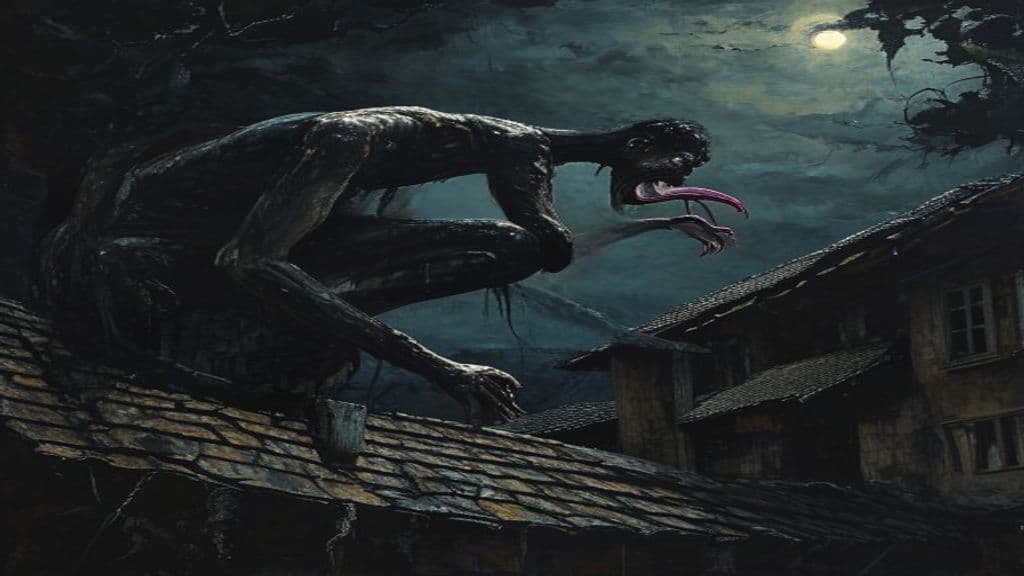
Aswang
The most feared supernatural being in Philippine folklore — a shape-shifting monster that appears human by day but transforms at night to prey on pregnant women and children.
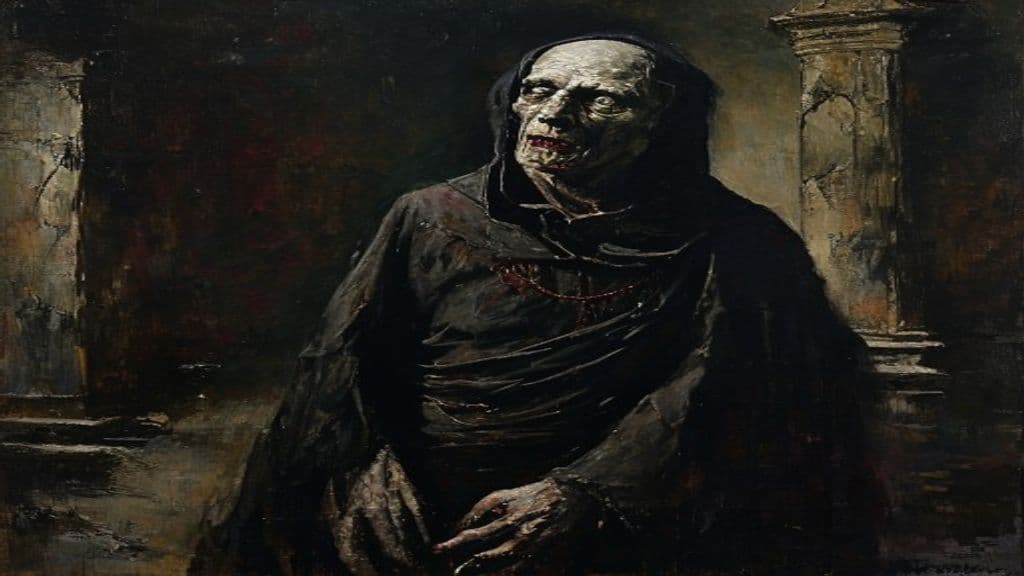
Vampire (tradition)
A class of revenant beings in southeastern and eastern European folk belief that subsist by feeding on the vital essence (generally blood) of the living. Recorded chiefly in early modern to modern oral traditions, these vampires are typically described as reanimated corpses whose presence explains unexplained illness, death, and post-mortem disturbances in their communities.
Anito
Anito is a category of non‑human and post‑human spiritual beings in indigenous Philippine animistic worldviews, encompassing ancestor spirits, nature spirits/local deities, and sometimes carved effigies (taotao) that house or represent those spirits. They mediate relations between the living and the unseen world, functioning as household guardians, owners of places, intercessors, or occasional agents of harm when offended.
Kan-Laon
Kan-Laon (variously Laon, Lahon, Lalaon, Lauon, Malaon, Raom, Laonsina) is a supreme female creator anito in Visayan pre-colonial belief whose domain is identified with Mount Kanlaon on Negros Island; she is associated with creation, agriculture, the sky, and divine justice and is attested across multiple Visayan ethnolinguistic groups.
Laon
Laon is presented in the supplied sources as an ancient supreme creator figure in Visayan mythic cosmology, identified in some accounts with the name Makaako and said to dwell in the uppermost level of a seven-layered universe.
Ama-arḫuš
Ama-arḫuš is attested in Mesopotamian sources as a divine figure associated with compassion and healing. She is presented both as an independent goddess and as an epithet applied to other goddesses (notably as a title designating them compassionate, for example in association with Gula).
Amabie
Amabie is a mid-19th-century Japanese yogenjū-type wondrous creature attested in kawaraban and related pamphlet culture that emerges from the sea (in canonical accounts) to prophesy about harvests and epidemics and prescribes that its image be drawn and shown to the sick as a protective measure.
Amadeus Cho
A fictional Korean American human superhero from Marvel Comics characterized foremost as a super-genius ('hero of the mind') who later assumes a Hulk-like superhuman identity (the Totally Awesome Hulk) and subsequently the mantle Brawn. He operates in modern Marvel continuity, interacting with gods, heroes, and mythic locations.
Amaethon
Amaethon is a figure from medieval Welsh mythology, son of Dôn and a member of the Children of Dôn, identified as a mythic ploughman whose actions (notably a theft from Arawn) figure in the Cad Goddeu ('Battle of Trees'). He is primarily attested in medieval prose and later poetic tradition as an agricultural specialist and participant in otherworld conflict.
Amahuaca
Amahuaca refers to an Indigenous people of the southeastern Amazon Basin (Peru and Brazil) and their Panoan language. The provided sources treat Amahuaca as a human ethnolinguistic group with documented history, language materials, and shamanic practices; there is no evidence in these sources that Amahuaca denotes a supernatural entity.
Amalek
Amalek (Heb. עֲמָלֵק, ʿĂmālēq) is presented in the supplied sources as an eponymous ancestor and the nation/tribe of the Amalekites in the Hebrew Bible — a recurring human enemy of Israel whose ambushes and raids become the paradigm for a legal-theological injunction to eradicate their memory.
Amalekites
The Amalekites are a people-group in the Hebrew Bible and later tradition portrayed as Israel's archetypal hostile enemy. Presented as a tribal/national antagonist descended from Amalek (a grandson of Esau), they appear in narratives of raids and battles and later as a theological symbol of implacable enmity that some texts treat as warranting eradication.
Amalthea
Amalthea (Α᾿μάλθεια) in Greek myth is the foster-mother or nurse of the infant Zeus (Jupiter). Traditions describe Amalthea either as a goat that nursed the child-god or as a nymph who suckled or fed him with goat's milk; poets in antiquity differ on these interpretations.
Amalthea
Amalthea (Ancient Greek Ἀμάλθεια) is a figure of Greek myth most commonly identified as the nurse of the infant Zeus. Traditions variously portray her as a nymph who tended a goat that fed Zeus or, in later Hellenistic treatments, as the goat itself; she is also associated with the "horn of Amalthea" (cornucopia), a horn reputed to yield inexhaustible food and drink.
Community Record
- [1]Amalanhig - Wikipedia. Wikipedia: "Amalanhig (also called 'Maranhig' or 'Amaranhig') are creatures in Visayan mythology... Aswangs who failed to transfer their monstrosity causing them to rise from their graves to kill humans by biting their necks."wiki
- [2]Amalanhig | Cryptid Wiki. Cryptid Wiki summary: "The amalanhig or maranhig ... are flightless aswang that came back to life after death. They rise from their grave after failing to pass their power to a relative... At night they go to nearby villages to prey on the residents using their sharp, pointed tongue."folk
- [3]Amalanhig : The Undead Vampire - Mythlok. Mythlok summary (secondary): discusses Amalanhig as undead vampires tied to aswang origins and recounts feeding and pursuit motifs.other
- [4]Mini Vampire Myths – Vampires. Popular-summary list referencing Philippine undead/vampiric motifs including Amalanhig.other
- [5]4 unconventional short fiction pieces about Philippine mythology - INQUIRER. Cultural commentary referencing Philippine mythic figures and their modern transmission.literary