
Traditional Jain accounts place Chandraprabha as the eighth Tīrthankara of the present avasarpini. He was born at Chandrapuri (at Varanasi) to King Mahasena and Queen Lakshmana Devi on the twelfth day of the Pausa (Pausha) month (traditional account). After a period as prince and ruler recorded in traditional chronologies he renounced the world, obtained Kevala Jnana while meditating under a Naga tree, and later attained nirvana at Sammed Shikharji on the seventh day of the bright half of the month of Faalgun. Chronological relations to other Tīrthankaras are given in Jain cosmological measures (for example, traditional sources state he was born 900 crore sagara after his predecessor Suparsvanatha, and that his successor Pushpadanta was born 90 crore sagara after him).
Sources describe Chandraprabha as having a complexion 'white as the moon' or 'bright as the rays of the moon' and as being of a traditional mythic height (given as 150 dhanusha). Iconographically he is usually depicted seated in lotus posture or in kayotsarga (standing meditation posture), bearing a crescent‑moon emblem as his distinguishing symbol beneath him, shown with a Shrivatsa mark and downcast eyes. Sculptural and monumental images (e.g., early fourth‑century sculptures, mulnayak images at Sonagiri, and a 21‑foot monolithic statue at Mandaragiri) follow these canonical features.
As a Tīrthankara Chandraprabha achieved Kevala Jnana (omniscience) and, in Jain doctrine, became a siddha (a liberated soul having destroyed all karma). Devotional texts (e.g., Svayambhūstotra and Chandraprabha‑charitra) praise his conquest of karmas and passions and present him as an object of worship and spiritual exemplar. The sources record no hostile or predatory behaviors; interactions documented are devotional, liturgical and cultic—images and hymns are used in temple worship and pilgrimage.
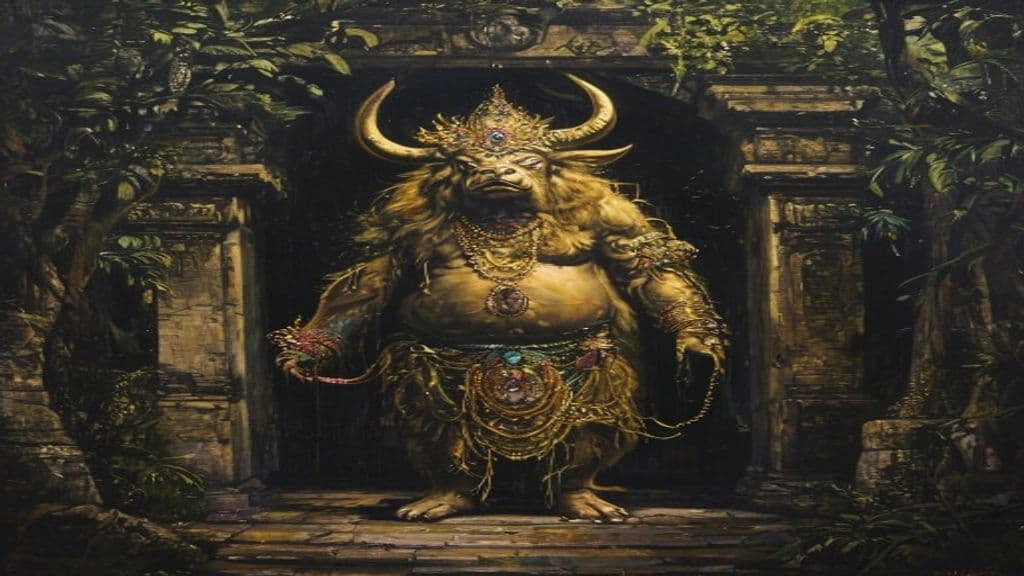
Yaksha
Nature spirits of Hindu, Buddhist, and Jain cosmology — guardians of forests, treasures, and wilderness. Ambivalent beings, capable of great benevolence to the respectful and terrible harm to the greedy.
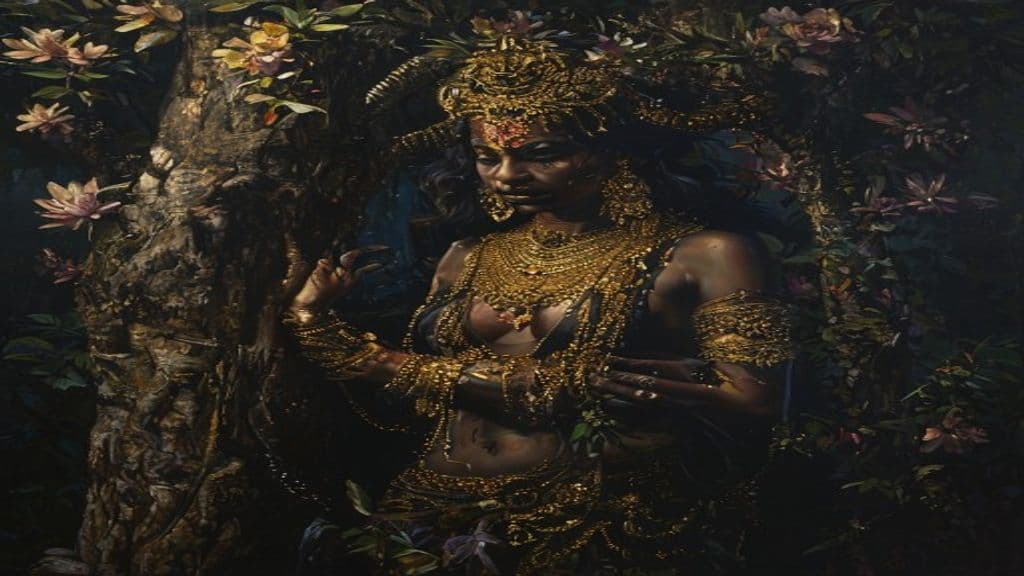
Yakshini
Semi-divine female nature spirits of enormous power — guardians of trees, forests, and buried treasure, described in Hindu, Buddhist, and Jain traditions alike. The 36 Yakshinis of the Uddamareshvara Tantra can be propitiated for wealth, beauty, and supernatural alliance — or angered to devastating effect by those who harm their trees.
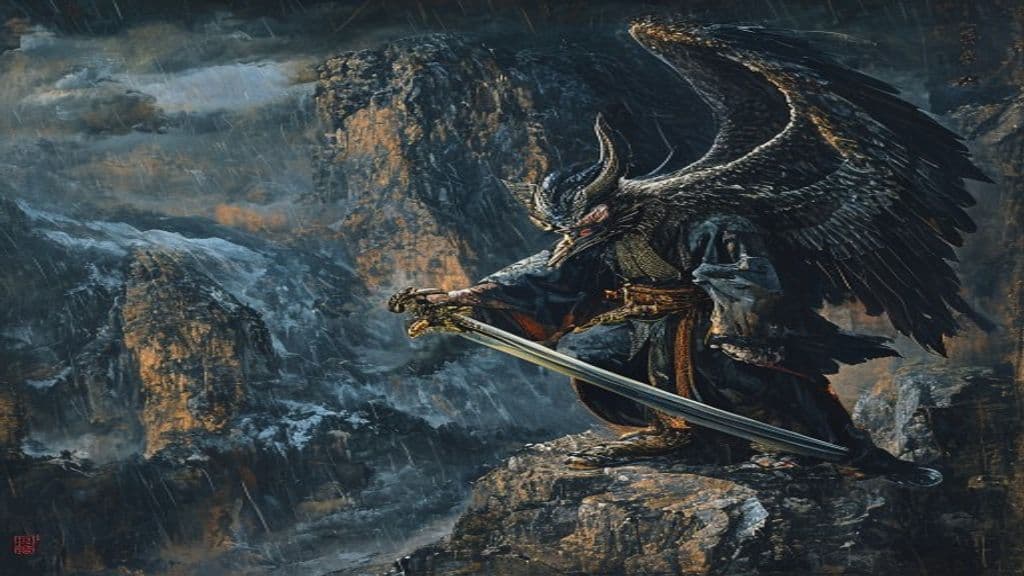
Tengu
Proud, warrior-like mountain spirits of Japan, associated with martial arts, pride, and the wild mountains. Neither fully good nor evil — they test and train warriors and monks, but punish the arrogant.
Chamrosh
Supernatural bird entity inhabiting the summit of Mount Alborz in Persian mythology. (Note: 1. Remove "Origin story" section since no origin story is provided in the source material. 2. Add a statement about the lack of specific abilities or behaviors under the "Abilities" section to clarify)
Chamunda
Chamunda (also Chamundeshwari, Chamundi) is described in the provided sources as a fearsome form of Chandi, a manifestation of the Hindu mother goddess (Mahadevi), and is counted among the seven Matrikas.
Chanda and Munda
Chanda and Munda are two named asura warriors in the Devi Mahatmya narrative who are sent by the demon-kings Shumbha and Nishumbha to confront the Goddess; their slaying by the goddess's terrifying war-aspect (Kali/Chamunda) gives rise to the epithet Chamunda.
Chandalika
A Dayan witch who has reached approximately 1600 years of age — the final threshold, beyond which she has become more force than person, capable of destroying entire lineages and withstanding divine invocations.
Chandi
Chandi (Caṇḍī / Caṇḍikā) is a fierce aspect of the Hindu Divine Feminine (Devi) prominent in Śākta traditions, celebrated in the Devi Māhātmya (Durga Saptashati) as a warrior‑protector and purifier. She is invoked in homa/chanting rites (Chandipath/Chandi Homam) to remove obstacles, cure evils, and bestow auspiciousness, and appears both in pan‑Indian scripture and varied local village forms especially in eastern India and Gujarat.
Chandra
Chandra is the Hindu divine personification of the Moon, appearing in Vedic, epic and Purāṇic literature. He functions as the lunar luminary, a member of the Navagraha (planetary regents), and is closely associated with plants/vegetation and the Vedic Soma tradition. Myths about Chandra include his marriages to the 27 Nakshatra personifications and the Tara–Brihaspati episode, in which his liaison produces the deity Budha and provokes cosmic dispute resolved by Brahma.
Chaneque
Chaneques are small, place-bound sprite-like beings in Mexican and wider Mesoamerican folklore, described as owners or inhabitants of particular dangerous places and as guardians of nature and households. Traditions portray them ambivalently: they may protect harvests and homes when propitiated, yet can mislead travelers, displace souls, cause illness, or physically harass people in some accounts.
Chang'e
Chang'e (嫦娥), originally attested as Heng'e and linked to the older name Chang Xi, is the female lunar immortal of Chinese myth who resides in the Moon Palace (廣寒宮). Best known from the elixir-of-immortality tale in which she ascends to the Moon and is accompanied there by the Jade Rabbit, she functions across religious and literary contexts as a lunar goddess/immortal and a poetic symbol of solitude and longing.
Changeling
A changeling is a human-like substitute left by nonhuman beings (fairies, trolls, demons, etc.) after they abduct a human—most often an infant. Found throughout much of European folklore, the changeling functions as an uncanny domestic replacement whose presence explains sickness, developmental difference, or sudden loss.
Chann Pardesi
Chann Pardesi is the title of a 1981 Punjabi-language film from India; the provided sources document the film's production, cast, plot summary, and official promotional/trailer certification. The materials do not identify 'Chann Pardesi' as a supernatural being or wandering spirit within Punjabi folklore.
Chaos gods (tradition)
A class of mythic figures or modern fictional entities associated with primordial or elemental chaos. In comparative mythology they denote personifications of cosmic disorder; in modern fictional settings (notably Warhammer 40,000 fandom) the term is used for emergent intelligences formed from concentrated collective emotion or psychic energy.
Chaos/Nun (Ancient Egyptian)
Primordial, formless substance underlying the created world in Ancient Egyptian creation myths. (Note: 1. Power tier should be Primordial (as it's a primordial substance underlying all creation), but Primordial is typically reserved for cosmic entities, so consider revising to Ancient, as Chaos/Nun has)
Community Record
- [1]Chandraprabha — Wikipedia. Wikipedia article 'Chandraprabha' (accessed source material provided).wiki
- [2]Wikidata entry Q5071432 (Chandraprabha). Wikidata item for Chandraprabha (reference record provided).other
- [3]Chandraprabha‑charitra (as referenced). Chandraprabha‑charitra by Haribhadra (mentioned in source materials; text title cited in provided notes).literary
- [4]Svayambhūstotra (lines praising Chandraprabha) — as quoted in sources. Svayambhūstotra by Acharya Samantabhadra (quoted lines referenced in provided materials).literary
- [5]Archive and regional references (assorted archival listings mentioning images and temple sites). Archive entries and collected materials listed among the provided source documents (used only to confirm presence of non‑ritual references and limitations).other