
In the sources Bai Baianai appears both as a cosmological figure and as a local guardian spirit. Some accounts present her as a daughter of the high creator Kayra (placing her within Turkic divine genealogy), while other descriptions treat her as an embodied woodland/fisheries patron present at specific natural sites. Her name is derived from Altaic‑Turkic roots glossed as 'wealth', 'richness', 'grandness' and 'divinity', and in ancient descriptions she is identified as a goddess of wildlife, wealth and fertility. These overlapping registers reflect a figure venerated across Altai and Sakha as a source of material abundance and lineage protection.
Reported depictions commonly portray Bai Baianai as an ethereal maiden: tall, slender, with long loose hair and wearing free‑flowing gowns often ornamented with feathers; some accounts add wings. Descriptions in the sources note pale, glowing skin and in some traditions a fair or blonde appearance. Several accounts emphasize transformative and fearsome manifestations: when angered she may assume the form of a monstrous bird and is described in some texts as able to fling fire at enemies.
Across the supplied material Bai Baianai functions as a protector and provider—patron of hunters, a bringer of fertility, game, fish and material wealth, and in certain traditions a guardian of children and family lineage. She is credited with controlling ecological and economic outcomes for human communities. Conversely, some sources report punitive powers: causing drought, burning crops or making cattle die of high fever when offended. The figure is seasonal in folk belief, said to come into the human world in spring and remain until autumn. Sources also distinguish functional forms (Bai Baianai for hunting, Tagh Baianai for forests, Ughu Baianai for fishery), suggesting local specialization within the Baianai cluster.
Weaknesses
- conditionseasonal absence (winter)
- otherabsence of explicit material weaknesses in sources — no attested aversions or substances recorded
Wards
- rituallighting fires and prayers by hunters
- ritualongoing cultic reverence (Altai and Sakha)
Jann
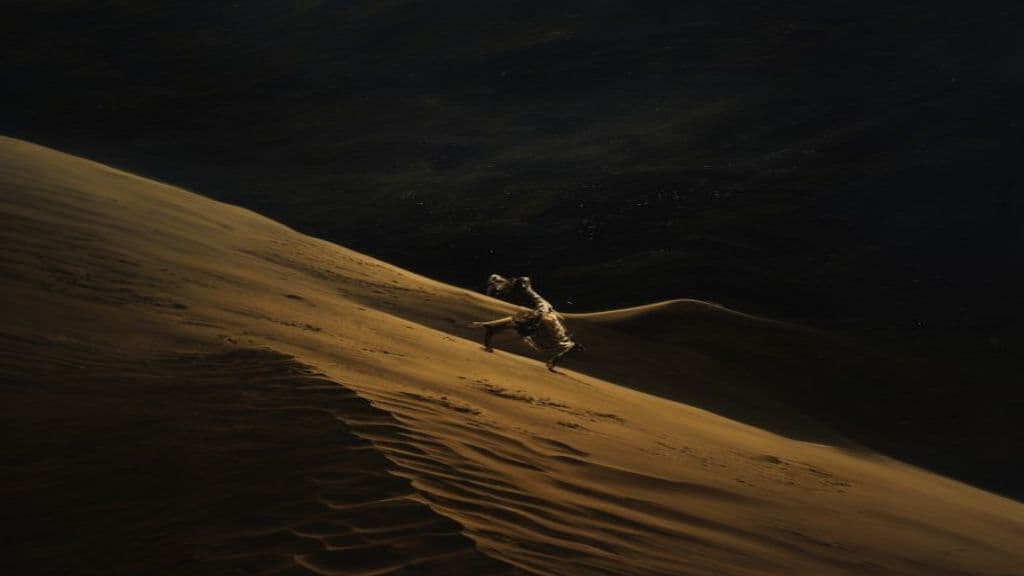
The weakest class of djinn in Islamic tradition, associated with desert winds and taking the form of snakes or whirlwinds, dwelling in empty wilderness and posing little threat to those who know the proper invocations.
Djinn
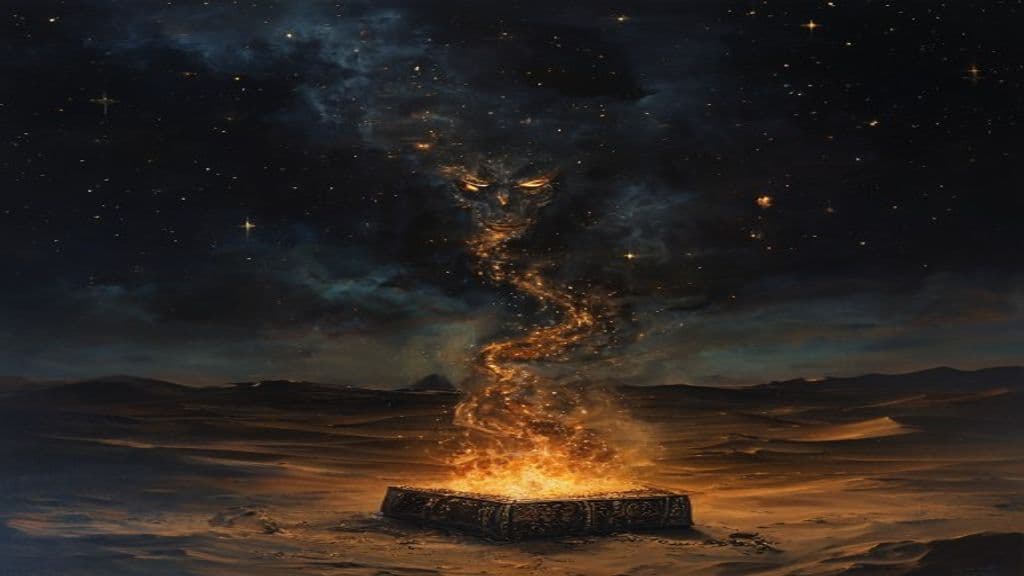
The class of supernatural beings created from smokeless fire in Islamic cosmology — a parallel civilization to humanity, capable of belief or unbelief, with their own prophets, society, and judgment before God.
Chud
The Chud (Russian: Чудь) are an ancient, mythic people in Russian and several Finno‑Ugric oral traditions. Presented as a pre‑modern population, they appear in legends as a displaced, assimilated, or subterranean society whose disappearance and former condition help explain features of landscape and cosmology in regional folklore.
Yelbeghen
A multi‑headed monstrous being from Turkic (notably Altai) traditions, originally depicted as a serpentine or draconic creature that in later tellings appears as an ogre‑like behemoth; associated with cosmic predation (eclipses), guarded treasures, great strength, magic, and occasionally sexual relations with humans.
Bagha Shad
Bagha Shad (Old Turkic: 𐰉𐰍𐰀𐱁𐰑, baγa šad; Chinese 莫贺设/莫賀設, mòhè shè) was an early 7th-century Göktürk shad (dynastic prince/general), a close kinsman and subject of the Western Turkic khagan Tong Yabghu, attested in Chinese sources as sojourning in China in 618–626 and probably the father of Böri Shad.
Bahamut
In medieval Islamic cosmographical and tafsir traditions Bahamut is a vast aquatic creature—described as a giant fish or whale—that lies deep beneath the earth and functions as a structural support in a layered model of the cosmos, bearing a bull which in turn bears a gemstone slab and angel that shoulder the earth.
Bahkauv
Aachen-area monstrous figure in Rhineland folklore depicted as an elongated or deformed calf with sharp fangs that lurks near wells, springs, sewers and fountains and traditionally ambushes intoxicated men at night, latching onto their shoulders before attacking. The creature is tied to urban water features in Aachen and appears in civic memory (notably a statue placed over an associated well in 1902 and replaced in 1967).
Bahram (Shahnameh)
Bahram is an Iranian heroic figure in Ferdowsi's Shahnameh, presented as a human warrior and counselor. He is named as a son of Goudarz and brother of Rohham, Giv, and Hojir, and appears in the episode of Siavash as one of Siavash's counselors alongside Zange-ye Shavaran.
Bahubali
Bahubali is a prominent figure in Jain hagiography: a royal scion who renounces worldly rule, undertakes prolonged standing ascetic meditation (kayotsarga), attains omniscience (kevala jnana) and ultimately liberation (moksha) to become a siddha. He is widely commemorated in Jain art and by monumental monolithic statues (notably the Gommateshwara at Shravanabelagola).
Bai Longma (White Dragon Horse)
A dragon-being from the 16th-century Chinese novel Journey to the West who serves as the monk Tang Sanzang's steed during the pilgrimage and is later ordained to the Buddhist office Babu Tianlong Guangli Bodhisattva. Presented in the narrative as a dragon in horse form or a dragon who takes on the role of a horse/servant.
Bai Suzhen (White Snake)
Bai Suzhen (白素貞), commonly called the White Snake, is a cultivated snake spirit who attains human form and is the central figure of the Legend of the White Snake. Sources present her as a one‑thousand‑year‑old snake spirit who transforms into a beautiful woman, engages in a romantic marriage with a human (Xu Xian), is opposed by Buddhist exorcism in many variants, and in some local traditions is venerated as Madam White Snake (白蛇娘娘).
Bai Ze
Bai Ze (白澤, Báizé; Japanese Hakutaku) is a legendary sacred creature in Chinese tradition famed as an authoritative recorder of ghosts and gods whose illustrated compendium (Bái Zé Tú) was employed as a household prophylactic against spirit-world harm. The creature’s image and diagrams were used in China and later Japan to identify, ward off, and prescribe avoidance of spectral calamities.
Bai-Ülgen
Bai-Ülgen (often shortened to Ülgen) is a high creator-deity in Turkic religious cosmology, presented in available sources as a magnificent and wealthy divine figure who occupies a top position in the pantheon and is sometimes identified with the overarching sky god Tengri. Some modern references also list him within Mongolian contexts.
Baiame
Baiame is a principal creator/ancestral Sky Father in the Dreaming traditions of several south‑eastern Australian Aboriginal peoples. He is credited with shaping landscape, instituting law and ceremony (notably the first bora initiation), and returning to the sky while remaining present in sacred sites and rock art.
Community Record
- [1]Bai Baianai — Wikipedia. Wikipedia contributors, 'Bai Baianai', Wikipedia, The Free Encyclopedia.wiki
- [2]Wikidata: Baj Bajania (Q3621530). Wikidata entry Q3621530 (Baj Bajania).wiki
- [3]Quagmire (Kuta) — IMFDB (ancillary mention). IMFDB entry referencing Yakut mythic names in popular culture (used as ancillary corroboration).other
- [4]August 2024 Horrorscopes: Vengeful Nature Deities! | The Horror Tree. Horrortree article referencing Bai Baianai in a popular context.other