Botis is a product of the European grimoire corpus rather than a figure with an independent mythic origin in folk tradition. He is attested in multiple ritual manuals and demonological catalogues compiled in Renaissance and early modern Europe: most prominently the Ars Goetia section of the Lesser Key of Solomon and Johann Weyer’s Pseudomonarchia Daemonum, where he is catalogued with an office, functions, and a commanded retinue. Variant manuscript traditions preserve slightly different profiles (for example the Munich Manual treats him as Otius). The provided sources do not supply an etymology or a pre-grimoire origin narrative; instead Botis functions within the magico-theological worldview of the grimoires as an office-holding spirit that can be summoned and commanded by ritual technique.
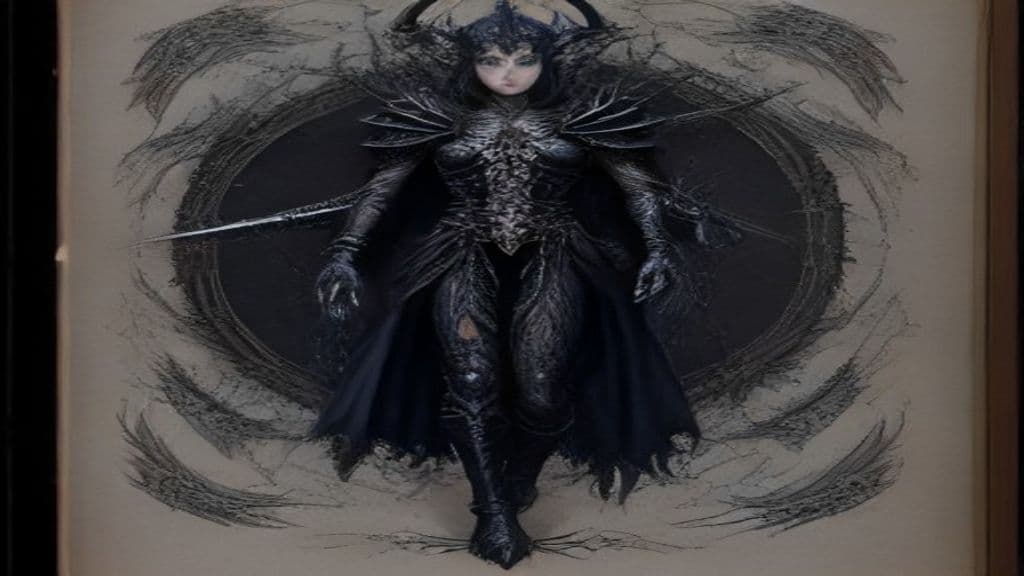
Descriptions vary across the grimoire sources. In the Ars Goetia and Pseudomonarchia Daemonum summaries Botis is said to appear initially as a viper and then to assume a human form described in those accounts as sword-toting, fanged, and horned. By contrast, the Munich Manual (where he appears as Otius) is reported to give him a humanoid appearance from the outset. The Grand Grimoire does not detail his visual form but places him in a chain of command under Agaliarept. These variant attestations indicate a transformative or polymorphic iconography in the manuscript tradition rather than a single fixed depiction.
Across the cited grimoire summaries Botis is attributed with broad divinatory knowledge—he answers questions and "discusses matters past, present, and future"—and with social-magical functions, notably reconciling friends and foes and bringing favour from allies and enemies. He is also assigned command of subordinate spirits: the Ars Goetia / Pseudomonarchia entries credit him with ruling 60 legions of demons, while the Munich Manual attributes 36 legions; the Grand Grimoire lists him as subordinate to Agaliarept. Additional cosmogonic detail in some secondary sources (via Rudd) pairs him with an opposing Shem HaMephorash angel, Loviah, reflecting the grimoires’ dualistic mapping of spirit offices onto angelic counterparts. The supplied materials do not include ritual formulas, methods of binding, or operational limits beyond these catalogued functions.
Weaknesses
- otherNo specific weaknesses listed in provided sources
Wards
- ritualNo protective formulas, seals, or apotropaic wards for Botis are given in the supplied materials; the grimoire context implies control is achieved via conjurations and bindings found in the full ritual texts (not supplied)

Agaliarept
A named high-ranking spirit from post-medieval grimoire tradition, presented in the Grimoirium Verum and the Grand Grimoire as a commanding officer in a hierarchical host of spirits; credited with revealing secrets and commanding a legion, and cited in later printed occult imprints and modern fiction.

Jann
The weakest class of djinn in Islamic tradition, associated with desert winds and taking the form of snakes or whirlwinds, dwelling in empty wilderness and posing little threat to those who know the proper invocations.
Bael
Bael (also spelled Baal or Ba'al) is a named kingly spirit appearing in post‑medieval European demonological grimoires. He is listed as the opening or first spirit in some catalogs (notably the Pseudomonarchia Daemonum and The Lesser Key of Solomon) and is described in short summaries as a hoarsely voiced king; fuller ritual texts and attributes are not present in the supplied excerpts.
Bune
Bune is a ducal spirit in European grimoire tradition, listed in works such as the Lesser Key of Solomon, Pseudomonarchia Daemonum, Dictionnaire Infernal, and the Livre des Esperitz. Described as commanding many legions and able to move the dead, confer wealth, and grant eloquence and wisdom, Bune functions as a summonable operant office within early modern ceremonial magic.
Gemory (Gremory)
Gemory (also Gremory, Gamori, Gomory, and variants) is a named Goetic spirit catalogued in medieval and early modern European grimoires. Described as a crowned woman riding a camel, she is attributed powers over hidden treasures, knowledge of past/present/future, and procuring love; her rank and legion counts vary between sources.
Paimon
Paimon is a high-ranking spirit from early-modern and medieval European grimoire traditions (notably the Ars Goetia and related compilations). He is depicted as a king who rules other spirits, teaches sciences and secret knowledge, and can be summoned and compelled by ceremonial operators within the ritual corpus.
Borysthenes
Borysthenes is the ancient Greek name for the Dnieper River and its personified river-god in classical accounts. In Greek literary and antiquarian sources the name denotes both the physically fertile river near Pontic Olbia and a local river-divinity invoked in genealogies and place‑names.
Borysthenis
Borysthenis (Ancient Greek Βορυσθενίς) is a theonym recorded in Greek discourse with two distinct usages: (1) as the name of one of a localized triad of Muses described as daughters of Apollo (sisters Apollonis and Cephisso), and (2) as an epithet applied to the Scythian earth-and-water goddess Api, indicating her status as 'daughter of the god of the Borysthenēs (Dnipro) river.'
Borzu Nama
A legendary hero from the Shahnameh epic cycle, embodying strength and courage. (Note: * Power tier should be Primordial (as it's a legendary hero from an epic cycle with no clear supernatural abilities). * Summary is accurate. * Appearance: No information available in source material, )
Bosom of Abraham
In Jewish tradition, the Bosom of Abraham is a concept representing a state or location within Sheol where righteous individuals await redemption after death. (Note: * Power tier should be Primordial (as it's a concept within Sheol, which is often described as a cosmic realm) * Origin story needs more context from source material; association with Abraham's righte)
Botres
Botres (Ancient Greek: Βότρης, Bótrēs) is a Theban youth in Greek myth who, having tasted the sacrificial victim's brain during his father Eumelus's offering to Apollo and then being fatally struck by his father with a brand, is transformed by Apollo into the bird called Aeropus (the bee-eater). The story is attested in Greek mythographic tradition and briefly referenced in Ovid's Metamorphoses and in Antoninus Liberalis' collection of metamorphoses.
Bouncing Boy
Bouncing Boy is a fictional superhero (Charles Foster 'Chuck' Taine) appearing in DC Comics, best known as a member of the Legion of Super-Heroes whose primary Silver Age power is to inflate into an elastic sphere and bounce. Across continuities he functions as comic relief, morale officer, and occasional tactical asset; in some reboots he is non-powered and serves as the Legion's engineer/architect.
Bound monster (motif)
A mythic motif in Norse mythology describing powerful hostile beings who are physically or cosmologically restrained in the present but are prophesied to break free during Ragnarök to wreak destruction. The label is a modern scholarly summary applied to several canonical figures (Loki, Fenrir, Jörmungandr, Hel) rather than an Old Norse technical name.
Bounos (Bunus)
Bounos (Ancient Greek: Βοῦνος) is a legendary early king of Ephyra (an early name for Corinth), described in surviving mythographical summaries as a son of Hermes and the mortal Alcidamea/Alcidamia. He is credited with receiving the throne from Aeëtes when the latter sailed to Colchis and with founding a sanctuary to Hera Bunaea on the road to Acrocorinthus; after his death the kingdom passed into the hands of Epopeus of Sicyon.
Community Record
- [1]Botis - Wikipedia. Wikipedia: 'Botis' article summarizing grimoire entries (Ars Goetia, Pseudomonarchia, Munich Manual, Grand Grimoire; Rudd on angelic opposition)wiki
- [2]Botis - Thelemapedia. Thelemapedia entry summarizing grimoire material; fragmentary quoted text available in supplied notesother
- [3]Count/President Botis - 72 Demons of The Lesser Key of Solomon: The Ars Goetia. Archive recording/archive item referencing the Ars Goetia entry for Botis (secondary/derivative material in supplied list)other