
Accounts vary across Greek and Roman traditions. The Roman Cupīdō is identified with the Greek Eros; in some Greek sources Eros appears as a primordial force, while in later classical and Roman accounts the love-deity is presented as a youthful or childlike figure and commonly as the son of Venus (and sometimes of Venus and Mars). The supplied sources emphasize these multiple genealogical and conceptual strands rather than a single canonical birth-story.
Depictions vary by period: Classical Greek Eros is often a slender winged youth, while Hellenistic and Roman visual tradition increasingly presents him as a chubby boy (the putto/amorino type). Common attributes include wings, a bow and arrows, and occasionally a torch; in later iconography Cupid is sometimes shown blindfolded. He may also appear in multiples (Amores/amorini) or accompanied by fertility and seasonal motifs.
Cupid's principal power is to cause erotic desire by striking targets with his arrows. Classical tradition describes two kinds of arrows or darts — one with a sharp golden point that inspires passion, and another with a blunt lead tip that induces aversion or dullness — so that being struck produces intense, often uncontrollable love or its opposite. He functions narratively as an agent who initiates or complicates human love affairs and is used allegorically to explore love's wounding and inflaming qualities.
Weaknesses
- otherNone attested in supplied sources
Wards
- otherNo classical apotropaic rites or protective practices against Cupid are documented in the provided sources
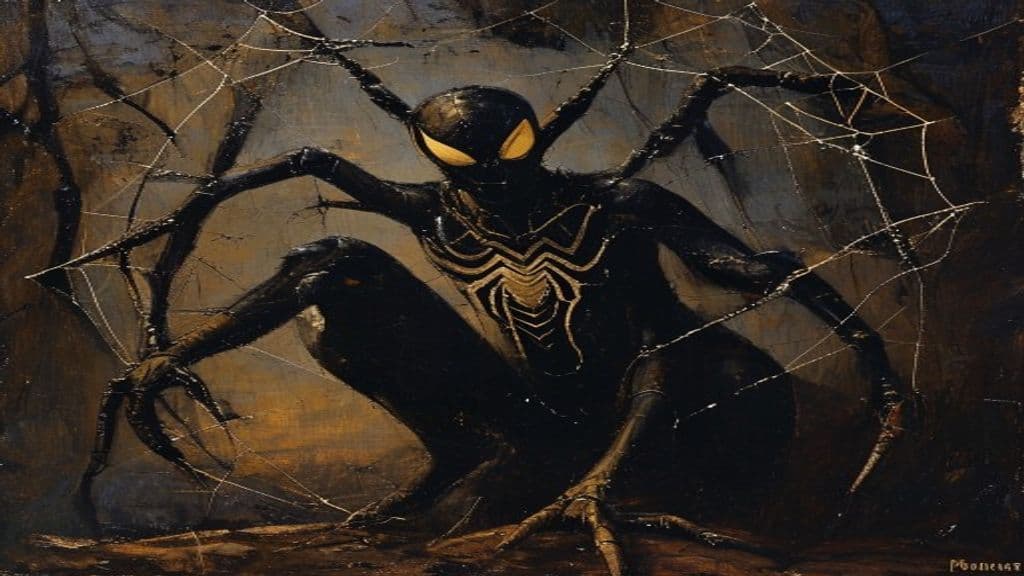
Anansi
The spider trickster god of Akan folklore — cunning, mischievous, and wise. Keeper of stories and teacher of human beings, brought through the slave trade into Caribbean and African-American tradition.

Apsara
Celestial dancers and water nymphs of Hindu cosmology — beautiful semi-divine beings who dance at the court of Indra and, by his command, descend to earth to distract sages from excessive asceticism.
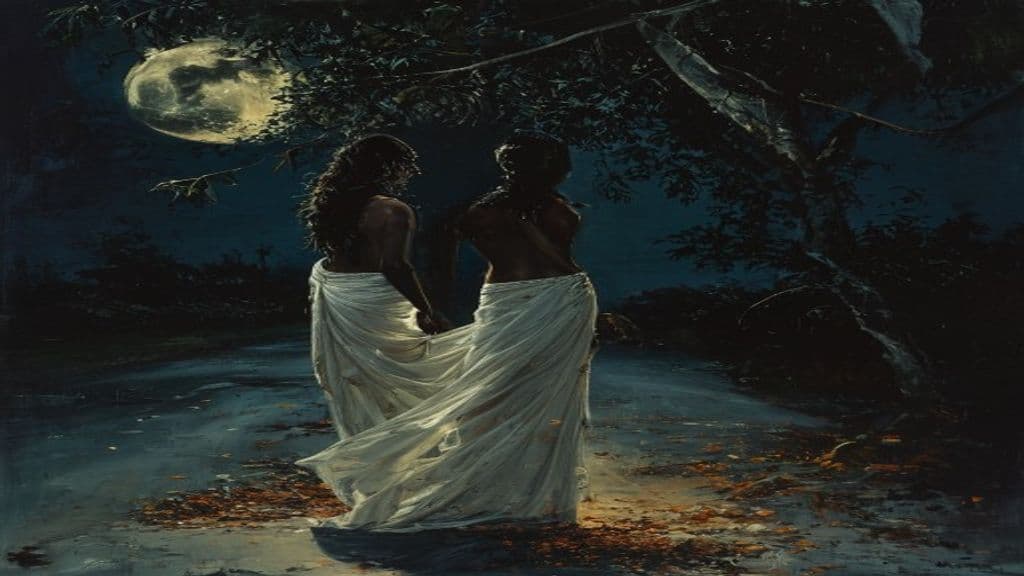
Mohini
South Indian spirit of a beautiful woman who died of a broken heart or by betrayal — she appears on roadsides at night, enchants men into following her, and leads them to ruin or death.
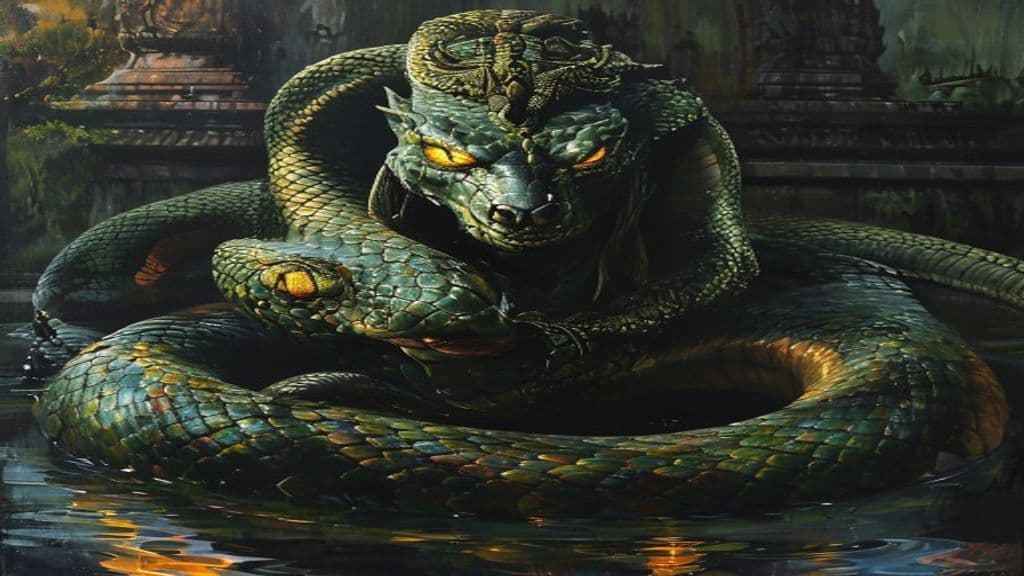
Naga
Divine serpent beings of Hindu, Buddhist, and Jain cosmology — powerful guardians of water, earth, and underground treasures. Revered as deities in South and Southeast Asia.
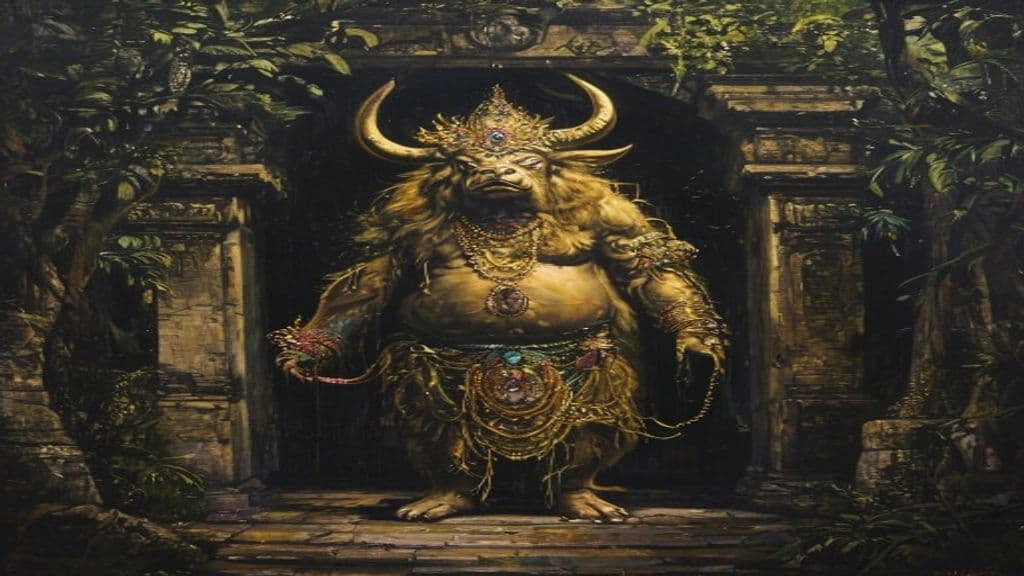
Yaksha
Nature spirits of Hindu, Buddhist, and Jain cosmology — guardians of forests, treasures, and wilderness. Ambivalent beings, capable of great benevolence to the respectful and terrible harm to the greedy.
Cuchavira
Cuchavira is the rainbow deity of the Muisca (of the Altiplano Cundiboyacense) associated with the appearance of the rainbow after storms. The figure functions as a protective and intercessory presence—thanked with offerings when sunlight returns after destructive rains—and is linked in mythic accounts with Bochica, Chibchacum, and the supreme being Chiminigagua.
Cuegle
The cuegle is a monstrous figure from Cantabrian (northern Spain) folklore: a small, bipedal humanoid with grotesque features that attacks people and livestock and is reputed to steal babies from cradles. Household protection recorded in sources is placing oak or holly leaves in the cradle, which the creature is said to find repulsive.
Culhwch
Culhwch is a mortal heroic figure of medieval Welsh narrative tradition, protagonist of the tale Culhwch and Olwen. A noble-born youth and cousin of Arthur, his story centres on a quest to win Olwen by completing a series of impossible tasks (anoethau) with the aid of Arthur and his warriors.
Culsu
Culsu is an attested name listed among Etruscan deities and legendary figures in modern compilations. Available sources provide only nominal attestation (the name and a modern label of 'goddess'); no independent ancient narratives, functions, iconography, or rituals are recorded in the supplied materials.
Cult of Dionysus
A cult associated with the Greek god Dionysus, patron deity of wine, fertility, theater, and ecstasy. (Note: 1. Factual claim: The article states that Dionysus's original name 'Dionysus' (Διόνυσος) is derived from Linear B tablets as 𐀇𐀺𐀝𐀰 (di-wo-nu-so). However, the source material does not support this )
Cunizza da Romano
Cunizza da Romano (c.1198–1279) is a historical Italian noblewoman of the da Romano family who appears as a named soul in Dante Alighieri’s Divine Comedy (Paradiso Canto IX), located among the blessed of the heaven of Venus and presented as an exemplum of lives shaped by love.
Curetes
The Curetes (Greek Κουρῆτες, Kouretes) are a named group of ritual attendants or minor divine retainers associated with Aegean and Anatolian mother-goddess cults—primarily Rhea and Cybele. They are attested in ancient sources and modern reference works as dancing servants or ritual personnel whose name also survives in urban toponymy (e.g., Kouretes/Curetes Street at Ephesos).
Curupira
A Tupi–Guarani–area forest spirit who protects woods and wildlife by misleading, punishing, or rewarding humans according to their behavior; widely attested across Brazil and neighboring regions with many regional variants.
Cusco Quechua
Cusco Quechua (Qusqu qhichwa simi / Qusqu runasimi) is a regional variety of Southern Quechua spoken in the city and Department of Cusco, Peru. It is part of the Southern Quechua grouping (including Puno and Bolivian varieties) and is the variety used and promoted by the Academia Mayor de la Lengua Quechua in Cusco; sources note debates over vowel analysis and orthography and list the variety as vulnerable in language-vitality metadata.
Cuélebre
A legendary long‑lived reptilian guardian from Asturian and Cantabrian folklore, depicted as a giant winged serpent or dragon that inhabits caves and watery liminal places, guards treasure, and is sometimes said to hold xanas (fairy‑like beings) captive. Folktales attribute to it senescent physical changes, a miraculous healing byproduct, and specific folkloric countermeasures.
Cyane
Cyane (Ancient Greek Κυάνη, Kuánē, 'dark blue') is a Sicilian water-nymph (naiad) associated with a spring or pool near Syracuse. In myth she attempts to block Hades' abduction of Persephone, pleads by citing her own consensual relationship with the river-god Anapus, and—after failing—dissolves into the waters of her pool; the spring is thereafter sacred and named for her.
Cyanippus
Cyanippus (Greek: Κυάνιππος) is a personal name attested for at least three distinct mortal men in Greek mythic traditions: an Argive/Achaean warrior-king connected to the Trojan Horse cycle, a Thessalian hunter whose dogs kill his wife, and a Syracusan who omitted worship of Dionysus and whose divinely induced crime leads to oracle-driven expiation. He is presented as human rather than as a supernatural being.
Community Record
- [1]Cupid - Wikipedia. Wikipedia, 'Cupid' entry (accessed from provided research notes)wiki
- [2]Cupid - Wikidata. Wikidata summary entry for Cupid (Roman deity, counterpart of Eros)other