
Fariburz is presented within the Shahnameh’s mytho-historical Kayanian cycle as a son of King Kay Kavus and member of the royal household; his narrative role is that of a princely champion participating in the dynasty’s military and dynastic contests. In the Bahman fortress episode Kay Kavus promises to share his throne with whoever captures the impregnable fortress; Tus and Fariburz make an initial attempt and are driven back by heat before later events (including intervention invoked in God's name) lead to the fortress’ walls disintegrating. Across the epic Fariburz recurs as a participant in key court episodes, linking narratives of kingship, combat, and succession.
The supplied manuscript folio captions and summaries depict Fariburz in action: as an archer who draws his sword in close combat, as a combatant who plants the Iranian banner after victory, and as a commander involved in sieges of fortified places. Individual folios show him in tournament/joust scenes and in assaults on fortresses, typically armed (bow, sword) and portrayed in the attire of a royal champion; no sustained descriptive portrait (height, facial detail) is provided in the sources.
Fariburz’s attributed capacities are heroic martial skill, battlefield leadership, and royal agency. Specific feats cited include shooting arrows then drawing his sword to cleave his opponent Kalbad 'in two, from neck to waist' in the First 'Joust of the Rooks' and ascending the mound to plant the first Iranian flag, and participating alongside Tus in an assault on the fortress of Bahman. The sources portray him as a mortal human hero interacting with supernatural adversaries (divs) in narrative episodes but do not ascribe supernatural powers to him.
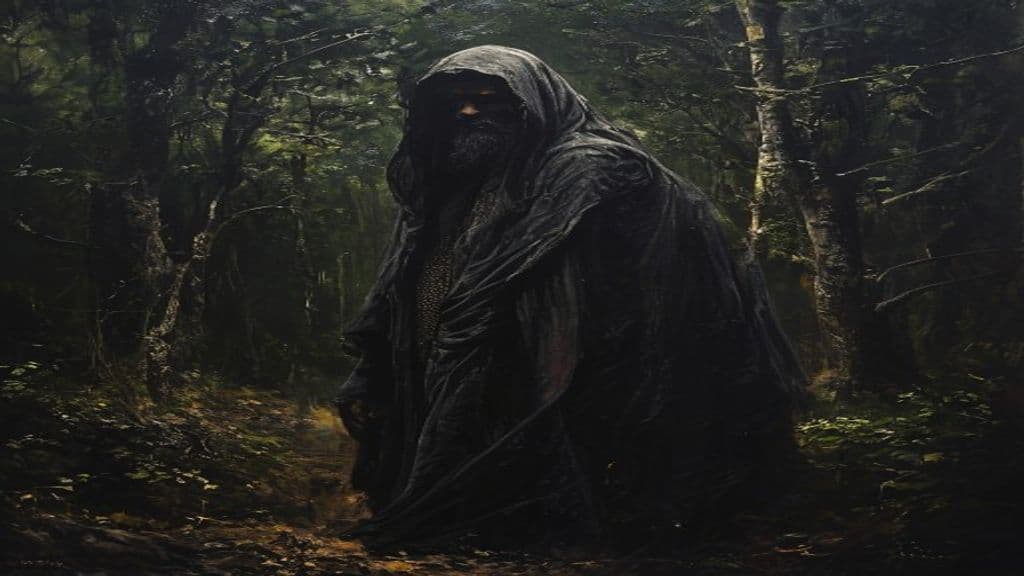
Babr-e Bayān
Babr-e Bayān is the name of a legendary suit or armor associated with the Iranian hero Rostam in Persian epic tradition. In most accounts it is an extraordinary protective garment (sometimes said to be made from a slain creature’s hide) that confers invulnerability when worn.
Biderafsh
Biderafsh is a Turanian heroic warrior and envoy attested in the Iran–Turan cycle of epic literature (notably the Shahnameh) who bears a name meaning 'with unfurled banner.' In the Goshtasp–Arjasp episode he delivers a threatening letter, fights in Arjasp's army, kills Zarir, and is in turn slain by the Iranian hero Esfandiar (attested in Shahnameh and earlier Middle Persian and Islamic-era sources).
Davāzdah Rokh
Davāzdah Rokh (Persian: دوازده رخ, 'Twelve Combats') is a narrative episode in Ferdowsi's Shahnameh describing a sequence of single combats between Iranian and Turanian champions during Kay Khosrow's campaign; it is also locally anchored to the Zibad / Kuh-Zibad region in Greater Khorasan.
Farânak
Farânak is a human female character in the Persian epic Shâhnâmeh, attested as the wife of Abtin and the mother of the hero-king Fereydun. Her name derives from Persian terms meaning 'butterfly' and by extension is linguistically associated with the Persian lynx/caracal; however, the cited sources present her as a mortal figure within epic genealogy rather than a supernatural being.
Gordāfarīd
Gordāfarīd (Persian: گردآفريد) is a human heroine in Ferdowsi’s Shāhnāmeh (The Book of Kings). A warrior of the White Fortress (Dezh-e Sepid), she dons armour, sallies forth to challenge the Turanian commander Sohrab, delays the enemy advance, is defeated in single combat, and is spared by Sohrab; modern scholarship and performers treat her as a lasting symbol of female courage and prudence in Persian epic.
Kai Khosrow
Kai Khosrow is a legendary Kayanian king in Persian epic tradition, chiefly known from the Shahnameh and related material. He is remembered as the rightful heir who returns from exile, avenges his father Siavash, and rules Iran while repeatedly opposing the Turanian king Afrasiab.
Shahrasb (Shahnameh)
A pious and reliable advisor in the Shahnameh tradition, guiding King Tahmuras towards moral guidance and acquiring Khvarenah. (Note: - Power tier: Primordial or Ancient would be more plausible given Shahrasb's role as a moral guide for a mythical king. - Appearance: Add "Not described in source material" to indicate that the inform)
Farbod
In Persian tradition, Farbod is a concept associated with protection, honor, and prestige. (Note: - Power tier should be "Primordial" or unclear, as no specific abilities or behaviors are mentioned. - Origin story is accurate, but could be expanded upon with more context about pre-Islamic Persia a)
Farfarello
Farfarello is one of the Malebranche in Dante Alighieri's Inferno, depicted as a vulgar and quarrelsome demon charged with policing Bolgia Five of the Eighth Circle (Malebolge). The name also appears in modern Italian popular verse (a Trilussa lullaby) as a bogey-figure invoked to frighten or discipline children.
Farhad (Persian literature)
In Persian literature and mythology, Farhad is a character associated with the love story of Khosrow and Shirin. (Note: 1. Power tier should be revised to "Minor Spirit" since Farhad's abilities are more related to his devotion and determination, rather than cosmic or deity-level powers. 2. Remove description of "Appea)
Farinata degli Uberti
Farinata degli Uberti (born Manente degli Uberti, 1212–11 November 1264) was a 13th‑century Florentine aristocrat, knight, and leader of the Ghibelline faction whose political career, posthumous inquisitorial prosecution (1283), and literary depiction by Dante have made him a charged exemplar in medieval debates about heresy and the afterlife.
Faro
Faro is identified in the supplied sources as a deity prominent in the Mandé creation narrative. Beyond a single disambiguation reference, the provided material contains no further ethnographic or mythic details about Faro's attributes, stories, or rituals.
Community Record
- [1]Fariburz (Shahnameh) - Wikipedia. Wikipedia contributors, 'Fariburz (Shahnameh)', Wikipedia, https://en.wikipedia.org/wiki/Fariburz_(Shahnameh)wiki
- [2]Kai Khusrau, Gudarz and Giv Capturing the Demon's Fortress, Bahman (folio caption). Archive folio caption describing the Bahman fortress episode, https://archive.org/details/mma_kai_khusrau_gudarz_and_giv_capturing_the_demons_fortress_bahman__fo_447302literary
- [3]Folio 341r: The First 'Joust of the Rooks': Fariburz versus Kalbad. Manuscript folio caption, 'The First Joust of the Rooks: Fariburz versus Kalbad', https://archive.org/details/shahnama-shah-tahmasp-341rliterary
- [4]Folio 341v: The First 'Joust of the Rooks': Fariburz versus Kalbad. Manuscript folio caption, 'The First Joust of the Rooks: Fariburz versus Kalbad', https://archive.org/details/shahnama-shah-tahmasp-341vliterary
- [5]Shahnameh characters and summaries (Heritage Institute). Heritage Institute, 'Ferdowsi Shahnameh Characters', https://heritageinstitute.com/zoroastrianism/shahnameh/characters.htmother
- [6]Fariburz - Wikipedia (disambiguation note re historical figure). Wikipedia contributors, 'Fariburz', noting distinct historical Sasanian officer Phabrizus, https://en.wikipedia.org/wiki/Fariburzwiki