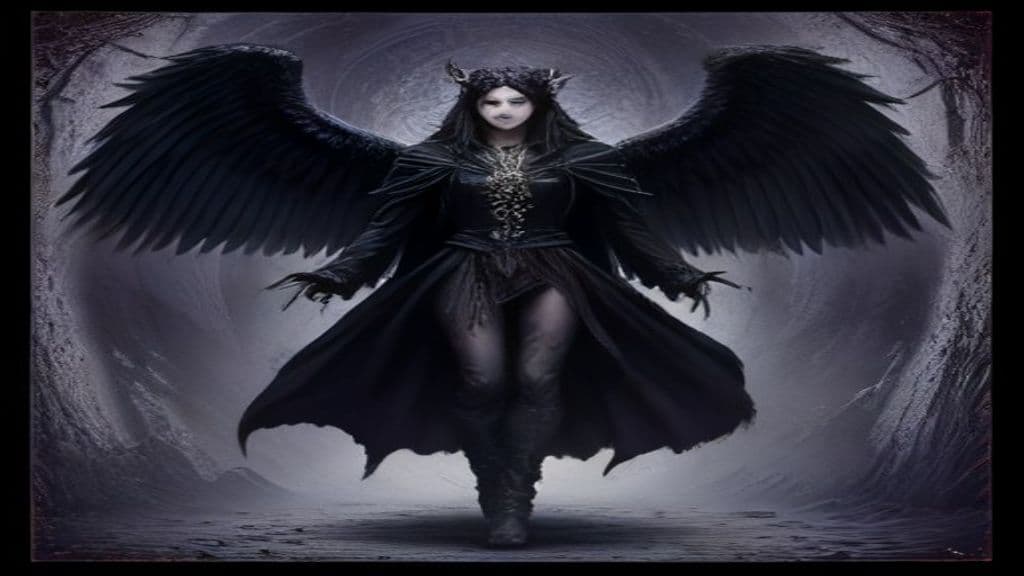
Glasya-Labolas is attested in grimoire compilations derived from the Ars Goetia (the Lesser Key of Solomon) and modern annotated editions of that corpus. In these listings he is one of the catalogued spirits (commonly counted among the Seventy-Two) assigned a rank and portfolio of powers for use in ritual evocation; the supplied sources do not give a folkloric birth myth or pre-grimoire origin narrative beyond his appearance in these goetic catalogs.
Classical goetic summaries in the supplied materials describe Glasya-Labolas as showing himself "in the form of a Dog with Wings like a Gryphon"; modern retellings preserve this canine figure with griffin-like wings as his characteristic manifested form.
Across the provided sources Glasya-Labolas is credited with teaching "all Arts and Sciences in an instant," revealing "all things past and to come," commanding legions of spirits (one source gives thirty-six legions), influencing minds and affections of others (fragmentarily attested), and being an "author of bloodshed and manslaughter." These attributions appear in goetic listings that present spirits as specialists whose portfolios combine instructive, divinatory, social-influence, and violent functions. Modern media adapt these powers for game mechanics and narrative roles but do not constitute independent traditional claims.
Weaknesses
- otherClassical sources do not list specific intrinsic vulnerabilities for Glasya-Labolas beyond standard goetic constraints (e.g., containment by ritual circle, use of names/sigils) as implied by the goetic ritual context.
Wards
- ritualGeneral goetic containment and banishing practices (e.g., Preliminary Invocation / Traditional Circle / Modern Circle / Lesser Banishing Ritual of the Pentagram) — cited as contextual methods in modern annotated Goetia editions but no Glasya-Labolas–specific ward is given in the supplied excerpts.

Djinn
The class of supernatural beings created from smokeless fire in Islamic cosmology — a parallel civilization to humanity, capable of belief or unbelief, with their own prophets, society, and judgment before God.

Jann
The weakest class of djinn in Islamic tradition, associated with desert winds and taking the form of snakes or whirlwinds, dwelling in empty wilderness and posing little threat to those who know the proper invocations.
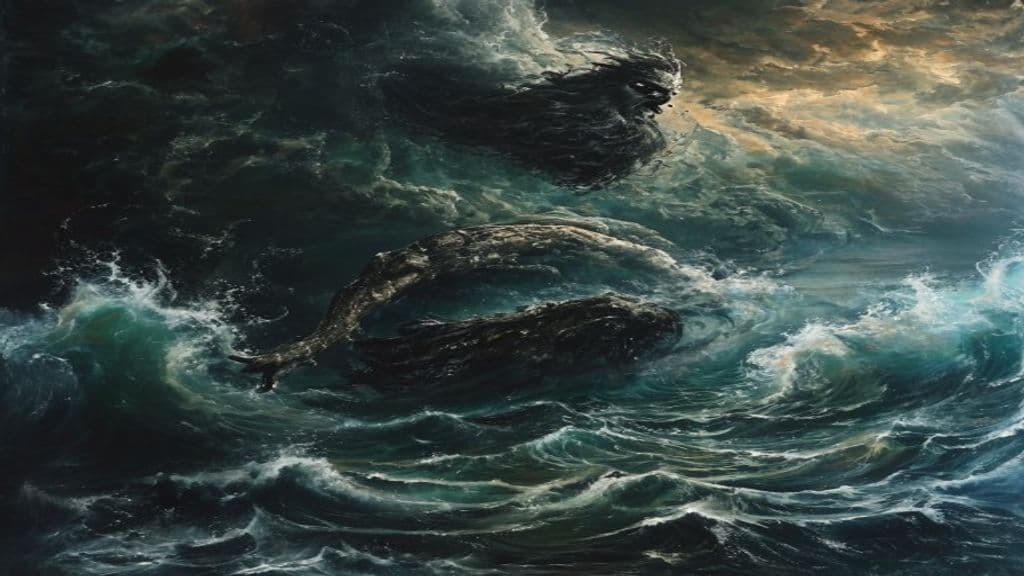
Marid
The most powerful class of jinn in Islamic tradition — beings of the sea, associated with the deep ocean, storms, and the granting of wishes at terrible cost. The classic genie of the Arabian Nights.
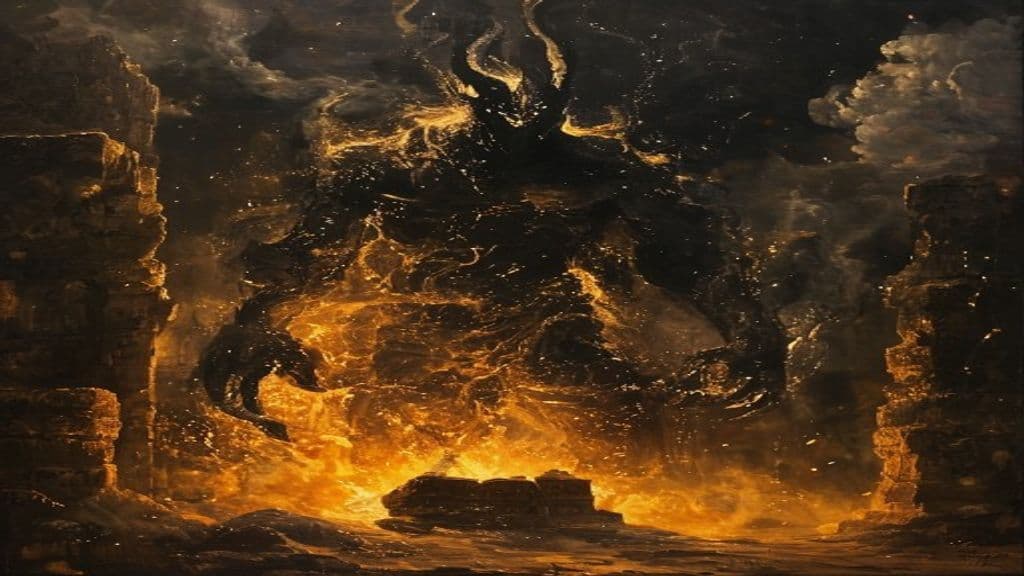
Ifrit
One of the most powerful classes of jinn in Islamic and pre-Islamic Arab tradition — a fire-born being of immense strength and cunning, capable of great works of engineering and terrible violence.
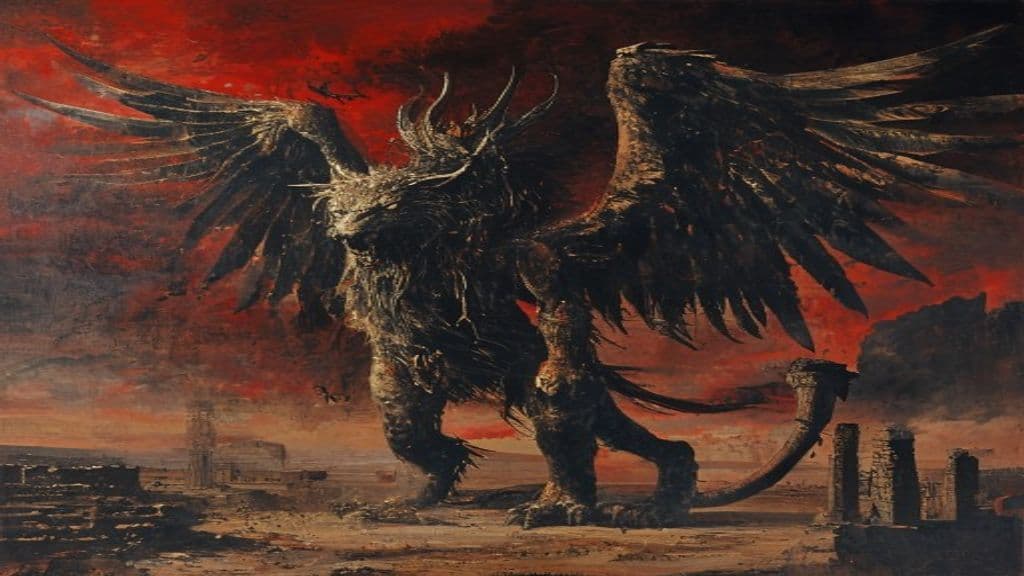
Pazuzu
The king of the wind demons of ancient Mesopotamia, lord of the southwest wind — paradoxically invoked as a protector against Lamashtu and other demons despite being evil himself.
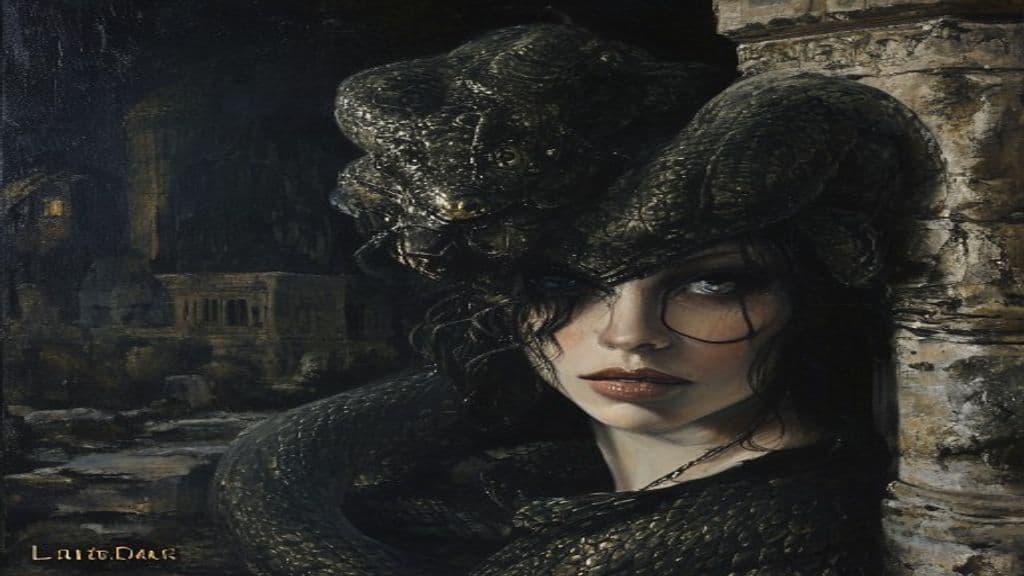
Lamia
A child-devouring demon of Greek mythology — once a queen of Libya and lover of Zeus, driven mad by Hera's destruction of her children and transformed into a monstrous hunter of other women's children.
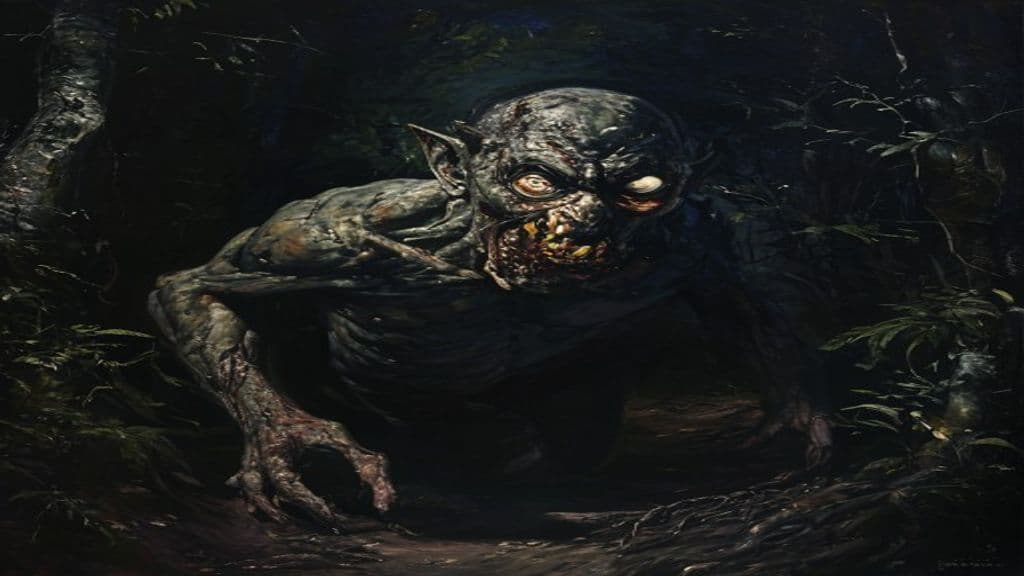
Pishacha
Flesh-eating spirits of Hindu mythology that haunt cremation grounds and are associated with disease, madness, and possession. The lowest class of demon in the Vedic hierarchy.
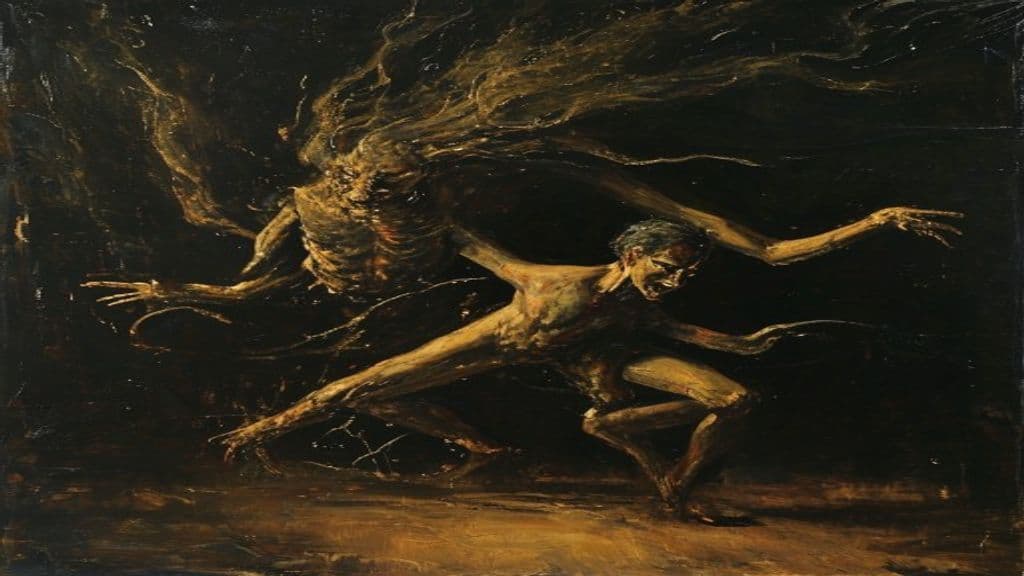
Pishacha-graha
The possessing variety of pishacha described in classical Ayurvedic and tantric texts — a grasping spirit (graha) that seizes the body of a victim, producing symptoms of madness and compulsion.
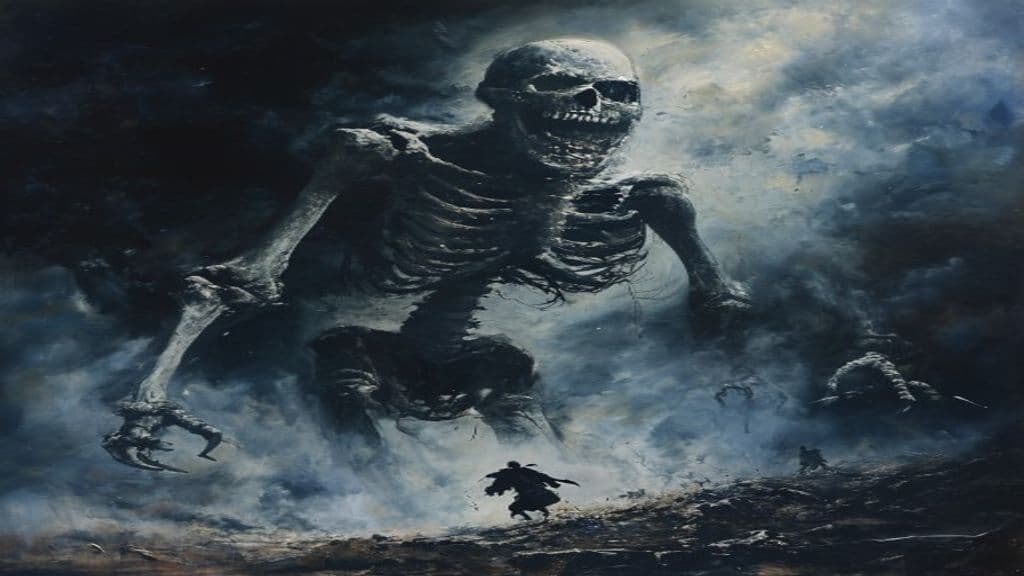
Gashadokuro
A fifteen-times-human-height skeletal yokai formed from the bones of those who starved to death or died on battlefields, their unburied remains fused together into a hungry colossus.
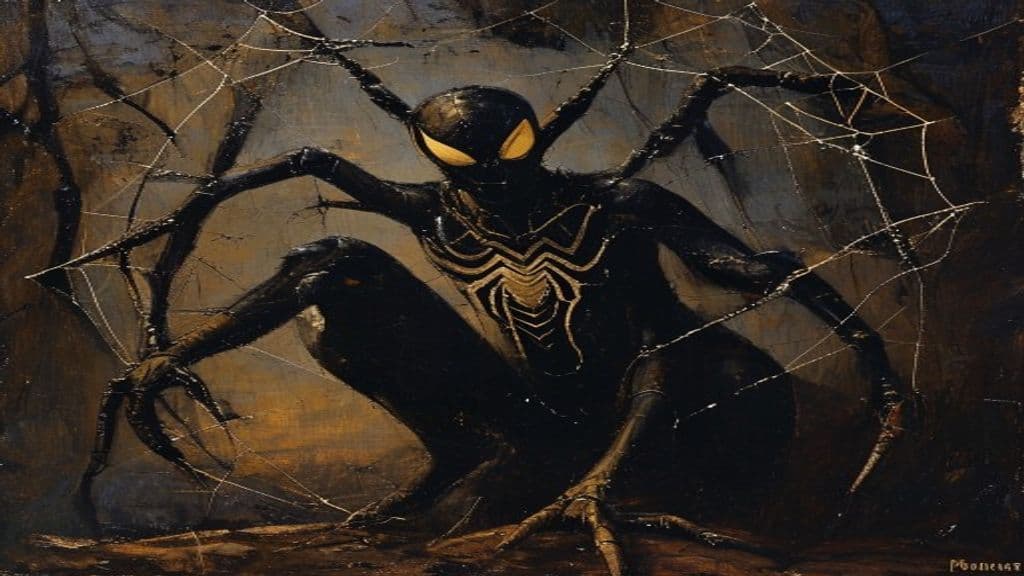
Anansi
The spider trickster god of Akan folklore — cunning, mischievous, and wise. Keeper of stories and teacher of human beings, brought through the slave trade into Caribbean and African-American tradition.
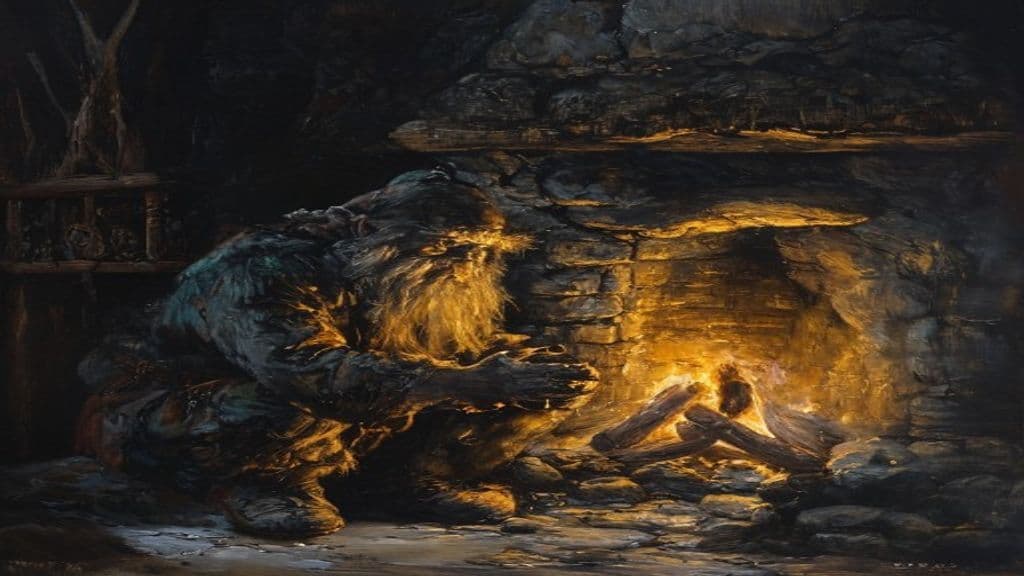
Domovoi
The house spirit of Slavic tradition — a small, invisible guardian of the home bound to a specific dwelling and its family. Protective when respected; dangerous when insulted or forgotten.
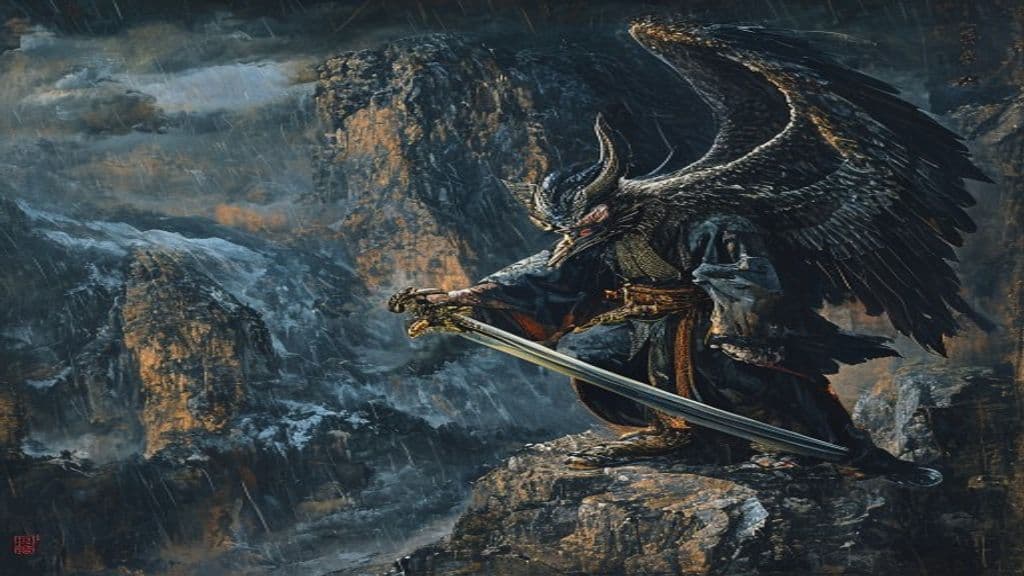
Tengu
Proud, warrior-like mountain spirits of Japan, associated with martial arts, pride, and the wild mountains. Neither fully good nor evil — they test and train warriors and monks, but punish the arrogant.
Giv (Gev)
Giv (Persian: گیو), also rendered Gev, is a legendary Iranian knight and one of the main human heroes in the New Persian epic Shahnameh. He is presented as a noble paladin of the House of Goudarz, father of Bizhan, brother of Roham, and a loyal companion of kings such as Key Khosrow.
Gjenganger
A Scandinavian revenant — a deceased person who 'goes again' and returns to the realm of the living. Historically depicted as a corporeal, often violent returning dead in saga material and later as a more ghost‑like or disease‑associated presence in post‑medieval folklore.
Gladiator (Kallark)
A historical social role in Roman civic and funerary ritual: armed combatants (Latin: gladiatores) who fought in public spectacles (munera) for commemorative, political, and entertainment purposes. The available sources treat gladiators as human performers and social actors rather than supernatural beings.
Glaistig
A figure from Scottish folklore variously described as a Green Lady, house/estate spirit, herding guardian or a dangerous female lure. Traditions portray the glaistig as ambivalent—beneficent when respected (protecting cattle, households, or bestowing favors) and harmful when offended (luring men, injuring travellers).
Glasir
Glasir is a named tree or grove in Old Norse mythic geography that stands before the doors of Valhalla in Asgard; its foliage is described as red gold and it functions in skaldic and Eddic poetry as a kenning for gold.
Glass Cat (Bungle)
An animate ornamental spun-glass cat from L. Frank Baum's Land of Oz, created by a magician's Powder of Life. Transparent except for jewel-like internal features, the Glass Cat is sentient, vain, and occasionally helpful to Ozian travelers.
Glauce
Glauce (Ancient Greek Γλαύκη, Latin Glauca) is a recurring female proper name in Greek myth applied to several distinct figures — sea-nymph (including a Nereid), Arcadian nurse of Zeus, and various mortal princesses (notably the Corinthian bride in the Medea cycle). The name evokes a blue‑green gleam and in some traditions personifies a sea‑color; the figures bearing it function chiefly as attendants, dynastic daughters, or tragic victims rather than as individually powerful supernatural agents.
Glaucia
In Greek myth, Glaucia (Ancient Greek: Γλαυκία) is a daughter of the Trojan river-god Scamander who, after events connected with Heracles' campaign at Troy, was taken to Boeotia where her son gave his and her names to local streams; she functions in the sources as an eponymous genealogical figure linking Trojan divine parentage to Boeotian local cults (not described as an independent supernatural agent).
Glaucus
In classical Greek myth, Glaucus is a former mortal fisherman who became a sea-associated divine figure after contact with a magical herb. He is portrayed as a prophetic sea-being who dwells among the Nereids, is consulted by sailors and voyagers for prophecy, and appears in episodic myths (Argonauts, Menelaus, the Scylla/Circe cycle).
Glaucus of Corinth
Glaucus of Corinth (Greek: Γλαῦκος), often surnamed Potnieus, is a mortal royal figure in Greek mythic genealogies. Described as a son of Sisyphus and a king (variously of Potniae in Boeotia or of Corinth/Ephyra), his principal mythic note is a violent death caused by horsemanship; he functions mainly as a genealogical ancestor in local heroic tradition.
Glenn Talbot
Glenn Talbot is a fictional human military officer in Marvel Comics who serves as a recurring supporting character and occasional antagonist in Hulk-centered stories. Portrayed as a career military man and government agent, he is notable for discovering Bruce Banner's transformations and for representing institutional responses to superhuman phenomena across comics and adaptations.
Glenus
Glenus is a minor figure in Greek mythic genealogy attested as one of the named sons of Heracles (a member of the Heraclidae). He appears in lists of Heracles' offspring and in a local founding context (nursed by Abia) rather than as an independently attested hero with distinct exploits.
Community Record
- [1]List of demons in the Ars Goetia (Wikipedia). Wikipedia: List of demons in the Ars Goetia — Glasya-Labolas entry and list of seventy-two spiritswiki
- [2]Count/President Glasya-Labolas - 72 Demons of The Lesser Key of Solomon: The Ars Goetia | Demonology - Solomon's Temple Investigation Marathon 503. Archive item summarizing Glasya-Labolas as a mighty President who commands thirty-six legionsother
- [3]Amulet of Glasya-Labolas (Thingiverse archive). Archive: modern artifact listing using Glasya-Labolas as iconography (adaptational/pop-culture use)other
- [4]DUQUETTE + HYATT - Aleister Crowley's Illustrated Goetia - Sexual Evocation (1992, 2000 - ed.2). DuQuette & Hyatt annotated edition listing Glasya-Labolas among The Seventy-Two Spirits and containing ritual appendices (Preliminary Invocation, Traditional/Modern Circle, Lesser Banishing Ritual of the Pentagram).other
- [5]Glasya-Labolas - PathfinderWiki. PathfinderWiki entry summarizing appearance and abilities adapted from goetic sourceswiki
- [6]Glasya-Labolas | Megami Tensei Wiki. Megami Tensei Wiki — modern game adaptation and summary of goetic attributeswiki
- [7]Glasya-Labolas | Megami Tensei Wiki | Fandom. Fandom page listing variant names/spellings and game portrayals derived from goetic traditionwiki
- [8]Rood Boy // “The Twenty-fifth Spirit is Glasya-Labolas. He is...” (Tumblr quote). Reproduction of a traditional Ars Goetia phrasing: "The Twenty-fifth Spirit is Glasya-Labolas... a Mighty President and Earl, and showeth himself in the form of a Dog with Wings like a Gryphon."other
- [9]Glasya-Labolas Weakness and Boss Fight Guide SMT V Vengeance (Siliconera). Modern game guide describing an adaptation of Glasya-Labolas as a boss — included to document contemporary cultural reuses, not as grimoire authority.other