Multiple medieval and early modern prose narratives place the sprite in castle and manorial contexts around Hildesheim and Winzenburg. The name appears in Latin sources as pileatus/pilleatus ("the capped one") and in German dialectal forms; authors record it as a local, personal spirit tied to particular seats rather than an abstract force. Sources differ on episodes and exact haunt but consistently treat the being as a localized household/castle spirit recorded by writers such as Trithemius and later editors and collectors.
Accounts consistently describe the spirit wearing peasant clothing and a distinctive small felt hat (the 'little hat' reflected in many dialectal name forms and the Latin gloss). It could appear visibly or remain invisible; the supplied texts do not give consistent details on size or other bodily features beyond clothing and the cap.
Reported behaviors include speaking familiarly with people (both visibly and invisibly), giving tidings or warnings (one account has it foretell impending danger to Bishop Bernhard), protecting individuals (it chased off men from a man's wife when treated as guardian), and bestowing a singular helpful object in one tale (a laurel-leaf ring given to an 'idiot clerk' that was said to grant knowledge). Sources emphasize it 'did not initiate harm, and only reciprocated' but would remember insults and retaliate severely, including mutilation and fatal attacks in narrative episodes. Its agency is also linked to political advantage in at least one version (enabling seizure of Winzenburg by warning a bishop).
Weaknesses
- ritualexpulsion by episcopal/clerical exorcism (ecclesiastical incantations)
Wards
- conditionproper respect / avoidance of insult (sources imply that not insulting the sprite prevents retaliation)
- ritualecclesiastical exorcism performed by a bishop or cleric (reported as driving the sprite out of the city)
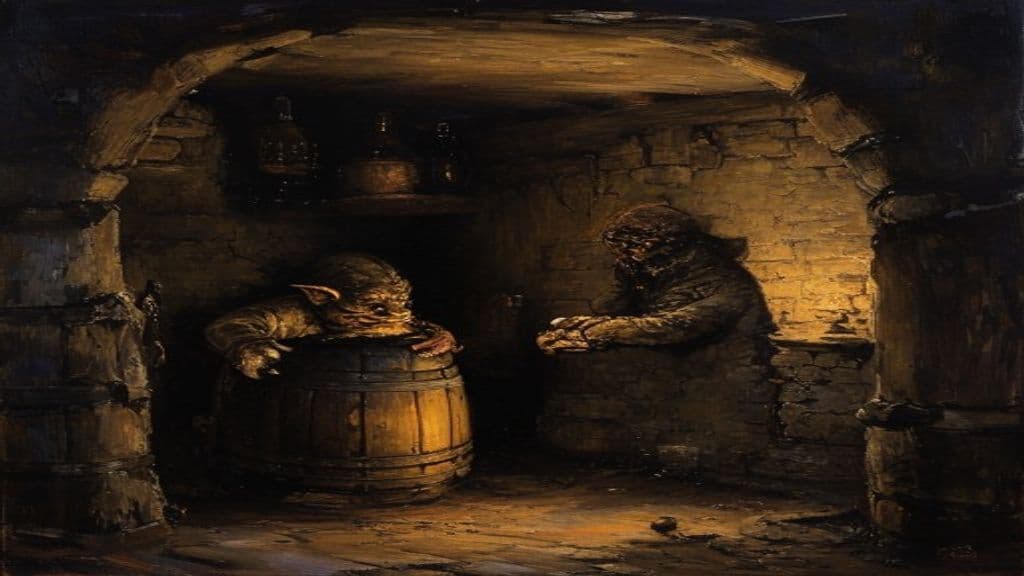
Kobold
The German household and mine spirit — a mischievous but potentially helpful small being who attaches to a household, bringing luck or disaster depending on how it is treated.
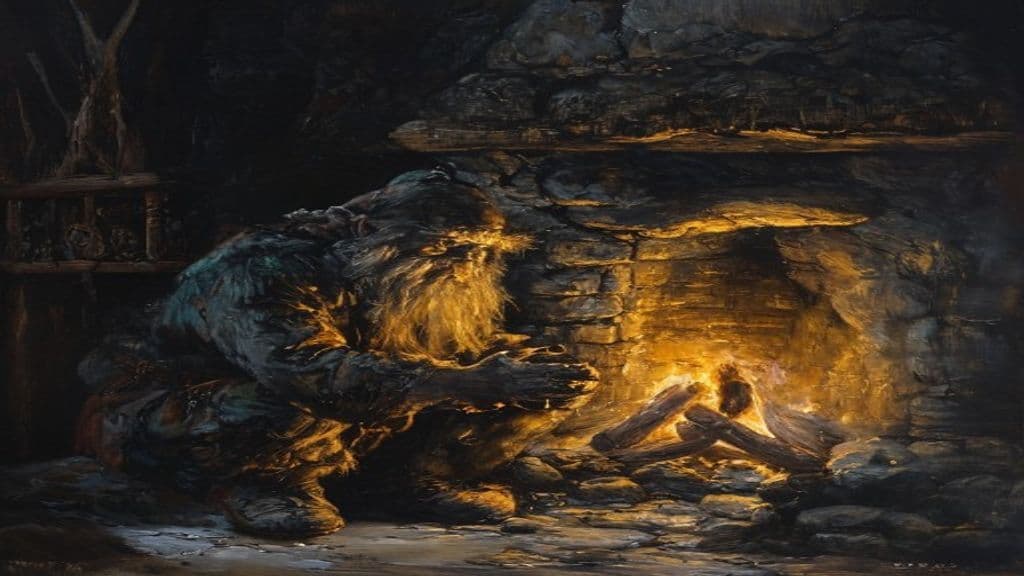
Domovoi
The house spirit of Slavic tradition — a small, invisible guardian of the home bound to a specific dwelling and its family. Protective when respected; dangerous when insulted or forgotten.
Abaddon
In Hebrew scripture Abaddon is primarily a noun meaning 'destruction' or a section/condition of the underworld paired with Sheol; in the New Testament Book of Revelation Abaddon is personified as an angelic figure (Greek Apollyon) described as the king of an army of locusts released from the abyss during the apocalypse.
Abadir
Abadir is a polysemous name attested in distinct cultural contexts: a legendary founding saint and clan ancestor in eastern Ethiopia (Sheikh Abadir Umar Al‑Rida / Aw Abadir), a term applied to cone‑shaped cult stones in Phoenician religious description, and a personal name of a martyr (Abadir/Apater) in the Coptic Synaxarium. The attestations are independent usages of the same name rather than a single supernatural being.
Abadiu of Antinoe
Abadiu of Antinoe was a fourth‑century bishop of Antinoe (Antinoopolis, in Roman Egypt) commemorated as a martyr and saint in the Coptic Orthodox Church, with a feast day on 26 December. Sources record that he was killed during a theological dispute with Arian opponents and reference him in collections of Egyptian martyrs.
Abagtha
Abagtha (Hebrew: אבגתא, ’Ǎḇaḡṯā) is a named human court official in the Hebrew Bible’s Book of Esther, listed among seven chamberlains who ministered before King Ahasuerus and were commanded to bring Queen Vashti before the king. He is attested only in Esther 1:10 and is presented as an institutional palace attendant rather than a supernatural being.
Abanoub
Abanoub is a 4th‑century Egyptian Christian child martyr venerated in the Coptic tradition. Remembered for his public confession of Christ, miraculous healings associated with his passion, and the translation and veneration of his relics, his feast is observed on July 31 (Epip 24) and his cult centers include Nehisa and Samanoud.
Abaskhiron the Soldier
A Coptic Orthodox martyr venerated for refusing imperial idolatry during the Diocletian persecution; reputedly healed by the Archangel Michael, preserved in monastery relics, and commemorated on 14 June (7 Paoni).
Abdel Messih El-Makari
Abdel Messih El-Makari (1892–1963) was a Coptic Orthodox monk and priest venerated as a 20th‑century Coptic saint. Associated with the Monastery of Saint Samuel the Confessor and the Monastery of Saint Macarius (Scetes/Wadi El‑Natrun), he is remembered for humility, asceticism, charity, and reported spiritual gifts such as prescience, discerning of spirits, and healing.
Abel
Abel is the second son of Adam and Eve in the Genesis narrative, a shepherd whose accepted offering and subsequent murder by his brother Cain form the biblical account of the first death. Later interpretive traditions expand his role, treating him as an archetypal righteous victim, a postmortem avenging or adjudicating figure, and in some systems (notably Mandaean) identifying him with an angelic lightbeing.
Abib and Apollo
Abib and Apollo are Christian ascetics and hagiographic saints of Akhmim (Upper Egypt) attested in Coptic sources and the Historia Monachorum. Remembered for extreme asceticism, monastic leadership, angelic encounters, and inclusion in the Coptic Synaxarion (feast day November 4).
Abiel
Abiel is attested in the supplied sources only as a male given name — borne by several historical American individuals and listed as two minor biblical figures. The provided materials contain no evidence presenting Abiel as a supernatural, mythological, or folkloric entity.
Abijah of Judah
Abijah (also Abijam or Abiah) is presented in the biblical and later interpretive traditions as a short-reigning human king of Judah from the Davidic line. He is portrayed as a dynastic successor whose military actions (notably the battle at Mount Zemaraim) and moral evaluation in rabbinic literature are interpreted theologically in relation to the Davidic covenant.
Abimelech
Abimelech is a Hebrew personal name and occasionally a regnal title attested in the Hebrew Bible and later traditions. It appears as the name/title of Philistine rulers in the patriarchal narratives (the "king of Gerar" who interacts with Abraham and Isaac) and as the personal name of Abimelech son of Jerubbaal (Gideon) in Judges, a dynastic usurper whose brief rule ends in violent death.
Community Record
- [1]Hödekin — Wikipedia article. Wikipedia contributors, 'Hödekin,' Wikipedia, https://en.wikipedia.org/wiki/H%C3%B6dekinwiki
- [2]Hödekin — Wikidata entry. Wikidata, Q1451862, http://www.wikidata.org/entity/Q1451862wiki