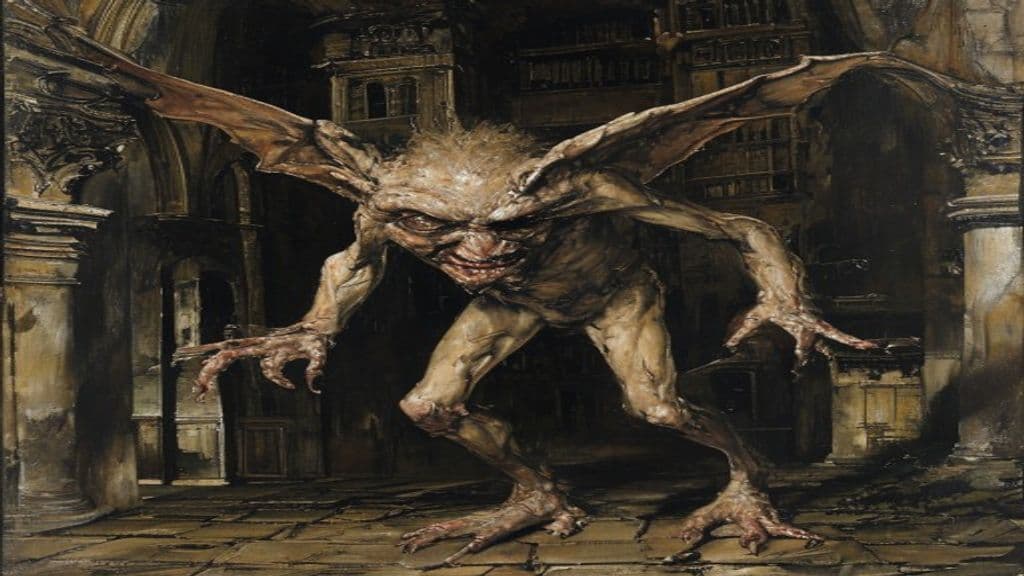
The English word imp derives from Old English impa, originally meaning a young shoot or scion of a plant or tree. That botanical sense (a grafted shoot, scion or child) traces through Late Latin/medieval forms and is cognate with Ancient Greek ἔμϕυτος ('implanted, grafted'). Over time, particularly by the early modern period (16th–17th centuries), the term shifted from the idea of a small offspring or scion to denote small supernatural beings; later Christian-influenced usage increasingly associated imps with familiars and attendants of the devil.
Sources describe imps as small in stature and often not conventionally attractive, but their form is variable and emphases in tradition are on liveliness and mischief rather than a fixed anatomy or costume. Imps appear in literary and artistic contexts as lively little figures and also as grotesque or stone-carved figures in architecture (for example, the local Lincoln cathedral legend of a petrified 'Lincoln Imp'). Exact anatomical or dress details are not consistent across the sources.
Imps are chiefly noted for mischief and prankish behaviour — practical jokes that range from harmless to upsetting in some traditions. They appear as solitary tricksters, companions seeking human attention, and in later traditions as familiars or attendants of witches, warlocks, or infernal masters. A recurring motif finds imps bound into objects (swords, bottles, crystal balls) and summoned by a master; such bound imps sometimes grant wishes in literary examples (e.g., Robert Louis Stevenson's story 'The Bottle Imp'). Sources also note that imps, while often imagined as long-lived, can be harmed or contained by certain weapons, enchantments, or wards.
Weaknesses
- othervulnerable to certain weapons or enchantments (unspecified)
- othercan be contained or bound within objects (sword, bottle, crystal ball)
Wards
- ritualdomestic wards (unspecified)
- othercontainment/binding to objects by a master
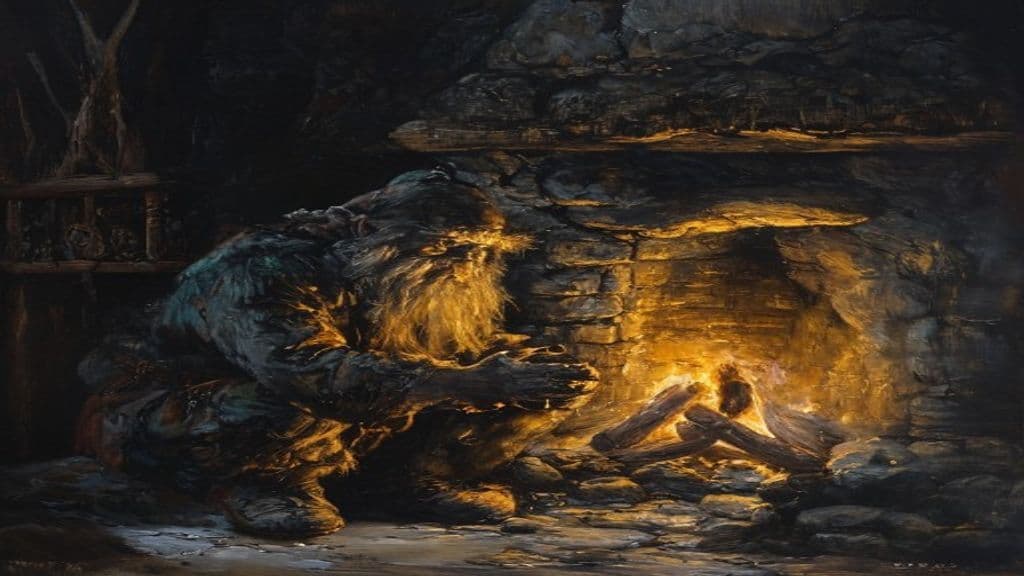
Domovoi
The house spirit of Slavic tradition — a small, invisible guardian of the home bound to a specific dwelling and its family. Protective when respected; dangerous when insulted or forgotten.
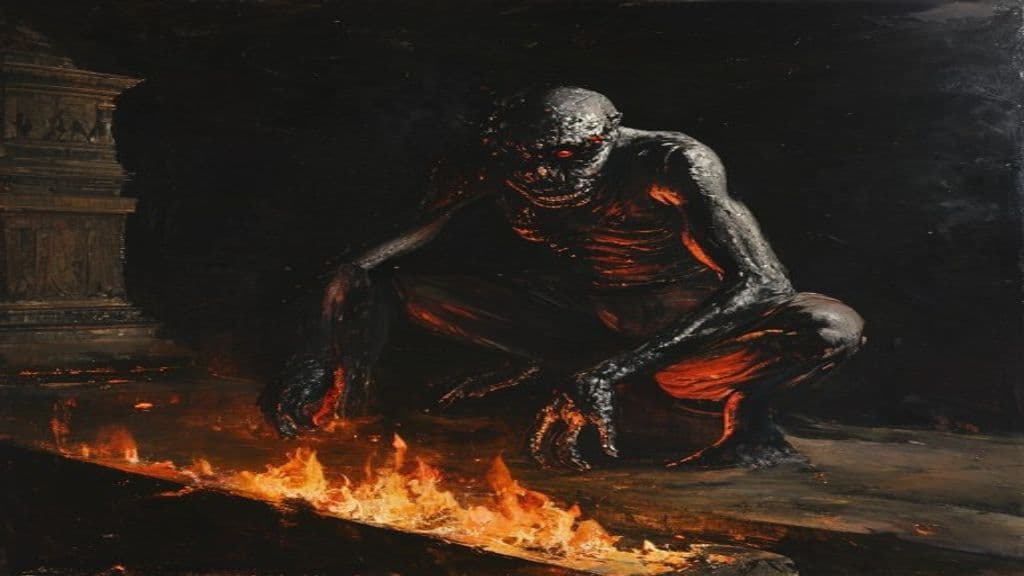
Pishach
Among the oldest classified demon-types in Hindu tradition — flesh-eating entities of the cremation ground first named in the Atharva Veda. The Pishach inhabits fresh corpses and possesses the living, causing the specific Ayurvedic condition of 'pishachabadha': madness, speaking in unknown languages, consuming impure things.
Black Dog (folklore)
A class of supernatural canine apparition in British vernacular folklore, often associated with liminal places and regarded as an omen-bearing or guardian hound. Local named forms (Black Shuck, Barghest, Gurt Dog, Gallytrot) show a range from malign, death-portending hellhounds to benevolent guide-figures.
Black cat
A domestic cat with black fur that functions both as an ordinary companion animal and as a versatile folkloric symbol. In many traditions it is an omen of good or bad fortune, is associated with witches and seafaring luck, and has been repurposed in modern political and cultural symbolism.
Changeling
A changeling is a human-like substitute left by nonhuman beings (fairies, trolls, demons, etc.) after they abduct a human—most often an infant. Found throughout much of European folklore, the changeling functions as an uncanny domestic replacement whose presence explains sickness, developmental difference, or sudden loss.
Devil
A cross-cultural mythic personification of evil and hostile forces, used in religious, literary, and popular contexts to explain temptation, moral corruption, disease, death, and misfortune. Its exact cosmological status varies by tradition, ranging from an independent principle of evil to a created being that became evil or a symbolic embodiment of human wickedness.
Fairies
Fairies are a category of anthropomorphic spirit-beings from European folklore, described as possessing magical or preternatural qualities and appearing across a range of traditional stories and modern cultural expressions. The motif spans cautionary folk beliefs (often concerning protection from their spite) and contemporary festival, musical, and literary uses.
Fox spirit
A widespread class of mythical beings associated with foxes (often represented by red-fox imagery in many traditions) characterized by cunning, shapeshifting, trickery, and ambiguous moral roles; prominently attested in East Asian folklore and present in modern literature and media as romantic, vengeful, or matchmaking figures.
King in the Mountain
A widespread folklore motif of a ruler or hero who lies hidden or sleeping inside a mountain and is expected to return in a future time of need. Treated by folklorists as a comparative motif or tale type (e.g., the 'Kyffhäuser type') rather than a single named supernatural being.
Rhinemaidens
Three water sprite sisters from Germanic mythology, known for their enchanting singing and association with the Rhine river. (Note: 1. Power tier should be Primordial, as they are associated with a major river and not specified to have regional or local power. 2. Appearance: "No physical description is provided in sources" should )
Shape-shifters
A cross-cultural motif and capability in mythology, folklore, and speculative fiction describing beings or persons who can physically transform themselves through unnatural means. Appears across ancient ritual contexts, foundational epics, and modern popular culture rather than as a single unified species or entity.
Werecat
A werecat is a folkloric category of therianthropic beings or people associated with transformation between human and feline forms. The motif appears across Europe, Africa, South and Southeast Asia, and China, with locally specific explanations (witchcraft, hereditary curse, sorcery, ghostly influence, or divine/royal descent).
Werewolf
A figure of European folklore of a human who can change into a wolf or wolf–human hybrid, variously portrayed as voluntary shapeshifter, cursed afflicted person, or clinical delusion (lycanthropy). Belief in werewolves was entwined with medieval and early modern witchcraft accusations and persisted into Gothic and popular fiction.
Imhotep
Imhotep was a historical Old Kingdom Egyptian official (chancellor to Pharaoh Djoser) whose memory was gradually glorified and by the Late Period and Ptolemaic era had been assimilated into Egyptian cult as a deified patron of medicine, wisdom, architecture, and scribal arts. He functioned as a non-royal cult deity centered at Memphis and was syncretized with gods such as Thoth and equated by Greeks with Asclepius.
Community Record
- [1]Imp — Wikipedia. Wikipedia contributors, 'Imp', Wikipedia, The Free Encyclopediawiki
- [2]The Bottle Imp — Robert Louis Stevenson (example cited in sources). R. L. Stevenson, 'The Bottle Imp' (literary example referenced in source material)literary
- [3]Project notes and compiled research (provided URLs list). Compiled research notes supplied by user referencing the Wikipedia article and examples such as the Lincoln Imp and etymology from Old English impaother